

A lost cat slipping through a storm drain or a dog disappearing during a busy festival turns identification into an urgent task. A pet microchip scanner retrieves the number stored on an implanted chip, while the registration record connects that number to current contact details. ISO standards, the common framework used to identify implanted animal chips, are supported by several options here, but compatibility with older or nonstandard chips varies. These picks cover single-pet needs, clinic inventories, mixed-format scanning, and field use.
An Overview Of The Picks

Fi Nano Dog Microchip 1-Pack
Fi Nano Dog Microchips 20-Pack
Hero Universal Microchip Scanner

ISENVO Microchip Scanner 190S

ISENVO Microchip Scanner 190A

ISENVO Bluetooth Scanner 190E

ISENVO Microchip Scanner 190C
More On The Choices That Made The List
The Fi Nano Dog Microchip 1-Pack is a microchip rather than a scanner. It suits a household preparing for one new pet, with a 1.4 mm ISO-format chip, an individually wrapped small-gauge needle, and a syringe included for administration by a trained pet professional.
Registration and profile updates can be handled through Nano Try Fi from a smartphone or computer at no cost. The chip is also searchable through AAHA’s 24/7 database, which makes it a sensible starting point for a newly adopted dog, assuming the implantation and registration steps are completed properly.
Reasons It Performs
- The single-chip format keeps the initial setup uncomplicated for one pet.
- ISO compatibility allows the chip to be read by compatible scanners across international settings.
- Online profile updates help keep contact and household information current.
- AAHA search access gives shelters and animal-care teams another route for identification.
Practical Considerations
- This package contains no handheld scanner, so you still need compatible equipment to read the chip.
Key Product Details
Made For
First-time pet owners seeking a straightforward microchip and online profile management for one dog.
A Better Fit Elsewhere
The Hero Universal Microchip Scanner is a better fit for households or clinics that also need a device for reading chips.
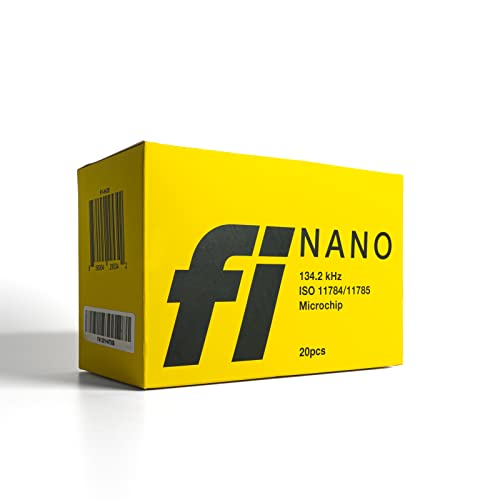
The Fi Nano Dog Microchips 20-Pack follows the same basic format as the one-chip option, but its scale suits shelters, rescue groups, and veterinary practices handling several animals. Each 1.4 mm ISO chip arrives with an individually wrapped small-gauge needle and syringe, reducing the need to assemble a multi-animal supply from separate pieces.
Profile registration and updates remain available through Nano Try Fi at no cost, while AAHA database searching provides another identification route. For a clinic with an established implantation process, that combination may be more useful than any extra feature on a consumer scanner.
The Upside
- Twenty individually packaged implantation sets simplify bulk inventory handling.
- The 1.4 mm ISO format supports use with compatible scanners in different countries.
- AAHA search access helps participating shelters and animal-care locations identify registered animals.
- Online profile management supports updates across multiple household or animal records.
Where It May Fall Short
- Twenty chips are excessive for a household caring for only one new dog.
- The package still does not include equipment for reading a chip after implantation.
Right Fit For
Rescue organizations, shelters, and veterinary teams that regularly implant and register several dogs.
Swap It Out When
The Fi Nano Dog Microchip 1-Pack is a better fit for a single-pet household that does not need bulk inventory.
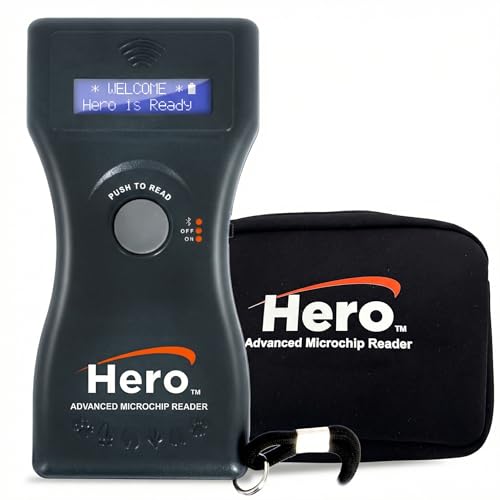
Broad chip compatibility gives the Hero Universal Microchip Scanner an advantage when your animals may carry different identification formats. It reads ISO chips along with 9-, 10-, and 15-digit chips, making it more adaptable than the ISENVO models that concentrate on 15-digit standards.
Bluetooth connectivity can send scanned numbers to a compatible device within 25 feet, a useful arrangement for field work, temporary clinics, and barn visits. The same breadth makes it relevant for horses and livestock, not just household pets, although your specific chips still need to match the supported formats.
Practical Pluses
- Support for several digit lengths reduces the risk of overlooking an older chip format.
- Bluetooth transfer reduces retyping when a phone or computer is nearby.
- The animal range suits clinics, shelters, barns, and other field settings.
- Universal format support makes it practical for mixed pet and livestock inventories.
Compatibility Comes First
- The stated 25-foot transfer range may be restrictive in a large barn or spread-out outdoor site.
Technical Highlights
Who Will Love This
Mixed-animal caretakers and mobile identification teams that need broad format support.
Where A Sibling Pick Shines
The ISENVO Bluetooth Scanner 190E is a better fit for compact work focused on EMID FDX-B and ISO chips.
Rechargeable operation makes the ISENVO Microchip Scanner 190S practical for repeated identification work without a disposable power supply. Its 15-digit focus and support for ISO 11784, ISO 11785, and FDX-B formats place it in the same practical category as the 190A and 190C models.
The trade-off is narrower compatibility than the Hero scanner. A household dealing with standard 15-digit chips will find that focus easier to understand, while a shelter encountering several legacy formats should check the chips in its care before settling on this model.
Key Advantages
- Rechargeable power suits repeated home, clinic, or shelter use.
- FDX-B is a 15-digit animal identification format, making the scanner relevant to many modern chips.
- Support for ISO 11784 and ISO 11785 covers the principal international scanning standards.
Some Limits To Know
- The 15-digit emphasis may not suit every older or nonstandard implanted chip.
- Bluetooth transfer is not a listed feature, so the scanner works more as a standalone tool.
Feature Snapshot
The Right Fit
Pet owners and small animal-care teams handling mostly modern 15-digit microchips.
Another Choice May Suit
The Hero Universal Microchip Scanner suits mixed-format facilities that also encounter 9- and 10-digit chips.
The ISENVO Microchip Scanner 190A is built around a clear purpose: reading EMID, ISO 11784, ISO 11785, and FDX-B 15-digit chips. That makes it a sensible option for a clinic whose cases mainly involve modern 15-digit identifications and where straightforward format matching matters more than broad compatibility.
Its rechargeable design supports regular use, but the fixed protocol focus creates a meaningful pre-purchase check. Unlike the Hero Universal Microchip Scanner, this model cannot recognize 9-digit IDs or Avid chips, so its best home is in a workflow built around the formats it explicitly supports.
Everyday Advantages
- Supports several protocols used for 15-digit animal identification.
- Rechargeable operation suits clinics and shelters with repeated scanning needs.
- Clear format focus makes it easy to match with a known chip inventory.
A Few Limitations
- Avid chips are not supported, which rules it out for some legacy identifications.
- Nine-digit identification numbers are not recognized.
- The device cannot cover every chip format found across mixed animal populations.
Who Should Grab It
Small clinics and shelters whose animals mainly carry supported 15-digit FDX-B, EMID, or ISO chips.
Reach For A Different Pick When
The Hero Universal Microchip Scanner is a better fit for shelters that also handle Avid, 9-digit, or 10-digit chips.
Compact proportions and wireless syncing give the ISENVO Bluetooth Scanner 190E a natural place in a mobile kit. It reads EMID FDX-B chips under ISO 11784 and ISO 11785 protocols, so its format coverage closely matches the ISENVO 190A, 190C, and 190S models.
Its 134.2 kHz radio-frequency identification operation reads the implanted identifier, while the OLED screen presents information in a compact handheld format. Bluetooth lets a nearby phone or computer receive the number, which reduces manual transcription during a busy farm visit, temporary shelter, or mobile clinic.
Noteworthy Benefits
- The compact handheld shape fits more easily into a field kit than a desktop setup.
- Bluetooth transfer reduces the need to type chip numbers into a nearby device.
- An OLED display provides a clear place to review the scanned identifier.
- Rechargeable power supports mobile work away from a wall outlet.
Details To Watch
- The supported EMID FDX-B and ISO protocols do not cover every legacy chip format.
Core Details
Built With In Mind
Mobile clinics, barn teams, and field workers who need compact scanning with wireless record transfer.
Skip It When
The Hero Universal Microchip Scanner is a better fit for work involving older 9- and 10-digit chips.
The ISENVO Microchip Scanner 190C combines a rechargeable handheld design with support for 15-digit ISO and FDX-B chips. It also offers access to ISENVO’s pet registration service, adding a record-management route to the basic job of reading the identifier implanted in an animal.
Compared with the 190S, the core format coverage appears closely aligned, so the distinction comes down to the specific listing features and support route. For standard 15-digit pet identification, it offers a practical combination of scanning, charging, and registration assistance without the broader legacy-chip coverage of the Hero unit.
Features That Help
- Rechargeable construction fits repeated use without disposable batteries.
- ISO and FDX-B support covers common 15-digit chip formats.
- Registration assistance provides a path for organizing the recovered number.
- The handheld format is easier to move between rooms than a fixed workstation.
Trade-Offs To Consider
- The 15-digit emphasis calls for a compatibility check before handling unfamiliar legacy chips.
- Unlike the 190E, wireless transfer is not a listed feature.
Quick Facts
Whose Shelf It Belongs On
Pet households, small clinics, and shelters that regularly handle modern 15-digit chips.
Consider Something Else When
The ISENVO Microchip Scanner 190S is a better fit for your setup when you prefer that model’s feature set and support path.
What to Check Before You Buy a Pet Microchip Scanner
Chip Formats Come First
A scanner can only retrieve identifiers it has been designed to recognize. Check whether your animal carries a 15-digit FDX-B, ISO 11784, or ISO 11785 chip, or an older 9- or 10-digit format. The Hero scanner offers the broadest format coverage here, while the ISENVO 190A explicitly excludes Avid and 9-digit chips.
Power and Data Handling
Rechargeable power suits clinics, shelters, and mobile teams that scan throughout the day. Bluetooth transfer is worth considering when a phone or computer is consistently nearby, particularly for barn or field visits. A standalone rechargeable scanner may be simpler for occasional household checks.
Portability and Handling
Compare the handheld size with your storage space and travel case. A compact OLED-equipped model such as the 190E suits a mobile kit, while a fixed location may make a larger display and more controls easier to use. The key is whether you need portability, simple controls, or shared access.
Registration and Records
A scanner retrieves the number; it does not automatically contact the owner or maintain the registration record. Consider a model with a registration service, such as the 190C, or a database-search option, such as the Fi Nano chips searchable through AAHA.
Before You Commit to a Scanner
Wrong Turns To Avoid
Do not assume every scanner recognizes every chip format. Confirm the implanted number’s length and protocol before ordering, especially for adopted animals, livestock, or older identifications. A broad product name alone does not resolve compatibility.
The Upgrade Payoff
A higher-tier model earns its place through broader formats, wireless transfer, or a more capable display. Those features matter for mixed animal populations and mobile work, while a single-pet household with one standard chip may gain little from added complexity.
Frequently Asked Questions
What is a pet microchip scanner?
It reads the unique number stored in an implanted identification chip. It retrieves identity data from that chip, but it does not physically locate the animal.
Are all pet microchip scanners compatible with every chip?
No, compatibility depends on the scanner’s supported protocols and the chip format. Check the chip length and standard before choosing a model.
Does a rechargeable scanner make sense for home use?
A rechargeable scanner is convenient for repeated use and avoids disposable battery replacement. A permanently powered unit may be equally practical for occasional checks.
Can I use a pet microchip scanner for horses or livestock?
Some models support animals beyond cats and dogs. The Hero scanner specifically covers horses, livestock, and other animals alongside broader chip-format support.
What matters most with microchip registration?
An accurate chip number and a current registration record are the essential pieces. Keep the contact information current so a found number leads to useful ownership details.
Final Verdict
Start with chip format, since compatibility matters more than every other feature. The Hero Universal Microchip Scanner suits mixed-format and field work, while the rechargeable ISENVO models fit standard 15-chip workflows. The Fi Nano packs are microchips for implantation rather than scanning devices, making them useful complements rather than substitutes for a scanner.
