

Your child’s first tooth can turn toothbrushing into a daily negotiation, especially when the bristles feel unfamiliar or the handle is difficult to hold. A suitable baby tooth brush makes the routine easier for you and more tolerable for your child, whether you prefer a finger-style brush, a manual animal design, or an electric model with a timer and light. The right choice depends less on decoration than on age, grip, mouth size, and how much supervision your family needs.
How The Shortlist Stacks Up

grabease Silicone Finger Toothbrush, Double-Sided with Choke Shield
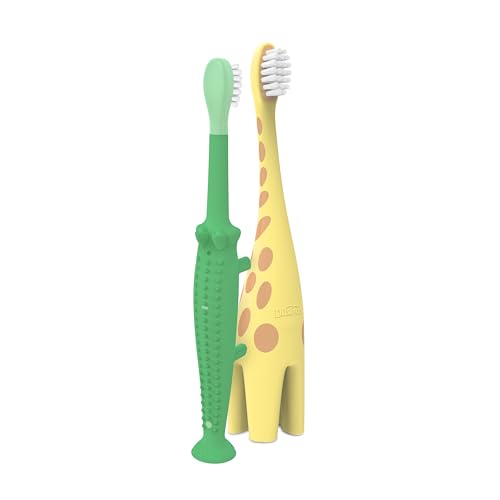
Dr. Brown’s Infant-to-Toddler Brush Set

Dr. Noah Bamboo Baby Toothbrush 4 Pack

EASICUTI Soft 3-Sided Toddler Toothbrush

brush-baby BabySonic Infant and Toddler Electric Toothbrush with Two Heads

Lwalaneng U-Shaped Kids Electric Toothbrush

Lwalaneng Kids U-Shaped Electric Toothbrush, Four Modes, Four Heads

Lwalaneng Ultrasonic U-Shaped Kids Electric Toothbrush
A Closer Look At Each Pick
A first tooth can make toothbrushing feel awkward for everyone. The grabease finger brush puts the cleaning surface directly on your fingertip, giving you control over pressure and placement as your child adjusts to the routine. The silicone handle also gives a small hand something recognizable to hold, although adult-led brushing remains important.
Unlike the animal-shaped manual brushes in this shortlist, this model works like an extension of your finger. That approach suits parents managing a wiggly baby or tender teething gums, and the double-sided tapered bristles let you change the contact angle without swapping tools.
What Stands Out
- Finger-mounted construction gives you precise control over each tooth.
- Two bristle sides provide different angles for front and back teeth.
- Soft tapered bristles suit sensitive mouths and tender gums.
- The shield keeps the brush from traveling too deeply into the mouth.
- The compact design is easier to introduce than a long manual handle.
Things To Consider
- Finger brushing depends on adult control, so it may not encourage independent brushing as quickly as a handled design.
Feature Snapshot
Who It Suits Best
You will appreciate this brush most with a baby who needs close adult control during early toothbrushing.
Another Choice May Suit
Dr. Brown’s Infant-to-Toddler Brush Set offers a more conventional handled design for children ready to practice gripping a toothbrush.
Two brushes give you a straightforward way to move from infant care into toddler participation. The Dr. Brown’s set pairs a giraffe brush for younger babies with a crocodile brush for growing mouths, so you can change the shape and handle as your child’s teeth develop. That variety is useful in homes transitioning between stages.
You can stand the giraffe on four legs after brushing, while the crocodile uses a suction cup to remain upright. These details reduce countertop clutter, and depending on your child’s grip, the animal legs may also make a familiar handle easier to hold. The set is less suited to finger-style brushing than the grabease option.
A Few Strong Suits
- Two character shapes suit different developmental stages.
- The giraffe’s standing base keeps it away from the counter surface.
- The crocodile’s suction cup helps it stay upright near the sink.
Practical Considerations
- The crocodile’s stand-up design requires a smooth, clean surface for the suction cup.
- Young children will still need guidance to reach every tooth.
Quick Facts
Made For
This set works well for families wanting one familiar-looking brush for an infant and another for a growing toddler.
Where A Sibling Pick Shines
The grabease Silicone Finger Toothbrush gives you more direct control for a very young baby with a sensitive mouth.
Material choice can matter in a family trying to limit plastic around a child’s daily belongings. The Dr. Noah brush uses a bamboo handle and plant-based bristles, giving you a manual option that feels different from silicone and conventional plastic brushes. You may prefer its natural look beside a sink filled with colorful toddler items.
The four-count pack makes replacements easier to manage, particularly once bristles become worn or a brush travels between homes. Unlike the grabease finger brush, this model has a traditional handle that a child can gradually learn to hold. Plant-based bristles may also produce a different brushing sensation than silicone.
The Practical Payoff
- The bamboo handle avoids a conventional plastic handle.
- Plant-based bristles suit shoppers seeking non-silicone manual brushes.
- Four brushes provide a convenient replacement supply.
- The straight handle supports gradual independence practice.
Small Caveats
- Bamboo and plant bristles may feel firmer than the silicone approach used by the grabease brush.
- Young children may initially prefer a colorful animal handle.
- Your child will still need help reaching back teeth.
The Right Fit
You will find this pack useful when reducing plastic in the bathroom and keeping spare brushes on hand matters to you.
Not Your Match When
The Dr. Brown’s Infant-to-Toddler Brush Set may suit a child better when animal-shaped grips and upright storage matter more than material choice.
Brushing several tooth surfaces usually means changing the brush angle repeatedly. The EASICUTI brush puts three bristle sides around the tooth, reducing that back-and-forth for parents working with a squirming toddler. You can cover the front, back, and side surfaces in a single positioning, depending on the child’s movement.
The soft bristles suit tender mouths, while a tongue-cleaning surface on the reverse adds another routine-care element. Compared with the conventional animal brush from Dr. Brown’s, this design favors coverage and a compact brushing motion rather than a character grip. The honest read is that some children may adapt more readily to an animal than a geometric handle.
Good Reasons To Consider
- Three-sided bristles simplify contact with several tooth surfaces.
- The back of the head includes a tongue-cleaning surface.
Trade Offs
- The added tongue-cleaning surface creates another area to rinse and dry.
- Unlike the finger brush, this design gives the child a handle to manage.
- Its unfamiliar shape may be less inviting to a child who prefers character designs.
- Adult assistance remains necessary for back teeth.
Key Attributes
Best Suited To
This brush works well for toddlers whose parents want a thorough manual brush without a powered handle.
Look Elsewhere When
The brush-baby BabySonic Infant and Toddler Electric Toothbrush fits families that prefer vibration, illumination, and a built-in timer.
A timer can turn “keep brushing” into a concrete goal for a young child. The brush-baby BabySonic pairs a two-minute timer with a built-in LED light, vibration, and a small brush head intended for ages 0-3. The light may help you see individual teeth and gums, while the vibration provides the movement that manual brushes do not.
Two sensitive brush heads give you a spare during the early teething stage, and the timer helps build a repeatable bathroom routine. Compared with the grabease finger brush, this model offers more structure and entertainment cues, but it also introduces a larger powered handle. For most families, that trade is worthwhile once vibration helps hold your child’s attention.
Benefits That Matter
- The two-minute timer provides a clear endpoint for brushing.
- LED illumination makes teeth and gums easier to see.
- Gentle vibration offers a different experience from manual brushing.
- Two sensitive heads cover initial use and replacement needs.
- The compact electric format suits infants and toddlers up to age 3.
Worth Noting
- The powered handle requires more space at the sink than a slim manual brush.
Built With In Mind
You will appreciate this model in homes trying to make toothbrushing more structured for a baby or very young toddler.
Reach For A Different Pick When
The EASICUTI Soft 3-Sided Toddler Toothbrush offers a quieter manual alternative for a child sensitive to vibration or sound.
A U-shaped head fits around the front and back teeth at once, turning your child’s bite into the brushing position. The Lwalaneng model is aimed at ages 2-6 and includes two silicone U-shaped heads plus two conventional soft heads. That mix gives you a broad surface option and a smaller head for more targeted brushing.
Compared with the brush-baby BabySonic, this design relies on a wide silicone arrangement rather than a small round head and vibration. The trade-off is fit, because a child must open wide and hold steady. You may find the U-shaped head easier to position across several teeth, provided the bite does not feel strained.
What Works In Its Favor
- The U-shaped silicone head contacts several teeth in one position.
- Four included heads provide silicone and soft-head options.
- The age range specifically accommodates toddlers ages 2-6.
Factors To Consider
- Children with a narrow bite may find the U-shaped head less comfortable.
- You need to guide the head along the gum line rather than rely on one stationary position.
- The broad head may take longer to rinse around the handle joint.
Feature Rundown
Who Will Love This
This electric brush suits toddlers who are comfortable placing a wide silicone head over their front and back teeth.
Swap It Out When
The Lwalaneng Ultrasonic U-Shaped Kids Electric Toothbrush provides a broader age range for children continuing beyond age 6.
Children often outgrow a toddler brush before they outgrow the habit of brushing. This Lwalaneng model spans ages 2-16 and adds four cleaning modes to the U-shaped format, making it a long-term option for one household. The cartoon-bear styling also gives an older child a more playful reason to keep the brush on the sink.
Four heads include two silicone U-shaped options and two soft heads, so you can change the contact style as needed. In practice, the choice of modes may be more useful for older children than toddlers, while the smaller head provides a familiar manual-like alternative. Its IPX7 waterproof rating supports use around water, though the charging area still needs to stay dry.
What Earns Its Place
- Four cleaning modes offer adjustments as your child grows.
- The age range supports use from toddlerhood into adolescence.
- Two U-shaped and two soft heads provide varied options.
- Cartoon styling adds a playful element to the routine.
- IPX7 waterproof construction suits bathroom use.
Details To Watch
- The U-shaped head must fit comfortably without forcing your child’s bite.
- More than one head type creates additional pieces to rinse and store.
- Young toddlers may not engage meaningfully with four different modes.
Whose Shelf It Belongs On
You will get lasting value from this model in a household with children several years apart who share a bathroom.
Consider Something Else When
The brush-baby BabySonic Infant and Toddler Electric Toothbrush focuses more directly on babies and toddlers up to age 3.
A single electric brush can cover several years when its intended age range extends from toddlerhood into the early school years. The Lwalaneng Ultrasonic U-Shaped Kids Electric Toothbrush is designed for ages 2-12 and includes two silicone U-shaped heads along with two standard soft heads. That combination gives you a wide option for younger teeth and a smaller option for closer work.
Compared with the four-mode Lwalaneng model, this version keeps the feature set more focused around the U-shaped design and interchangeable heads. For families without a need for multiple modes, that simplicity may be appealing. The important fit check remains the same: your child should be able to close around the head without discomfort.
Notable Gains
- The age range covers toddlerhood through approximately age 12.
- Four included heads support different brushing approaches.
- The silicone U-shaped head reaches around front and back teeth.
Possible Compromises
- A wide U-shaped head may not suit a narrow or sensitive mouth.
- You must guide the powered head along the teeth rather than hold it still.
- Children accustomed to a conventional brush may need time to adjust.
Technical Highlights
Who Should Grab It
This brush fits families seeking one powered option for children roughly between ages 2 and 12.
Where Another Pick Suits Better
The Lwalaneng Kids U-Shaped Electric Toothbrush, Four Modes, Four Heads fits households wanting additional modes and a longer age range.
What Matters Before You Choose a Baby Tooth Brush
Start with your child’s age and teeth
A baby brush made for the earliest teething stage usually prioritizes gentle contact and adult control. A toddler brush can introduce a fuller handle, character styling, or three-sided coverage. For children with more teeth, a U-shaped electric brush may fit a broader mouth, but you still need to confirm that the head rests comfortably without stretching the cheeks.
Compare the way the brush is held
A finger brush gives your hand precise control but leaves less for the child to hold. Animal-shaped handles can make independent practice more inviting, while three-sided and U-shaped designs reduce the number of angles you need to demonstrate. Consider your child’s grip and attention span, not just the age printed on the package.
Decide how much guidance the routine needs
A timer, LED light, vibration, and character design can make brushing more engaging for some children. Electric equipment also takes more room at the sink and requires a dry charging area. Manual brushes keep the routine simpler and may be easier to use during travel, although your child still needs help reaching the back teeth.
Before Toothbrushing Becomes a Bottleneck
Mistakes Worth Dodging
Choosing solely by the child’s age can overlook head size, grip, and sensitivity. A brush that looks suitable may still require a wide-open bite or an unfamiliar head shape, so check the fit in the bathroom rather than relying on the package alone. Replacing a damaged or poorly fitting brush also matters more than trying to make an uncomfortable design work.
What Separates Premium From Basic
The additional cost of an electric model may buy vibration, illumination, timing, several modes, or interchangeable heads. Those features help some children understand how long to brush and give you more ways to reach different tooth surfaces. A basic manual brush remains sensible when simplicity, portability, and direct finger control matter most.
Frequently Asked Questions
When should a baby begin using a toothbrush?
Brushing can begin when the first tooth appears, with a brush sized for an infant mouth. You should follow the guidance of an appropriate pediatric dental professional for your child’s individual oral care.
How often should a baby toothbrush be replaced?
Replace a baby toothbrush about every three months, or sooner when the bristles become worn. For a finger brush, pay particular attention to the condition of both the bristles and the silicone body.
Is a finger toothbrush better than a handled brush?
A finger toothbrush gives you more control over a young baby’s mouth, while a handled brush helps children practice gripping and moving a tool. The grabease brush favors adult control, while the Dr. Brown’s set encourages more conventional handle practice.
Should a baby use an electric toothbrush?
An electric toothbrush can suit a child who responds well to vibration, light, or a timer. The brush-baby BabySonic offers those features for ages 0-3, while the Lwalaneng models use U-shaped silicone heads for children who can comfortably hold a wider bite.
What size baby toothbrush should a toddler use?
Choose a brush whose head fits comfortably without forcing the mouth open or pushing against the gums. Three-sided and U-shaped designs need particular attention to fit, while a smaller conventional head may suit a child who resists the broad shape.
Final Verdict
Your best choice depends on your child’s stage and your desired level of control. The grabease finger brush serves early teeth, the Dr. Brown’s set adds child-friendly grips, and the electric options provide timers, lights, or U-shaped coverage. Choose the design your child can tolerate comfortably, then focus on a patient, consistent routine.
