

Losing muscle strength after surgery, immobilization, or a prolonged stretch of inactivity can make daily movement feel harder. An EMS machine, or electrical muscle stimulation device, creates controlled muscle contractions, while TENS units focus on pain sensation; the right combination depends on your rehabilitation needs, treatment area, and mobility. The seven options below cover electrical stimulation, targeted muscle training, and cold-therapy support for hip or knee recovery.
A Side-By-Side Look
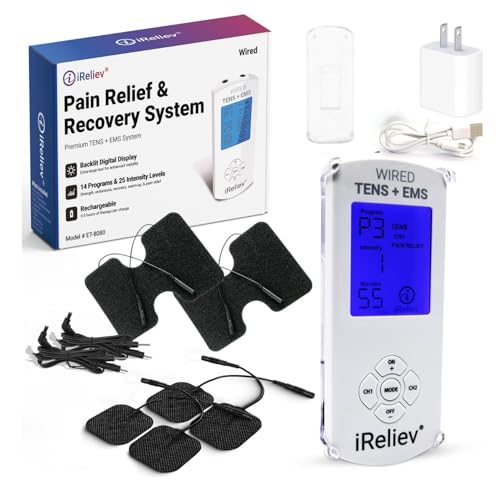
iReliev TENS Unit + EMS Muscle Stimulator, 14 Therapy Modes, Rechargeable

iSTIM EV820 TENS Unit with 8 Gel Electrodes

TESMED Fit 5.8 Muscle Stimulator, EMS, TENS & Massage, 22 Programs, 6 Customizable

ICYTHRP Programmable Hip Ice Machine

BHK-TENS 22-Mode EMS and TENS Muscle Stimulator for Pain Relief

Neocarbon TENS Unit Muscle Stimulator, Red

ICYTHRP Programmable Knee Ice Machine
A Closer Look At Each Pick
Rechargeable power makes this combination convenient for repeat sessions at home, with no disposable battery routine. Its large backlit display also helps you check the selected mode and intensity in dim rooms, which matters during a late-evening recovery routine.
The device separates TENS, which uses electrical pulses to target pain sensation, from EMS, which prompts muscle contractions. Compared with the TESMED Fit 5.8, it offers fewer programs but avoids the three-AAA battery arrangement, making it a practical match for anyone following a consistent rehabilitation schedule.
Well-Handled Touches
- Rechargeable operation suits frequent home sessions without regular battery replacement.
- Eight TENS modes and six EMS modes separate pain-oriented and muscle-oriented routines.
- Large and small electrode pads support placement across different body areas.
- The backlit display keeps settings easier to read during evening use.
Practical Considerations
- Fourteen total modes are fewer than the 22-program options offered by the BHK-TENS unit.
- Electrode placement and intensity should follow your clinician’s guidance, especially over numb or recently operated areas.
Key Product Details
Right Fit For
This unit suits people who want rechargeable TENS and EMS functions in one device for a clinician-guided home routine.
A Better Fit Elsewhere
The TESMED Fit 5.8 may suit you better when customizable programs, massage functions, and simultaneous dual-area use matter more than rechargeable power.
A straightforward TENS setup can make sense when your main goal is targeted pain management during a back, shoulder, or rehabilitation routine. The EV820 comes with eight gel electrodes, giving you more placement options than a basic two-pad arrangement.
Unlike the iReliev TENS Unit + EMS Muscle Stimulator, this model is presented as a TENS device rather than a combined muscle-conditioning system. For someone comparing stimulation types, that distinction is the honest read: it may complement a rehab plan, but it does not offer the same direct muscle-contraction function as an EMS unit.
Why It Works Well
- Eight electrodes give you more flexibility for two-area or repeated placement routines.
- Japanese gel pads are designed for skin contact and electrical signal transfer.
- The focused TENS format suits pain-management sessions involving the back or other sore areas.
Points To Note
- The absence of an EMS function makes it less directly aligned with strength-oriented muscle routines.
- Confirm that the included electrode quantity and connection type match your planned treatment areas.
Quick Facts
Made For
This TENS unit is made for beginners and people seeking a simple pain-focused routine rather than programmed muscle training.
Consider Something Else When
The iReliev TENS Unit + EMS Muscle Stimulator is a better fit when your plan requires both pain stimulation and direct muscle contractions.
Three functions in one unit make the Fit 5.8 attractive for a varied routine. EMS supports muscle stimulation, TENS focuses on pain sensation, and the third massage function provides another type of electrical pulse sensation for relaxation routines.
The 22 programs, including six customizable options, offer finer control than the iReliev unit’s 14 modes. Eight electrodes can cover larger areas or two body areas at once, so this may suit a person balancing muscle activation with pain-focused sessions, provided AAA battery handling fits the routine.
The Good Stuff
- Twenty-two programs create a broad selection for different stimulation preferences.
- Six customizable programs let you save or adjust routines more closely to your plan.
- Forty intensity levels provide a wide adjustment range rather than a few fixed steps.
- Eight electrodes support two-area stimulation and placement across larger muscle groups.
- Three functions consolidate TENS, EMS, and massage stimulation in one device.
Possible Compromises
- Three non-rechargeable AAA batteries are less convenient than the iReliev unit’s rechargeable design.
- Large program counts can feel excessive when your routine calls for only a few straightforward settings.
Built With In Mind
This model is built for muscle-focused users who want customizable programs, several stimulation functions, and flexible electrode placement.
Swap It Out When
The iReliev TENS Unit + EMS Muscle Stimulator suits you better when rechargeable power and simple device upkeep outweigh a larger program library.
Hip surgery can interrupt normal movement, making cold-therapy equipment a practical companion during early recovery. This model uses circulating cold water around the hip area, and its quiet pump reduces the noise that could otherwise interrupt rest or sleep.
Unlike the electrical stimulators, the ICYTHRP hip machine does not create muscle contractions. Its role is targeted cooling, which can complement a broader rehabilitation plan that also includes clinician-directed movement or electrical stimulation.
Where It Helps
- The hip-specific design targets the joint area during post-operative recovery.
- A programmable timer allows scheduled treatment periods to suit a structured routine.
- Continuous cold-water circulation provides more even contact than loose ice packs.
- The quiet pump is useful during rest periods or overnight recovery routines.
Details To Watch
- This is cold therapy rather than EMS, so it cannot directly stimulate muscle contraction.
- Check the hip wrap and tubing arrangement against your comfort needs and treatment-space limitations.
Core Details
The Right Fit
This machine suits people recovering from hip surgery who need scheduled cold therapy alongside their broader rehabilitation plan.
Another Choice May Suit
The ICYTHRP Programmable Knee Ice Machine is a better match when your recovery involves the knee rather than the hip.
A broad mode library can be useful when one household wants stimulation for shoulders, neck, back, arms, abdomen, hips, or legs. This BHK-TENS unit combines TENS and EMS functions, letting you separate pain-focused stimulation from routines intended to prompt muscle contractions.
The TESMED Fit 5.8 also offers 22 programs, but adds massage and six customizable settings. The BHK-TENS distinction is its broader range of body-area applications, which may be the more useful feature for a multi-area household routine.
Strengths Worth Knowing
- Twenty-two modes provide numerous options for changing stimulation routines.
- Combined TENS and EMS functions support both pain-focused and muscle-oriented sessions.
- Applications span the shoulders, neck, back, abdomen, hips, arms, and legs.
- Multi-area potential suits people who do not want separate devices for different body regions.
Some Limits To Know
- More modes do not automatically mean better suitability, so your clinician’s guidance should guide selection.
- The listing does not pair this model with a massage function like the TESMED Fit 5.8.
- Confirm the supplied electrode sizes and placement requirements before treating larger muscle areas.
Feature Facts
Who Will Love This
This device suits people seeking one multi-area stimulator for both TENS and EMS routines across several body regions.
Look Elsewhere When
The TESMED Fit 5.8 may suit you better when a dedicated massage function and customizable programs are central to your routine.
Organization makes a difference in a device you use regularly, and the Neocarbon kit arrives with a substantial accessory set. You receive 16 reusable pads in small, medium, and large sizes, two dual-plug snap cables, a USB charging cable, two pad holders, instructions, and a travel case.
Compared with the TESMED Fit 5.8, which includes eight electrodes, this package provides more replacement pads and a broader size range. The carry case is the notable advantage for someone alternating between home, work, and travel, although the full kit may take up more room than a compact unit.
What It Does Well
- Sixteen reusable pads offer a useful supply for regular sessions and shared household routines.
- Small, medium, and large pad sizes improve placement options across different body areas.
- Two dual-plug cables support flexible electrode arrangements.
- The travel case, holders, instructions, and charging cable create a more complete portable package.
Worth Bearing In Mind
- The travel case and accessory set may occupy more space than a compact stimulator and its original packaging.
- Verify that the snap connectors and chosen pad sizes suit your intended treatment areas before use.
On-The-Go Choice
This kit suits frequent travelers or households that want multiple pad sizes, replacement pads, and a dedicated carry case ready to go.
Reach For A Different Pick When
The iReliev TENS Unit + EMS Muscle Stimulator is a better fit when rechargeable operation and a combined muscle-stimulation function matter more than a large accessory kit.
A knee recovery routine often calls for cooling around a large, sensitive joint area, and this machine places circulating cold water inside a knee-focused wrap. The programmable timer adds structure to a recovery schedule, while the quiet pump keeps the setup practical during periods of rest.
Its hip counterpart uses the same general cold-therapy approach, but this knee version is the more natural choice after knee surgery. Neither ICYTHRP model stimulates muscle contraction, so they complement rather than replace an EMS component in a comprehensive rehabilitation plan.
What Helps Most
- The knee-specific wrap provides focused coverage for post-operative knee routines.
- Programmable timing helps organize repeated cold-therapy periods.
- Continuous cold-water circulation maintains contact around the joint.
Small Caveats
- This is a cold-therapy device rather than an electrical muscle stimulator.
- Check the wrap fit, tubing length, and available treatment space before bringing it into your recovery setup.
Important Details
Best Suited To
This ice machine suits people recovering from knee surgery who want timed cold therapy as part of a structured recovery routine.
Where A Sibling Pick Shines
The ICYTHRP Programmable Hip Ice Machine serves you better when your treatment area is the hip rather than the knee.
How To Match Stimulation And Recovery Tools To Your Care Plan
Understand TENS, EMS, And Cold Therapy
TENS uses electrical pulses to target pain sensation, while EMS prompts muscle contractions through electrical stimulation. Cold-therapy machines circulate chilled water around a treatment area but do not stimulate muscle contraction. Choose the function that fills a specific gap in your clinician-directed plan.
Match Electrode Coverage To Body Area
Pad quantity is useful, but placement matters more. A large muscle group may need a different arrangement from a smaller joint area, and some units support simultaneous treatment of two regions. Check the supplied pad sizes, cable arrangement, and the body area you need to reach.
Treat Program Count As One Feature
A larger program library offers variety, yet it does not establish which setting suits your body or rehabilitation stage. Customizable options can be more useful than a long preset list. Choose based on function, ease of adjustment, and guidance from your clinician.
Check Power And Practical Setup
Rechargeable power suits frequent sessions, while included AAA batteries keep the device portable. Cold-therapy systems require room for the wrap, tubing, and reservoir. Consider setup, storage, and your ability to repeat the routine consistently.
Avoid Common Mistakes And Know What Upgrades Add
Mistakes Worth Dodging
Do not choose a mode count before confirming that the device supports the function you need. TENS, EMS, and cold therapy serve different purposes, and a large accessory kit cannot compensate for the wrong treatment type. Check pad placement, power requirements, and treatment-area fit before ordering.
What Separates Premium From Basic
Higher-tier models may add rechargeable power, more programs, custom settings, dual-area use, quieter pumps, or a larger accessory set. Those extras help when your routine demands frequent use or precise control. A basic unit can make more sense for a narrow, occasional routine.
Frequently Asked Questions For Ems Machine For Muscle Atrophy
Can An EMS Machine Treat Muscle Atrophy?
An EMS machine does not treat muscle atrophy on its own. It provides electrical muscle stimulation, so its role belongs within a clinician-guided rehabilitation plan.
Is EMS Or TENS Better For Muscle Atrophy?
EMS is more directly aligned with muscle contraction because it prompts muscles to contract. TENS focuses on pain sensation, so it may complement a recovery plan that addresses discomfort.
How Many Electrode Pads Do You Need?
The right count depends on the treatment area and whether the device supports simultaneous placement. Eight pads offer more routing options than a basic two-pad system.
Are Cold Therapy Machines The Same As EMS Machines?
No. Cold-therapy machines circulate chilled water around an area, while EMS machines deliver electrical pulses that prompt muscle contractions.
Are Rechargeable EMS Devices Easier To Maintain?
Rechargeable devices avoid regular battery replacement, which suits frequent use. Battery-powered models can still be convenient for portability, so consider where and how often you plan to use the device.
Final Verdict
Your best choice depends on the missing piece in your recovery routine. Rechargeable TENS-and-EMS units suit frequent home sessions, customizable models offer broader program control, and ICYTHRP machines serve focused hip or knee cooling. Choose the function that fits your treatment area and stick with the routine your clinician recommends.
