

A full day of walking can leave your feet feeling much more tired than your legs, especially when every step lands through a thin, unstructured shoe insole. The right insert adds cushioning, arch support, or heel control, but the best option depends on your foot shape, shoe type, and whether you spend more time walking or standing.
Several miles in trail shoes require a different setup from a full shift on concrete. Your arch profile, shoe volume, and preferred amount of structure matter, so the most useful insoles for long distance walking are not automatically the thickest or most supportive ones.
How The Shortlist Stacks Up

Vionic Relief Full Orthotic

Spenco Rx Orthotic Arch Support Insoles

Copper Fit Work Gear Comfort Insoles
KEEN Utility K20 Cushion Insole

Sof Sole High Arch Foam Insoles

CRUVHEAL 220+ lbs Plantar Fasciitis Insoles

CRUVHEAL Work Pro Low Arch Insoles

CRUVHEAL Work Orthotic Insoles XL
More On The Choices That Made The List
Vionic’s full-length orthotic brings structure to shoes that otherwise leave your foot feeling unsupported. A deep heel cup, which is the raised section that surrounds the heel, helps hold that area more securely during long walks and full workdays.
The three-zone comfort approach is useful for people moving between casual outings, standing shifts, and lighter hikes. Compared with Copper Fit’s ventilated foam design, this option places more emphasis on organized support than cool airflow, so you may feel the difference sooner in shoes with minimal cushioning.
What Makes Sense
- Deep heel cup adds structure to everyday walking shoes.
- Three-zone comfort balances support across the foot.
- Full-length coverage suits closed shoes and active days.
- Useful for workdays that include both standing and walking.
Practical Considerations
- Structured support may feel more substantial than basic foam inserts.
- Check that your shoe has enough room to accommodate a full-length insole.
Key Specs
Who Will Love This
You will appreciate this option if you walk long stretches during the day and want more heel control than a basic cushioning insert provides.
Consider Something Else When
Copper Fit Work Gear Comfort Insoles may suit you better when ventilation and softer foam matter more than structured arch support.
A three-quarter-length orthotic leaves the toe area uncovered while supporting the heel and arch. That makes it a practical choice for walking shoes with less internal room, especially during miles that involve pavement rather than technical trails.
Spenco combines nylon construction with a shock-absorbing core and support that can follow the foot’s shape. You may find the more structured feel useful over long days, although the shorter coverage offers less cushioning under the toes than a full-length foam insert.
Where It Excels
- Adjustable heel and arch components support a personalized fit.
- Shock-absorbing cushioning softens the landing underfoot.
- Three-quarter design fits many shoes with less toe space.
Points To Note
- It covers only three quarters of the shoe’s interior.
- Women’s and men’s sizing differs, so verify the listed range.
- The structured core may take some getting used to.
Feature Snapshot
Made For
You’re a strong fit for this model when your feet need adjustable arch and heel support but your walking shoes feel crowded with a full-length insert.
A Better Fit Elsewhere
Vionic Relief Full Orthotic offers broader coverage and deeper heel structure for walkers who want support extending across the entire foot.
Copper Fit takes a softer approach with triple-layer construction and dual-layer foam. Ventilation adds airflow through the insert, which makes it a sensible option for warm workdays and shoes where breathability matters as much as cushioning.
Unlike the more architectural Spenco Rx Orthotic, this design concentrates on impact absorption and airflow. It may feel more immediately flexible in casual walking shoes, though people needing pronounced arch support have fewer adjustment options here.
Positive Points
- Dual-layer foam helps absorb repeated walking impacts.
- Ventilation promotes airflow through the insole.
- Triple-layer build adds softness without requiring complex setup.
Soft Spots
- Ventilation is more central than targeted arch adjustment.
- Layer height may reduce space inside snug shoes.
Right Fit For
You’ll like these insoles for warm shifts, errands, and long walks where soft cushioning and airflow matter most.
Another Choice May Suit
Spenco Rx Orthotic Arch Support Insoles are the better match when adjustable arch and heel support matter more than ventilated foam.
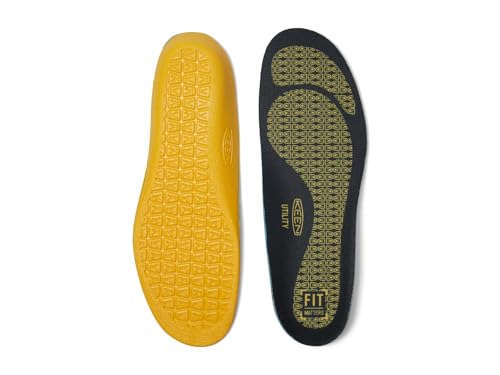
The K20 is built around a low-to-medium arch profile, making it more relevant to work shoes and boots than to a narrow high-arch setup. Its anatomically shaped footbed follows the foot’s contours instead of presenting a completely flat surface.
Full-length cushioning covers the entire insole area, while textile and synthetic materials suit practical footwear. Compared with the CRUVHEAL Work Pro model, this option provides a more conventional contoured profile without the same emphasis on gel pads and low-arch shaping.
The Value In It
- Low-to-medium arch construction targets common workwear profiles.
- Contoured footbed follows the foot’s natural shape.
- Full-length cushioning supports the complete interior.
- Designed specifically for work shoes and boots.
Trade Offs
- The specified arch profile may not suit high or low arches.
- Men’s sizing requires attention before ordering.
Quick Facts
Who Should Grab It
Choose the K20 for work shoes and boots when your feet have a low-to-medium arch and you want shaped support across the foot.
Reach For A Different Pick When
CRUVHEAL Work Pro Low Arch Insoles fit better when gel cushioning and a pronounced low-arch profile are your priorities.
High arches often feel uncomfortable in shoes whose footbeds sit nearly flat, especially during a long walk. This full-length foam insert adds a higher arch profile while extending coverage through the entire shoe for men with that foot shape.
Its performance-focused foam construction makes it a direct alternative to the more elaborate CRUVHEAL models. You may appreciate the simpler approach, but the high-arch design is the central decision point rather than a neutral all-purpose insert.
Strengths Worth Knowing
- High-arch profile addresses a more elevated foot shape.
- Full-length foam cushions beneath the entire foot.
- Simple construction avoids bulky adjustment components.
Potential Compromises
- The high arch may feel exaggerated in low-profile shoes.
- Full-length foam needs enough room inside the footwear.
- The design is specifically oriented toward men.
Built With In Mind
You’re the intended shopper for this model if you have high arches and want full-length foam coverage in roomy walking shoes.
Look Elsewhere When
CRUVHEAL Work Pro Low Arch Insoles suit you better when your feet have a low arch and work boots are your main footwear.
This model is built for people carrying 220 pounds or more who also have a high arch. Its 1.4-inch arch support is the defining feature, giving the insert more vertical structure than the standard foam options in this roundup.
The design is aimed at distributing weight and reducing heel pressure during extended workdays, not merely adding a thin layer underfoot. Compared with Sof Sole High Arch Foam Insoles, it offers a more substantial, specifically developed support profile for heavier users.
What It Does Well
- Designed around a 220-pound-plus body-weight range.
- High 1.4-inch arch creates substantial support.
- Weight distribution targets pressure during long shifts.
- Heel-focused design suits prolonged standing.
Where It May Fall Short
- The pronounced arch may not suit a low or neutral arch.
- Heavy support can reduce space inside close-fitting shoes.
- Listed sizing includes a medium designation, so check fit.
Technical Highlights
Who It Suits Best
You’ll find this model relevant if you weigh 220 pounds or more, have high arches, and spend long hours on your feet.
Swap It Out When
CRUVHEAL Work Pro Low Arch Insoles are a better fit for a low arch that needs cushioning and low-arch shaping.
Low arches and stiff work boots create a familiar combination: a flat foot shape meeting a firm, heavily treaded sole. These insoles add low-arch support and gel cushioning to create a more comfortable space between your foot and the boot.
A breathable velvet surface and small massage points add comfort during long shifts. Unlike the neutral arch of the KEEN Utility K20, this design follows a low-arch profile, making it the more targeted choice for people who spend much of the day in work boots.
Reasons It Performs
- Gel pads provide additional impact cushioning.
- Low-arch profile supports flatter foot shapes.
- Velvet surface encourages airflow through the boot.
- Massage points add texture during extended wear.
Details To Watch
- The low-arch construction is unsuitable for a pronounced high arch.
- Boot fit may change after adding a thick insole.
- Women’s and men’s size ranges differ.
The Right Fit
These insoles fit your routine best when you wear work boots, have a low arch, and spend long shifts walking across hard floors.
Where A Sibling Pick Shines
CRUVHEAL Work Orthotic Insoles XL are the better choice for deeper heel control and shock-absorbing support during extended standing.
This orthotic combines a cushioning layer, arch support, a deep U-shaped heel cup, and shock-absorbing pads for workers who alternate between walking and standing. The heel cup is the most distinctive element, wrapping around the heel more closely than a standard foam insert.
Compared with the CRUVHEAL Work Pro model, this option offers deeper heel positioning and a broader orthotic layout. You may prefer that combination for long warehouse shifts, while someone mainly walking in roomy athletic shoes may favor a lighter insert.
Noteworthy Benefits
- Deep U-shaped heel cup secures the heel position.
- Arch support adds structure during long shifts.
- Shock-absorbing pads cushion repeated impacts.
- Combined layers balance support and padding.
Potential Drawbacks
- The structured build may require space inside work shoes.
- The XL designation calls for a careful size check.
Feature Breakdown
Whose Shelf It Belongs On
This model belongs with work shoes or boots used by people who need deeper heel control during long hours on their feet.
Not Your Match When
Copper Fit Work Gear Comfort Insoles suit you better when ventilated foam and a softer, less structured feel are your priorities.
What To Match Before You Buy
Start With Your Arch Shape
Your arch shape determines how the insert meets the middle of your foot. Low-to-medium profiles suit many everyday feet, while high-arch inserts leave more space beneath the midfoot. Choosing against your natural shape can make a long walk feel unnecessarily awkward, so use the shape of your bare foot as an early guide.
Check Coverage Against The Shoe
Full-length inserts cover the heel through the toe and usually work best in roomier footwear. Three-quarter insoles leave the toe area open, making them useful when toe room is tight. You’ll get a more secure fit when the insert covers the area your shoe is designed to support without forcing the toe box upward.
Separate Cushioning From Structure
Soft foam is valuable for absorbing impact, while an arch plate or heel cup adds stability. Your daily mileage matters here: long walks over pavement call for a balanced combination, while stationary work shifts may favor deeper heel control. More structure isn’t automatically better, particularly in shoes that already feel rigid.
Common Mistakes And Worthwhile Upgrades
Wrong Turns To Avoid
Avoid choosing solely by the word “orthotic,” since supportive and cushioned designs solve different problems. Don’t overlook the listed size or skip the shoe-fit check, either. A supportive insert still needs room to sit flat without crowding the toe.
What Separates Premium From Basic
Higher-tier inserts often add adjustable components, deeper heel cups, or specialized arch profiles. Those features help when your foot needs structured support; they merely add bulk when soft cushioning would do the job.
Frequently Asked Questions
How Do I Choose Insoles For Long Distance Walking?
Choose by arch shape, shoe volume, and the amount of structure your feet need. Full-length coverage works for roomy shoes, while three-quarter inserts suit tighter footwear.
Should I Wear the Same Insoles in Every Shoe?
Use the same pair only when both shoes have similar internal dimensions and construction. Switching between models can make their support feel inconsistent across your day.
Are High-Arch Insoles Better for Walking?
High-arch insoles are designed for elevated feet, not for every walker. Neutral or low-to-medium profiles often make more sense for flatter foot shapes.
Are Three-Quarter Insoles Good for Long Walks?
Three-quarter insoles support the heel and arch while preserving toe room. They work well in snug shoes, though full-length models provide more cushioning beneath the toes.
When Should Persistent Foot Pain Be Evaluated?
Stop relying on an insole to manage pain that continues or worsens. A qualified healthcare professional can assess recurring foot or leg symptoms that may need a different solution.
Final Verdict
The right insole depends on your arch, footwear, and daily movement. Vionic offers balanced structure, Spenco provides adjustable support, Copper Fit favors ventilated cushioning, and the KEEN and CRUVHEAL choices serve defined workwear needs. Start with the fit you actually need rather than the thickest insert, and check size and shoe compatibility before ordering.
