

Posterior tibial tendonitis often develops where the tendon along your inner ankle supports the arch, especially during long walks or extended periods of standing. The right insole can add useful structure, cushioning, and heel control, but most of these options were designed for plantar fasciitis, high arches, or general foot support rather than the posterior tibial tendon itself. A careful match between your arch, shoe type, and daily routine matters more than a bold support claim.
An Overview Of The Picks

MUNA Plantar Fasciitis Insoles


Vionic Relief Orthotic

Spenco Rx 3/4 Length Orthotic Insoles

Sof Sole Men’s High Arch Insoles
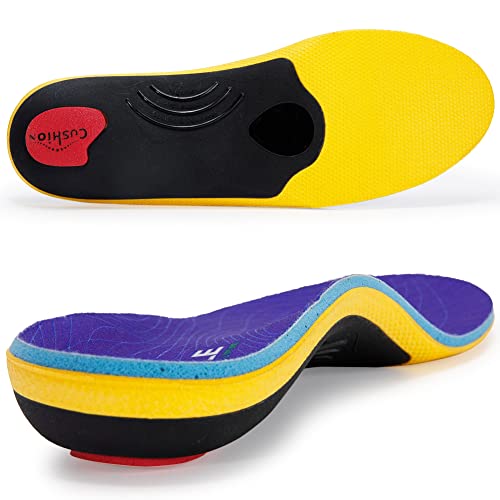
VALSOLE Heavy Duty Plantar Fasciitis High Arch Support Insoles for Work Boots

CRUVHEAL 220+ lbs Insoles for Men

CRUVHEAL Work Orthotic Boot Insoles
The Details Behind The Selections
MUNA takes a more structured approach than a basic foam insert. Its semi-rigid arch shell resists excessive arch flattening, while the heel cup surrounds the heel and adds stability. That combination may feel more substantial during a full day of walking than the softer options later in this roundup.
The design is aimed at plantar fascia discomfort rather than the posterior tibial tendon, so its relevance here comes from arch and heel control. You may find the firmer shell useful in sneakers, running shoes, or boots, particularly when your arch feels tired after commuting or standing. Unlike a cut-to-fit foam insert, each pair is built to size and requires no trimming.
Benefits That Matter
- The semi-rigid shell supports the arch without behaving like a completely rigid orthotic.
- The stabilizing heel cup keeps the rear of the foot more centered in footwear.
- Built-to-size construction makes it easier to keep your usual shoes in rotation.
- Compatibility with boots, sneakers, and running shoes adds practical flexibility.
Things To Consider
- You may notice a firmer sensation underfoot than with a basic foam footbed.
- Check the listed size carefully because trimming is not part of the design.
Key Specs
Who It Suits Best
This pair suits adults who want structured arch and heel support across work shoes, sneakers, and running shoes.
A Better Fit Elsewhere
CRUVHEAL 220+ lbs Insoles for Men may suit you better when heavier body weight and work-boot support are the main priorities.
After the MUNA’s structured arch shell, the ARIAT ATS Gel Footbed offers a much simpler approach. Gel cushioning provides a softer landing surface without claiming the same level of arch control, making it a straightforward option for men who spend shifts in round-toe work shoes.
Its value for posterior tibial tendonitis comes from comfort under the heel rather than condition-specific positioning. The honest read is that this may suit footwear with a removable insole, while a runner who needs a pronounced arch platform may find the support too modest. You will get a more familiar, cushion-focused feel than the firmer MUNA design.
Useful Strengths
- Gel cushioning softens the contact between your foot and the shoe’s insole platform.
- The simple footbed design works well when you want cushioning without a complex orthotic profile.
- Its men’s round-toe focus suits work and casual shoes with that shape.
Small Caveats
- The listed model is intended for men’s footwear, so sizing and fit require care.
- Check that the shoe permits an insole and leaves enough room around the toe.
Built With In Mind
This footbed suits men who spend long shifts in round-toe shoes and prefer cushioning over structured arch support.
Another Choice May Suit
MUNA Plantar Fasciitis Insoles may suit you better when a semi-rigid arch shell and stabilizing heel cup are priorities.
Vionic combines a deep heel cup with a full-length orthotic profile, offering more coverage than the ARIAT gel footbed. The deep cup is the molded rim that surrounds the heel, while the three-zone comfort design divides support across different areas of the foot. That structure may feel more organized underfoot during a full workday.
This women’s model is not presented as a posterior tibial tendon design, so think of it as general support rather than a specialized answer. You may appreciate it in walking shoes or work shoes during long office days, weekend walks, and other extended wear. Compared with the MUNA, Vionic emphasizes a broad full-foot layout and deep heel containment rather than a semi-rigid plantar-fascia-focused shell.
A Strong Showing
- The deep heel cup provides structured containment around the rear of the foot.
- A full-length insert covers more of the foot than a three-quarter-length option.
- Three-zone comfort organizes support across separate areas of the foot.
- The women’s design suits daily walking, work, and casual footwear.
Worth Noting
- A full-length profile needs enough shoe volume to sit flat without crowding the toes.
- Its general-support format is less specialized than an insert designed around one foot condition.
Feature Snapshot
Right Fit For
This orthotic suits women who want full-foot coverage and deep heel support during long daily wear.
Reach For A Different Pick When
Spenco Rx 3/4 Length Orthotic Insoles may suit you better when shoe space is tight and you prefer a shorter insert.
The Spenco Rx takes up less room than Vionic’s full-length orthotic, making it useful when toe space matters. Its three-quarter design supports the heel and arch while leaving the forefoot open. A nylon construction and Spencore cushioning add a softer component, which may be welcome during long walks or standing shifts.
Customizable heel and arch support gives the insert a more adaptable feel than a fixed high-arch insert such as Sof Sole. For posterior tibial tendonitis, the heel and arch structure is the relevant part, although the product is not identified as tendon-specific. You may find this balance especially useful in roomy work shoes, walking shoes, or any footwear where a full-length insert would feel crowded.
What Pays Off
- The 3/4 length preserves more forefoot space inside the shoe.
- A customizable heel and arch plate adjusts to the support area of your foot.
- Spencore cushioning softens each step during walking and extended standing.
- The nylon construction creates a lighter alternative to a bulky full-length orthotic.
Points To Keep In Mind
- The forefoot area remains uncovered, so it offers less full-foot coverage than Vionic Relief Orthotic.
- The listed size ranges span women’s 9–10.5 and men’s 8–9.5, so verify your size.
Made For
This insert suits people who need heel and arch support in roomier shoes without a full-length footbed.
Where A Sibling Pick Shines
Vionic Relief Orthotic may suit you better when full-foot coverage and a deeper heel cup are your priorities.
High-arch support is the defining feature here, and Sof Sole makes that geometry the focus. The full-length foam insert gives the foot support across more of the shoe, while the raised profile may feel more substantial than the gentler ARIAT gel footbed. That makes it a natural choice for a high arch that feels unsupported in ordinary footwear.
Its relevance to posterior tibial tendonitis comes from general arch positioning, not from a tendon-specific design. You may find the pronounced profile more noticeable during a long walk, and athletes or active workers can compare it with the CRUVHEAL models built around heavier body weight. A low or neutral arch could find this geometry too strong, so the fit check matters.
Useful Touches
- The high-arch profile gives visibly elevated support where the foot needs it.
- Full-length coverage extends the insert through the entire shoe rather than stopping near the forefoot.
- The foam construction creates a simpler base for everyday athletic or casual shoes.
Less Ideal Details
- The pronounced arch may feel excessive for a low or neutral arch.
- Its full length requires enough shoe volume to lie flat comfortably.
Who Will Love This
This insert suits men with high arches who want a full-length foam option for athletic or casual footwear.
Swap It Out When
CRUVHEAL Work Orthotic Boot Insoles may suit you better when your main use is long shifts inside work boots.
VALSOLE scales up the support angle for people carrying 220 pounds or more. Its high-arch structure, flat-foot positioning, and work-boot format target a different need from the Sof Sole insert, which offers a more general high-arch foam design. The heavier-body focus is the key detail to notice here.
For posterior tibial tendonitis, you should treat this as supportive footwear rather than a condition-specific insert. You may find the high-arch profile and shock-absorbing approach useful during long workdays, especially in roomy boots. Compared with MUNA, VALSOLE emphasizes heavier-duty positioning for work environments rather than a semi-rigid shell built around plantar fascia concerns.
Standout Benefits
- Support is designed around body weights of 220 pounds and above.
- High-arch positioning targets a pronounced arch profile.
- The design also considers flat-foot support, giving it a more specialized geometry.
- Work-boot compatibility suits demanding footwear and extended shifts.
Honest Caveats
- The high arch may feel pronounced during the first wear, so a gradual introduction can be more comfortable.
- Confirm that your work boot has enough internal room for the insert’s arch structure.
Best Suited To
This pair suits adults over 220 pounds who need high-arch positioning in work boots or supportive shoes.
Look Elsewhere When
MUNA Plantar Fasciitis Insoles may suit you better when you want a lighter, semi-rigid arch shell without a heavy-duty body-weight focus.
CRUVHEAL specifies support for users weighing 220 pounds or more, with 1.4 inches of arch support. That figure makes the design easy to understand: it creates a pronounced rise beneath the arch rather than relying on a shallow contour. The intent is to distribute weight across the foot and reduce concentrated heel pressure during long workdays.
You may find this useful in work boots, though the design is not presented as a posterior tibial tendon solution. It gives you more arch height than the Spenco Rx and a clearer body-weight focus than VALSOLE. The medium size is the deciding practical detail, particularly because a neighboring CRUVHEAL boot option comes in XL.
Good Reasons To Consider
- A 1.4-inch arch rise provides clearly defined support beneath a high arch.
- The 220-pound-plus design targets users who may need firmer positioning.
- Weight distribution across the foot reduces concentration at the heel.
- Work-boot use makes it relevant for long shifts and frequent walking.
Details To Watch
- This listing is marked medium, so compare it with your usual insole size.
- The 1.4-inch rise may feel pronounced in a shallow shoe despite the boot focus.
Quick Facts
Who Should Grab It
These insoles suit men over 220 pounds who want pronounced arch support for work boots and long shifts.
Consider Something Else When
CRUVHEAL Work Orthotic Boot Insoles may suit you better when you need the available XL size for a larger boot fit.
This work-boot insert layers several support features around a more specific long-shift design. A cushioning layer sits alongside arch support, a deep U-shaped heel cup, and shock-absorbing pads. The heel cup, which is the raised rim around the heel, helps keep the rear foot centered while the pads soften impact through each step.
Its connection to posterior tibial tendonitis is again general support rather than a tendon-specific construction. You may find the layered approach useful across warehouse, construction, or service shifts where your feet remain inside boots for hours. Compared with the medium CRUVHEAL 220+ lbs model, this version prioritizes boot-specific features and comes in XL for a larger fit.
Notable Upsides
- A cushioning layer adds comfort beneath the foot during extended wear.
- The deep U-shaped heel cup provides structured heel containment.
- Shock-absorbing pads soften repeated contact with the ground.
- Arch support works with the heel cup for a more complete fit inside boots.
Small Limitations
- The available size is XL, so a medium insert may be needed for a smaller boot.
- Its boot-oriented profile may occupy more room than a slim three-quarter insert.
Core Features
The Right Fit
This insert suits people with larger feet who spend long workdays in boots and prefer layered cushioning and heel support.
Where Another Pick Suits Better
CRUVHEAL 220+ lbs Insoles for Men may suit you better when medium sizing and a 1.4-inch arch rise match your needs more closely.
What to Match Before You Buy
Arch Profile and Foot Position
A high arch calls for more noticeable support, while a neutral or flat arch may find aggressive geometry uncomfortable. MUNA offers a semi-rigid arch shell, Sof Sole uses a high-arch profile, and both CRUVHEAL models add pronounced support for specific work scenarios. The ARIAT gel footbed takes a softer, less structural approach.
Shoe Volume and Insert Length
A full-length insert offers broad coverage but needs room to lie flat. Spenco’s 3/4-length design preserves forefoot space, while boot-specific models suit roomier footwear. Remove the existing insole and compare the available space before choosing.
Activity and Support Level
Daily walking, running shoes, office hours, and warehouse shifts create different demands. Cushioning may suit shoes worn primarily for walking, while structured arch and heel support becomes more relevant during extended standing. Persistent inner-ankle pain deserves evaluation by an appropriate specialist doctor.
Avoiding Common Fit Errors
Mistakes Worth Dodging
Do not select a high-arch insert solely because your foot feels tired, or assume a general orthotic resolves inner-ankle pain. Compare arch shape, shoe volume, and your actual work routine, and stop wearing an insert that creates sharp discomfort.
Where The Extra Money Goes
More specialized models often add structured shells, deeper heel cups, layered cushioning, or support designed for heavier body weight. The upgrade matters when those features match your footwear and daily demands, but a simpler gel or foam footbed can be enough for lighter use.
Frequently Asked Questions
Can these insoles identify posterior tibial tendonitis?
No. An insole can add support and cushioning, but it cannot determine the cause of inner-ankle pain. An appropriate specialist doctor should evaluate persistent or worsening symptoms.
How do I choose between high-arch and neutral insoles?
Match the insert to your foot shape and how the current shoe feels during wear. A raised profile suits a clearly high arch, while a neutral arch may need a less pronounced design.
Can I use these insoles in work boots?
Several options are intended for boots, including VALSOLE and both CRUVHEAL models. Confirm the size and available interior space so the insert lies flat without crowding your toes.
Should I wear a new insole immediately?
A gradual introduction may feel more comfortable with a firm or high-arch design. Stop wearing it if it causes sharp pain, rubbing, or worsening symptoms, and seek professional guidance for ongoing discomfort.
When should foot or ankle pain be professionally assessed?
Seek evaluation for persistent pain, swelling, increasing difficulty walking, or symptoms that continue despite footwear changes. Early assessment can help identify whether your arch, shoes, activity, or another factor deserves attention.
Final Thoughts
The most useful choice depends on your arch, shoe space, and schedule. MUNA offers the most structured general option here, Spenco fits tighter shoes, and the VALSOLE and CRUVHEAL choices suit heavier users or long shifts. Give any new insole a fair wear test, and follow your specialist’s advice for tendon-related symptoms.
