

You want bright, menthol‑pine notes for stuffing and warm, balsamic depth for sauces — and you can have both. You’ll find pantry jars, crushed bulk, and organic ground that each suit different jobs and budgets, so choosing wisely matters more than you’d consider. I’ll walk you through five top options for 2026 and how to use them, with quick tips so your next roast or bread isn’t left flat.
| Watkins Organic Rubbed Sage Spice Jar (0.7 oz) |

| Best Organic Pick | Form: Rubbed (lightly crushed flakes) | Botanical/Ingredient: Sage (Salvia officinalis / rubbed sage) | Typical Culinary Use: Seasoning for savory dishes, pair with thyme/rosemary/oregano | VIEW LATEST PRICE | Read Our Analysis |
| McCormick Gourmet Organic Rubbed Sage 0.75 Oz |

| Classic Thanksgiving Staple | Form: Rubbed (fluffy, lightly milled/sieved) | Botanical/Ingredient: Sage (rubbed sage) | Typical Culinary Use: For turkey, stuffing, pork, lamb, potatoes | VIEW LATEST PRICE | Read Our Analysis |
| Frontier Co-op Crushed Sage Leaf (1 lb) |

| Best Bulk Buy | Form: Crushed leaf | Botanical/Ingredient: Sage leaf (Salvia officinalis) | Typical Culinary Use: Stuffing, holiday dishes, stews, poultry, pork | VIEW LATEST PRICE | Read Our Analysis |
| Spice Islands Rubbed Sage 0.8 Oz |

| Most Flavorful | Form: Rubbed | Botanical/Ingredient: Sage (rubbed sage) | Typical Culinary Use: Meats, stuffings, everyday savory dishes | VIEW LATEST PRICE | Read Our Analysis |
| Frontier Co-op Organic Ground Sage Leaf 1lb |
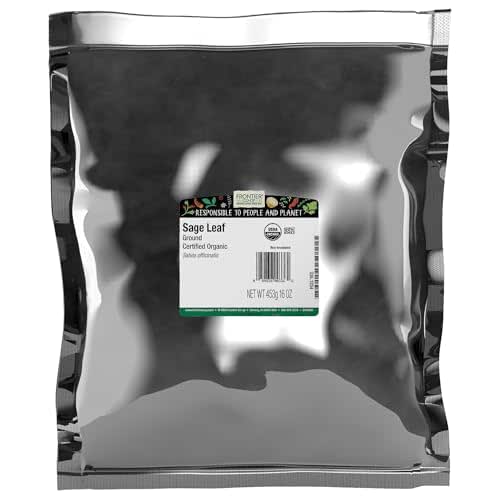
| Best for Cooking Prep | Form: Ground (powder) | Botanical/Ingredient: Sage leaf (Salvia officinalis, ground) | Typical Culinary Use: Stuffing, pork chops, stews, chicken, holiday dishes | VIEW LATEST PRICE | Read Our Analysis |
More Details on Our Top Picks
Watkins Organic Rubbed Sage Spice Jar (0.7 oz)
Should you cook often and want reliably pure, organic sage, Watkins Organic Rubbed Sage (0.7 oz) is a smart pick—it’s USDA organic, Non‑GMO Project Verified, kosher, and gluten‑free, so you can season confidently whether you’re making stuffing, sauces, or simple roasted vegetables. You’ll get a strong aromatic, savory flavor that stands well alone or blends with thyme, rosemary, or oregano. The 0.7 ounce gourmet jar offers superior quality in a custom recyclable bottle, so you’re choosing taste and sustainability. Sourced with Mediterranean‑influenced character, it’s intended strictly for culinary use and performs reliably in everyday cooking.
- Form:Rubbed (lightly crushed flakes)
- Botanical/Ingredient:Sage (Salvia officinalis / rubbed sage)
- Typical Culinary Use:Seasoning for savory dishes, pair with thyme/rosemary/oregano
- Origin / Sourcing Notes:Mediterranean-influenced sourcing (general origin implied)
- Purity / Additives:Single-ingredient (pure rubbed sage)
- Certifications / Claims:USDA Organic, Non-GMO Project Verified, Kosher, Gluten free
- Additional Feature:Custom recyclable bottle
- Additional Feature:Strong aromatic, savory
- Additional Feature:USDA organic & kosher
McCormick Gourmet Organic Rubbed Sage 0.75 Oz
Should you want a reliable, organic rubbed sage that measures easily and blends evenly, McCormick Gourmet Organic Rubbed Sage is a great choice—especially for home cooks who frequently make Thanksgiving stuffing or roast poultry. You get 0.75 oz of lightly milled, sieved sage with a fluffy texture that’s simple to pinch or spoon. Its aromatic, woody-piney flavor brings classic holiday notes to turkey, stuffing, potatoes, pork, or lamb. Sourced from Albania and certified organic and non-GMO, it’s suitable for adding directly during cooking or as a finishing touch whenever you desire even distribution and predictable seasoning.
- Form:Rubbed (fluffy, lightly milled/sieved)
- Botanical/Ingredient:Sage (rubbed sage)
- Typical Culinary Use:For turkey, stuffing, pork, lamb, potatoes
- Origin / Sourcing Notes:Sourced from Albania
- Purity / Additives:Single-ingredient (pure rubbed sage)
- Certifications / Claims:Certified organic, Non-GMO
- Additional Feature:Lightly milled fluffy texture
- Additional Feature:Sourced from Albania
- Additional Feature:Easy even distribution
Frontier Co-op Crushed Sage Leaf (1 lb)
Should you cook frequently for family gatherings or batch-prep savory dishes, Frontier Co-op’s 1 lb crushed sage is a smart, cost-effective pick — its kosher-certified, non‑irradiated leaves deliver consistent, minty-earthy flavor and come in a bulk bag that lets you season large recipes without constant repurchasing. You’ll get dried, crushed Salvia officinalis with fuzzy gray-green leaves, processed at a member-owned cooperative focused on environmental and producer welfare. The sage—grown in regions including Albania, Europe, and North America—is cut and sifted, never treated with ETO. Use it in stuffing, stews, pork, or chicken, paired with rosemary and garlic.
- Form:Crushed leaf
- Botanical/Ingredient:Sage leaf (Salvia officinalis)
- Typical Culinary Use:Stuffing, holiday dishes, stews, poultry, pork
- Origin / Sourcing Notes:Grown/harvested in Albania, Europe, North America (general)
- Purity / Additives:Single-ingredient crushed sage leaves; never irradiated/no ETO
- Certifications / Claims:Kosher certified; never irradiated / no ETO
- Additional Feature:Bulk 1 lb bag
- Additional Feature:Never irradiated
- Additional Feature:Cooperative-owned brand
Spice Islands Rubbed Sage 0.8 Oz
Whenever you cook frequently with poultry, stuffings, or roasted vegetables, you’ll find Spice Islands Rubbed Sage (0.8 oz) a smart choice for 2026 thanks to its warm, spicy, almost balsamic flavor and single-ingredient purity. You’ll appreciate how that concentrated, rubbed form blends quickly into pan sauces and stuffing mixtures, letting its artisan-crafted profile shine without masking other ingredients. There’s no sugar, fillers, or extras—just pure sage designed to preserve intense, authentic flavor. The petite, well-sealed package keeps potency high and fits your spice rack. Choose this provided you want reliable, flavorful sage that performs consistently in everyday dishes.
- Form:Rubbed
- Botanical/Ingredient:Sage (rubbed sage)
- Typical Culinary Use:Meats, stuffings, everyday savory dishes
- Origin / Sourcing Notes:(Not specified) — crafted for authentic flavor (origin not listed)
- Purity / Additives:No added sugar, fillers, or other ingredients
- Certifications / Claims:(No formal certifications listed) Emphasis on purity/artisanship
- Additional Feature:No added ingredients
- Additional Feature:Warm balsamic notes
- Additional Feature:Artisanal flavor focus
Frontier Co-op Organic Ground Sage Leaf 1lb
Assuming you want a reliable, organic ground sage that’s ready for bulk cooking and seasoning, Frontier Co-op’s Organic Ground Sage Leaf 1lb delivers a fresh, minty-earthy flavor profile and kosher certification—perfect for home cooks or small food businesses who value clean sourcing and consistent quality. You’ll get dried, ground Salvia officinalis grown in Albania, with sweet, menthol-like and piney notes that pair brilliantly with rosemary, garlic, pork, chicken, stews, and stuffing. The leaves are dried then powdered without ionizing radiation or ethylene oxide. As a member-owned cooperative since 1976, Frontier underscores organic stewardship; store it cool and dry.
- Form:Ground (powder)
- Botanical/Ingredient:Sage leaf (Salvia officinalis, ground)
- Typical Culinary Use:Stuffing, pork chops, stews, chicken, holiday dishes
- Origin / Sourcing Notes:Grown/harvested in Albania (also cultivated in Europe/North America historically)
- Purity / Additives:Single-ingredient ground sage; no ionizing radiation/no ETO
- Certifications / Claims:Certified organic, Kosher; no ionizing radiation / no ETO
- Additional Feature:Ground powder form
- Additional Feature:Certified organic & kosher
- Additional Feature:Store cool, dry
Factors to Consider When Choosing Sage Leaves
Whenever you pick sage leaves, pay attention to flavor and aroma so the herb complements your dishes. Consider form and texture, whether you need whole, crushed, or ground, and check for organic certification and clear origin or sourcing. Also inspect packaging for airtight seals and recent harvest or best-by dates to guarantee freshness.
Flavor And Aroma
Although sage’s savory character is instantly recognizable, you’ll want to contemplate leaf form, maturity, and handling in order to get the aroma and flavor you’re after: fresh leaves are bright, menthol- and pine‑like; dried leaves concentrate those notes into sweeter, earthier, and more pungent tones; and ground sage releases flavor fast while whole or crushed leaves infuse more slowly. Choose younger leaves whenever you want a milder, greener herbaceousness; select older leaves for stronger, resinous, slightly bitter depth. Make certain proper drying and airtight storage to preserve volatile oils like thujone, camphor, and cineole—loss yields flat, dull sage. Whenever pairing, balance sage’s menthol/earthy profile and moderate bitterness with fatty meats, rich sauces, or starchy sides so it improves without overwhelming. Note make certain.
Form And Texture
Because form determines how sage behaves in a dish, pick the texture that matches your cooking method and timing: whole dried leaves hold shape for infusing or garnish, crushed or flaky leaves give a pleasing mouthfeel and quicker flavor release for roasts or braises, and ground sage disperses instantly in sauces or batters but packs more potency per teaspoon. You’ll tear or rehydrate whole leaves whenever you want visible herb chunks or gentle infusion. Use crushed or flaky sage whenever you want some texture with faster aroma release. Reserve ground sage for smooth sauces, dressings, and baked goods, but bear in mind it loses volatile aromatics sooner—measure slightly less or add later. Always adjust recipes because a teaspoon of ground equals more leaf mass than loose leaves.
Organic And Certifications
Provided you care about how your sage was grown and processed, look for trusted third‑party seals like USDA Organic, Non‑GMO Project, and kosher certification—each verifies different practices (no synthetic pesticides, GMO testing, and dietary-compliant handling, respectively). Whenever you shop, prioritize certified labels that include the certifier name and batch or lot information so you can verify traceability and audit records. Understand that organic certification usually limits irradiation and certain chemical treatments; should those processing details matter, check certifier statements or packaging notes. Non‑GMO Project verification gives extra assurance against genetic modification. Kosher marks add handling and ingredient inspections beyond farming practices. These seals reduce guesswork, let you compare products objectively, and help you choose sage that meets your safety and ethical preferences.
Origin And Sourcing
Along with certifications, where your sage comes from and how it’s handled after harvest will shape its aroma, flavor concentration, and general quality. Check origin: Mediterranean-grown sage often delivers warmer, resinous oils, while temperate-region leaves tend toward milder, greener notes. Look for sourcing transparency—clear country of origin and harvest timing—to judge seasonality and likely freshness. Prefer organic or certified production to minimize synthetic pesticide residues in case that matters to you. Take into account whether suppliers work with cooperatives or small farms; those models can improve traceability and often support sustainable practices and fair labor. Finally, ask about post-harvest handling: drying methods, irradiation or treatments, and storage conditions directly affect essential oil retention and the herb’s final flavor.
Packaging And Freshness
Whenever you’re choosing sage, pay close attention to the packaging: airtight, opaque containers (glass jars or resealable pouches) keep light and oxygen from stripping the herb’s volatile oils and aroma. Pick smaller jars or resealable packs so you don’t expose the whole supply each time; once opened, dried sage tastes best for roughly 6–12 months. Check for clear production, harvest, or best-by dates rather than vague shelf claims. Reject packages with moisture, clumping, or dull gray-green leaves — signs of oxidation or humidity damage. In case you purchase bulk, select high-turnover stores, confirm intact seals, and transfer to a cool, dark pantry in an airtight jar immediately after opening to preserve potency.
Culinary Pairings And Use
Consider how sage will interact with the other elements on the plate: its warm, slightly minty, and piney notes cut through rich proteins like pork, lamb, and roast poultry and brighten starchy sides such as stuffing, potatoes, and squash. Use it with butter or oil at the outset to infuse sauces and pan-roasted vegetables, or crisp whole leaves briefly for a fragrant, crunchy garnish. Combine sage with rosemary, thyme, or oregano to build Mediterranean-style rubs for roasts, stews, and braises. Choose powdered or rubbed sage whenever you need even dispersion in batters, sausages, and stuffings; pick whole or crushed leaves for long simmering and infusions where texture and layered flavor matter. Match form to method for best results.
