

Like finding an old map in a kitchen drawer, choosing the right millet can change how you cook and feel about meals. You’ll want options that balance taste, nutrition, and ease, so this list points to hulled and whole grain choices, organic and gluten free labels, plus bulk and quick cook forms that fit busy routines and special diets. Keep an eye on package size, storage, and simple prep tips as you compare.
| Bob’s Red Mill Millet Hulled 28-Ounce (Pack of 4) |

| Pantry Staple | Form: Hulled whole grain | Gluten Status: Implicitly gluten-free/all natural (millet is naturally gluten-free) | Primary Use: Cooking as cereal/rice substitute; baking add-in | VIEW LATEST PRICE | Read Our Analysis |
| NOW Foods Organic Hulled Millet (16 oz) |

| Organic Pick | Form: Hulled whole grain | Gluten Status: Gluten-free (explicit) | Primary Use: Rice/quinoa substitute; breakfast, soups, baking, popped snack | VIEW LATEST PRICE | Read Our Analysis |
| Big Green Organic Millet (Gluten-Free Vegan) |

| Best For Pasta | Form: Millet-based pasta shells (foxtail millet flour) | Gluten Status: Gluten-free (explicit) | Primary Use: Pasta dishes (sauce holder); pasta substitute | VIEW LATEST PRICE | Read Our Analysis |
| Bob’s Red Mill Whole Grain Millet (28 oz) |
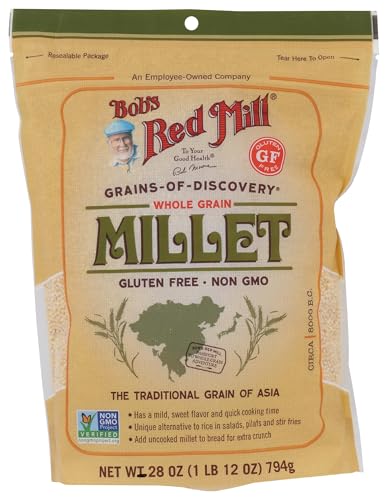
| Quick-Cooking Favorite | Form: Whole grain millet | Gluten Status: Vegan/whole grain (millet is naturally gluten-free) | Primary Use: Rice alternative for salads, pilafs, stir-fries; baking add-in | VIEW LATEST PRICE | Read Our Analysis |
| Bulk Grains 100% Organic Millet Hulled – Single Bulk Item – 25LB |

| Bulk Buy | Form: Hulled millet (bulk kernels) | Gluten Status: Millet (naturally gluten-free) | Primary Use: Side dish/main grain; made creamy or fluffy; couscous/cracked uses | VIEW LATEST PRICE | Read Our Analysis |
More Details on Our Top Picks
Bob’s Red Mill Millet Hulled 28-Ounce (Pack of 4)
Whenever you want a reliable, everyday millet that’s easy to cook and gentle on the stomach, Bob’s Red Mill Hulled Millet, in the 28-ounce pack of four, is a smart pick for your pantry. You’ll find an all natural, kosher certified grain that’s trans fat free and cholesterol free. It’s easily digested and alkaline, so it feels lighter than many other grains. Use it as a warm cereal, steam it like rice, or stir half a cup into yeast bread for a pleasant crunch. Historically called birdseed, millet has fed families across the Far East for generations.
- Form:Hulled whole grain
- Gluten Status:Implicitly gluten-free/all natural (millet is naturally gluten-free)
- Primary Use:Cooking as cereal/rice substitute; baking add-in
- Digestibility / Health Benefit:Easily digested; alkaline
- Origin / Sourcing Note:Not specified (Bob’s Red Mill brand)
- Packaging Size:28 oz units, pack of 4 (112 oz total)
- Additional Feature:Pack of four
- Additional Feature:Kosher certified
- Additional Feature:Steamed-rice substitute
NOW Foods Organic Hulled Millet (16 oz)
Assuming you want a simple, reliable whole grain that’s gentle on your stomach and easy to cook, NOW Foods Organic Hulled Millet is a smart pick because it’s hulled, organic, and grown in the USA via a family company you can trust. You’ll like its mild, slightly nutty taste and flexible texture that becomes soft or crunchy depending on how you cook it. It’s gluten free, alkaline, and offers protein, fiber, B vitamins, and minerals. Use it like rice or quinoa for breakfast bowls, soups, stews, breads, muffins, or pop it for a snack after cooking initially.
- Form:Hulled whole grain
- Gluten Status:Gluten-free (explicit)
- Primary Use:Rice/quinoa substitute; breakfast, soups, baking, popped snack
- Digestibility / Health Benefit:Easily digestible; easy on stomach; alkaline
- Origin / Sourcing Note:USA-grown; packaged in USA
- Packaging Size:16 oz (1 lb) package
- Additional Feature:USA-grown organic
- Additional Feature:Poppable like corn
- Additional Feature:Family-owned brand
Big Green Organic Millet (Gluten-Free Vegan)
Whenever you want a gluten-free, vegan pasta that still feels familiar and satisfying, Big Green Organic Millet is often the best pick for families and home cooks who crave simple, healthy swaps. You’ll find shell-shaped noodles made from 100% organic foxtail millet flour. They’re organic, lectin-free, non-GMO, and a reliable wheat and rice alternative. The shells hold sauce well and cook to al dente quickly whenever you follow the package. Millet brings more essential amino acids, fiber for a happy gut, and good protein. Sourcing avoids synthetic pesticides, and customer support offers satisfaction guarantees should you need help.
- Form:Millet-based pasta shells (foxtail millet flour)
- Gluten Status:Gluten-free (explicit)
- Primary Use:Pasta dishes (sauce holder); pasta substitute
- Digestibility / Health Benefit:High fiber; promotes digestion; “happy gut”
- Origin / Sourcing Note:Made from selected organic foxtail millet (organic sourcing)
- Packaging Size:8.8 oz (single pack)
- Additional Feature:Shell-shaped pasta
- Additional Feature:Made from foxtail millet
- Additional Feature:Lectin-free claim
Bob’s Red Mill Whole Grain Millet (28 oz)
In case you want a simple, reliable millet that cooks quickly and suits a range of diets, Bob’s Red Mill Whole Grain Millet (28 oz) is made for you. You’ll like its mild, sweet flavor and how fast it cooks whenever you need a healthy side. It’s whole grain, vegan, and kosher, so you can trust it for many meals. Use it like rice in salads, pilafs, and stir fries, or mix uncooked millet into bread for extra crunch. Keep in mind its ancient roots as a sacred crop, which makes it feel connected to history while fitting modern kitchens.
- Form:Whole grain millet
- Gluten Status:Vegan/whole grain (millet is naturally gluten-free)
- Primary Use:Rice alternative for salads, pilafs, stir-fries; baking add-in
- Digestibility / Health Benefit:Whole grain nutritious; mild/sweet (easy to eat)
- Origin / Sourcing Note:Not specified (Bob’s Red Mill brand; whole grain)
- Packaging Size:28 oz (single pack)
- Additional Feature:Quick cooking time
- Additional Feature:Whole-grain label
- Additional Feature:Sweet, mild flavor
Bulk Grains 100% Organic Millet Hulled – Single Bulk Item – 25LB
At the time you buy in bulk or cook for a crowd, this 25 pound bag of Bulk Grains 100% Organic Millet Hulled is a smart match for your kitchen. You’ll find tiny round kernels that range from white to gray, yellow, and red. The hulled variety cooks creamy like mashed potatoes or you can make it fluffy like rice. That versatility lets you pair it with soups, stews, salads, or roasted vegetables. Keep in mind some millet types are from different plant groups, so texture can vary. It’s sold year round, often linked to bird seed, yet it’s perfectly safe and nourishing for people too.
- Form:Hulled millet (bulk kernels)
- Gluten Status:Millet (naturally gluten-free)
- Primary Use:Side dish/main grain; made creamy or fluffy; couscous/cracked uses
- Digestibility / Health Benefit:Versatile; nutritious staple (creamy or fluffy when cooked)
- Origin / Sourcing Note:Bulk-sourced (various millet species; common market availability)
- Packaging Size:25 lb bulk bag
- Additional Feature:25 lb bulk bag
- Additional Feature:Multiple kernel colors
- Additional Feature:Cracked millet option
Factors to Consider When Choosing Dried Millets
Whenever you pick dried millets, ponder about what you need from them like nutrition, how gentle they are on your stomach, and whether they’re safe should you avoid gluten or other allergens. Also consider cooking time, texture, and flavor since those affect how you’ll use millets in soups, salads, or baking. These factors connect directly because a millet’s taste and cook time shape its texture and digestibility, which together decide whether it fits your meals and health needs.
Nutritional Profile
Suppose you’re picking dried millets for your pantry, consider the nutrients that will really support your daily meals and energy needs, because these tiny grains pack a lot more than you could expect. You’ll want millets for steady energy since they’re about 60–70% complex carbs. Those carbs fuel you longer than simple sugars, so meals feel satisfying. You’ll also get around 9–12% protein, and that protein brings a better set of essential amino acids than many common cereals. Choose hulled versions whenever possible, because they hold more fiber and micronutrients, with fiber near 8–12% by weight. Millets give B vitamins like niacin, B6, and folate plus minerals such as magnesium, phosphorus, manganese, and iron. Most are gluten free and low in saturated fat, so they fit heart healthy and gluten free plans.
Digestibility And Gut Health
You’ve already looked at the vitamins, minerals, and fiber that make millets a smart pantry choice, and it helps to also consider about how those tiny grains will sit in your stomach and gut. You’ll find hulled millets gentler because the outer hull is removed, cutting rough bits and insoluble fiber that can irritate. Many millets give you resistant starch and soluble fiber, so your good gut bacteria get fed and produce helpful short chain fatty acids that support digestion. Some varieties feel alkaline and mild, so they suit sensitive stomachs or recovery. Since millets hold phytic acid, you should soak, rinse, ferment, or cook them well to ease digestion and enhance nutrient absorption for a kinder gut experience.
Gluten And Allergen Status
Because most millets are naturally gluten-free, you can often choose them as a safe swap for wheat and other gluten grains, but it helps to stay a little cautious in case you have celiac disease or strong sensitivity. Many varieties like pearl, foxtail, proso, and finger millet are safe provided they avoid cross-contact during harvest or processing. Check for certified gluten-free labels should your sensitivity be severe. Also keep in mind that rare millet protein allergies exist, so introduce a new millet slowly and watch for reactions. In the event you have multiple sensitivities, read processing statements and look for third-party testing. These steps protect your health and let you enjoy millet as a nourishing, gluten-free option with confidence.
Cooking Time And Texture
After you’ve checked labels and allergy remarks, it helps to ponder about how cooking time and texture will shape your meals. You’ll notice most pearled or hulled millets simmer in about 15 to 25 minutes, while whole-grain or coarse grinds take longer. Should you want a light, fluffy side, cook with roughly 1 part millet to 2 parts water, then let it steam off the heat. For creamy porridge, stir more and add extra liquid. Cracked or popped millet cooks almost instantly and gives a nutty, crunchy bite. Finer flours and small millet pastas reach al dente in minutes, while whole-seed kernels stay firmer and slightly chewy. Soaking whole hulled millets for 30 to 60 minutes shortens simmering and yields softer, even texture.
Flavor And Culinary Use
Should you want a grain that quietly supports your dish, millets are a gentle, flexible choice and they won’t fight other flavors. You’ll find varieties from mild and slightly sweet to nutty, so you can swap them for rice or quinoa without drama. Consider texture next. Cooked millets can be creamy provided mashed, fluffy provided steamed, or lightly crunchy provided toasted. That matters whenever you plan pilafs, salads, porridge, or bread.
Small whole hulled millets keep their shape for salads and pilafs, while cracked or overcooked millets become ideal for porridge and mash. Some types pop like popcorn for snacks, and others grind into a soft flour for pasta or baking. Because they’re mild and alkaline, you can pair them with spices or honey across breakfasts, soups, and baked goods.
Organic And Non‑GMO Status
Whenever you care about what goes into your food and how it was grown, choosing organic and non-GMO millets can give you real peace of mind. You’ll cut exposure to synthetic pesticides, herbicides, and fertilizers whenever you pick certified organic millets, and that choice tends to support healthier soil and more biodiversity on farms. At the same time, non-GMO verification reassures you the seeds weren’t altered, which matters to many people for ecological or precautionary reasons. Look for third party labels like USDA Organic and Non GMO Project to confirm claims rather than trusting marketing copy. Know that organic doesn’t always mean more nutrients, so check lab data whenever that’s your priority. Also weigh the higher price against reduced chemical exposure and environmental benefit.
Packaging Size Options
Picking the right package size makes a big difference in how fresh your millets stay and how much you enjoy cooking with them. You’ll want small packs, 8 to 16 ounces, provided you cook rarely or live alone. They cut waste and make testing a new millet easy. For small families, choose 24 to 32 ounce bags that balance cost and freshness. In case you eat millets daily or feed a large household, bulk 5 pound bags save money but need airtight jars and cool dry storage to keep pests away. Consider single serving uses like cereal versus regular rice substitutes when matching size to use. Keep in mind larger bags lower cost per ounce but can lead to waste if you can’t store them well.
Sustainability And Sourcing
You’ve already considered about package size and storage, so let’s also look at where your millet comes from and how it was grown. Choose millet grown with organic or regenerative practices because they use fewer synthetic chemicals and help soil store carbon. Also check water needs since some millets are drought tolerant and use far less irrigation than rice or maize, which matters in dry areas. Prefer millets from smallholder farms or agroforestry where intercropping and rotation cut pesticide use and build soil health. Reflect on transport distance and shelf stability because local grain or long‑lasting varieties reduce emissions and spoilage. Finally, seek seed transparency and diverse heirloom varieties to support biodiversity and resilience for future seasons.
