


If you want to try something new and healthy, palmyra fruit offers unique qualities. You find palmyra in many tropical regions, where people enjoy its sweet, jelly-like texture. This fruit stands out for its nutritional value.
Nutritional Quality | Benefit |
|---|---|
Rich in Antioxidants | Fights free radicals |
High in Dietary Fiber | Supports digestion |
Low Glycemic Index | Helps manage blood sugar |
Heart Health Support | Potassium and magnesium for your heart |
Natural Detoxifier | Promotes liver health |
People in different cultures roast or boil palmyra, or use its flour in baking. When you taste palmyra fruit, you discover both flavor and health benefits.
Key Takeaways
Palmyra fruit is rich in antioxidants, which help protect your cells from damage and support long-term health.
High in dietary fiber, palmyra aids digestion and helps you feel full, making it a great choice for weight management.
With a low glycemic index, palmyra fruit can help regulate blood sugar levels, making it beneficial for those managing diabetes.
Packed with vitamins and minerals, palmyra supports bone health, skin health, and overall immune function.
Enjoy palmyra in various ways, such as fresh, in desserts, or added to smoothies for a refreshing and nutritious treat.
What Is Palmyra Fruit?
Origin & Appearance
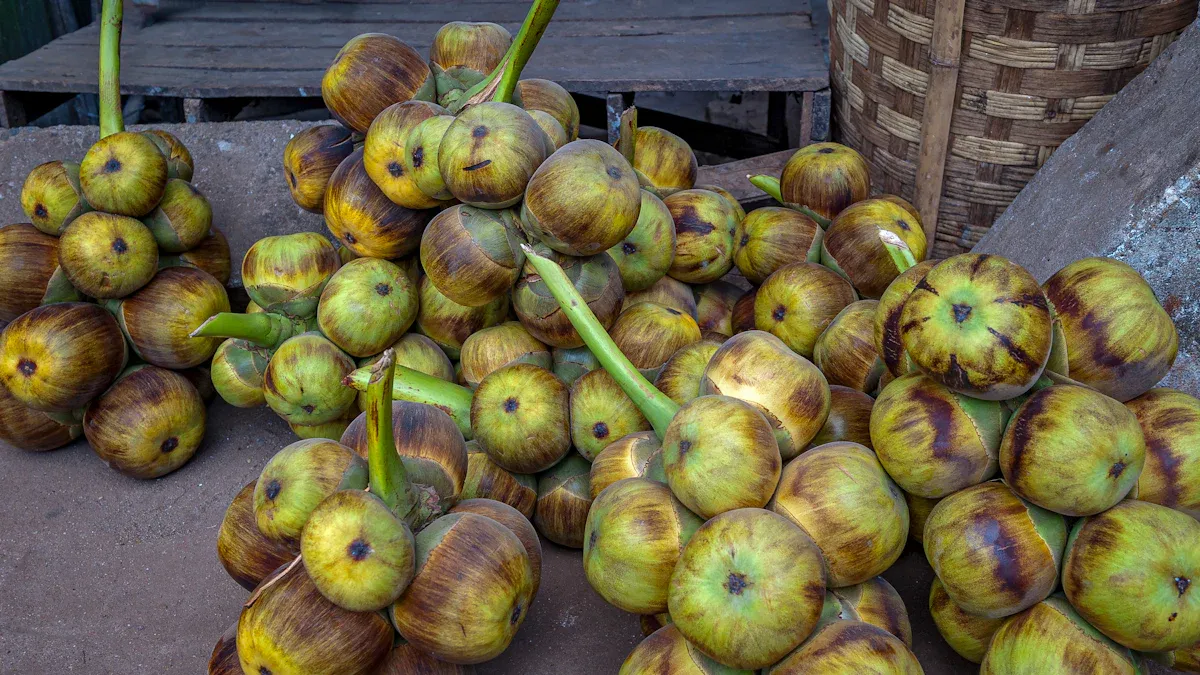
You can find sugar palm fruit growing in tropical regions of Africa and Asia. It thrives in places like the Indian subcontinent, Southeast Asia, and New Guinea. The tree prefers coastal areas, riverbanks, and open plains with sandy or loamy soil. Sugar palm fruit grows best in subtropical and tropical climates with wet and dry seasons.
Here is a quick look at its botanical classification:
Classification Level | Name |
|---|---|
Kingdom | Plantae |
Division | Tracheophyta |
Class | Liliopsida |
Order | Arecales |
Family | Arecaceae |
Genus | Borassus |
Species | Borassus flabellifer L. |
You can spot sugar palm fruit by its black, hard outer skin. When you peel it, you see a yellow to cream-colored layer. Inside, you find white, jelly-like flesh that looks like litchi but without the seed. The flesh feels juicy and soft, making it a refreshing treat.
Common Names
People call sugar palm fruit by many names in different regions and languages. Here are some of the most common:
Hindi: Taltar, Thada, Tala, Tar
English: Palmyra palm, Palm tree, Toddy palm
Arabic: Thara
Bengali: Thala
Gujarati: Thada
Kannada: Kharathala, Talimara, Tale Mara, Tati hannu
Malayalam: Karimpana, Pana
Marathi: Thada
Tamil: Panaimaram, Nonkuppanai
Telugu: Tharichettu, Thalhi
You may also hear people refer to it as palmyra fruit or sugar palm fruit, depending on where you are.
Why Try Palmyra?
You might wonder why you should try sugar palm fruit. This fruit offers many health benefits and culinary uses. Sugar palm fruit is rich in vitamins and minerals that support your overall health. Its high fiber content helps your digestion and keeps you feeling full. The juicy pulp hydrates your body, especially in hot weather. Sugar palm fruit also contains calcium and phosphorus, which help keep your bones strong. Vitamin C in the fruit supports your skin by helping your body make collagen. If you want to manage your weight or blood sugar, sugar palm fruit can help because it has a low glycemic index and lots of fiber.
Health Benefit | Description |
|---|---|
Nutrient-rich | Packed with vitamins and minerals for your health. |
Digestive health | High fiber helps keep your digestion regular. |
Hydration | Juicy pulp keeps you hydrated in hot climates. |
Weight management | Fiber helps you feel full and supports weight goals. |
Bone health | Calcium and phosphorus keep bones and teeth healthy. |
Skin health | Vitamin C helps your skin stay elastic and healthy. |
Blood sugar control | Low glycemic index helps manage blood sugar. |
Antioxidants | Protects your cells from damage and supports long-term health. |
Tip: You can enjoy sugar palm fruit fresh or use it in many recipes. Its sweet, mild flavor makes it a favorite in desserts and drinks.
Palmyra Fruit Nutrition
Key Nutrients
You find palmyra packed with important nutrients that help your body stay healthy. The fruit contains moisture, protein, carbohydrates, vitamins, and minerals. You get a sweet taste and a jelly-like texture when you eat palmyra. The nutritional facts show that palmyra fruit is nutrient-rich and high in fibre, which supports your digestive system.
Here is a table showing the main nutrients per 100 grams of palmyra fruit:
Nutrient | Amount per 100g |
|---|---|
Energy | 29 kcal |
Moisture | 92 g |
Protein | 1 g |
Fat | 0 g |
Carbohydrates | 6 g |
Calcium | 10 mg |
Phosphorus | 20 mg |
Iron | 0 mg |
Thiamine | 0.04 mg |
Riboflavin | 0.02 mg |
Niacin | 0.3 mg |
Vitamin C | 5 mg |
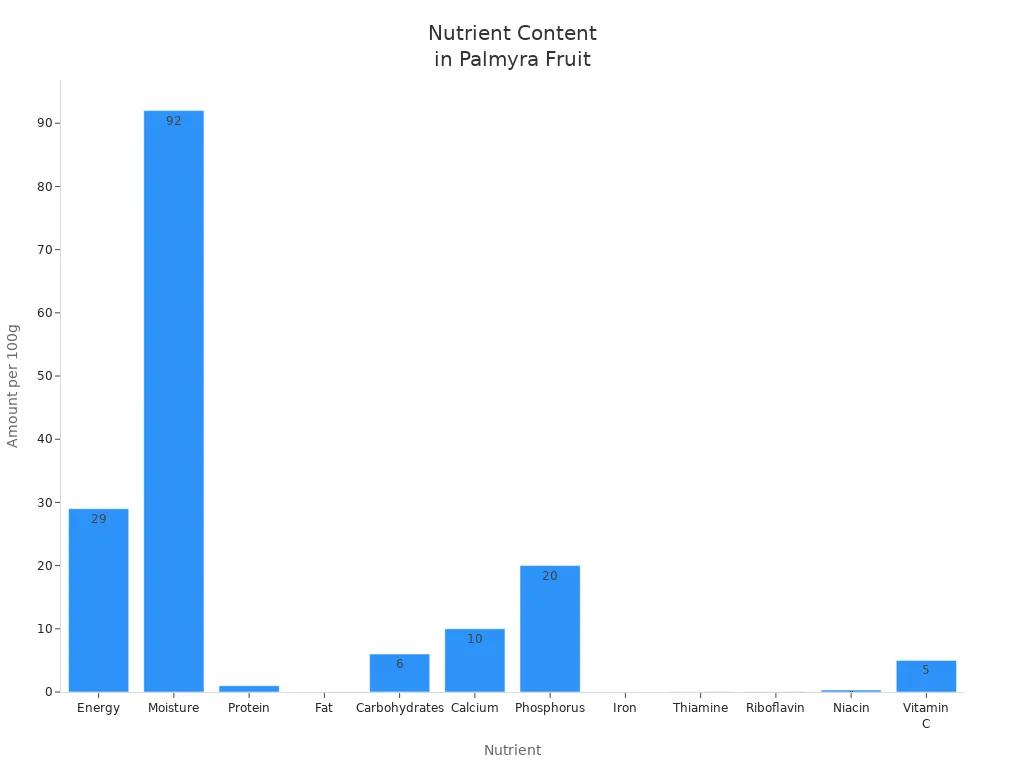
You see that palmyra contains no fat and very little protein, but it gives you carbohydrates for energy. The fruit is high in moisture, which helps keep you hydrated. You also get thiamine, riboflavin, and niacin, which support your metabolism.
Note: Palmyra fruit pulp is high in fibre. This helps your digestive system work well and meets part of your daily fibre needs.
Vitamins & Minerals
Palmyra gives you a variety of vitamins and minerals. You get vitamin C, which boosts your immune system and helps your skin stay healthy. The fruit also contains vitamin A, which supports your vision and skin. You find potassium in palmyra, which helps your muscles and keeps your body fluids balanced. Calcium and phosphorus help your bones stay strong. Iron supports your blood health and energy levels.
Here is a table showing key vitamins and minerals and what they do for your body:
Vitamin/Mineral | Health Implications |
|---|---|
Vitamin C | Boosts immunity and promotes healthy skin |
Vitamin A | Supports vision and skin health |
Potassium | Regulates fluid balance and muscle function |
Calcium | Essential for bone health |
Iron | Important for blood health and energy levels |
You also get antioxidants from palmyra. These protect your cells from damage and help you stay healthy. The fruit has a high total phenolic content and flavonoid content, which are types of antioxidants. You find 104.00±0.02 μg gallic acid equivalents and 98.45±0.03 μg quercetin equivalents per 100 mg in palmyra.
Calorie Content
You get a low-calorie snack when you eat palmyra fruit. One serving gives you about 87 calories. This makes palmyra a good choice if you want a light and refreshing food.
Palmyra fruit contains 29 kcal per 100 grams.
One serving gives you about 87 calories.
You can compare palmyra with other tropical fruits. Palmyra has fewer calories than mangoes or bananas. It also has more moisture and is high in fibre, which helps you feel full. The fruit stands out as a superfood because it is nutrient-rich and contains antioxidants that support your health.
Tip: You can enjoy palmyra as a hydrating snack or add it to fruit salads for extra nutrition.
Nutritional Benefits
Digestive Health
You can support your digestion by adding palmyra to your diet. This fruit is high in fiber, which helps your digestive system work smoothly. When you eat palmyra, you may notice that it boosts digestion and keeps your bowel movements regular. The fiber in palmyra fruit acts like a gentle brush for your intestines. It helps remove waste and keeps your gut healthy. Many people use palmyra as a natural way to ease constipation and improve gut health. You can enjoy this fruit as a snack or add it to smoothies for extra fiber.
Antioxidant Effects
Palmyra is rich in antioxidants, which protect your cells from damage. These antioxidants include polyphenols and flavonoids. They help your body fight oxidative stress and reduce inflammation. You may lower your risk of diseases linked to cell damage when you eat foods high in antioxidants.
Antioxidants in palmyra fruit, including polyphenols and flavonoids, combat oxidative stress.
They help reduce cellular inflammation.
These antioxidants may protect against diseases related to oxidative stress.
You can think of palmyra as a superfood because it helps your body stay strong and healthy. Eating palmyra gives your body the tools it needs to fight off harmful substances and keep your cells working well.
Blood Sugar Support
Palmyra fruit offers important health benefits for people who want to manage their blood sugar. This fruit has a low gi, which means it does not cause a rapid spike in blood sugar. Scientific studies show that palmyra can help regulate blood sugar levels and support pancreatic health.
Component | Effect on Blood Sugar Regulation |
|---|---|
Palmyra Fruit | Significant antidiabetic properties, reduces blood glucose levels, restores pancreatic function |
Researchers have also studied different parts of the fruit. Here is what they found:
Study Component | Findings |
|---|---|
GE (Germinated Endosperm) | Maximum antidiabetic effects, normalized fasting blood glucose levels in diabetic rats |
IE (Immature Endosperm) | Significant reduction in fasting blood glucose levels |
SPFP (Sugar Palm Fruit Pulp) | Reduced fasting blood glucose levels but not as effective as GE and IE |
You can see that palmyra supports blood sugar control and may help people with diabetes. Adding palmyra to your meals can be a smart choice if you want to keep your blood sugar steady.
Other Health Perks
Palmyra fruit gives you many other health benefits. You can enjoy this fruit for its cooling and hydrating effects, especially in hot weather. Palmyra helps maintain gut health and acts as a natural energy source. It supports your immune system and gives your skin a healthy glow. You may also find that palmyra aids in weight control and promotes heart health.
Naturally hydrating and cooling
Maintains gut health
Natural energy source
Sustains healthy immune function
Skin benefits you can feel
Aids in blood sugar control
Supports heart health
Aids weight control
Increases mental calmness
Naturally detoxifying
You can use palmyra as a natural detoxifier. It helps your body remove toxins and keeps you feeling refreshed. Many people enjoy palmyra for its palm fruit health benefits, such as supporting heart health and helping with weight management. You can add palmyra to your daily routine to experience these nutritional benefits.
Tip: Try palmyra in fruit salads or chilled drinks for a refreshing treat that supports your health.
Palmyra Culinary Uses

How to Prepare
You can enjoy palmyra fruit in many ways, but knowing how to prepare it makes a big difference. When you select palmyra, look for fruit with a firm, unbroken shell and a fresh aroma. The flesh inside should feel soft and jelly-like. Here is what you can do to get the pulp ready for culinary uses:
Grate the pulp and strain it with water. This method mixes in some fiber.
Squeeze each seed by hand with water. This can be tough on your hands.
Cut away the fiber using scissors, then whisk the pulp in a mixer with water. This makes extraction easier.
You can freeze the extracted pulp for several months, even up to a year. Divide it into small portions before freezing. This helps you use only what you need and keeps the rest fresh.
Popular Recipes
Palmyra fruit works well in both sweet and savory dishes. You can try these popular recipes at home:
Taaler Bora: Sweet fritters made with palmyra pulp.
Payasam: A creamy, milk-based dessert.
Paddus: Small, round sweets with a soft texture.
Palmyra pulp jelly: A cool treat for hot days.
Palmyra pulp sourdough bread: Adds a unique flavor to your bread.
You can also add palmyra to curries for a mild, sweet taste. Many people enjoy it fresh or mix it into fruit salads. If you wonder how to eat palmyra fruit, try it raw, in desserts, or even in curries for a twist.
Tip: Try adding palmyra pulp to smoothies or yogurt for a refreshing snack.
Storage Tips
Proper storage keeps palmyra fruit safe and tasty. You can store palm spread at room temperature for up to 9 months or in the fridge for up to 12 months. Palm toffee stays fresh for 9 months at room temperature.
Product | Storage Duration | Storage Condition |
|---|---|---|
Palm Spread | Up to 9 months | Ambient temperature |
Palm Spread | Up to 12 months | Refrigerated |
Palm Toffee | Up to 9 months | Room temperature |
Fresh palmyra fruit lasts about 2 days at room temperature in a thick plastic bag. In the fridge, it stays good for up to 8 days. Always freeze the pulp quickly to prevent spoilage and keep its nutritional value.
Storage Condition | Packaging Type | Shelf Life (Days) |
|---|---|---|
Ambient (32±2°C) | Low Density Polyethylene (450 micron) | 2 |
Refrigerated (5 ±1°C) | High Molecular Density Polyethylene (40 micron) | 8 |
You discover many reasons to add palmyra fruit to your meals. This fruit gives you water, protein, and important minerals. It supports your health with fiber, antioxidants, and vitamins. You find it especially helpful for digestion, skin, and blood sugar balance.
Nutrient | Amount per 100g |
|---|---|
Water | 77 g |
Protein | 1 g |
Carbohydrates | 21 g |
Calcium | 9 mg |
Phosphorus | 33 mg |
Vitamin C | 5 mg |
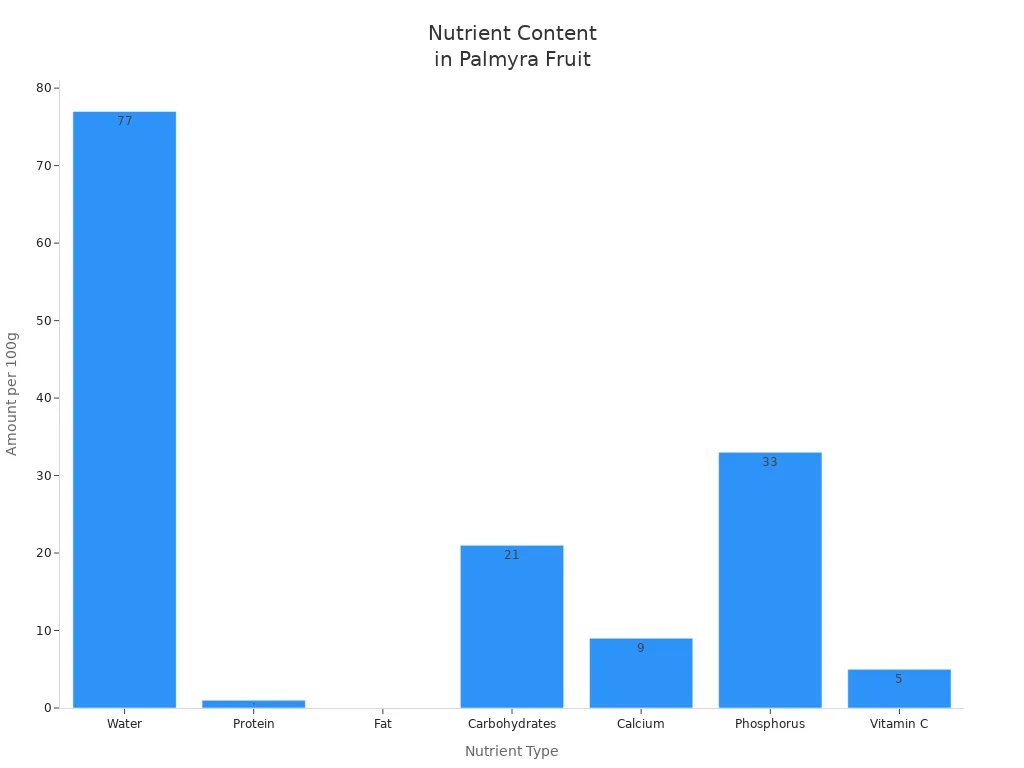
You can enjoy palmyra in many recipes. Its nutrients help you stay healthy and energized every day.
FAQ
What does palmyra fruit taste like?
You taste a mild sweetness with a hint of coconut. The jelly-like flesh feels cool and refreshing. Many people say it tastes best when chilled.
What nutrients do you get from palmyra fruit?
You get vitamin C, vitamin A, potassium, calcium, and fiber. These nutrients help your body stay healthy. Palmyra fruit also gives you antioxidants that protect your cells.
What are common ways to eat palmyra fruit?
You can eat palmyra fruit fresh, add it to desserts, or blend it into drinks. Many people use it in puddings, fritters, and fruit salads.
What makes palmyra fruit good for hot weather?
Palmyra fruit contains a lot of water. You stay hydrated when you eat it. The cool, jelly-like texture helps you feel refreshed on hot days.
What should you look for when buying palmyra fruit?
You should choose fruit with a firm shell and a fresh smell. The flesh inside should look white and feel soft. Avoid fruit with cracks or a sour odor.