

At roughly 160 calories per ounce, these two tree nuts differ in fiber, minerals, texture, and cooking roles. Almonds provide more dietary fiber and vitamin E, while cashews provide more copper, iron, and carbohydrates. Your best choice depends on your portion and purpose.
For snacks, meals, and pantry planning, this comparison covers macronutrients, heart health, fullness, preparation, and practical serving sizes for your routine.
Both Nuts Offer Nutrient Density With Different Strengths
With those goals in view, both options deliver unsaturated fat, plant protein, minerals, and enough calories to matter. A 1-ounce serving fits in a small handful, yet it supplies roughly 157 to 164 calories. Your priority may be more fiber, a creamier sauce, a lower-cost pantry staple, or a snack that lasts until dinner.
Seeds and Their Origins
Almonds are seeds from a drupe fruit related to peaches and cherries. The edible almond sits inside a hard pit, much like the kernel inside an apricot stone. Cashews are seeds attached to cashew apples, fleshy fruits grown in Brazil, India, Vietnam, and parts of Africa.
That botanical difference helps explain their handling and price. Cashew harvesting requires separation of the seed from its shell and fruit, while almond orchards produce fruit with a hull, shell, and edible kernel. Your grocery aisle shows the finished product, not the distinct processing behind it.
Monounsaturated Fats Support Flexible Meal Planning
Both nuts contain substantial unsaturated fat, including monounsaturated fats. Replacing foods high in saturated fat or refined carbohydrates with plain nuts can improve the overall quality of your plate. That pattern aligns with heart-conscious eating guidance from the American Heart Association.
No single nut wins every meal. Walnuts provide plant omega-3 fat, peanuts offer a protein-forward option at a modest cost, and almonds and cashews solve different cooking and snack needs. Keeping two or three plain varieties on hand gives your meals more range than treating one nut as mandatory.
Those shared strengths make portion-level differences more useful than a broad healthy label. The next comparison shows what reaches your bowl in a standard serving.
A standard ounce reveals how closely these options align on calories despite their distinct nutrient profiles.
The One-Ounce Comparison Shows Small Calorie Differences
Because both nuts are energy-dense, a measured ounce gives the clearest comparison. Almonds contain about 164 calories per ounce, while cashews contain about 157 calories. That 7-calorie difference means almonds vs cashews calories rarely settle your choice by themselves.
| Nutrient per one-ounce serving | Almonds | Cashews |
|---|---|---|
| Calories | About 164 | About 157 |
| Total fat | About 14 g | About 12 g |
| Protein | About 6 g | About 5 g |
| Carbohydrates | About 6 g | About 9 g |
| Dietary fiber | About 3.5 g | About 1 g |
| Serving visual | About 23 whole almonds | About 18 whole cashews |
Dietary fiber creates the clearest macronutrient split. Almonds provide more than three times the fiber in the same 1-ounce serving, which can make your snack feel more substantial. Their firm crunch may also slow your eating pace compared with the softer, buttery texture of cashews.
Protein differs by only about 1 gram per ounce. Almonds vs cashews protein matters less than the rest of your meal, since Greek yogurt with sliced almonds has a very different total than cashews stirred into rice and vegetables. The full bowl determines whether a snack becomes protein-forward.
Piece count can vary with nut size, roasting, and breakage. A kitchen scale, 1/4-cup measure, or familiar small bowl helps you keep portions consistent until you recognize your usual serving. Micronutrients create a more meaningful separation than calories alone.
Beyond calorie counts, vitamins and minerals reveal where each choice offers its clearest advantage.
Micronutrients Create the Strongest Nutritional Difference
Beyond the small calorie gap, almonds stand out most for vitamin E. A 1-ounce serving also provides more calcium and magnesium than cashews. Vitamin E acts as an antioxidant and helps protect cell membranes during normal metabolism.
Almonds Provide Vitamin E and Magnesium
Magnesium supports hundreds of enzyme reactions involved in energy metabolism, muscle contraction, and nerve signaling. Almonds contain a meaningful amount per ounce, though your total intake also comes from beans, whole grains, leafy vegetables, dairy foods, and other nuts. A varied eating pattern matters more than relying on one snack.
Calcium gives almonds another advantage in a breakfast bowl or trail mix. They do not replace calcium-rich meals, but they can add useful variety where dairy foods or fortified alternatives are limited. Your choice becomes especially practical when crunch and vitamin E matter as much as flavor.
Cashews Provide More Copper and Iron
Per ounce, cashews deliver more copper, iron, zinc, vitamin K, and carbohydrates. Copper supports enzymes involved in iron transport and connective-tissue formation. Iron forms part of hemoglobin, the protein in red blood cells that carries oxygen through your body.
| Nutrient emphasis | Nut with the stronger one-ounce amount |
|---|---|
| Vitamin E | Almonds |
| Calcium | Almonds |
| Magnesium | Almonds |
| Copper | Cashews |
| Iron and zinc | Cashews |
| Vitamin K | Cashews |
Variety, roasting, added oil, and salt can shift the numbers on a package label. The label on the product in your cupboard gives the closest comparison for what you actually eat. Those details are reflected in USDA FoodData Central entries and manufacturer Nutrition Facts panels.
Mineral differences help narrow your choice, but fullness determines whether that serving works in daily life. Texture and fiber become especially relevant at snack time.
Those nutrient advantages matter differently when appetite, activity level, and meal timing enter the decision.
Almonds Tend to Support Fullness While Cashews Fit Higher-Energy Meals
With micronutrients settled, the practical difference is how each nut feels during and after eating. Almonds contain more fiber, slightly more protein, and a firmer crunch. Those traits may help you feel more satisfied when almonds replace cookies, chips, or a sugary granola bar.
Almonds Fit Fullness-Focused Snacks
Eating pace changes the experience of a snack. Chewing breaks food into smaller pieces and mixes it with saliva before digestion begins, and harder foods generally require more chewing. That extra time may give fullness signals a chance to register before your hand reaches for another handful.
- Pair with fruit Add almonds to an apple or pear for crunch, dietary fiber, and natural sweetness in one snack.
- Use a measured bowl Place about 23 almonds in a dish instead of eating directly from a large bag.
- Choose plain varieties Select plain or dry-roasted almonds without added sugar to keep the ingredient list simple.
- Add to breakfast Scatter chopped almonds over oats rather than expecting nuts alone to serve as a full meal.
Almonds vs cashews for weight loss does not have a universal winner. Either nut can fit a calorie-aware pattern, but almonds may better suit your routine when fiber and crunch make a smaller portion feel satisfying. Weight change still depends on total food intake, activity, and your long-term habits.
Cashews Work Well in Higher-Energy Meals
Cashews can disappear quickly because their mild flavor and soft bite make them easy to eat. They suit a long workday, a hiking lunch, or a meal plan built around a calorie surplus. Their texture also blends smoothly into sauces and dairy-free cream bases.
For almonds or cashews for weight gain, either choice adds useful calories. Almonds work well in oatmeal, yogurt, and grain bowls, while cashews soften into curries, sauces, and rice dishes. Your meal gains more energy from fruit, yogurt, oats, beans, or a full entree alongside either nut.
Portion control matters more than the 7-calorie gap. A few extra handfuls can add several hundred calories before your meal begins.
Fullness and energy needs also affect blood sugar and heart-conscious meals. The broader plate matters more than either nut in isolation.
Yet a satisfying snack is only one part of how these foods influence metabolic and cardiovascular health.
Heart Health and Blood Sugar Depend on the Full Plate
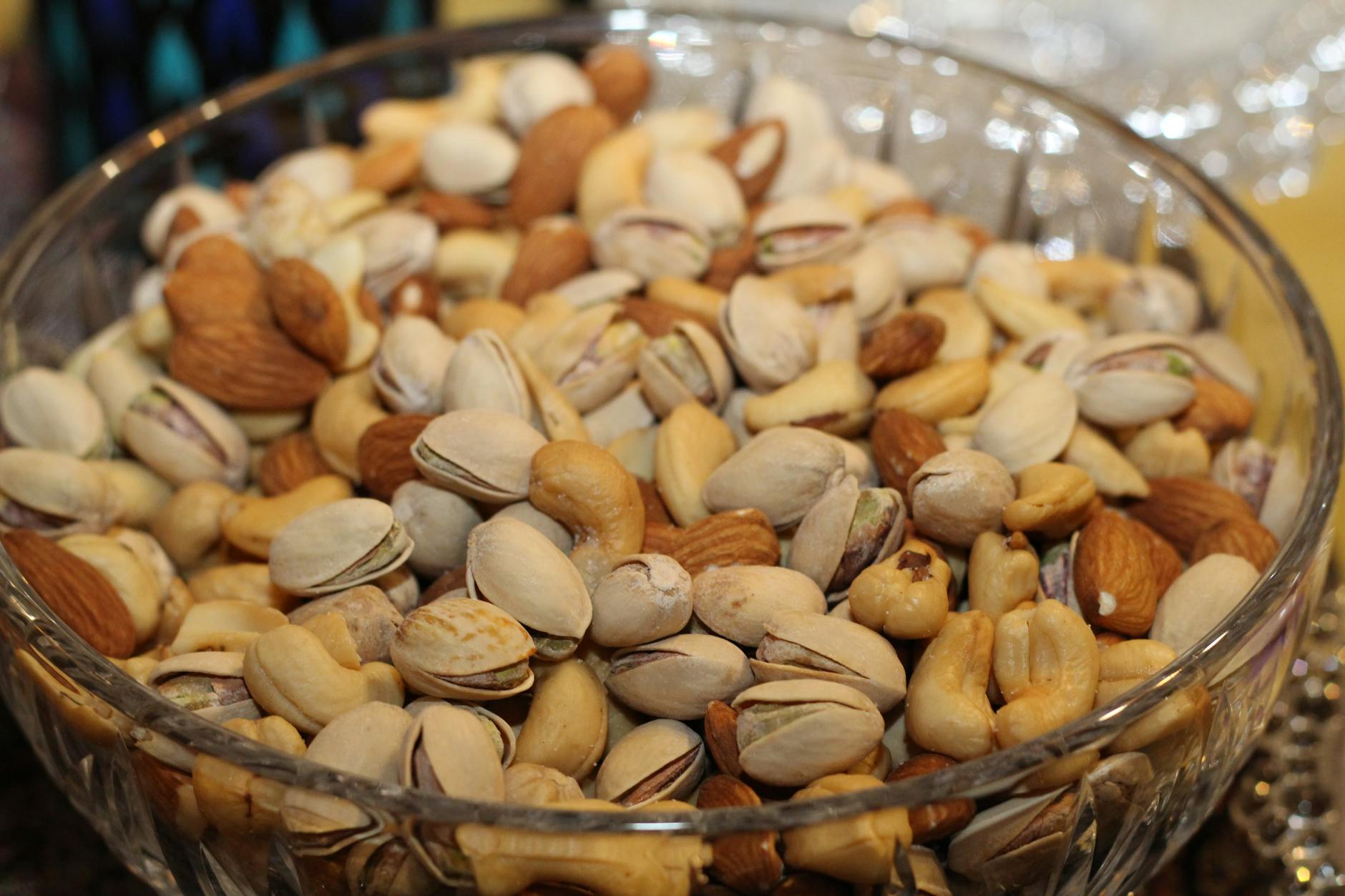
After portion and satiety, the next issue is what the nuts replace. Swapping a sugary snack or buttery pastry for plain almonds or cashews changes fat quality, fiber, protein, and mineral intake at the same time. Both can fit meals built around vegetables, beans, fruit, whole grains, and minimally processed foods.
Almonds Offer More Fiber With Fewer Carbohydrates
Almonds contain about 6 grams of carbohydrates and 3.5 grams of fiber per ounce. Fiber is not fully digested in the small intestine, and some reaches the colon, where gut microbes ferment certain fibers into short-chain fatty acids. That mechanism helps explain why a fiber-rich snack may feel steadier than a refined-carbohydrate snack.
Food responses still vary with the entire meal, activity, medications, sleep, and health conditions. Anyone managing diabetes or following a medically prescribed eating plan should discuss individual carbohydrate and calorie targets with a qualified healthcare professional. Your personal target can differ sharply from a generic serving suggestion.
Practical Choices Depend on Your Goal
| Your priority | Useful choice | Why it fits |
|---|---|---|
| Fiber, vitamin E, calcium, fullness | Almonds | More fiber plus a firm crunch |
| Copper, iron, zinc, creamy cooking | Cashews | More of those minerals and a soft texture |
| Plant omega-3 fats | Walnuts | They contain alpha-linolenic acid |
| Protein-forward value | Peanuts | They provide solid plant protein at a modest cost |
Heart health depends on the repeated pattern of foods across your day. A salted cashew snack beside soda differs from cashews folded into a vegetable curry with brown rice. Nuts are included among nutrient-dense food choices in the Dietary Guidelines for Americans, but preparation still changes the result.
That preparation detail is easy to miss at the store. Salt, sugar, and added oil can outweigh the small nutritional differences between the nuts.
Store-bought versions can shift that balance quickly, making ingredients and serving habits central to the choice.
Daily Portions and Preparation Determine the Real-World Choice
Once the full plate is considered, a 1-ounce serving of plain, unsalted nuts can fit many balanced eating patterns. Your daily amount may be smaller or larger based on hunger, activity, medical guidance, and the rest of your meals. A measured serving is a useful starting point, not a rigid rule.
Flavor Coatings Change the Nutrition Label
Honey-roasted, candy-coated, salted, and oil-roasted nuts can add sugar, sodium, and extra fat. A plain nut has one ingredient, while a flavored version may include sugar, corn syrup, vegetable oil, salt, starches, or seasonings. Those additions can matter more than the basic almonds vs cashews nutrition comparison.
- Check serving size Start with the grams listed on the Nutrition Facts panel before trusting the package image.
- Scan sodium Salted nuts can add substantial sodium across several handfuls in one day.
- Spot added sugars Read the ingredient list instead of relying on a front-label flavor name.
- Watch added oils Oil-roasting can raise calories beyond the plain version of the same nut.
- Portion before eating Pour your serving into a bowl and store the bag away before you start snacking.
Cashew Processing and Personal Limits Matter
Cashew shells contain irritating compounds related to urushiol, the substance associated with poison ivy reactions. Retail cashews undergo processing to remove shell materials before sale. Packages labeled raw usually mean the cashews were not roasted like snack nuts, not that they are unprocessed shell-on seeds.
Tree nut allergies can cause serious reactions, and cashews do not suit anyone with a cashew or tree-nut allergy. Kidney-stone concerns, kidney disease, sodium restrictions, diabetes management, pregnancy, nursing, medication use, and medically prescribed diets can alter what works for you. A qualified healthcare professional can tailor advice to your medical history.
Choose plain or dry-roasted nuts for the clearest label comparison. Salt, sugar, coatings, and oil can matter more than which nut you pick.
These everyday choices bring the comparison back to your own plate. Neither nut suits every situation, but both can work in a measured serving.
With portions and preparation in view, the better option depends largely on your needs and preferences.
Bottom Line
For a final choice, select almonds where fiber, vitamin E, magnesium, calcium, and a more filling snack matter most. Choose cashews where your meals benefit from copper, iron, zinc, a softer texture, or a creamy cooking ingredient. Portion size and preparation carry more weight than the small calorie gap.
Plain nuts in a measured serving offer the cleanest starting point. Your preferences, allergies, energy needs, and the rest of your meal determine which option makes more sense on a given day.
FAQ
Are almonds healthier than cashews?
Almonds are healthier for your goal when you want more dietary fiber, vitamin E, calcium, magnesium, and a firmer snack texture. Cashews are stronger for copper, iron, zinc, vitamin K, and creamy cooking. Neither nut is universally healthier because your portion size, preparation, allergies, and overall eating pattern matter more.
Which has more protein, almonds or cashews?
A 1-ounce serving of almonds supplies about 6 grams of protein, versus about 5 grams for cashews. That 1-gram gap is small, so your full meal matters more than the nut choice. Yogurt, beans, eggs, tofu, or fish can change your protein total far more.
Which nut is better for weight loss or appetite control?
Almonds may fit appetite control better because they provide more fiber, slightly more protein, and a firmer texture that can slow eating. Neither nut causes weight loss, and both are calorie-dense. Your serving size, snack pattern, and total food intake shape results more than a 7-calorie difference per ounce.
Do almonds or cashews have more healthy fat?
Almonds contain about 14 grams of total fat per ounce, compared with about 12 grams in cashews. Both provide mostly unsaturated fats, including monounsaturated fats, so either can support your heart-conscious eating pattern. Replacing saturated-fat-rich snacks with plain nuts matters more than the 2-gram difference.
Which is better for heart health and cholesterol?
Both almonds and cashews can fit a heart-conscious pattern because they contain unsaturated fats, plant protein, and minerals. Almonds provide more fiber, while cashews provide more copper and iron. Your overall plate has the larger effect, especially whether nuts replace refined snacks or accompany vegetables, beans, fruit, and whole grains.
Is it good to eat almonds and cashews every day?
A 1-ounce serving of plain, unsalted almonds, cashews, or a mix can fit many daily eating patterns when you account for its calories. Your needs can differ with activity level, allergies, kidney concerns, sodium limits, diabetes management, or a medically prescribed diet. Individualized guidance may be useful for your situation.
