

A noodle block made with wheat flour, water, salt, oil, and kansui may be vegan, but its seasoning can contain egg, dairy, chicken fat, pork extract, fish powder, or other animal-derived broth ingredients.
Your answer depends on the noodle block, instant ramen seasoning packets, and toppings. This breakdown helps you compare labels, brands, restaurant bowls, and practical plant-based ramen options.
Ramen Packages Contain Separate Vegan Checks
The noodle brick is only one part of the decision. A standard instant package can include a dry noodle block, powdered soup base, liquid oil sachet, and garnish pouch, and each component can carry different ingredients.
Plain Noodle Blocks May Be Vegan
Dry ramen noodles can suit a vegan diet when the dough contains flour, water, salt, oil, and kansui. Kansui is an alkaline blend that commonly includes sodium carbonate and potassium carbonate, which raise dough pH and give ramen its springy texture.
Your ingredient labels should still settle the question. Egg noodles contain egg yolk, egg white, albumen, or egg powder, while some noodles also contain milk solids, butter, whey, or animal-derived fat.
Fresh restaurant noodles deserve extra scrutiny because egg is common in fresh noodle dough. A shelf-stable noodle brick may use only wheat-based ingredients, while freshly made yellow noodles can rely on egg for richness and color.
Seasoning Packets Change the Full Answer
A plant-based noodle block does not make the prepared bowl vegan. Animal-derived broth can appear in a powder packet as chicken fat, pork extract, beef flavoring, bonito, shrimp, fish sauce, or dairy ingredients.
A package can contain vegan-friendly noodles while its included seasoning contains pork extract, chicken fat, fish powder, or milk. Discarding the packet can change your meal, but it does not make the original seasoning vegan.
That separation explains why package fronts can be misleading. The next useful step is checking every sachet rather than judging the noodles by appearance.
Those separate sachets matter most because concentrated seasonings often hide the animal-derived ingredients noodles lack.
Broth and Flavor Packets Carry the Highest Risk
Because the noodle block may be plain, the soup base usually deserves your closest label review. Meat fats and extracts dissolve into broth quickly, creating the savory aroma that makes instant ramen smell fuller after hot water is added.
Each Package Component Needs Inspection
| Package part | What it may contain | What to inspect |
|---|---|---|
| Noodle block | Flour, oil, salt, kansui, and sometimes egg. | Check for egg, milk solids, butter, and animal fat. |
| Powdered soup base | Salt, spices, extracts, flavor enhancers, and broth powders. | Check for chicken fat, pork extract, beef flavoring, and bonito. |
| Liquid sachet | Oil, tare, soy sauce, chili paste, or seasoning concentrate. | Check for fish sauce, oyster extract, lard, dairy, and shrimp. |
| Garnish pouch | Vegetables, sesame, dried protein pieces, or egg flakes. | Check for meat bits, shrimp, egg, and dairy-based toppings. |
A powdered broth packet can contain more animal ingredients than its pale color suggests. Chicken fat carries aroma compounds that water cannot hold as effectively, while pork extract and beef flavoring add meat-like depth after the powder dissolves.
Cup noodles need extra attention because some manufacturers blend oils, toppings, and seasoning into the cup. You cannot always remove a separate packet, so the full ingredient panel matters more than package format.
Restaurant Bowls Add More Hidden Sources
A restaurant bowl can include animal ingredients in the broth, tare, chili oil, garlic oil, toppings, and finishing sauce. Tare is the concentrated seasoning added before broth, and it may contain fish, meat stock, fermented seafood, or animal fat.
Vegetable, miso, and spicy menu descriptions identify a flavor style, not a guaranteed ingredient standard. Your server may need to ask the kitchen whether the broth base, seasoning concentrate, and noodle dough contain animal products.
Once you separate each component, label terms become easier to judge. That label work starts with the direct ingredients that make ramen non-vegan.
Recognizing the risky components is only half the task, since animal ingredients can appear under less obvious names.
Animal Ingredients Appear Under Several Label Names
Chicken fat, egg, milk, and fish sauce make the decision clear. Extracts, powders, flavor blends, and stock concentrates require a slower scan because they may hide the animal source behind a broader name.
Direct Animal Ingredients Belong on a Stop List
- Egg ingredients: Skip whole egg, egg yolk, egg white, albumen, and egg powder in noodle dough or garnish flakes.
- Dairy ingredients: Avoid milk, whey, lactose, butter, cream powder, casein, and cheese flavor in vegan ramen.
- Meat fats: Set aside packets containing chicken fat, lard, tallow, pork fat, bacon flavor, or rendered animal fat.
- Meat extracts: Watch for chicken extract, pork extract, beef extract, meat stock, and bone broth powder.
- Fish ingredients: Fish sauce, anchovy, shrimp, bonito, sardine, and oyster extract all come from animals.
- Gelatin ingredients: Gelatin can appear in specialty toppings and concentrated flavor products, even though it is less common in plain noodles.
Start below the nutrition panel rather than with the bowl photo. A package shown with corn and scallions can still use chicken stock, while chili-heavy seasoning may rely on bonito powder for savory depth.
Flavor Terms Need Context
Terms such as natural flavors, artificial meat flavor, umami seasoning, yeast extract, and flavor enhancers require review of the surrounding ingredients. MSG is not itself an animal ingredient because manufacturers produce it through fermentation, but an MSG blend can also contain pork powder, dairy, or fish extract.
Miso, soy sauce, mushroom, and vegetable flavors are not automatic vegan ramen ingredients. Miso is fermented soybean paste, and soy sauce starts with soybeans and wheat, but either can be combined with chicken stock or fish seasoning.
“Dairy-free” excludes milk-derived ingredients, not every animal ingredient. A dairy-free ramen package can still contain egg, chicken fat, pork extract, beef flavoring, or bonito.
Vegetarian ramen needs the same close reading. A vegetarian soup can omit meat and fish while still using egg noodles or milk powder, which leads directly to the brand-specific details in your cart.
Even familiar terms vary by recipe, so each flavor deserves scrutiny before a brand earns your trust.
Major Ramen Brands Need Flavor-Specific Review
Brand names are not reliable shortcuts because flavor, country of sale, and package format can change the ingredient panel. Your exact package matters more than an old online list or a familiar logo.
Maruchan, Top Ramen, Nissin, and Other Lines Vary
| Brand or line | What the name tells you | Package-level action |
|---|---|---|
| Maruchan | The noodle block may lack obvious animal ingredients, while seasoning packets vary by flavor. | Read the exact flavor for meat fats, extracts, dairy, egg, and fish. |
| Top Ramen | US Soy Sauce, Chili, and specialty products can have different ingredient panels. | Confirm the SKU in hand, including soup-base ingredients. |
| Nissin Cup Noodles | Cup formats may blend seasonings, oils, and toppings directly into the product. | Inspect the full panel instead of assuming you can separate the noodles. |
| Nongshim | Korean-market and US-market versions can differ by flavor and distribution. | Look for beef, seafood, anchovy, pork, egg, and dairy on that package. |
| Buldak | Spicy sauces and cheese varieties vary sharply by flavor and market. | Do not treat “spicy” or “vegetarian” as proof of vegan status. |
The brand name alone cannot answer that because a plain-looking noodle brick and its flavor packet may have different ingredient lists. You should inspect the exact Maruchan variety, including any soup base and garnish packet.
Some noodle blocks may appear free of direct animal ingredients, but Top Ramen and Nissin products differ by flavor, format, and formula, so your package label remains the deciding document.
Certified Vegan Options Reduce Guesswork
Products with a clear vegan statement or a Vegan Action mark reduce the chance that a flavor packet contains an overlooked animal ingredient. Vegan Action administers the Vegan program, though you should still compare the visible claim with the current ingredient label.
Lotus Foods sells rice-based noodle products that can suit plant-based cooking, while Ocean’s Halo offers plant-based instant noodle options with seaweed-forward flavors. Dr. McDougall’s and Trader Joe’s have also carried miso-style noodle products, but suppliers and formulas can change.
Nongshim and Buldak show why imported products need a package-level review. A version made for South Korea, the United States, or another export market can use different suppliers and different ingredients, making a homemade bowl a dependable alternative.
Recipe differences across markets make simple noodles especially useful when you want complete control over the bowl.
Plain Noodles Can Become a Full Vegan Ramen Bowl
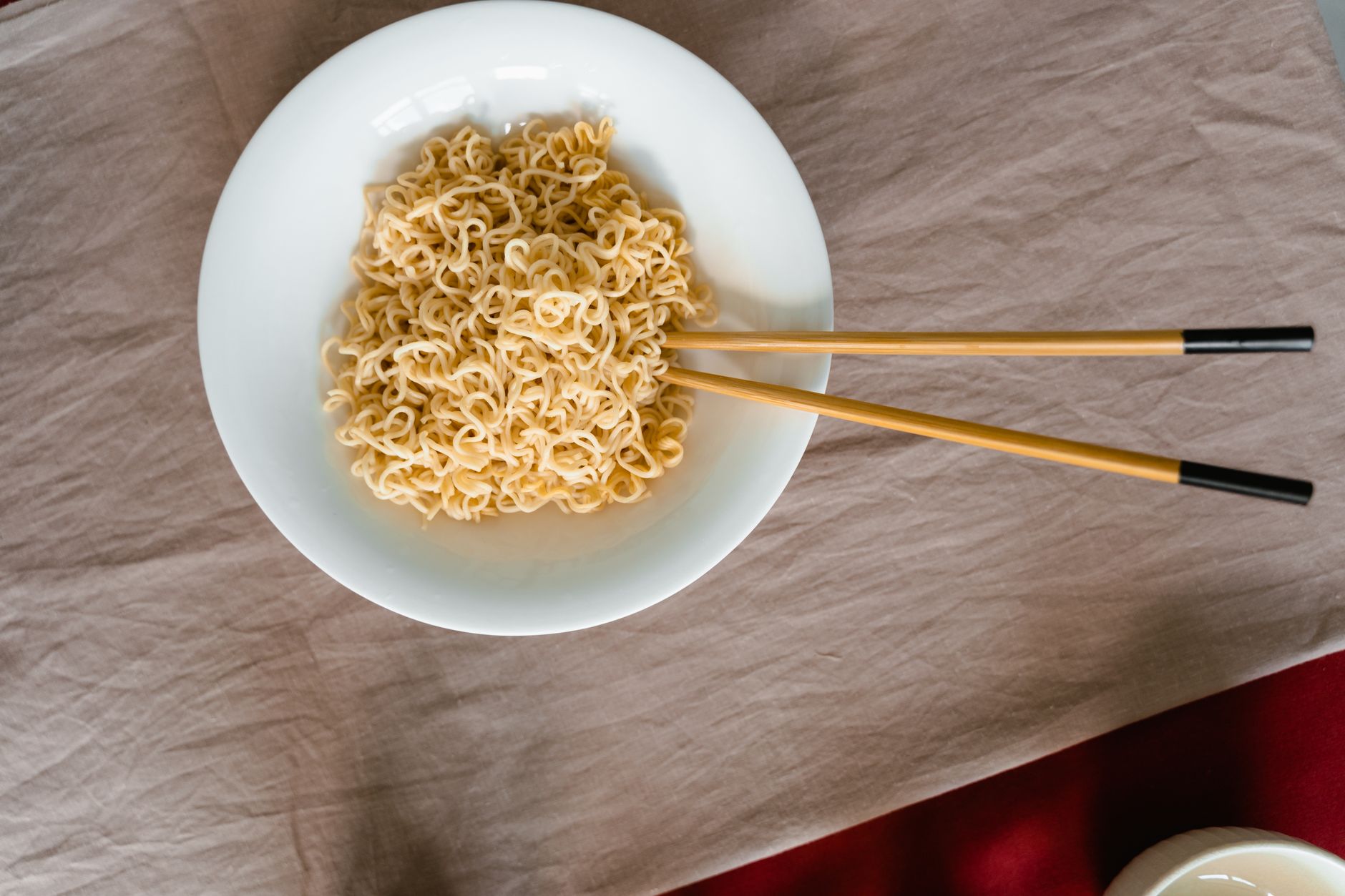
After you set aside a non-vegan sachet, you can still build a flavorful bowl in the same pot. Salt, fermented soy, mushrooms, chili, and aromatic oil create the savory layers that a standard packet usually supplies.
A Four-Part Broth Formula Builds Depth
- Salty base: Use soy sauce or tamari for the salty backbone that a seasoning packet would normally provide.
- Savory layer: Stir miso or mushroom powder into warm liquid after the heat drops to preserve more aroma.
- Spicy element: Add chili crisp, chili oil, or crushed red pepper for heat and toasted flavor.
- Aromatic finish: Garlic, ginger, scallions, and sesame oil give your broth a fresher scent than dried powder.
- Broth volume: Use 2 cups of vegetable broth or water, then taste before adding more salty ingredients.
A practical bowl can start with 2 cups of vegetable broth, 1 spoonful of miso, a splash of soy sauce, and a small amount of sesame oil. Miso contains fermented soybean proteins and flavor compounds formed during fermentation, so a modest amount can make broth taste fuller without animal-derived broth.
Stir miso into a ladle of warm broth before returning it to the pot. Boiling miso hard can mute lighter aromas, while a gentler finish leaves the soup rounder and less flat.
Plant-Based Toppings Add Texture and Protein
Soft tofu, crisp tempeh, edamame, seitan, mushrooms, bok choy, spinach, corn, seaweed, and sesame seeds give your bowl different textures. Ramen tastes more complete with chewy noodles, tender greens, savory broth, and one crisp or browned topping.
Pan-browned mushrooms work especially well because heat triggers the Maillard reaction on their surface. That reaction creates roasted flavor compounds from amino acids and sugars, giving your broth deeper savory character without meat stock.
For a creamy bowl, unsweetened soy milk, oat milk, tahini, or blended cashews can add body. Allergy needs still come first because soy, sesame, oats, and tree nuts can be unsuitable for your household.
Home cooking gives you control over each ingredient. Restaurant orders require the same component-by-component approach, but the kitchen has already combined several moving parts.
That control disappears once a kitchen combines its stock, sauces, toppings, and noodles before serving.
Restaurant Orders Need Specific Ingredient Requests
A request for “no meat” can remove pork slices while leaving chicken stock in the bowl. Your request needs to cover the noodles, broth, tare, oil, and toppings separately.
Kitchen Questions Should Name Each Component
Ask whether the noodle dough contains egg and whether the broth uses meat stock, bone broth, or fish stock. You should also ask whether tare, chili oil, and finishing sauce contain fish sauce, bonito, oyster extract, lard, butter, or dairy.
A clear request can state: “Please use vegetable or mushroom broth with eggless noodles, no animal-based tare, and plant-based ramen toppings.” That wording gives the kitchen specific ingredients to verify instead of asking staff to interpret a broad dietary label.
Menu Names Can Hide Animal Ingredients
- Tonkotsu broth: This rich white broth is made from pork bones, so it does not suit a vegan bowl.
- Chicken paitan: Its opaque texture comes from emulsified chicken fat and stock rather than vegetables.
- Dashi base: Many versions use bonito, a dried fish ingredient that provides smoky savory flavor.
- Spicy oil: Chili oils can include pork fat, shrimp, or fish seasoning beneath the pepper heat.
- Marinated eggs: Ajitsuke tamago is an egg topping that should be removed from a plant-based order.
- Butter toppings: Corn butter and miso butter bowls contain dairy, even where the broth is vegetable-based.
A vegetable or miso description is a starting clue, not a complete answer. The same habit helps you in the grocery aisle, where a 30-second label scan can prevent a last-minute change at dinner.
Clear requests help, but a consistent label-checking habit offers more certainty when you shop for packaged ramen.
A Label Routine Reduces Ramen Shopping Mistakes
Thirty seconds with an ingredient panel is more useful than a saved brand list from two years ago. Your review should move from noodle dough through every seasoning source, then finish with allergen information.
A Repeatable Package Scan Works Across Brands
- Read noodle ingredients: Search for egg, milk, dairy powders, animal fat, and gelatin before checking flavor claims.
- Inspect every sachet: Read powdered broth, liquid oil, garnish pouches, and ingredients printed directly on the cup.
- Find vegan claims: A clear vegan statement or Vegan Action mark can reduce uncertainty around complex flavor blends.
- Contact the maker: Ask about natural flavors or unclear extracts when the label does not identify their source.
- Match the market: Compare online information with the country, package size, and exact flavor in your hand.
- Review allergen text: Read “may contain” statements separately from ingredient-based vegan suitability.
Other noodles can work in a ramen-style broth. Rice noodles may contain no egg, while soba, udon, and legume-based noodles can suit your bowl, although soba and udon formulas vary by maker.
Vegan Status and Allergy Safety Are Different
An ingredient list without dairy or egg can meet a vegan standard, while a voluntary “may contain milk” statement signals possible cross-contact for someone with an allergy. The Food Allergen Labeling and Consumer Protection Act requires US packaged foods to identify major allergens used as ingredients, but it does not require uniform cross-contact wording.
Ingredients can change after supplier changes or reformulation. Your safest ramen choice is always the package in hand, especially for imports, limited-distribution products, and flavors with multiple seasoning sachets.
Because recipes can change without warning, careful package checks remain the most reliable guide to vegan choices.
The Bottom Line on Vegan Ramen
Ramen can suit a vegan diet when the noodles, broth base, seasoning packet, oil, and toppings all avoid animal-derived ingredients. Start with plain wheat noodles, check every package component, and replace unsuitable flavoring with vegetable broth, miso, mushrooms, chili, and plant-based protein.
Your best result comes from treating ramen as a kit rather than a single ingredient. That small shift makes it easier to spot egg noodles, dairy ingredients, animal-derived broth, and hidden fish seasoning before they reach the bowl.
FAQ
Are ramen noodles vegan on their own?
Flour, water, salt, oil, and kansui can produce a vegan plain noodle block. You need to check your ingredient label because some noodle blocks contain egg, milk, butter, whey, or animal fat.
Why are most instant ramen packets not vegan?
Chicken fat, pork extract, beef flavoring, fish powder, shrimp, bonito, and dairy often appear in instant soup bases. Your noodle block may be suitable while the seasoning packet is not.
Are any Maruchan ramen noodles vegan?
Some Maruchan noodle blocks may appear to contain no direct animal ingredients, but you need to review the full package by flavor. Your seasoning packet may contain animal-derived flavoring, so do not treat the Maruchan name or a plain-looking noodle brick as proof.
Which Top Ramen or Nissin flavors are vegan?
Package-by-package label review is necessary because product ingredients vary by flavor, market, and format. You should check the exact Soy Sauce, Chili, Cup Noodles, or specialty product instead of relying on the brand name.
What ingredients make ramen non-vegan?
Animal-derived additions such as egg, milk, whey, butter, chicken fat, lard, pork extract, beef extract, fish sauce, shrimp, bonito, and oyster extract make ramen non-vegan. Your label scan should include the noodle block, soup base, oil sachet, and garnish pouch.
Is ramen dairy-free and egg-free?
A dairy-free, egg-free package can still contain other animal-derived ingredients and therefore may not be vegan. Your ramen can still contain chicken fat, pork extract, beef flavoring, fish sauce, anchovy, shrimp, or bonito.
