

Are Snickers vegan or vegetarian is a dietary question with two different answers: regular US Snickers bars are not vegan because they contain milk-derived ingredients, while many lacto-ovo vegetarians may include them. Milk chocolate, milk fat, skim milk, and whey make the standard bar unsuitable for a vegan diet.
For your candy-aisle decision, this covers US ingredients, gelatin concerns, regional recipes, specialty formats, label checks, and plant-based Snickers alternatives with a similar peanut-caramel profile.
Regular US Snickers Bars Do Not Fit a Vegan Diet
With the dairy distinction established, the standard US bar has a clear status. A regular Snickers contains milk chocolate and other milk-derived ingredients, so it does not meet vegan standards. Mars Wrigley lists milk ingredients on regular US Snickers packaging, making the wrapper stronger evidence than a broad online claim.
| Dietary standard | Regular US Snickers bar | Why it fits or does not fit |
|---|---|---|
| Vegan | No | Milk-derived ingredients are deliberately used in the formula. |
| Lacto-ovo vegetarian | Often yes | The standard bar does not normally list meat, fish, or gelatin. |
| Dairy-free | No | Milk is an ingredient, not merely a factory cross-contact warning. |
| Halal or kosher | Check exact package | Dietary rules and product markings require separate verification. |
| Peanut allergy avoidance | No | Peanuts are a central ingredient in the bar. |
A vegetarian diet can include dairy, eggs, both, or neither, depending on your personal rules. Vegan, dairy-free, halal, kosher, and allergy-safe are separate standards. That is why a bar can be potentially vegetarian without being vegan.
Milk listed in the ingredients means dairy is part of the recipe. A “may contain milk” statement means possible cross-contact during production, not intentional milk in the formula.
The four-layer structure explains the dairy finding. Chocolate, caramel, nougat, and fillings can each use milk ingredients, so the ingredient panel deserves more attention than the bar’s familiar appearance.
Milk-derived components are the clearest issue, but other animal-based additives may require a closer look.
Dairy Ingredients Create the Main Vegan Barrier
Milk Chocolate Changes the Dietary Status
Because dairy is built into the standard formula, the chocolate coating alone rules out a vegan diet. Milk chocolate uses milk solids and milk fat for a creamy texture and softer melt. Cocoa butter melts close to body temperature, while milk fat further changes the coating’s texture on your tongue.
You can spot the main issue without memorizing every candy ingredient. Scan the ingredient label for milk, skim milk, milk fat, whey, lactose, butterfat, and milk chocolate. A different formula on your package may require a separate decision.
Caramel and Nougat Can Also Contain Dairy
The center layers can add more dairy beyond the coating. Caramel may use milk ingredients for a soft chew, while nougat can contain dairy components that create its pale, airy bite. Heated sugar, proteins, and fats also produce Maillard browning, which gives candy bars their toasted flavor notes.
- Milk chocolate means the outer coating contains dairy and does not fit vegan standards.
- Skim milk adds milk proteins and milk sugars to confectionery formulas.
- Milk fat contributes richness and changes how the chocolate coating melts.
- Whey powder comes from milk and can appear in creamy fillings.
- Lactose is milk sugar, relevant to both vegan choices and lactose intolerance.
- Butterfat is a dairy fat that helps keep confectionery soft and rich.
Dairy makes a product non-vegan, but dairy does not automatically make it non-vegetarian. Your next check concerns ingredients that may matter to strict vegetarians, religious diets, or those avoiding animal-derived additives.
Beyond milk, certain additives can raise separate concerns depending on your dietary or religious requirements.
Gelatin and Pork Concerns Require Package-Specific Evidence
Standard US Bars Do Not Normally List Gelatin
Beyond dairy, caramel and nougat do not automatically mean pork-derived gelatin. Standard US Snickers bars do not normally list gelatin. Still, formulas can change, imported stock can differ, and specialty varieties may use a different ingredient panel.
You should not treat an online rumor about caramel as proof of pork gelatin. Gelatin comes from collagen taken from animal tissue, and it forms a springy network in water. That mechanism explains its role in gummies, marshmallows, and some whipped confections, rather than proving it appears in every soft candy filling.
Other Animal-Derived Ingredients May Matter
Strict dietary rules can extend past meat and gelatin. Egg whites, confectioner’s glaze, and processing aids may affect your choice, even though they are not normally associated with a regular Snickers bar. Confectioner’s glaze is shellac, a resin associated with lac insects, and it appears more often on shiny coatings than on standard candy-bar chocolate.
- Gelatin listing calls for source verification because its animal origin can vary.
- Egg ingredients may suit some vegetarians but do not fit a vegan diet.
- Confectioner’s glaze may conflict with vegan or strict vegetarian standards.
- Processing aids may not appear with the same detail as recipe ingredients.
- Religious markings can answer sourcing questions that an ingredient list cannot settle.
Cross-contact needs separate reading, too. A statement such as “may contain milk” points to shared equipment or handling, while milk listed among ingredients signals deliberate use. For milk allergy concerns, follow advice from a qualified healthcare professional rather than relying on vegan or vegetarian wording alone.
Those ingredient details can shift with the country and product format. A standard checkout-lane bar is not the only Snickers item you may encounter.
Because formulas vary across markets and varieties, the wrapper itself becomes the most dependable source.
Country and Product Format Can Change the Ingredient Answer
National Recipes Can Differ
Since formulas are not universal, a bar sold in the United States may differ from one sold in the United Kingdom, India, Europe, or another market. Mars Wrigley uses local factories, local labeling rules, and market-specific recipes. A claim based on a UK wrapper does not settle the contents of a US bar in your hand.
Vegetarian labeling also varies by country. A package carrying the Vegan Society Vegan Trademark provides useful independent evidence for the product bearing that mark. Its absence does not prove animal ingredients are present, so you still need to read your package.
Specialty Products Need Their Own Review
Minis, seasonal packages, flavored releases, and Snickers Ice Cream products need separate checks. Ice cream versions use a frozen dairy base, while a peanut-butter flavor or holiday assortment may add ingredients absent from the regular 1.86-ounce bar.
| Product situation | What can change | Practical step |
|---|---|---|
| US standard bar | Milk chocolate, nougat, and caramel formula | Read the wrapper in hand. |
| Imported bar | Regional recipe and vegetarian marking | Use that country’s label, not US search results. |
| Snickers Minis | Package-specific ingredient declaration | Review the bag rather than assuming a match. |
| Seasonal or flavored item | Added fillings, coatings, or inclusions | Read every ingredient line. |
| Snickers Ice Cream | Frozen dairy base and allergens | Handle it as a separate product. |
Older vegetarian claims may describe a past formula, a single country, or a discontinued variety. The current wrapper gives you a more reliable answer than a dated product listing. That makes label-reading the practical next step.
Reading that label carefully also helps identify alternatives that deliver similar flavors without conflicting ingredients.
A Package Check Gives You the Most Reliable Answer
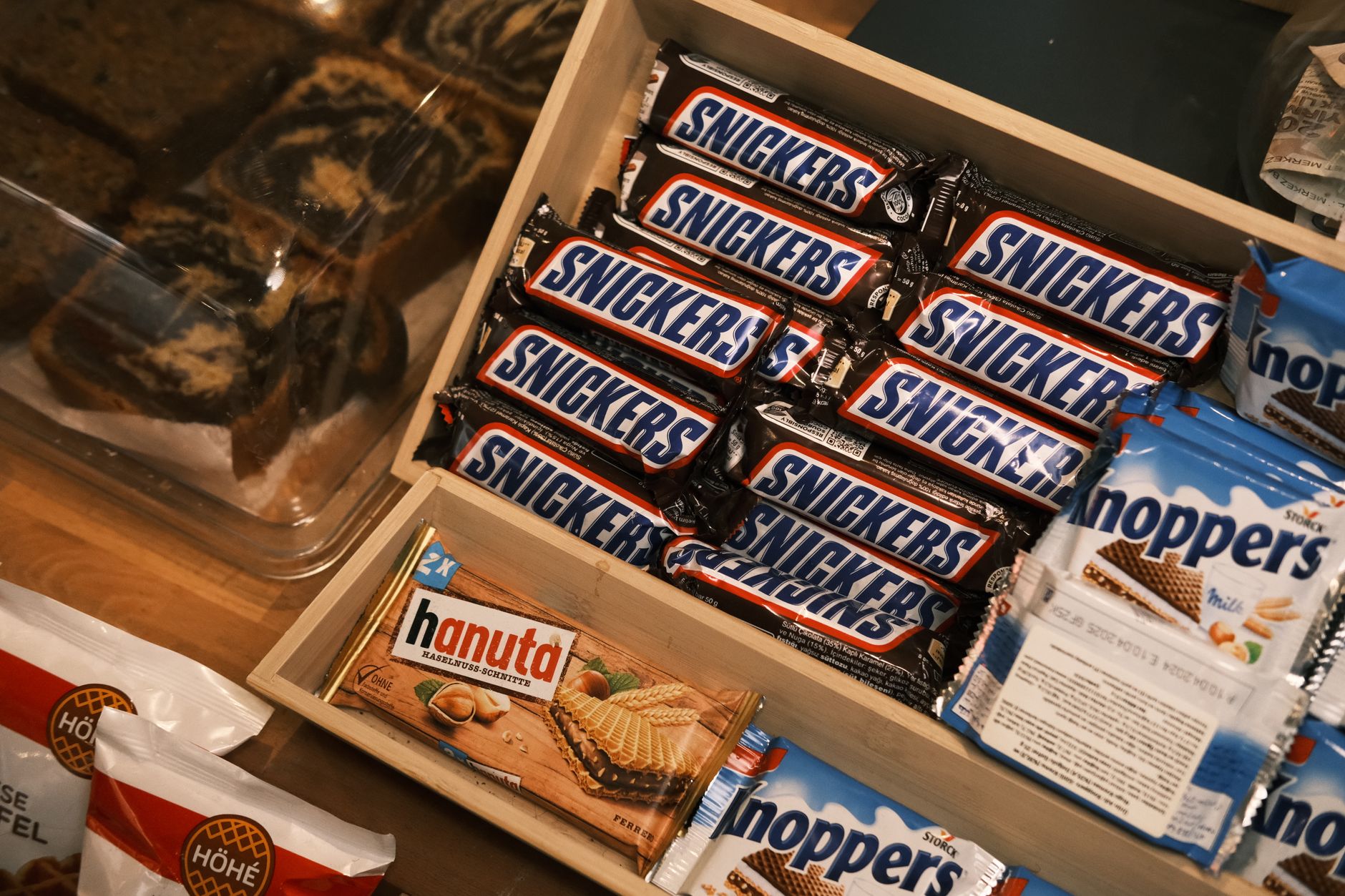
The Ingredient Panel Comes First
With country and format differences in mind, start with the ingredient panel rather than a front-of-pack slogan. The list tells you what the manufacturer intentionally added to that specific product. Your decision should come from the bar’s actual formula, not from its name or color scheme.
- Read ingredients Find milk, whey, lactose, gelatin, egg, honey, or glaze before judging the bar.
- Check allergens Look for milk, peanuts, soy, egg, and any allergen relevant to your household.
- Separate warnings Distinguish recipe ingredients from “may contain” cross-contact statements.
- Find certification marks Use recognized vegan or vegetarian trademarks where your dietary rules need added assurance.
- Verify product type Match the package to Minis, Ice Cream, seasonal, imported, or flavored versions.
- Ask Mars Wrigley Contact the company with the package name, country, and lot details when wording is unclear.
Major food allergens require clear handling on US packaged-food labels, but an allergen statement does not replace the full list. Milk, egg, peanuts, soy, wheat, sesame, fish, crustacean shellfish, and tree nuts are the nine major allergens recognized under US Food and Drug Administration requirements. That disclosure helps you identify allergens, while the ingredient panel helps you assess vegan and vegetarian suitability.
Online Ingredient Lists Have Limits
An old store listing can conflict with the wrapper in your hand. Manufacturer websites may lag behind packaging changes, retailers can copy stale details, and imported products may share a name without sharing a formula. Use the local Mars Wrigley listing as a cross-check, then follow the physical package where details differ.
This label-led method answers are regular Snickers vegan and are Snickers vegetarian without guessing from the candy’s appearance. It also protects you from assuming that regular bars, Minis, ice cream products, and seasonal releases use identical recipes.
Once the regular product does not fit your food rules, the familiar flavor profile is still possible without milk ingredients. Plant-based choices range from certified packaged bars to a simple chilled home version.
Whether store-bought or homemade, these options can satisfy the craving while aligning with different food rules.
Plant-Based Snickers Alternatives Can Meet Different Dietary Needs
Store Options Depend on Your Priorities
After checking the standard bar, vegan alternatives to Snickers generally fall into three groups: certified vegan peanut-caramel bars, dairy-free chocolate bars with nut fillings, and homemade vegan Snickers bars. A recognized vegan mark gives you more certainty than a wrapper that merely looks plant-based.
Your preferred texture can narrow the field. A peanut-caramel bar may come close to the original’s salty crunch, while a date-based center has a darker fruit note and less of the buttery caramel flavor. Neither option is automatically allergy-safe, so check peanuts, soy, coconut, and cross-contact language.
- Vegan peanut-caramel bars suit a ready-made chocolate, nut, and caramel-style snack.
- Dairy-free chocolate bars work where avoiding milk matters more than copying nougat.
- Date caramel centers create sticky homemade fillings without dairy or honey.
- Peanut butter layers add fat and body where classic nougat uses dairy ingredients.
- Coconut-based fillings can create a soft center, though coconut flavor remains noticeable.
A No-Bake Homemade Version Avoids Dairy
A small loaf pan can produce a practical batch of homemade vegan Snickers bars. Line it with parchment, press in a peanut butter and ground-oat base, then scatter salted peanuts across the layer. Blend soft dates with a little water and peanut butter for a caramel-style center, chill it until firm, and cover the slab with dairy-free chocolate.
Refrigerate cut squares in a sealed container for about 5 to 7 days, or freeze them for a longer hold. Cold filling matters because it sets the chocolate faster and keeps crumbs from dragging through the coating. Check your dark chocolate carefully, since some varieties still contain milk fat, and packaged substitutes may include honey.
A home version does not copy every factory-made detail, but it can give you the peanut, caramel, nougat, and chocolate rhythm without the dairy barrier. The certification mark or ingredient panel still decides whether a packaged substitute fits your standard.
Ultimately, the specific product label,not the familiar name,determines whether it suits your dietary needs.
Bottom Line on Snickers Dietary Suitability
Regular US Snickers bars are not vegan because milk ingredients are built into the chocolate and filling. Many lacto-ovo vegetarians may regard the standard bar as suitable because it does not normally list meat, fish, or gelatin. Your final decision should account for dairy, egg, gelatin, religious rules, allergies, and the exact package.
The wrapper remains the deciding evidence for imported products, Snickers Minis, Snickers Ice Cream, seasonal releases, and changing formulas. For a plant-based choice, select a certified vegan peanut-caramel bar or make a chilled version with dates, peanuts, peanut butter, and dairy-free chocolate.
FAQ
Are regular Snickers bars vegan?
No. Regular US Snickers bars contain milk-derived ingredients, including milk chocolate, skim milk, milk fat, and whey, so they do not fit a vegan diet. Check the package in hand because a flavored, imported, or seasonal Snickers product can use a different formula from the standard bar.
Are Snickers bars vegetarian in the United States?
Many lacto-ovo vegetarians regard standard US Snickers bars as suitable because the normal ingredient list does not include meat, fish, or gelatin. Your vegetarian diet may exclude dairy, egg ingredients, processing aids, or cross-contact, so the package still needs a close read.
What animal-derived ingredients are in Snickers?
On regular US labels, milk-based ingredients are the main animal-derived components in Snickers bars. Milk chocolate, skim milk, milk fat, whey, lactose, or butterfat may appear on the ingredient label. Those dairy ingredients make the standard bar non-vegan, but dairy can be compatible with a lacto-ovo vegetarian diet.
Do Snickers contain gelatin, pork, or other animal-derived additives?
Standard US Snickers bars do not normally list gelatin, and caramel or nougat alone does not prove pork-derived gelatin is present. You should verify the exact package because imported, seasonal, and specialty products can differ. Gelatin, egg whites, confectioner’s glaze, and processing aids may matter under stricter dietary rules.
Why have Snickers been described as non-vegetarian in some countries?
Recipes and vegetarian labeling can differ among the United States, the United Kingdom, India, Europe, and other markets. A product may use a local formula or follow country-specific labeling rules. Mars Wrigley packaging from the country where your bar was sold provides stronger evidence than a claim written for another market.
Are Snickers Ice Cream bars vegan or vegetarian?
Frozen dairy forms the base of these products, making them unsuitable for vegans. Vegetarian suitability depends on your individual rules and the exact package. Review the ice cream wrapper separately because it is not the same formula as a regular Snickers bar.
