

A measured swap can recreate lift with baking soda and acid or supply air through another method. You can rescue cakes, muffins, pancakes, and quick breads with the right ratio, but an improvised swap can leave your batter bitter, flat, overly brown, or too loose.
Your best choice depends on the recipe’s acid, liquid, and structure. These kitchen-tested options help you match the swap to the batter instead of guessing during a rushed bake.
Baking Powder Chemistry Determines the Right Swap
Carbon dioxide bubbles turn thick batter into a lighter crumb as heat sets the flour, starch, and egg proteins around those bubbles. Baking powder is one of the most reliable chemical leavening agents because it combines an alkaline base, baking soda, with dry acids such as monocalcium phosphate and sodium acid pyrophosphate.
Moisture starts the acid-base reaction, while oven heat expands the trapped gas. Your batter needs enough structure to hold that gas until it sets. A thin pancake batter can rise from a quick burst of bubbles, while a biscuit dough needs more even lift to create distinct layers.
Baking Soda Needs a Measured Acid
Baking soda is sodium bicarbonate, and it is far stronger than baking powder by volume. A recipe needs acid from buttermilk, plain yogurt, sour milk, molasses, brown sugar, lemon juice, white vinegar, or cream of tartar before soda can provide a clean rise.
Without enough acid, baking soda cannot replace baking powder teaspoon for teaspoon. You may see darker color and extra spread, but the finished bake can taste soapy or bitter because unreacted soda remains in the crumb.
Acid and bicarbonate create carbon dioxide gas after they meet moisture. Gluten, egg proteins, and starch hold those bubbles briefly, which explains why rough mixing or a long wait before baking can reduce lift. That mechanism matches American Chemical Society teaching materials on acid-base reactions.
Too Much Soda Leaves Visible Clues
Excess baking soda raises the batter’s pH. The higher pH speeds Maillard browning, so cookies may darken before their centers set, while cakes can spread unevenly and develop a bitter edge.
Add baking soda only where a measured acid source exists. Even a small excess can change color and flavor, even when the rise looks acceptable.
That chemistry leads to the closest emergency formula: baking soda paired with cream of tartar. Your next decision is simpler because the ingredients already in the recipe narrow the best option.
That ingredient list often reveals the most practical substitute before you need to reach for anything unusual.
Available Pantry Ingredients Set the Best First Choice
Because the reaction needs both a base and an acid, cream of tartar gives you the closest dry replacement. It supplies the acid missing from baking soda, so the mixture behaves more like commercial baking powder than soda stirred into vinegar at the last minute.
The Closest Dry Formula Uses Two Ingredients
For every 1 teaspoon called for, stir 1/4 teaspoon baking soda with 1/2 teaspoon cream of tartar. Whisk the blend through the flour and other dry ingredients before adding liquid. This substitute for 1 teaspoon baking powder adds no extra moisture, making it a dependable choice for cakes, muffins, pancakes, biscuits, and quick breads.
| Baking powder in recipe | Baking soda | Cream of tartar |
|---|---|---|
| 1/2 teaspoon | 1/8 teaspoon | 1/4 teaspoon |
| 1 teaspoon | 1/4 teaspoon | 1/2 teaspoon |
| 1 tablespoon | 3/4 teaspoon | 1 1/2 teaspoons |
Use level measuring spoons for this formula. A rounded 1/4 teaspoon of soda can shift flavor and browning, especially in a small vanilla cake or a batch of 12 muffins where the total acid is limited.
A Pantry Check Prevents a Poor Match
- Dry acid on hand: Choose baking soda and cream of tartar for a close homemade replacement with no liquid adjustment.
- Acidic dairy available: Pair baking soda with buttermilk, plain yogurt, or sour milk and subtract the added dairy from another recipe liquid.
- Acidic liquid available: Use lemon juice or white vinegar only where a faint tang fits the finished flavor.
- Self-rising flour stocked: Replace all-purpose flour, omit added leavener, and check the label before adding salt.
- No soda in the pantry: Use self-rising flour or an aerated method only in batters that can hold added air.
Liquid acids can work, but they change more than the reaction. The amount you pour affects batter thickness, which is why dairy and vinegar need a more careful adjustment.
Because these alternatives introduce moisture alongside acidity, preserving the intended batter consistency takes a small recalibration.
Acidic Dairy and Pantry Acids Require Liquid Adjustments
Since dairy brings both acid and moisture, it can activate soda while also thinning your mixture. In a formula with roughly 1/2 cup buttermilk, plain yogurt, or sour milk, about 1/4 teaspoon baking soda can stand in for 1 teaspoon baking powder.
The full ingredient list still matters. Cocoa, molasses, brown sugar, and fruit can contribute acidity, so your recipe may need less soda than a simple conversion suggests. A baking soda and acid substitute works best when the existing ingredients already support that balance.
Dairy Changes Batter Thickness
Sour milk is regular milk acidified with lemon juice or vinegar, while cultured buttermilk gets its tang from fermentation. Both can activate baking soda. Thick plain yogurt may need thinning with a little milk before it pours like the liquid already listed in your recipe.
Subtract another liquid by the amount of dairy added. Otherwise, a cake batter can become loose, spread before setting, and develop a heavy center even though the acid and soda amounts were correct.
| Acid source | Why it works | Your adjustment |
|---|---|---|
| Buttermilk | Its acidity reacts with baking soda. | Subtract added buttermilk from another liquid. |
| Plain yogurt | Its tang and moisture activate soda. | Thin thick yogurt if needed, then reduce recipe liquid. |
| Sour milk | Added acid gives milk a soda-reactive profile. | Use it as the dairy portion and reduce another liquid. |
| Molasses | Its acidity can contribute to soda activation. | Match the soda amount to the full formula. |
Lemon Juice and Vinegar React Fast
A tablespoon of either lemon juice or white vinegar supplies quick acidity, but also adds water and a distinct flavor. Add only enough to react with measured soda, subtract that same volume from another liquid, and bake the batter promptly after mixing.
A chocolate cake or spice cake can carry a faint vinegar or lemon note better than a delicate vanilla layer cake. That flavor limit makes the dry cream-of-tartar formula a better option for pale cakes, and it also points toward the few choices available without baking soda.
When acidity must stay subtle, the remaining routes rely on different sources of lift and carry clearer trade-offs.
Options Without Baking Soda Provide More Limited Lift
Because cream of tartar is an acid rather than a base, it cannot make carbon dioxide by itself. A baking powder substitute without baking soda must either come from self-rising flour or use a batter that can hold air created by whipping or carbonation.
Self-Rising Flour Replaces Flour and Leavener
Each cup already combines flour, salt, and leavening. Replace all-purpose flour with an equal amount of self-rising flour, omit the recipe’s baking powder, then reduce or omit added salt after checking the ingredient label.
White Lily self-rising flour and King Arthur Baking self-rising flour are examples of products with differing protein and salt levels. Your biscuits may feel softer with a lower-protein flour, even when the rise appears close to the original recipe.
Whipped Foam Adds Air Instead of Gas
Club soda contains dissolved carbon dioxide, while whipped egg whites and aquafaba create mechanical aeration through tiny trapped air cells. Fold foam into moist batter with a wide spatula and slow strokes. Fast stirring breaks the air cells before the oven can set them.
- Club soda option: Use it for pancakes or thin cakes where carbonated water can replace part of the listed liquid.
- Whipped egg whites: Fold them into light cake or pancake batter for extra loft and a softer interior.
- Aquafaba foam: Use whipped chickpea liquid in eggless light batters where its texture suits the recipe.
- Dense dough limit: Avoid relying on foam for biscuits or compact quick breads that need quick chemical lift.
These methods add air rather than the timed gas release from dry leavening agents. Recipe structure becomes the deciding factor, particularly for cakes, cookies, and layered biscuits.
Those trade-offs matter differently in airy cakes, crisp cookies, and flaky doughs, where the formula governs success.
Recipe Structure Determines the Most Reliable Substitute
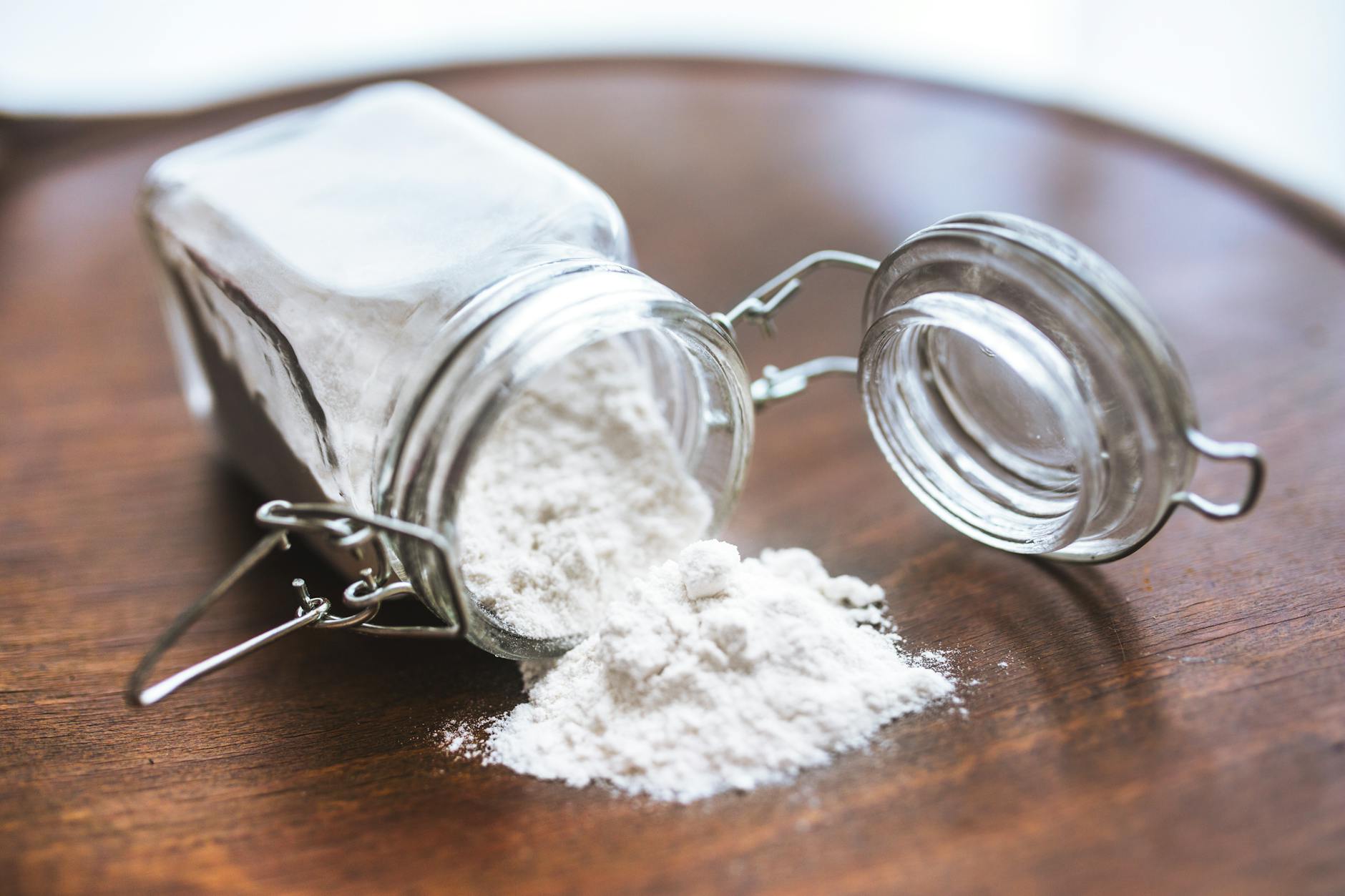
Because wet batter allows acid and soda to meet evenly, cakes, muffins, pancakes, and quick breads handle chemical swaps well. Buttermilk, yogurt, sour milk, cocoa, and molasses make the formula easier to balance because they can already supply some acidity.
Moist Batters Work Well With Chemical Swaps
For a buttermilk pancake recipe missing 1 teaspoon of baking powder, use 1/4 teaspoon baking soda where the batter includes about 1/2 cup buttermilk. Get the pan hot before mixing, then move the batter to the griddle while its bubbles still have force.
A baking powder substitute for cake needs restraint. In a vanilla layer cake, the cream-of-tartar formula keeps the flavor clean and avoids extra liquid. In a chocolate loaf with molasses, the acids already in the batter can give soda a more natural partner.
Cookies Need Controlled Spread
Cookie dough has less water than cake batter, and its fat melts before the center firms. Use the dry soda-and-cream-of-tartar formula where possible. A baking powder substitute for cookies made with lemon juice or vinegar can soften the dough, widen spread, and alter chew unless you also adjust flour or another liquid.
Chilling the dough can slow spread, but it cannot correct too much soda or a missing acid. Your measured baking soda to baking powder conversion matters more than an extra 30 minutes in the refrigerator.
Biscuits Leave Little Room for Error
Cold butter creates steam pockets, but biscuits also depend on fast, even chemical lift. Favor homemade baking powder or self-rising flour for this dough because both distribute leavening through the flour before liquid reaches it.
Club soda, whipped egg whites, and aquafaba can help pancakes or light cakes, yet they do not create the same upward push between biscuit layers. Once your substitute fits the recipe, timing protects the reaction behind the rise.
Even the best-matched replacement needs prompt handling, since its gas-producing reaction begins as soon as ingredients meet.
Prompt Baking and Specific Fixes Protect Flavor and Texture
Once liquid reaches soda and acid, the clock starts. Set the oven temperature and prepare the pan before wet and dry ingredients meet. A bowl left on the counter for 15 minutes can spend part of its gas before the batter reaches heat.
Fresh Ingredients Matter More Than Extra Amounts
Expired baking powder can lose strength after repeated exposure to humid kitchen air. Check the date, close the canister tightly, and use a fresh container where your recipe needs dependable lift. Adding more stale powder does not restore the missing reaction.
Stir the dry blend thoroughly before adding liquid. A pocket of baking soda can leave one bitter bite in an otherwise well-risen cake.
Common Results Point to Specific Problems
- Bitter or soapy flavor: Too much soda or too little acid left alkaline baking soda in the finished crumb.
- Dense middle: Stale leavener, too little leavener, or delayed baking weakened the gas release before the structure set.
- Excessive spread: Extra soda, added liquid, or warm dough allowed the structure to flatten before setting.
- Sour finish: Lemon juice, vinegar, yogurt, or buttermilk exceeded what the recipe’s flavor could absorb.
- Pale crumb: Too little soda reduced browning, although pale color alone does not prove a failed bake.
Baking powder can be omitted in a deliberately dense cookie or in dough raised chiefly with yeast. Whipped eggs can lift sponge-style cakes. Your cakes, muffins, pancakes, biscuits, and quick breads will turn flatter and heavier without a suitable leavener, which is why measured baking powder substitutes beat casual guesswork.
Precision at every stage turns a workable substitution into a dependable result rather than a disappointing compromise.
Key Principles for a Successful Swap
The most reliable replacement matches baking powder’s two-part design: a measured base, a measured acid, and the right moisture level. Choose baking soda and cream of tartar for the closest dry swap, reduce liquid around dairy or vinegar, and bake promptly after mixing.
Your result depends on proportion and timing, not on adding extra leavener. Keep the dry formula for neutral-flavored cakes and biscuits, reserve acidic dairy for recipes that can absorb its moisture, and use self-rising flour only after accounting for its added salt.
FAQ
What can you use if you do not have baking powder?
You can use 1/4 teaspoon baking soda plus 1/2 teaspoon cream of tartar for each 1 teaspoon of baking powder. Buttermilk, plain yogurt, sour milk, lemon juice, or white vinegar can activate soda too, though your recipe needs enough acid and a matching liquid reduction.
What can you substitute for 1 teaspoon of baking powder?
A 1-teaspoon replacement uses 1/4 teaspoon baking soda and 1/2 teaspoon cream of tartar stirred into the dry ingredients. This dry formula is useful for cakes, muffins, pancakes, biscuits, and quick breads because it does not thin your batter.
Can you use baking soda instead of baking powder?
With a suitable acidic ingredient, 1/4 teaspoon baking soda can replace 1 teaspoon baking powder. Soda without enough acid may leave your baked goods soapy or bitter, darken them too quickly, and produce uneven spread rather than steady lift.
How do you make baking powder with baking soda and cream of tartar?
For every teaspoon your recipe needs, combine 1/4 teaspoon baking soda with 1/2 teaspoon cream of tartar. Whisk the mixture into the dry ingredients so the soda and acid distribute evenly before liquid starts the reaction.
What can you use instead of baking powder if you do not have baking soda?
You can use self-rising flour in place of all-purpose flour and omit the recipe’s baking powder, while reducing added salt after checking the flour label. Club soda, whipped egg whites, and aquafaba can add air to pancakes or light cakes, but they are weak choices for biscuits.
Can you skip baking powder in a recipe?
Dense cookies and recipes lifted mainly by yeast or whipped eggs can often go without it. Your cakes, muffins, pancakes, biscuits, and quick breads will usually lose height and tenderness without another leavening method, since their structure depends on gas bubbles during baking.
