

In a recipe missing bay leaves, a small, measured herb swap,or no swap at all,often works best. For one dried leaf, start with 1/4 teaspoon dried thyme or oregano; in a crowded chili, you can usually omit it because stronger spices already shape the pot.
Use these ratios to adjust broths, sauces, rice, braises, curries, adobo, and French onion soup without covering your food in loud herbal flavor.
Omission Works When Bay Is Not Carrying the Dish
Because bay leaf works quietly, you can leave out a single dried leaf in a heavily seasoned recipe without damaging the final dish. Onion, garlic, celery, tomatoes, browned meat, cumin, chile powder, and beans already create several aromatic layers. In a chili or tomato-rich stew, omission is usually safer than adding an herb that changes the recipe’s direction.
Clear liquids need more care. Chicken stock, French onion soup, plain rice pilaf, and a simple braising liquid have fewer competing aromas, so your missing leaf may leave the finish tasting flatter. The cooking time matters too: a leaf simmered for 60 minutes contributes more than one used for a 15-minute sauce.
A Short Kitchen Check Helps You Choose
- Check the quantity. One missing leaf in a large Dutch oven rarely needs a replacement, while three leaves in a light stock may justify a small swap.
- Count existing herbs. Thyme, oregano, basil, rosemary, and Italian seasoning already in your recipe can cover part of bay’s background flavor.
- Match the cuisine. Mediterranean dishes usually suit thyme or oregano, while curry leaves belong only in dishes built around their own aroma.
- Respect the liquid. Clear broth exposes extra herbs quickly, but tomato sauce can carry a small amount of basil or a seasoning blend.
- Start below target. Dried herbs grow stronger during a simmer, and you cannot remove their flavor once it has spread through the pot.
Bay leaf works in the background. A mismatched herb can cause more harm than omission because dried herbs continue releasing flavor during the simmer.
That restrained role explains why bay can seem subtle while still changing the shape of a long-cooked dish. Its aroma becomes easier to replace once you understand where it comes from.
That replaceable aroma matters most when a pot has time to draw out deeper, woodier notes.
Bay Adds Low, Woody Depth During Long Cooking
That background effect comes from bay’s slow infusion into liquid and fat. Turkish bay leaves, from Laurus nobilis, bring woody, lightly floral, tea-like notes with a savory Mediterranean character. Your soup does not taste sharply of bay; instead, the leaf supports onion, stock, beans, and meat from underneath.
Volatile Oils Need Heat and Time
Bay leaves contain aromatic compounds including 1,8-cineole, eugenol, and linalool. Heat pulls these volatile oils into broth and braising liquid over about 30 to 90 minutes. Fat holds aroma molecules, which is why you may notice bay more clearly in a beef braise than in a thin vegetable broth.
Simple dishes reveal that contribution more clearly than busy ones. In rice pilaf, chicken stock, or a bouquet garni for stock, removing bay can leave the final sip less rounded. In chili with cumin, cocoa, chile powder, tomatoes, and beans, its absence can disappear completely.
Whole Leaves Must Leave the Pot
Bay leaves stay stiff after cooking. Remove them before serving, along with woody thyme sprigs and rosemary stems, because their texture is unpleasant to bite. Check the bottom of a deep stew before serving, since a leaf can settle beneath potatoes or vegetables.
California bay, from Umbellularia californica, deserves separate attention because it has a sharper eucalyptus-like edge than Turkish bay. Use a smaller piece when your recipe calls for standard Mediterranean bay. Those differences make careful measurements more useful than a casual leaf-for-leaf swap.
Because those notes concentrate gradually, restrained amounts keep a replacement from overtaking the entire pot.
Measured Ratios Prevent an Over-Herbed Pot
Once you know bay’s flavor is restrained, the amount becomes the key decision. One dried leaf calls for a modest amount of a supporting herb, not a teaspoonful. Start with 1/4 teaspoon dried thyme or dried oregano, then give the dish at least 20 minutes of simmering before judging your adjustment.
| Missing ingredient | Starting amount per dried bay leaf | Where it fits |
|---|---|---|
| Dried thyme | 1/4 teaspoon | Soup, chicken, beans, stock, and braises |
| Dried oregano | 1/4 teaspoon | Stew, chili, and tomato-rich dishes |
| Italian seasoning | 1/4 teaspoon | Soup, sauce, or braise with few existing herbs |
| Crushed rosemary | 1/8 teaspoon | Lamb, beef, mushroom, and hearty bean dishes |
| Dried basil | 1/4 teaspoon | Tomato sauce and vegetable soups |
| Ground bay leaf | 1/8 to 1/4 teaspoon | Dishes where fine particles suit the texture |
Fresh, Dried, and Ground Bay Need Different Amounts
Dried bay leaves contain less water, so their flavor is usually more concentrated than fresh bay leaves. One large fresh leaf can replace about two dried bay leaves, but fresh leaves vary substantially in size, age, and potency. Smell your fresh leaf before adding it, then use a smaller piece if its aroma seems unusually strong.
Ground bay leaf conversion requires extra restraint because the particles remain in the finished food. Start with 1/8 teaspoon per missing leaf in broth, rice, or a delicate sauce. You can increase toward 1/4 teaspoon in a large stew, but ground bay cannot be removed after it disperses.
Ground bay leaf is not a one-for-one scoop. Begin at 1/8 teaspoon per leaf, especially in broth or rice, because every particle remains in the finished dish.
Those ratios make thyme the calmest pantry choice. Oregano, basil, rosemary, and blended seasonings work best when the recipe’s main ingredients welcome their stronger personalities.
Once quantity is under control, the herb’s particular character determines how it should support the dish.
Thyme, Oregano, Basil, and Blends Have Different Jobs
That measurement framework points you toward flavor rather than habit. Dried thyme gives soups, chicken, white beans, and braising liquids an earthy, savory shape without drawing much attention to itself. For your everyday bay leaf substitute, thyme is usually the safest choice because its faintly minty, camphor-like note sits near bay’s woody side.
| Herb | Flavor direction | Use it for |
|---|---|---|
| Thyme | Earthy, savory, faintly minty | Broth, chicken, beans, and braises |
| Oregano | Peppery, pungent, Mediterranean | Stew, chili, tomato, and lamb |
| Basil | Sweet, soft, anise-like | Tomato sauce and vegetable dishes |
| Rosemary | Pine-like, resinous, forceful | Beef, lamb, potatoes, and mushrooms |
| Sage | Earthy, peppery, musky | Sausage, pork, squash, and rich stuffing |
Oregano has more bite than thyme, so it can crowd a pale chicken soup or clean vegetable stock. Basil tastes sweeter and works well beside tomato, while rosemary should appear only in very small amounts because its resinous oils can take over a covered Dutch oven. Your choice should follow the central ingredient, not the empty space left by bay.
A Two-Herb Blend Gives Stews More Shape
For a rounder flavor in stew, use 1/8 teaspoon dried thyme plus 1/8 teaspoon dried oregano per missing leaf. The combination supplies an earthy middle and a mild peppery edge without relying on either herb alone. Add the blend near the start of simmering so the dried leaves can soften into the liquid.
Italian seasoning is a convenience option, not a direct replacement. Read the label before adding it because Italian seasoning may already contain oregano, thyme, basil, rosemary, marjoram, or sage. If your recipe already lists two of those herbs, reduce the blend or skip it so you do not double the strongest flavors.
Bay seasoning needs the same label check. A jar labeled bay seasoning can contain paprika, celery seed, pepper, salt, thyme, oregano, or other spices, so it is not automatically equivalent to a whole leaf. That ingredient list matters even more once your recipe has a specific regional style.
The best choice also depends on whether those flavors belong naturally within the dish’s culinary tradition.
Recipe Style Determines the Least Disruptive Swap
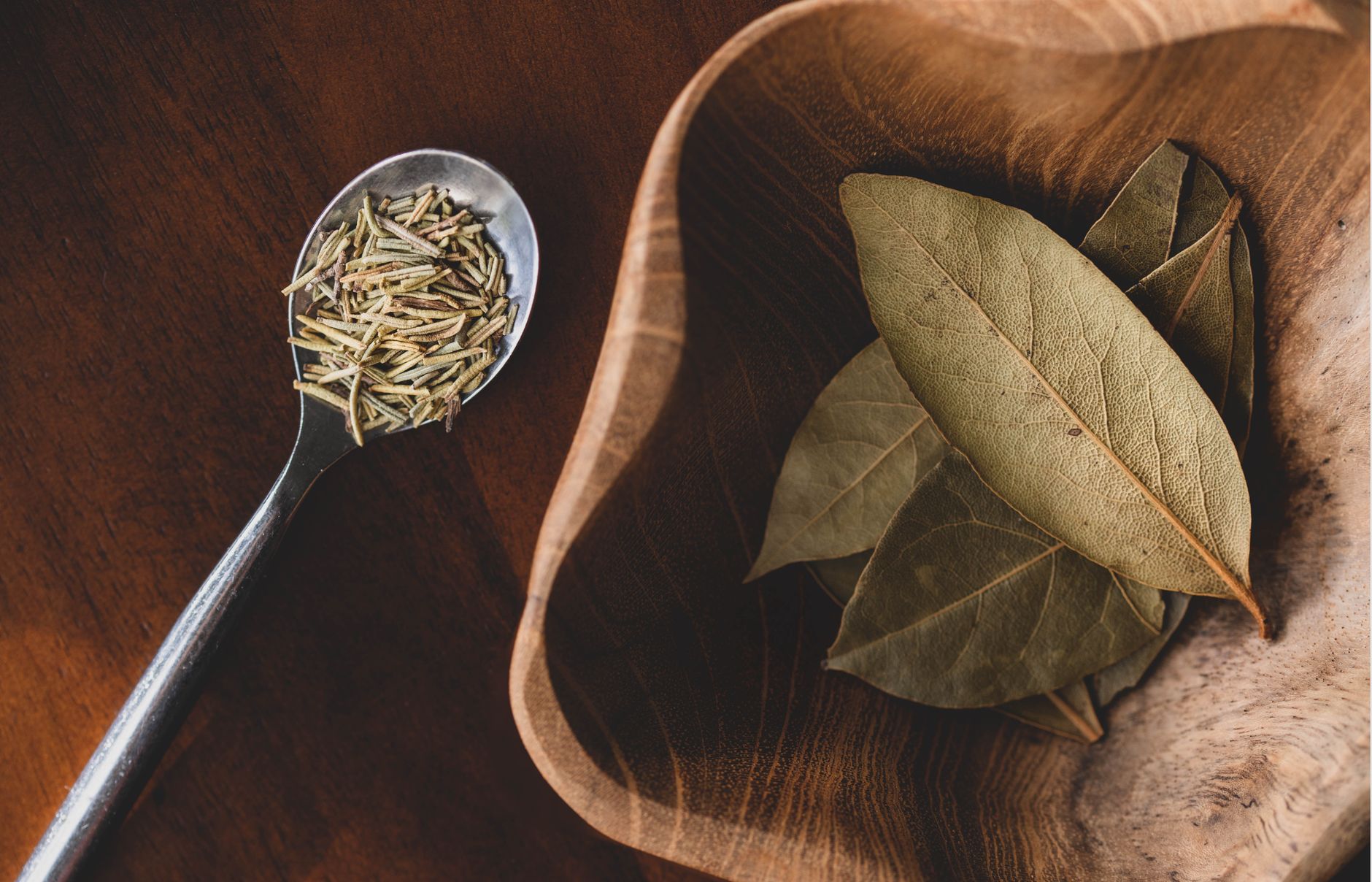
With the herb profile in mind, the best choice changes from pot to pot. Delicate liquid exposes every added note, while a dark braising liquid can absorb more structure. This table gives you a bay leaf substitute for soup and stew without forcing the same herb into every recipe.
| Dish | Least disruptive choice per missing leaf | Why it fits |
|---|---|---|
| Delicate soup or chicken soup | Omit, or 1/4 teaspoon thyme | Thyme stays quiet beside chicken and vegetables |
| Hearty stew or chili | 1/8 teaspoon thyme plus 1/8 teaspoon oregano | Dense ingredients can carry the rounded blend |
| Tomato sauce | 1/4 teaspoon basil or Italian seasoning | Basil follows tomato’s sweeter side |
| Beef braise | Thyme plus one crushed juniper berry | Juniper adds woodland character to meat |
| French onion soup | 1/4 teaspoon thyme | Oregano can distract from onion and beef stock |
| Rice or pilaf | Omit, or 1/8 teaspoon thyme | Rice absorbs herbs quickly and shows excess |
| Pickling liquid | Omit, or 1/8 teaspoon oregano | Vinegar already brings a strong aromatic profile |
French onion soup needs restraint because caramelized onion and beef stock are the main aromas. Use 1/4 teaspoon thyme for each missing dried leaf, or omit the leaf entirely in a well-seasoned pot. Oregano can pull your soup toward a pizza-sauce flavor that does not belong beside sweet onions and melted cheese.
Tomato sauce accepts basil more easily because basil supports tomato’s sweet, acidic edge. Beef stews and braises can handle thyme plus one lightly crushed juniper berry, which adds pine-like character from pinene. Remove the berry before serving because its flavor becomes stronger during a long simmer.
Pickling liquid requires the lightest touch. Vinegar, peppercorns, mustard seed, garlic, and dill already build a strong aromatic profile, so an extra herb can make your brine taste crowded. Regional ingredients create another important limit on substitutions.
That distinction becomes crucial when similarly named leaves come from entirely different cooking traditions.
Indian Bay, Curry Leaves, and Mediterranean Bay Are Not Interchangeable
That regional limit matters because several leaves share a familiar name but taste completely different. Tej patta, curry leaves, and Mediterranean bay leaves are not interchangeable pantry labels. Your bay leaf substitute in curry should follow the dish’s intended style instead of treating every aromatic leaf as equivalent.
| Leaf | Typical aroma | Natural home |
|---|---|---|
| Mediterranean bay | Woody, floral, tea-like | Stocks, braises, sauces, soups, stews, and braises |
| Indian bay leaf, tej patta | Cinnamon, clove, warm wood | North Indian rice and curries |
| Curry leaves | Citrusy, nutty, savory | South Indian and Sri Lankan dishes |
Indian bay leaf, called tej patta, has cinnamon-like and clove-like notes that suit North Indian rice dishes and masala-based cooking. Curry leaves release a distinctive citrusy aroma in hot oil, which is very different from steeping a bay leaf in stock. Neither leaf is a reliable substitute for a Mediterranean bay leaf in chicken soup or a French-style braise.
Adobo calls for similar discipline. Vinegar, soy sauce, garlic, black peppercorns, and bay create its familiar profile, while curry leaves or tej patta would push the dish in another direction. For a bay leaf substitute for adobo, you can omit the leaf or add a tiny pinch of oregano only where oregano fits the existing seasonings.
Once you separate regional leaves by flavor and cooking method, a simple pantry blend becomes easier to use without confusion.
With those differences clear, a modest combination of familiar herbs can provide steady background complexity.
A Small Pantry Blend Can Support Long-Cooked Dishes
That separation leaves room for a restrained, Mediterranean-style backup blend. Equal parts dried thyme and dried oregano make a useful mix for soups, stews, and braises. Use 1/4 teaspoon of the mixture per missing dried leaf, then allow at least 20 minutes for the flavor to settle into the liquid.
Small Adjustments Follow the Main Ingredient
- Tomato sauce. Add a pinch of dried basil to the blend for a softer, sweeter herbal finish beside tomatoes.
- Beef or lamb. Add a tiny pinch of crushed rosemary, no more than a pinch per pot, for a deeper pine-like note.
- White bean soup. Keep the blend plain so rosemary does not dominate the beans, broth, and olive oil.
- Mushroom braise. Use slightly more thyme than oregano for a darker, earthier flavor beside browned mushrooms.
Rosemary contains powerful aromatic oils and can become resinous fast, especially in a covered Dutch oven. Add your dried herbs at the start of cooking, then taste after they have hydrated for 20 minutes. A late sprinkle tastes sharp or raw because the leaf particles have not released their oils into the sauce or broth.
That timing protects the flavor of your main ingredients. It also avoids several common mistakes that turn a gentle replacement into the loudest thing in the pot.
Even a well-chosen blend can dominate if timing, quantity, or ingredient balance slips out of control.
Small Errors Can Make a Substitute Taste Aggressive
Because bay is muted, a full teaspoon of dried herb for one missing leaf can overwhelm a saucepan. Oregano, rosemary, sage, and seasoning blends announce themselves faster than whole bay leaves. Treat every substitute as a starting amount, then adjust only after the pot has simmered long enough to reveal its real flavor.
- Avoid large scoops. Begin with 1/4 teaspoon per leaf for thyme, oregano, basil, or Italian seasoning rather than adding a full spoonful.
- Skip herb piling. Choose one replacement or the thyme-oregano pair instead of opening several herb jars at once.
- Read bay seasoning. Check the label because bay seasoning is a blend, not a synonym for whole bay leaf, and formulas vary widely.
- Watch existing herbs. Reduce the added amount where your recipe already contains thyme, oregano, basil, rosemary, or marjoram.
- Remove woody pieces. Fish out whole bay leaves, juniper berries, rosemary stems, and thyme sprigs before serving.
Boldo leaves appear in some regional cooking as a substitute, but their medicinal, bitter character can overpower a standard stock or sauce. Save boldo for recipes specifically written around its flavor. For most home cooking, your safest choice remains omission or a measured amount of a familiar herb.
Controlled seasoning keeps a dish tasting like itself. That is the same quiet job bay performs when it is available.
Used with restraint, a substitute can preserve that background role and leave the finished dish balanced.
Bottom Line
Restraint produces the best result. You can omit one missing leaf in a heavily seasoned pot, use 1/4 teaspoon dried thyme for a clean all-purpose swap, and reserve oregano, basil, rosemary, Italian seasoning, or bay seasoning for recipes that welcome those distinct flavors. Fresh, dried, ground, California, Indian, and curry leaves have different strengths and culinary roles, so your recipe deserves more than a casual one-for-one exchange.
FAQ
What can I use if I do not have bay leaves?
Dried thyme is the most flexible option for soup, chicken, beans, stock, and braises. Use 1/4 teaspoon per missing dried leaf. Dried oregano works in stews, chili, and tomato dishes, while basil suits tomato sauce. Your choice should match the food’s main flavor.
Can I skip bay leaves entirely in a recipe?
You can skip bay leaves in many recipes, especially dishes with several strong seasonings or a short cooking time. A pot of chili, a tomato-heavy sauce, or a spice-rich stew may not show the omission. Your sparse broth or French onion soup has more reason for thyme.
Does a bay leaf really make a difference in soups and stews?
Bay leaf makes its clearest difference in clean stocks, rice, slow-cooked beans, and braises with few competing aromatics. Its woody, floral flavor diffuses during a long simmer instead of tasting loud. You may notice a less rounded finish rather than a sharply missing flavor.
What is the best substitute for bay leaves in French onion soup?
For French onion soup, dried thyme is the best stand-in for bay leaves. Use 1/4 teaspoon dried thyme for each missing leaf, then let it simmer with the stock for at least 20 minutes. Your soup will keep its focus on caramelized onions, beef stock, bread, and cheese.
How much oregano or thyme should I use instead of one bay leaf?
For each dried bay leaf, measure 1/4 teaspoon dried thyme or dried oregano. For a more balanced stew, use 1/8 teaspoon thyme plus 1/8 teaspoon oregano. Start with less in a delicate broth because your liquid will show extra herbs quickly.
Can I substitute fresh bay leaves for dried bay leaves?
Fresh leaves can replace dried ones, but the two forms do not always swap one-for-one. One large fresh leaf can replace about two dried leaves, although fresh leaves vary in size and potency. Smell your leaf first and use a smaller piece if it smells especially strong.
