

At the serving sizes people actually eat, selected plant staples can provide useful lysine and protein without pushing arginine especially high. Soy foods, lentils, beans, peas, and potatoes form the most practical core. You do not need to chase zero arginine or rely on a narrow list of snack foods.
Below, you’ll find amino-acid comparisons, meal ideas, food tradeoffs, and careful Herpes simplex virus (HSV) context for building a varied vegan diet that supports your protein needs.
Lysine and arginine play different roles in vegan nutrition
Lysine is essential while arginine has conditional roles
Lysine must come from food because it is one of the essential amino acids. Your body uses lysine for protein synthesis, collagen formation, and carnitine production. Carnitine helps move fatty acids into cells for energy production.
Arginine also supports normal body function. The body can produce arginine under many conditions, which is why it is considered conditionally essential. Growth, illness, injury, and physiological stress can change how much arginine your body needs.
Arginine acts as a precursor to nitric oxide, a signaling molecule involved in blood-vessel tone and immune-cell activity. Those roles explain why Lysine and Arginine appear together in nutrition searches. Food choices do not turn either amino acid into an enemy.
Protein digestion breaks food into individual amino acids, which your tissues use according to metabolic demand. A vegan diet can provide enough lysine, but grain-heavy meals need dependable protein anchors. Tofu, lentils, beans, split peas, and fortified soy milk make that job easier.
HSV discussions need clear limits
That amino-acid distinction leads to the HSV question, but the dietary evidence has limits. Herpes simplex virus (HSV) uses host-cell machinery during replication, and arginine has appeared in laboratory research on viral growth. That detail has fueled online food lists that frame arginine restriction as an outbreak strategy.
Human evidence does not show that food ratios reliably control recurrent HSV symptoms. Your food choices can support overall nutrition, but they cannot replace antiviral care, testing, or clinical evaluation. Laboratory mechanisms do not automatically predict what happens after a normal meal.
Food changes do not replace medical evaluation or antiviral care. Seek qualified medical attention for frequent, severe, unusual, or worsening symptoms, and discuss dietary restrictions that make eating difficult.
No ordinary food selectively removes lysine from your body. Low calorie intake, limited protein, repetitive meals, and strict avoidance lists can leave lysine intake short, especially after beans and soy disappear from the menu. The next step is comparing foods by serving size rather than by dramatic online claims.
Portion-based comparisons reveal which foods meaningfully contribute lysine across an ordinary day.
Serving size makes amino-acid comparisons more useful
Meal portions change the result
With those limits in mind, a cup of beans and a tablespoon of seeds should not be treated as equal meals. The chart below uses common edible household portions and estimates drawn from FoodData Central entries, checked against nutrient displays such as MyFoodData. Brand, water content, cooking method, and bean variety can all shift the numbers.
A useful choice has two features: meaningful lysine and enough protein to matter at a meal. A food with a ratio above 1.0 but only 1 gram of protein may work as a side dish. It cannot carry your lunch.
| Food and edible portion | Protein | Lysine | Arginine and lysine:arginine ratio |
|---|---|---|---|
| Firm tofu, 1/2 cup | 10 g | 0.65 g | 0.55 g, 1.18 |
| Edamame, 1 cup cooked | 17 g | 1.10 g | 1.25 g, 0.88 |
| Textured soy protein, 1/2 cup dry | 24 g | 1.60 g | 1.70 g, 0.94 |
| Cooked lentils, 1 cup | 18 g | 1.25 g | 1.60 g, 0.78 |
| Black beans, 1 cup cooked | 15 g | 1.05 g | 1.35 g, 0.78 |
| Baked potato with skin, 1 medium | 4 g | 0.24 g | 0.16 g, 1.50 |
These figures are estimates, not laboratory findings from your kitchen. Silken tofu holds more water than firm tofu, canned beans differ from home-cooked beans, and fortified soy milk varies sharply by brand. Use ratios as direction markers, then check protein grams and serving size before deciding what belongs on your plate.
FoodData Central is a United States nutrient database built from food analyses, labels, and reference foods. Its amino-acid entries show useful patterns, though incomplete entries and product variation mean a single ratio should never become a hard rule. Soy foods are a strong practical starting point because they combine protein, lysine, and flexible meal portions.
That comparison method points naturally toward soy, which offers more than a favorable number on a chart.
Among those realistic portions, soy stands out as a versatile foundation rather than merely a strong statistic.
Soy foods provide a practical lysine base
Meal-sized soy portions carry more nutritional weight
Soy foods can supply meaningful protein and lysine without forcing you to build meals around seeds or powders. Firm tofu, tempeh, edamame, soy milk, and textured soy protein all contain arginine. Their substantial lysine and protein still make them useful for a lower-arginine pattern.
A block of tofu offers more nutritional weight than a scattering of seeds because it provides protein, lysine, iron, and calories in a meal-sized portion. For your breakfast, lunch, or dinner, a protein anchor matters more than pursuing foods with no arginine. Zero arginine is not a realistic or necessary food goal.
Textured soy protein is especially practical where cost and storage matter. A dry half-cup expands after soaking and works in chili, pasta sauce, tacos, or stuffed peppers. Tempeh has a firmer bite and fermented flavor, while tofu absorbs the sauce and seasoning around it.
| Soy food | Realistic portion | How it fits your day |
|---|---|---|
| Firm tofu | 1/2 to 1 cup | Scramble it with mushrooms, broccoli, turmeric, and potatoes. |
| Tempeh | 3 ounces | Layer it into a sandwich with mustard, lettuce, and roasted peppers. |
| Edamame | 3/4 to 1 cup | Fold it into rice bowls beside cucumbers and shredded cabbage. |
| Fortified soy milk | 1 cup | Use it with oats, cereal, or a fruit smoothie at breakfast. |
| Textured soy protein | 1/2 cup dry | Simmer it in tomato sauce, tacos, or lentil soup. |
Fortification supports nutrition while protein remains the priority
Many soy milks contain calcium and vitamin D added by the manufacturer, though labels differ. Shake the carton before pouring because minerals settle at the bottom. Compare protein per cup, then check added sugars and the fortification that fits your diet.
Seitan also has a realistic place in your meals. Wheat gluten provides substantial protein, but its lysine density trails soy foods and Legumes because wheat proteins contain less lysine per gram of protein. Pairing seitan with lentils or beans improves amino acid balance without turning dinner into a calculation exercise.
Once soy appears regularly, legumes broaden your options and reduce dependence on a single staple.
Variety still matters, and familiar beans, lentils, and peas can reinforce that foundation at everyday meals.
Legumes make everyday meals more lysine-rich
Beans, lentils, and peas provide useful portions
A steaming cup of lentil soup supplies more useful amino acids than a few spinach leaves, even where spinach shows a favorable ratio on paper. Lentils, black beans, kidney beans, chickpeas, split peas, green peas, and bean-based pasta are lysine-rich vegan foods because your portion can reach 1/2 cup, 1 cup, or a full bowl.
The menu does not need unusual products. Canned beans work well after rinsing, dried split peas cook into a thick stew, and frozen green peas can lift a rice dish in five minutes. Bean-based pasta offers another route on busy nights that call for a familiar shape with more protein.
- Lentil soup Pair lentils with potatoes and carrots for a filling bowl without a seed-heavy garnish.
- Split-pea stew Cook split peas with celery, onions, thyme, and cubed potatoes until thick.
- Black bean tacos Fill corn tortillas with beans, salsa, lettuce, and avocado instead of a large tahini drizzle.
- Kidney bean chili Add textured soy protein to beans and tomatoes for a denser main dish.
- Pea rice bowl Stir green peas and baked tofu into rice with lemon and fresh herbs.
Vegetables cannot replace a protein anchor
Broccoli, kale, and mushrooms contain amino acids, but their high water content limits the amount supplied by a normal serving. Four cups of raw leafy greens may still contain less protein than 1/2 cup of cooked lentils. Keep vegetables for fiber, potassium, folate, texture, and color, then center the meal on legumes or soy.
Chickpeas are nutritious, but they are not uniquely low in arginine. A chickpea salad with vegetables and a baked potato can fit your pattern. A large bowl of roasted chickpeas plus sesame dressing shifts the meal toward more concentrated arginine sources.
That distinction makes room for vegetables and starches as supporting foods rather than pretending they can do the protein work alone.
Protein anchors set the structure, while produce and staples add energy, fiber, and flexibility around them.
Vegetables, fruit, and starches support protein-centered meals
Low protein also limits lysine
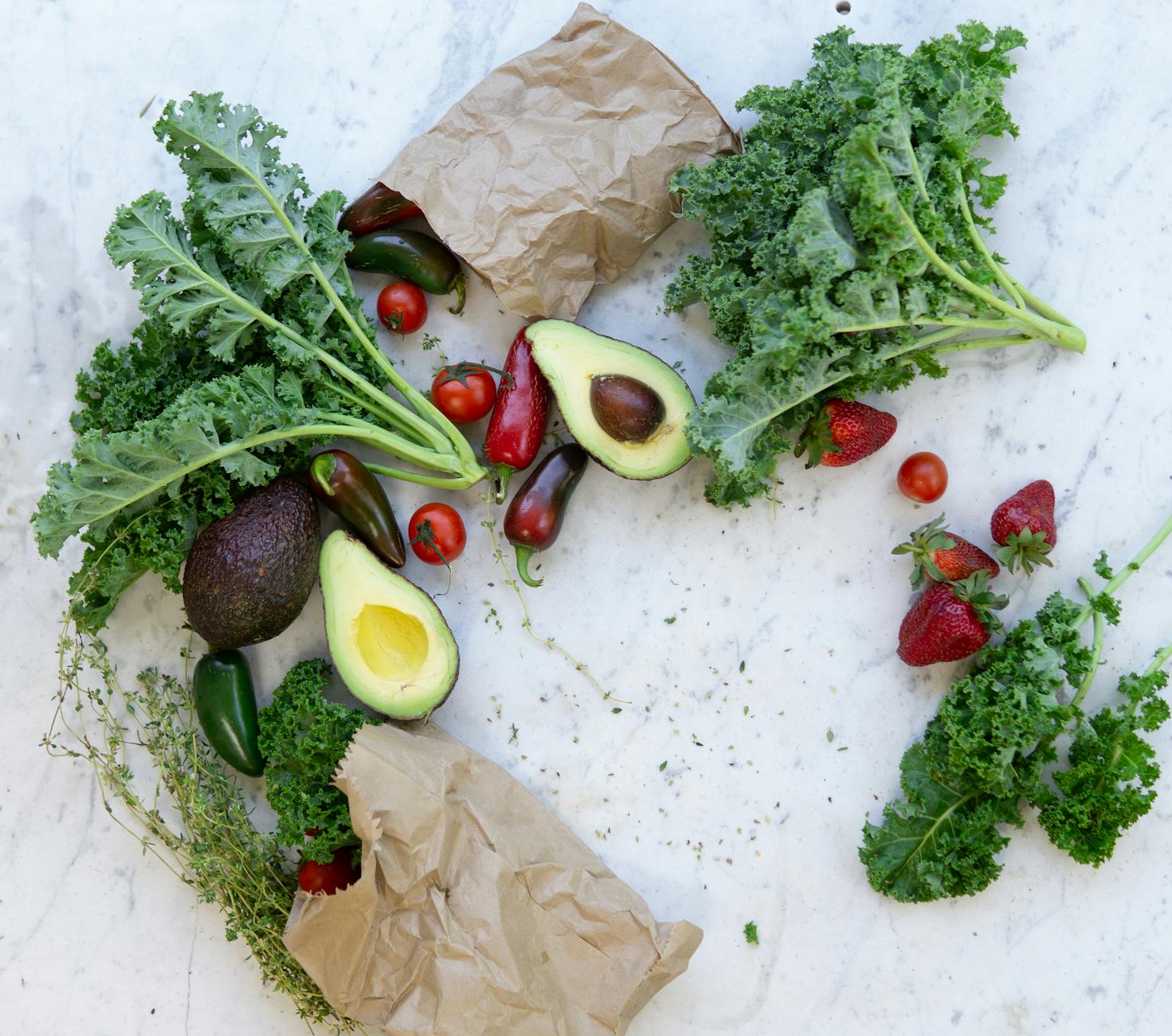
Potatoes have a useful ratio because their arginine content is small, yet a medium potato supplies only about 4 grams of protein. Potatoes, sweet potatoes, winter squash, leafy greens, mushrooms, broccoli, avocados, apples, pears, and berries can support your meals. They still need tofu, lentils, beans, or another protein-rich centerpiece.
Fruit serves a different role. Apples, pears, and berries contain little arginine in ordinary portions, but they also contain little lysine. Choose fruit for flavor, fiber, and variety rather than as proof that your daily protein needs are covered.
| Food group | Protein role | Useful meal role |
|---|---|---|
| Potatoes and sweet potatoes | Small protein contribution | Starchy base beside beans, lentils, or tofu |
| Broccoli, greens, mushrooms | Minor amino-acid contribution | Volume, micronutrients, and savory texture |
| Apples, pears, berries | Very small protein contribution | Snack or breakfast fruit beside soy yogurt |
| Rice, corn, oats, wheat | Moderate at meal portions | Energy source paired with a legume or soy food |
| Quinoa | More protein than rice | Useful grain, yet not a stand-alone lysine anchor |
Grains work best beside legumes or soy
Grains contain protein, though lysine is commonly the limiting essential amino acid in cereal proteins. Beans and lentils provide more lysine, which explains why rice with beans, corn tortillas with black beans, and oats with soy milk work well. Your body does not require every amino acid in the same bite, but dietary variety across the day remains sensible.
Quinoa provides more protein than rice, yet it still works best as one part of a complete meal. Nutritional yeast adds savory flavor and some protein, although amino-acid content differs by brand. Sprinkle it on tofu scramble or potato soup, but do not count a tablespoon as the central protein source.
Those meal-building choices become more important once concentrated snack foods start taking up too much space on the plate.
That balance can shift quickly when calorie-dense snacks and concentrated foods occupy disproportionate room.
Nuts, seeds, chocolate, and concentrated grains need portion awareness
High lysine does not automatically mean low arginine
A spoonful of pumpkin seeds provides protein and minerals, yet it also supplies concentrated arginine. Peanuts, almonds, walnuts, pumpkin seeds, sesame, sunflower seeds, hemp, chia, and cacao contain lysine, but arginine usually rises alongside it. Their fat content also makes large portions easy to eat before fullness sets in.
The point is not to ban these foods. Nuts and seeds provide unsaturated fats, fiber, magnesium, zinc, and vitamin E. Your lower-arginine pattern loses clarity once a smoothie includes hemp, chia, almond butter, cacao, and a seed-based bar in the same morning.
| Food | Why it needs awareness | Meal-sized alternative |
|---|---|---|
| Pumpkin seeds | Dense protein with abundant arginine | Roasted edamame or tofu cubes |
| Sesame and tahini | Concentrated seed paste | White bean spread with lemon |
| Hemp and chia | Small volume supplies many amino acids | Fortified soy yogurt with berries |
| Almonds and walnuts | Arginine rises with handful size | Fruit beside soy milk |
| Cacao powder | Concentrated cocoa solids add arginine | Cinnamon and berries for flavor |
Small swaps preserve variety
Keep a modest spoonful of seeds in meals where you enjoy them instead of turning every meal into a seed delivery system. An afternoon snack can be soy yogurt with berries, an apple with a glass of soy milk, or leftover lentil soup. Those options provide protein with less reliance on arginine-dense ingredients.
Portion awareness is not food fear. A tablespoon of sesame seeds in a meal has a different dietary effect than several seed-based snacks and a large handful of nuts across one afternoon.
Bananas contain small amounts of both lysine and arginine, so they are neither a notable lysine source nor a major arginine source. Their role is carbohydrate, potassium, and convenience. Pair a banana with soy milk or soy yogurt where your breakfast or snack needs more protein.
From there, a full day of meals shows how protein anchors, starches, and lower-arginine choices can work together.
Seeing these choices together makes the approach easier to translate from principles into breakfast, lunch, and dinner.
A one-day menu shows how the pattern fits real meals
Protein anchors belong at each major meal
Start with familiar foods and place a protein-rich item beside breakfast, lunch, and dinner. The sample below is a high-lysine vegan meal plan for an adult eating ordinary mixed meals. It is not a medical protocol or an HSV prescription.
Protein and lysine estimates vary with brands, cooking methods, and portion changes. The structure matters more than copying every ingredient exactly. Your appetite, body size, activity, age, and health status affect the amount that suits you.
| Meal | Example plate | Approximate protein and lysine |
|---|---|---|
| Breakfast | Oats cooked in 1 cup fortified soy milk, topped with pear and cinnamon | 12 g protein, 0.65 g lysine |
| Lunch | Lentil soup, baked potato, broccoli, and an apple | 22 g protein, 1.45 g lysine |
| Snack | Soy yogurt with berries, plus a small spoonful of pumpkin seeds | 8 g protein, 0.45 g lysine |
| Dinner | Tofu and green-pea rice bowl with mushrooms, cabbage, and lime | 25 g protein, 1.55 g lysine |
That menu supplies roughly 67 grams of protein before small brand and portion differences. Lysine is spread through the day instead of resting on one smoothie or one dinner. A steady pattern protects you from the weak spot created by relying on a single food.
Substitutions keep meals practical
- Soy avoidance Choose lentil breakfast soup, bean-based pasta, pea milk, and extra split peas across meals.
- Wheat avoidance Choose rice, corn tortillas, potatoes, oats labeled for dietary needs, and bean pasta.
- Tight budget Rely on dried lentils, split peas, potatoes, frozen vegetables, and store-brand canned beans.
- Higher calorie needs Include olive oil, avocado, extra rice, or another potato while retaining beans or tofu.
- Busy evenings Freeze cooked lentils in 1-cup portions and keep shelf-stable soy milk available.
Protein quality improves through the wider eating pattern rather than perfection at every forkful. Essential amino acids must come from food, so repeated meals centered on legumes and soy matter more than one favorable ratio. That principle aligns with information from the National Institutes of Health on essential amino acids.
The menu also shows why total food intake matters as much as any amino-acid ratio.
Practical meals also underscore that meeting overall protein needs outweighs chasing a mathematically perfect balance.
Protein adequacy matters more than ratio perfection
Energy intake changes how amino acids are used
Calories and protein work together. During an energy shortfall, your body may oxidize amino acids for fuel instead of directing them toward tissue protein synthesis. A narrow pattern built around fruit, vegetables, and starches can leave lysine intake short even where the ratio looks favorable.
A strong routine is straightforward. Include a substantial protein source at breakfast, lunch, and dinner, rotate soy foods and legumes, pair them with grains, and keep nuts and seeds in portions that fit your goal. This approach supports protein quality and amino acid balance without treating food like a laboratory experiment.
- Low calorie intake Eating too little food can reduce the amino acids available for tissue maintenance and repair.
- Grain-heavy meals Meals based mostly on bread, rice, cereal, or fruit may provide less lysine than meals built around legumes.
- Strict avoidance lists Removing soy, beans, peas, nuts, and seeds at once can make adequate protein harder to reach.
- Repeated snack meals Smoothies and bars can crowd out meal-sized tofu, lentil, bean, or pea dishes.
- Higher life demands Growth, illness, injury, pregnancy, aging, and high activity can change your nutrition needs.
Supplements and recurrent symptoms need clinical guidance
Lysine supplements have mixed research findings for recurrent HSV symptoms, and food choices cannot reliably stop or control outbreaks. A clinician can discuss recurrent symptoms, kidney disease, pregnancy, nursing, medication use, and restrictive eating before you start a supplement. Symptoms deserve care based on medical history rather than a ratio chart.
Protein needs can change with age, illness, appetite, body composition, and activity. Older adults, pregnant individuals, and those following a highly restricted Vegan diet may benefit from advice tailored by a registered dietitian or qualified healthcare professional. The International Society of Sports Nutrition also discusses protein quality and total daily intake in active adults.
Use food data to shape meals, not to diagnose a deficiency or direct medical care. Persistent fatigue, unintended weight change, poor appetite, or recurring symptoms call for qualified evaluation.
That clinical boundary leaves you with a useful kitchen standard: build protein adequacy first, then use ratios to fine-tune the foods around it.
With that priority established, a few repeatable habits can turn the approach into a sustainable routine.
Putting a lysine-focused vegan pattern into practice
Start by placing tofu, tempeh, lentils, beans, split peas, and edamame at the center of meals. Pair them with potatoes, grains, vegetables, and fruit so your plate contains energy, fiber, and a meaningful protein source. A steady bowl of lentils or tofu scramble contributes more lysine than strict avoidance of every nut or seed.
Use ratios as a flexible tool rather than a rulebook. Your meals can include sesame, almonds, cacao, or pumpkin seeds in modest amounts while still relying on soy foods and legumes for the bulk of your protein. That balance is more sustainable than a restrictive list of vegan foods low in arginine.
High-lysine low-arginine vegan foods work best as a regular meal pattern. Your goal is adequate food, adequate protein, dietary variety, and medical support where symptoms or restrictions make eating difficult.
FAQ
What vegan foods are high in lysine but low in arginine?
Tofu, soy milk, potatoes, lentils, beans, split peas, and green peas are useful choices for your meals. Soy foods and legumes contain arginine too, yet their protein and lysine amounts make them more practical than large servings of seeds, nuts, or cacao for a lower-arginine eating pattern.
Which plant-based protein sources have the most favorable lysine-to-arginine balance?
Firm tofu and baked potatoes show favorable lysine-to-arginine ratios in the portions listed above. Textured soy protein, lentils, black beans, and edamame also provide substantial lysine and protein, even where their ratios fall below 1.0. Your best choice combines a realistic serving size with enough protein to support the meal.
Are soy foods high in lysine and appropriate for a low-arginine vegan diet?
Soy foods are useful because tofu, tempeh, edamame, soy milk, and textured soy protein provide meaningful lysine and protein. They also contain arginine, so they are not arginine-free foods. For your meals, their protein contribution usually makes them more useful than concentrated seed- and nut-based snacks.
What vegan foods are high in arginine and commonly limited on a herpes diet?
Pumpkin seeds, sesame, tahini, hemp, chia, almonds, walnuts, peanuts, sunflower seeds, and cacao contain concentrated arginine. Those foods also provide valuable nutrients, so you do not need to treat them as forbidden. Portion size matters more than removing every source from your diet.
What vegan food is highest in lysine?
Textured soy protein, edamame, tempeh, tofu, and cooked lentils are among the strongest whole-food choices per realistic serving. Your result depends on water content and portion size, so dry textured soy protein may show more lysine per cup than tofu while serving differently on your plate.
Which nuts have the best lysine-to-arginine ratio?
Nuts are not strong low-arginine choices because their arginine content is concentrated alongside their protein. Peanuts can supply meaningful lysine, yet they also bring substantial arginine. Your meal pattern fits more easily around soy foods, beans, fruit, or soy yogurt than around a large nut snack.
