

A quick scan of the ingredient panel shows whether a Skittles bag includes gelatin, confectionery glaze, or other animal-derived processing aids. Standard U.S. fruit Skittles are usually vegan-friendly, but country-specific formulations, gummies, and special flavors can change the answer.
You need the exact wrapper in front of you because Mars Wrigley can vary formulas by market, flavor line, and format. That matters most if you buy original packs, sour versions, or imported candy.
Key Takeaways
- Original U.S. packs are usually the vegan-friendly option in the candy aisle.
- Gelatin is the ingredient that can flip the answer fastest.
- Sour, gummy, seasonal packs need a fresh label check every time.
- Sugar processing can matter for strict vegans, even in fruit candy.
- The exact bag beats an old ingredient screenshot every time.
The Short Answer On Standard Skittles
Classic rainbow pieces sold in the United States are usually the closest match to a vegan candy answer because the standard fruit formula has long avoided gelatin and dairy. That does not make every bag identical, since Mars Wrigley can change the recipe by market and by format.
For your cart, the brand name alone is not enough. A fresh package label tells you more than a stale blog post, a store photo, or a memory of last year’s candy aisle.
A single unfamiliar term can change the verdict, especially when it signals an animal-derived coating rather than gelatin.
Inside The Ingredient Panel
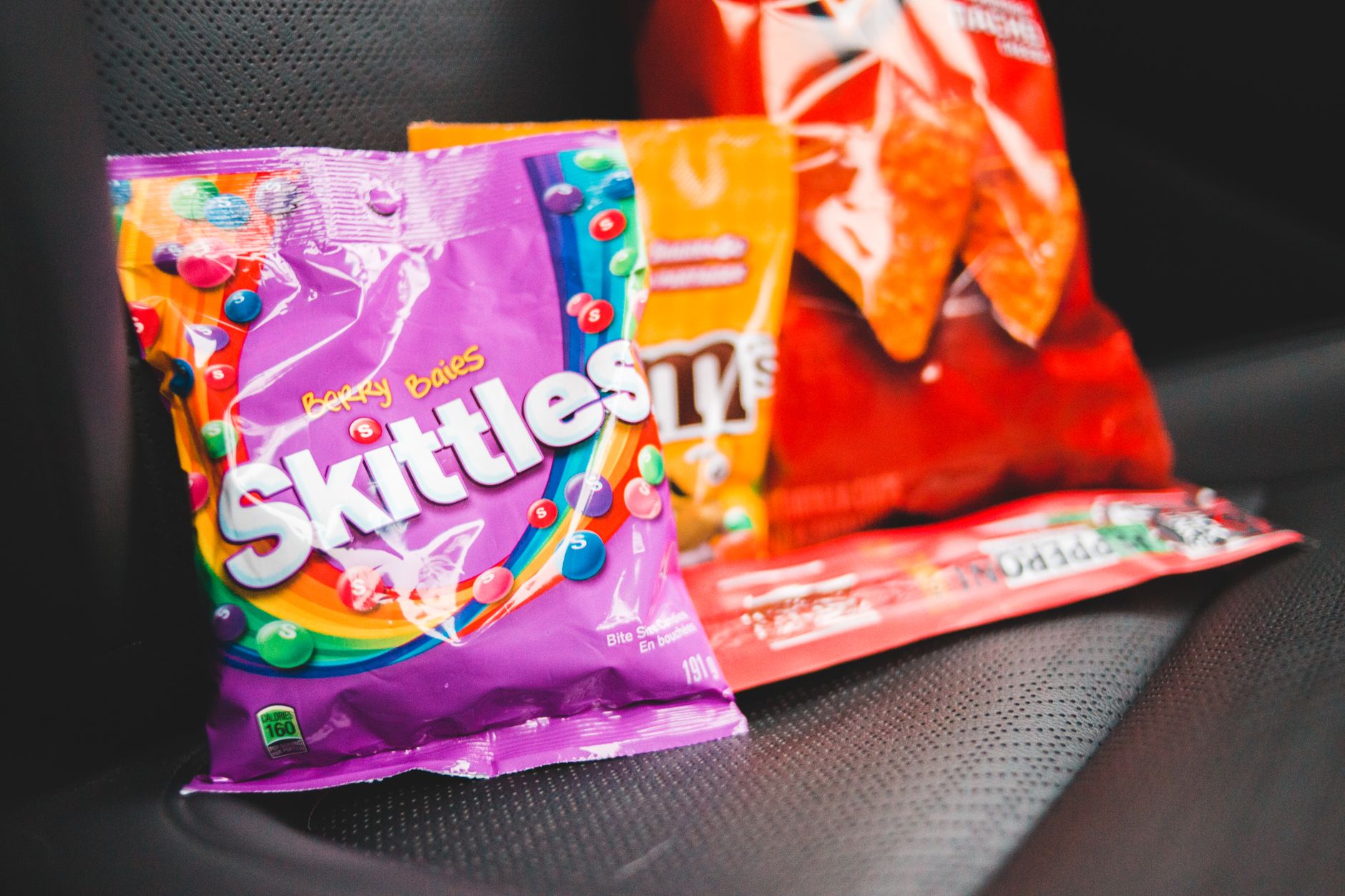
The ingredient panel decides the answer because small changes in texture agents or glaze can move a candy out of vegan territory. You get the clearest read by checking the ingredients first and the front of the bag last.
Gelatin Changes The Answer Fast
Gelatin is the clearest red flag because it comes from animal collagen and shows up in some chewy and gummy sweets. A standard Skittles bag in the U.S. has not centered on gelatin in the same way that marshmallow-style or gummy candies do, which is why the original fruit pieces get a vegan-friendly reputation.
That single ingredient matters more than the rest of the candy talk because it changes texture as well as sourcing. Gelatin traps water and gives candy a springy bite, so its presence usually points to a very different formula from the classic sugar-and-starch chew.
Sugar, Natural Flavors, And Color Additives Sit In Gray Zones
Sugar is the ingredient that trips up strict vegans most often, not because sugar is animal-derived, but because some refining systems use bone char as a filtering aid. That processing step does not appear on a candy label, so the package cannot always settle the question on its own.
Natural flavors and color additives sit in a different kind of gray area. Those terms can cover plant extracts, fruit concentrates, or non-animal flavor systems, yet they can also hide a supply chain detail that the front of the bag never explains.
A Few Label Facts Matter More Than Marketing Copy
Check the ingredient panel, not the slogan on the front. Candy labels can change without a loud announcement, and the back of the bag is where gelatin, confectionery glaze, and other animal-linked ingredients show up.
Mars Wrigley, the company behind Skittles in the U.S., controls the formula that lands in each market. That matters because a Mars product can use one recipe in one country and a different recipe elsewhere, even under the same brand.
Confectionery glaze is another ingredient that deserves a slow read. It can point to shellac from insects in some sweets, which is a different issue from gelatin but still outside a vegan diet.
Even then, the package is only one snapshot, which is why the same candy can read differently across markets and listings.
Flavor Lines That Need Separate Verification
The ingredient logic becomes more important as soon as you move from the basic fruit bag to a flavored spin-off. A flavor name tells you the taste profile, not the formula history.
Original Fruit Pieces Stay The Lowest-Risk Check
Original fruit Skittles are the format most vegan shoppers start with because the ingredient panel has tended to avoid gelatin in the U.S. package. That makes them the easiest Skittles line to place in a vegan routine, though your region still controls the final answer.
Wild Berry Skittles often follow the same general logic in the U.S., but they still deserve a look at the exact bag. Are wild berry skittles vegan is still a label-by-label question, not a fixed brand promise.
Sour And Gummy Formats Raise The Odds Of A Mismatch
Sour Skittles can use a different acid blend and coating pattern, which means the vegan answer should not be borrowed from the original fruit version. Are sour skittles vegan depends on the specific package, not the name on the shelf tag.
Skittles Gummies are the clearest caution flag because gummy candy is the format most likely to use gelatin. Are skittles gummies vegan is often answered by the texture itself, since gelatin is a common gelling agent in this type of candy.
Seasonal And Limited Bags Deserve Extra Caution
Holiday colors, movie tie-ins, and mixed candy packs can shift the ingredient list without changing the front design much. A seasonal pack can carry the Skittles name and still use a formula that does not match the fruit pieces you buy year-round.
That is why a flavor chart helps more than memory. The same shelf can hold one vegan-friendly bag, one doubtful bag, and one obvious no-go in the same week.
| Skittles line | US vegan status | Why it lands there |
|---|---|---|
| Original Fruit | Usually yes | Standard panels have not centered on gelatin or dairy. |
| Wild Berry | Check the bag | Flavor line can differ by market and reformulation. |
| Sour Skittles | Check the bag | Coatings and acids can shift the recipe. |
| Skittles Gummies | Often no | Gummy formats often rely on gelatin for texture. |
| Seasonal packs | High risk | Limited runs change faster than standard fruit bags. |
That table gives you the fastest field check, but it does not replace the ingredient panel on the exact item in hand. A shelf tag can lag behind a reformulation, and candy makers do not always update every online mention at the same speed.
Those gaps matter because dietary rules rarely stop at vegan concerns, and the same ingredients can trigger other restrictions too.
Why Country Labels Do Not Match
A U.S. yes does not carry over to the U.K., Australia, or another market with the same logo on the wrapper. Mars can alter sweeteners, acids, coloring systems, and coating agents to match local supply chains and local rules, so the same brand name can point to different ingredient lists.
Regional Formulas Shift More Than Flavor Names
The U.K. version of a candy can use a different recipe from the American version even when the bag looks familiar. That means a vegan answer tied to one market can mislead you in another, especially around color additives and glaze agents.
Australian packaging adds another wrinkle because import and local production lines may not share the same formula history. Your safest move is to trust the package sold in your region, not a screenshot from another market.
Why This Matters For Your Shopping Habit
Store aisles mix imported stock with domestic stock, and the front art rarely tells you which one you picked up. That is why the ingredient list has more authority than the box art, the ad copy, or the brand memory sitting in your head.
One bag can fit your vegan routine, while the next bag on the same shelf can fail on gelatin or glaze. That split is exactly why country labels deserve their own check, and it points straight to the other diet filters that sit beside vegan screening.
Personal rules still apply after the basics check out, which is why a quick, reliable reading method becomes the real advantage.
Vegetarian, Halal, And Gluten-Free Overlap
Vegetarian and vegan are not the same filter, and candy shows the difference fast. A vegetarian-friendly sweet may avoid meat ingredients while still using shellac, gelatin, or animal-derived processing aids that matter for vegan or halal shoppers.
Vegetarian Does Not Always Mean Vegan
Fruit Skittles can fit a vegetarian pattern more easily than a gummy candy, but vegetarian status does not answer every sourcing question. A strict vegan screen looks beyond meat and checks for gelatin, confectionery glaze, and sugar processing too.
That split is why a bag can feel safe to a vegetarian and still stay outside a vegan plan. The ingredient line has to clear both texture agents and hidden processing details.
Halal And Gluten Filters Ask Different Things
Halal shoppers often focus on gelatin source, flavor carriers, and any alcohol-based processing aid that may appear in confectionery work. A candy can be fruit-based and still miss a halal screen because one additive or coating does not fit the standard.
Skittles are gluten-free in many markets by ingredient list, but gluten-free status is not the same as vegan status. Gluten concerns center on wheat, barley, and rye proteins, while vegan checks focus on animal ingredients and certain processing aids.
Palm Oil Enters The Ethics Discussion, Not The Ingredient Gate
Palm oil can raise environmental concerns for some shoppers, yet it does not make a candy non-vegan by itself. That distinction matters because the vegan question here is about animal source and processing, while palm oil sits in a separate ethics discussion.
For your routine, that means a candy can clear the vegan label check and still leave you with personal sourcing questions. The next step is learning how to read the wrapper fast enough to spot reformulation clues.
A careful scan often saves time in the aisle, but some options still need a different pick when the formula misses your standard.
Reading The Package Like A Label-Checker
Small print beats memory here because candy formulas can change between one shipment and the next. The package in your hand tells you the truth for that bag, and the ingredient panel is the part that matters most.
Watch for gelatin, confectionery glaze, shellac, and vague flavor terms. Those are the ingredients that most often send a candy away from a vegan plan.
- Scan the panel. Look for gelatin, shellac, confectionery glaze, and any dairy words.
- Check the market. U.S., U.K., and Australian bags can use different recipes.
- Read after reformulations. A packaging refresh can hide a new ingredient line.
- Ignore stale screenshots. Use the current bag, not an old internet photo.
- Watch gummy forms. Chewy candy styles are the most likely to use animal-derived texture agents.
A quick label habit saves time in the candy aisle. Pick up the bag, scan the allergen and ingredient panels, and set it back down only after you see the exact words you want.
That difference is enough to make simpler varieties the safer bet when the goal is avoiding surprise ingredients.
Better Candy Picks When A Variant Fails The Test
Some candy shelves hand you a clean yes, and some hand you a maybe. When a Skittles variant misses your vegan filter, the easiest backup is another fruit candy with a short ingredient list and no gelatin.
Mainstream Plant-Based Sweets Can Fill The Same Snack Slot
Hard fruit candies, sour belts with plant-based recipes, and certain pectin-based chews can work well for a vegan pantry. Pectin matters because it comes from fruit cell walls, not animal collagen, so it behaves very differently from gelatin in chewy candy.
That physical difference shows up in the bite. Gelatin gives a bounce, while pectin usually sets into a firmer, fruit-jam style chew that feels cleaner for plant-based candy fans.
Starburst And Similar Fruit Chews Need Their Own Check
Starburst comes up because it sits in the same grocery lane, but a familiar fruit chew still needs its own ingredient read. The brand name, shape, and color do not prove anything about animal ingredients.
Fruit chews from other makers can fit a vegan routine better than a gummy pack, yet each bag still stands on its own panel. That habit helps you move from a single candy question to a reliable shopping pattern.
One useful rule follows from all of this: the simpler the candy format, the easier the vegan check. A plain fruit chew tends to give you less trouble than a gummy line, a holiday mix, or an imported pack with a different formula.
Bottom Line
Original U.S. Skittles are the most likely fit for a vegan candy choice, but the label still has the final word. Once you move into Sour, Wild Berry, gummies, seasonal packs, or another country’s wrapper, you need to read the ingredients on that exact bag before you decide.
FAQ
Do Skittles still have gelatin?
Standard U.S. fruit Skittles have not relied on gelatin the way many gummy candies do. Some Skittles variants in other markets or special formats can differ, so the ingredient panel on the exact package stays the only reliable check.
Are all Skittles vegan?
Some varieties in the lineup still use non-vegan ingredients, so the whole range does not automatically suit a vegan diet. Original fruit pieces in the U.S. are the most familiar vegan-friendly version, while gummies, seasonal packs, and regional formulas can use different ingredients.
Are Skittles vegan in the US and UK?
The U.S. answer can differ from the U.K. answer because Mars can use country-specific formulations. A vegan result in one market does not guarantee the same result in another, so you need to read the local label.
Are Skittles vegetarian or gluten-free?
On many standard fruit packs, the ingredient list points to vegetarian and gluten-free status, although that does not answer the vegan issue. Vegetarian, gluten-free, halal, and vegan each screen for different ingredients and processing details.
How can you check if Skittles are vegan on the package?
Start with gelatin, shellac, confectionery glaze, and any dairy words on the ingredient panel. Then check the country of origin and the exact flavor line, because a reformulated or imported bag can differ from the version you saw online.
Are Sour Skittles vegan?
A separate look at the pouch is necessary for Sour Skittles, since the coating and acid blend can differ from the original fruit version. The safest answer comes from the bag in front of you, not from a general brand claim.
