

Yes, but only in tiny, occasional amounts, because chia seeds are not a staple food for rabbits and can crowd out the fiber that keeps the rabbit digestive system working normally. Plain chia is best treated as a rare taste, not a routine snack.
You need the practical version of the answer, not a trendy nutrition claim. The sections below show where chia fits, which forms to skip, and what to watch for if your rabbit already tried it.
Key Takeaways
- Grass hay first keeps your rabbit chewing and supplies the long fiber that supports gut movement.
- Chia seeds stay dense in fat and fiber, so too much can upset digestion quickly.
- Daily chia is poor for rabbits with obesity, dental trouble, or a sensitive gut.
- Plain chia only is the only form worth discussing for rabbit use.
- Leafy greens and pellets fit rabbit feeding better than seed snacks.
The Short Answer For Rabbit Owners
Plain chia seed can be edible in tiny, occasional amounts, but it is not a regular rabbit food. The answer changes with body size, gut sensitivity, and the rest of the menu, not with human superfood trends.
You should also keep sweetened blends, flavored mixes, and Chia Pet seed media out of the bowl. That small distinction matters more than the seed’s healthy image, especially for a rabbit that already depends on hay and measured pellets.
Even a light sprinkle becomes meaningful when tiny seeds can crowd out the foods rabbits need most.
Where Chia Fits In A Rabbit Diet
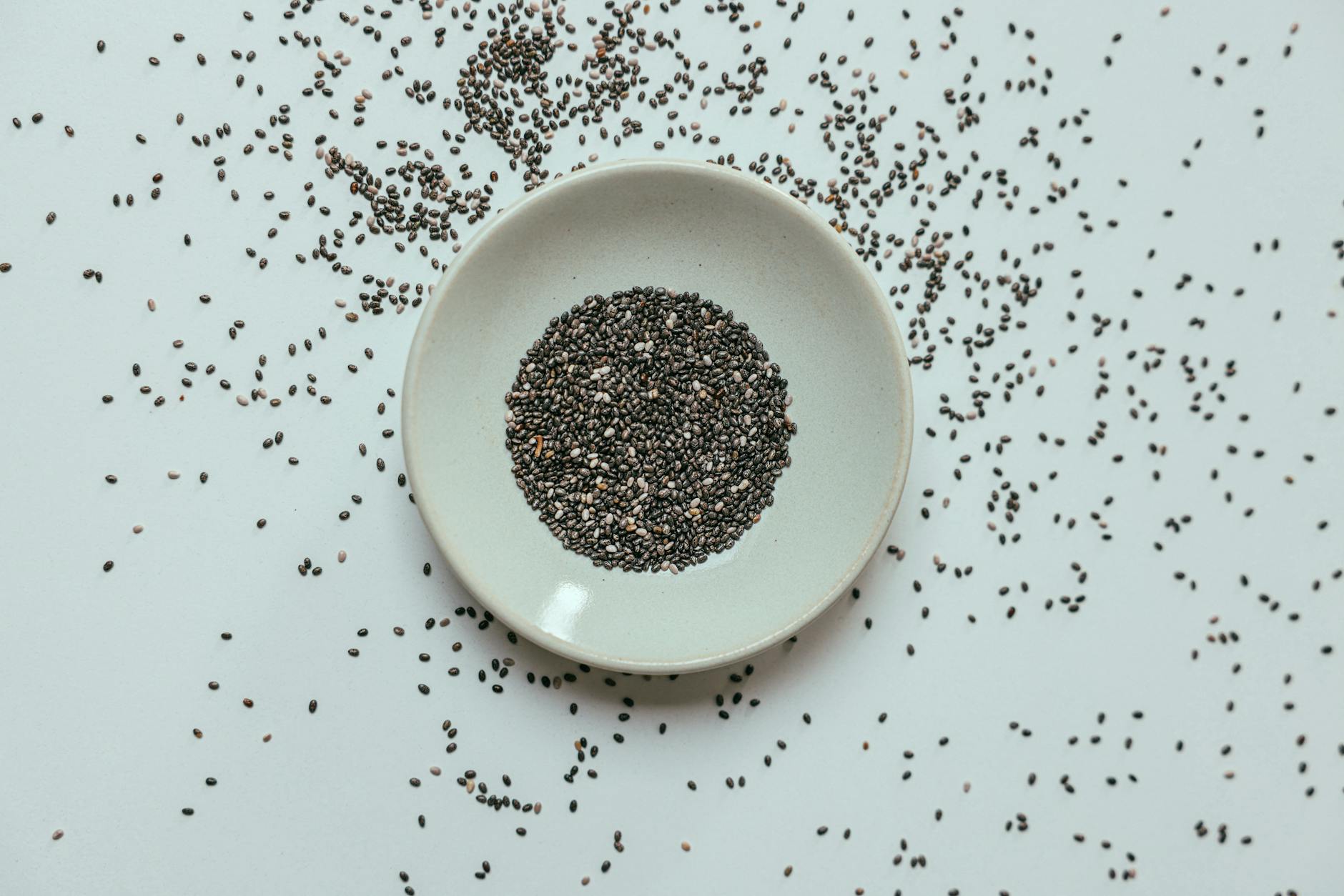
Hay sits at the center of rabbit feeding because long strands force chewing and keep intestinal movement steady. Timothy hay, orchard grass, and similar grasses do more for the digestive tract than any seed ever will.
Hay versus greens versus seeds
Leafy greens add water and variety, while rabbit pellets fill a narrow nutrition gap in measured amounts. Seeds sit in a very different category because they are energy dense and do not belong in the daily pattern that rabbits need.
| Food Type | Role In Rabbit Diet | Why It Matters |
|---|---|---|
| Grass hay | Main food | Supports chewing and gut motility |
| Leafy greens | Fresh variety | Adds moisture and plant diversity |
| Pellets | Measured ration | Helps cover concentrated nutrients |
| Chia seeds | Rare extra | Dense, small, and easy to overfeed |
Human superfood logic does not translate cleanly to rabbits. A food praised for omega-3s or fiber can still be a poor fit for a hindgut fermenter that relies on constant roughage, not calorie-dense extras. PubMed reviews on rabbit digestion repeatedly point to long fiber as the daily anchor, not seeds.
Why small-pet digestion behaves differently
Rabbits ferment plant material in the cecum, a large pouch that depends on a steady flow of fiber. Chia’s gelatinous outer coating absorbs water, which sounds useful for people but raises a different question in a rabbit’s mouth and gut.
You may see a neat little seed snack turn into a sloppy feeding habit after “just a sprinkle.” The issue is not drama, it’s math: tiny objects add up fast in a body that is built for hay, not seeds or microgreens.
That conservative approach makes sense, especially when daily chia leaves little room for a rabbit’s core diet.
The Limits Of Feeding Chia Seeds
The safest approach is to treat chia as a taste, not a routine serving. A few seeds on rare occasions may be tolerated by some rabbits, but there is no useful everyday amount for most animals.
Portion control beats enthusiasm
How much chia can a rabbit eat depends on the animal, yet the practical answer stays small enough to disappear into the rest of the ration. Once a seed starts replacing hay, even in small amounts, the feeding pattern has drifted in the wrong direction.
Use chia only as an occasional garnish, not a habit. A rabbit that already fills out quickly, skips hay, or chews poorly should not get it at all unless a rabbit-savvy vet says otherwise.
Slow changes expose tolerance
New foods should enter the bowl one at a time so digestive upset is easy to spot. A rabbit that stays bright, eats hay, and leaves normal droppings after a small taste is telling you more than any label on a bag.
A quick example helps: one rabbit may nibble two or three dry seeds and act unchanged, while another develops softer stool after the same amount. That difference is why routine feeding rules stay conservative, and it is why can rabbits have chia seeds everyday has a clear answer for most homes: no.
Some forms pass more easily than others, but texture and preparation still shape how a rabbit’s gut responds.
The Forms Of Chia That Are Less Suitable
Whole seeds, sprouted chia, microgreens, and plant pieces are not the same thing, even though the names blur together in search results. Chia Pet products add another layer of confusion because the seed media used for decoration is not a rabbit treat.
Whole seeds and sprouted forms
Whole seeds are small enough to stick in molars or get swallowed without much chewing, which matters for rabbits with dental wear. Sprouted chia and young shoots look softer, yet rabbit digestion still treats them as a new plant food that needs caution.
Mixed products and flavored blends
Sweetened blends, cereal-style mixes, and anything seasoned for people belong off the menu. A seed-coated snack bar or flavored topping carries ingredients that add sugar, salt, or texture changes that a rabbit does not need.
Chia sprouts from a kitchen tray can seem harmless, but human use and rabbit use are not the same setting. A rabbit mouth, cecum, and chewing pattern change the risk profile, especially with fragile teeth or a sensitive gut, which is why are chia seeds safe for rabbits depends on the form and the dose.
Once those signs appear, the safest response is to switch to gentler foods and watch closely for worsening.
Signs A Rabbit Did Not Tolerate Chia Well
Digestive trouble usually shows up fast after a new food. Reduced appetite, fewer droppings, soft stool, diarrhea, gas, or a hunched, quiet posture are all signals that chia did not sit well.
Behavior changes that matter
A rabbit that stops reaching for hay or sits still with a tucked body may be telling you the gut has slowed down. That pattern can move toward gastrointestinal stasis, which needs prompt veterinary attention.
For most rabbits, that simple combination stays the most reliable way to keep meals balanced and familiar.
- Less appetite means the rabbit is backing away from hay or greens after the new food.
- Soft stool signals the mix may have pushed the gut off balance.
- Gas pain can show up as restlessness, teeth grinding, or a hunched stance.
- Choking concern rises with dry seeds, dental gaps, or a poor chew pattern.
- Urgent vet call is wise when droppings stop, the rabbit stops eating, or pain signs appear.
Stop the new food at once and watch the next 12 to 24 hours closely. A rabbit that goes quiet, refuses hay, or passes no droppings needs professional care without delay.
Safer Treats And Sensible Next Steps
Leafy greens, a hay-based treat, and a measured pellet ration fit rabbit feeding far better than seeds do. Romaine, cilantro, parsley, and similar rabbit-safe vegetables give variety without pushing the menu toward dense extras.
What seeds rabbits can eat
Flax, sunflower, and pumpkin seeds are usually best kept as occasional nibbling items for rabbits rather than daily treats. Tiny amounts of plain seed may appear in some mixed foods, but the better question is whether the food belongs in the routine at all.
What to feed instead of seeds
Fresh hay should stay in front of the bowl all day, with greens added in sensible portions and pellets kept measured. That pattern gives a rabbit the fiber base that the cecum needs and keeps treat foods in their place.
Obesity, dental disease, and gut trouble call for extra caution. A rabbit already dealing with any of those issues should skip chia unless a qualified rabbit vet gives a clear reason to do something different. If you are comparing options, what to feed rabbits instead of seeds is usually the same solid trio: hay, greens, and a measured pellet ration.
Final Thoughts
Chia belongs in the “rare and tiny” category, not the daily rabbit menu. The safest bet is to keep hay, greens, water, and measured pellets at the center, then leave seeds out unless a rabbit’s health and chewing ability make a tiny taste reasonable.
FAQ
Are chia seeds safe for rabbits?
A teaspoon or less of plain chia seeds may be tolerated by some rabbits, but they are not a staple food. The main question is not just safety in theory, but whether a rabbit’s gut, teeth, and diet make any seed a poor fit.
Can rabbits eat chia seeds every day?
Daily chia is a poor choice for most rabbits. Hay, greens, and measured pellets fit the normal feeding pattern better, while daily seed feeding can crowd out the roughage that keeps digestion steady.
How much chia is too much for a rabbit?
Any serving that starts replacing hay or causes softer stool, less appetite, or gas is already too much for a rabbit. There is no useful everyday target for most rabbits, so the safer rule is to keep chia tiny and rare.
Can rabbits eat sprouted chia seeds?
Sprouted chia is still a new plant food, not a routine rabbit staple. It may look softer than dry seed, but rabbit digestion can still react badly, so caution stays the right stance.
What should rabbits eat instead of seeds?
Grass hay, leafy greens, fresh water, and a measured pellet ration belong at the center of the bowl. Those foods match the rabbit digestive system far better than seeds, which are dense and easy to overdo.
