

Tofu, tempeh, seitan, edamame, and other soy foods form meals that boost protein without depending on grains or sweet sauces. That structure helps you stay full longer and keeps carbs lower on busy days.
You can use this approach for breakfast, lunch, dinner, and meal prep if you want a practical vegan pattern that supports weight loss or muscle gain without making every plate complicated.
Key Takeaways
- Protein comes first. Build the plate around tofu, tempeh, seitan, edamame, or soy yogurt before adding vegetables.
- Low-carb volume matters. Non-starchy vegetables like cabbage, mushrooms, spinach, and broccoli add size without many carbs.
- Seeds carry weight. Hemp, chia, and pumpkin seeds add protein, fat, and texture with a smaller carb load than grains.
- Legumes stay selective. Lentils, chickpeas, and black beans can work in smaller portions, but they raise carbs faster.
- Macro labels help. Tracking protein per serving and net carbs per serving keeps meals aligned with weight loss or muscle goals.
The low-carb vegan protein staples do the work
That protein-first structure starts with a short list of foods that deliver a lot of amino acids without much starch. Seitan, tofu, tempeh, edamame, soy milk, and protein isolate give you the most control when you want a meal to feel substantial.
| Food | Protein Density | Net Carbs | Why It Fits |
|---|---|---|---|
| Seitan | Very high | Very low | Gluten-based and dense, so it behaves like the leanest plant protein on the plate. |
| Tofu | High | Low | Neutral flavor, easy texture control, and a strong base for scrambles, bowls, and stir-fries. |
| Tempeh | High | Low to moderate | Fermented soy gives it a firmer bite and a little more carb load than tofu, but it still stays useful. |
| Edamame | Moderate to high | Moderate | Handy in salads and bowls, with more carbs than tofu but less than beans. |
| Soy milk | Moderate | Low | Works in smoothies, sauces, and oatmeal swaps without the starch hit of many plant milks. |
| Protein isolate | Very high | Very low | Useful in shakes or baked recipes when you need a protein lift with minimal carbs. |
Tofu, tempeh, and seitan show up again and again because they do the heavy lifting without forcing your carbs upward. That matters on days when you want dinner to feel substantial, not diet-like.
Support players add texture and protein
Nuts, seeds, nut butters, and nutritional yeast belong in a supporting role. Hemp seeds add a soft crunch, chia thickens sauces and bowls, and nutritional yeast brings a savory, cheese-like note with a little extra protein.
Beans, lentils, quinoa, and chickpeas still have a place, but they move the carb total faster than the core staples. A half cup of lentils can work in a mixed bowl, while a full cup of quinoa can shift a meal into moderate-carb territory before you add sauce.
Think of protein sources as the engine and vegetables as the cargo. Once the engine is strong enough, you can add flavor and volume without letting starch take over.
Soy foods contain all nine essential amino acids, which makes them unusually useful in vegan meal planning. Seitan is also protein-rich, though it does not suit you if gluten is a problem in your diet.
That same logic aligns with guidance from Trifecta Nutrition and Greenletes, which both emphasize soy foods and protein-focused vegan meals. The lower the starch load in the base ingredient, the easier it is to shape the rest of the meal, and that leads directly into a repeatable plate formula.
With the base structure set, breakfast can finally deliver lasting fullness without the sugar crash.
Simple plate rules for high-protein vegan meals
That repeatable structure works best when you build meals in layers instead of guessing portions on the fly. Start with a protein target, then add vegetables, fat, and acid so the plate tastes complete.
Start with protein, then layer the rest
A strong plate begins with 25 to 35 grams of protein from tofu, tempeh, seitan, edamame, or a scoop of protein powder in a sauce or smoothie. That anchor keeps the meal filling before vegetables and fats enter the picture.
From there, add non-starchy vegetables, a measured fat source, and a sharp flavor note such as vinegar, lemon, mustard, garlic, herbs, or nutritional yeast. The result feels complete without leaning on rice, potatoes, pasta, or sweet sauces.
Swap starches for lower-carb volume
Cauliflower rice, zucchini noodles, cabbage, greens, and mushrooms can replace a large share of the starch on the plate. They give you chewing time and volume, which helps satiety without pushing carbs up fast.
Tahini dressings work well because they add body and a little fat, which slows the speed at which a meal feels empty again. A thin, sugary sauce does the opposite, so even a small drizzle can change the whole meal profile.
Use the same formula across the day
The same structure works for breakfast, lunch, and dinner, which is why meal prep stays practical. A tofu scramble in the morning, a seitan salad at lunch, and a tempeh skillet at night all follow the same logic.
That repetition is not boring; it is efficient. It also lets you batch-cook one or two proteins on Sunday and remix them through the week with different vegetables and sauces, which keeps high protein low carb vegan meal prep realistic.
Once that template is clear, breakfast stops being the hardest meal to solve, and your morning options get better fast.
That approach matters even more by midday, where a light-looking bowl can still keep hunger away.
Breakfasts that stay filling without the carb spike
Morning meals work better when they use savory protein instead of cereal logic. That shift keeps blood sugar steadier and gives you more staying power before lunch.
Tofu scrambles with savory add-ins
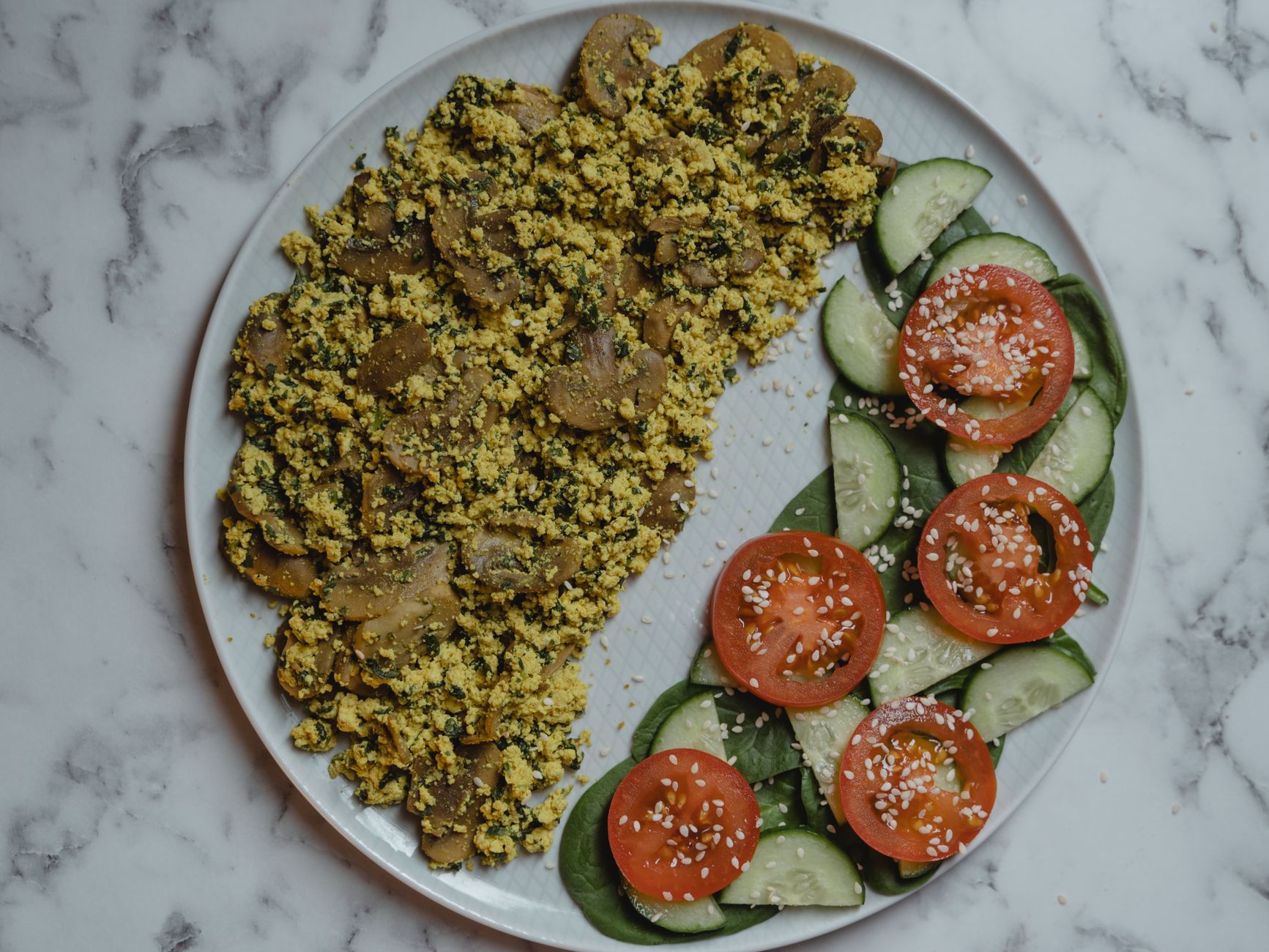
A tofu scramble works because crumbled tofu picks up flavor like a sponge and cooks fast in a skillet. Mushrooms, spinach, scallions, and avocado make it feel hearty without a toast-heavy side.
Season the pan with turmeric for color, black pepper for bite, and nutritional yeast for a savory edge. That combination keeps the meal firmly in the savory lane, which helps avoid the sugar rush that many fruit-heavy breakfasts bring.
Thick bowls and fast smoothies
Soy yogurt, chia seeds, hemp seeds, and protein powder make a bowl that lands closer to a protein meal than a dessert. Add cinnamon, cacao, or a few berries, and you keep sweetness in check.
Smoothies work best when you treat fruit as an accent, not the base. Soy milk, protein powder, chia, ice, and a spoon of nut butter create a thicker texture with fewer carbs than a banana-only blend.
Grab-and-go options for busy mornings
Eggless breakfast burritos made with tofu filling and cabbage slaw reheat well, and baked tofu squares travel even better. Cold chia pudding also holds in the fridge for several days, which makes it useful for meal prep weeks.
Easy high protein vegan meals do not need a long ingredient list at breakfast. A tofu cup, a yogurt bowl, or a blended shake can carry you until lunch without the crash that follows a pastry or cereal-heavy start.
Meal prep shines here because the same cooked tofu can become scramble filling, bowl protein, or sandwich filling the next day.
That same flexibility matters even more at lunch, where a meal that looks light in the container can still hit hard on satiety once you choose the right structure.
By contrast, dinner needs more staying power, which is where tofu, tempeh, and seitan earn their place.
Lunch bowls, salads, and soups with real staying power
Lunch is where structure pays off fast, because the container has to survive a few hours before you eat. Dense protein, crisp vegetables, and a sauce that stays balanced give you a meal that still tastes sharp at noon.
Build around seitan, tofu, or edamame
Seitan slices, baked tofu cubes, or shelled edamame turn a salad into a real meal instead of a side dish. A high-protein dressing made with tahini, soy sauce, lemon, and garlic adds another layer without pushing the meal into grain-bowl territory.
Crunch matters here. Cucumbers, broccoli, cabbage, fennel, and mushrooms create bite and water content, so the lunch feels large without a carb load that creeps up after noon.
Use soups that hold texture
Brothy soups with tofu, greens, and mushrooms reheat cleanly because those ingredients keep structure. Pureed soups can work too, but they need a protein anchor in the bowl or the meal turns into a vegetable starter.
A chickpea or lentil soup can fit, yet it works best in a smaller portion paired with extra tofu or seitan. That keeps protein higher while keeping the legume portion under control.
Meal-prep lunches that stay solid for days
Roasted broccoli, marinated tofu, and shredded cabbage keep their texture better than lettuce and watery tomatoes. A chopped salad kit built around those ingredients can last three days in the fridge before turning soft.
One practical example: a mason jar lunch with seitan, cabbage, cucumber, hemp seeds, and a tahini-lemon dressing stays crisp far longer than a quinoa bowl with delicate greens. That difference matters on your busiest workdays, which is why the dinner section leans even harder into protein density.
With starch under control and vegetables doing more work, the focus shifts to keeping the routine sustainable all week.
Dinner recipes built around tofu, tempeh, and seitan
Dinner usually needs the strongest flavor and the most satisfying bite. High-heat cooking helps soy foods brown, and that browning gives you better texture without adding starch.
Stir-fries, sheet pans, and skillet meals
A hot pan gives soy foods better browning, which deepens flavor without adding carbs. Stir-fries with broccoli, peppers, mushrooms, and tofu can feel rich even without rice.
Sheet-pan tempeh with Brussels sprouts and cabbage works for the same reason. The vegetables roast while the protein picks up color, and the pan juices become sauce with a splash of tamari, vinegar, or sesame oil.
Recipe roundup with macros
| Recipe | Serving Size | Protein | Net Carbs | Calories |
|---|---|---|---|---|
| Tofu broccoli stir-fry | 1 generous bowl | 28 g | 10 g | 360 |
| Tempeh cabbage skillet | 1 skillet portion | 26 g | 12 g | 390 |
| Seitan lettuce wraps | 3 wraps | 32 g | 8 g | 340 |
| Edamame mushroom bowl | 1 bowl | 22 g | 14 g | 310 |
| Tofu zucchini skillet | 1 dinner plate | 30 g | 9 g | 370 |
For low carb vegan recipes for weight loss, the seitan wraps and tofu skillet fit best because they keep carbs lower while staying filling. For high protein vegan recipes for muscle building, the tofu broccoli stir-fry and tempeh skillet give you a little more fuel around training.
Quinoa, chickpeas, and black beans still appear in many vegan dinners, but they work best as smaller accents rather than the center of the plate. That shift in proportion is what separates a protein-forward dinner from a grain bowl with garnish.
Mississippi Vegan, Greenletes, and registered dietitian-led nutrition advice all point toward the same pattern: keep the protein visible, keep the starch contained, and let vegetables carry the bulk. That leaves one final problem, which is making the whole week repeatable without burning out.
All of that points to one clear takeaway: low-carb vegan eating works best when structure and prep do the heavy lifting.
Meal prep, macro targets, and the mistakes to avoid
The biggest weekly win comes from repeating a few reliable components instead of cooking a new meal every time. Once your proteins, vegetables, and sauces are mapped out, the rest of the week gets much easier to manage.
A 7-day structure that keeps protein moving
A useful weekly structure uses three repeat proteins, two vegetable bases, and one sauce rotation. For example, tofu appears in breakfast and dinner, seitan handles lunch twice, and tempeh fills the middle of the week.
That setup can put you near 80 to 100 grams of protein a day without forcing every meal to feel different. A soy milk shake, a tofu scramble, a seitan salad, and a tempeh skillet can each carry a meaningful share of that total.
Common pitfalls that push carbs up
- Big legume portions. Lentils, chickpeas, and black beans add protein, but the carbs rise fast in large bowls.
- Quinoa as a base. Quinoa brings more carbs than tofu, tempeh, or seitan, so it works better as a side.
- Sauce overload. Sweet glazes and bottled teriyaki can add sugar faster than the main ingredients.
- Too little fat. A meal with no nuts, seeds, avocado, or tahini can leave you hungry again soon.
- Weak protein anchors. A pile of vegetables without a dense protein source makes the meal feel light by midafternoon.
Smart swaps for familiar vegan recipes
Swap pasta for zucchini ribbons, rice for cauliflower rice, and mashed potatoes for cauliflower mash. Those changes trim starch without stripping the meal of volume.
Replace a sweet peanut sauce with a tahini, lime, and tamari blend for a sharper finish. Swap a chickpea-heavy salad for tofu cubes and hemp seeds, and the protein stays high while carbs drop.
That is the heart of high protein low carb vegan recipes: protein comes from dense plant staples, carbs stay controlled through vegetable swaps, and meal prep turns the whole thing into a routine instead of a guess.
Bottom Line
The simplest way to keep vegan meals filling and lower in carbs is to let protein lead and starch stay secondary. Once tofu, tempeh, seitan, edamame, seeds, and smart sauces become your default, the meals feel sturdy without relying on grains or sweet extras.
FAQ
What vegan foods are high in protein but low in carbs?
Tofu, tempeh, seitan, edamame, soy milk, and protein isolate sit near the top for protein density with lower carb counts. Hemp seeds, chia seeds, nutritional yeast, and nut butters add extra protein and fat without a large starch load.
How do you eat a high-protein low-carb vegan diet?
Anchor each meal with a dense protein source, then add non-starchy vegetables, a fat source, and a savory sauce. That pattern keeps your plate filling while avoiding the grain-heavy structure that pushes carbs up quickly.
How can you get 100g protein a day as a vegan while keeping carbs low?
Spread protein across breakfast, lunch, dinner, and one snack so each eating window carries 20 to 30 grams. Tofu, seitan, tempeh, soy milk, and protein powder make that target much easier than relying on beans alone.
What vegan foods have zero carbs and high protein?
True zero-carb vegan foods are rare, but seitan and some protein isolates come very close. Most other plant proteins carry at least a few carbs, so the practical goal is low carb, not absolute zero.
Which high-protein vegan recipes are best for weight loss?
Recipes that pair seitan or tofu with broccoli, cabbage, mushrooms, greens, and a measured sauce work well because they are filling without a large starch hit. Lower-calorie bowls and skillet meals are easier to keep within a deficit than quinoa bowls or legume-heavy casseroles.
How do you reduce carbs in vegan recipes without losing protein?
Swap grains for cauliflower rice, zucchini noodles, or cabbage, then replace sweet sauces with tahini, vinegar, citrus, or mustard-based dressings. Keep the same protein source, and the meal stays strong while the carb load falls.
