

A balanced mix of lysine, methionine, and other essential amino acids helps explain why quinoa performs well for plant-based protein. It includes all nine essential amino acids, with lysine standing out more than in most grains, so protein quality matters as much as the raw protein number.
You can use that balance to judge whether quinoa fits your meals, how it compares with beans and grains, and what cooking changes actually matter for your plate.
Quinoa’s Protein Story In Plain English
Protein quality starts with amino acids, not just protein grams. Quinoa, from Chenopodium quinoa, gives you a broader spread of essential amino acids than most cereals, so it works better in plant-based meals.
Lysine is the clearest advantage. Wheat, rice, and corn run low on it, while quinoa brings more to the table, which is why sources such as Harvard T.H. Chan School of Public Health and Healthline place it among stronger plant proteins.
That still does not make quinoa a miracle food. A cup of cooked quinoa gives useful protein for a meal, but you still need the rest of your day to cover total protein needs.
That makes quinoa a helpful building block, yet the full day’s protein still decides the result.
Quinoa’s value sits in balance, not hype. You can use it as a strong plant-based base without treating it as your only protein source.
Key Takeaways
- All nine essentials: Quinoa supplies all nine essential amino acids, which puts it ahead of most grains.
- Lysine advantage: Lysine is one of quinoa’s strongest amino acids, and that supports plant protein quality.
- Sulfur amino acids: Methionine and cysteine are present, though levels vary by variety and growing conditions.
- Cooking holds up: Normal cooking keeps the amino acid pattern intact, while processing can affect digestibility.
- Serving size matters: A typical serving helps your protein intake, but it rarely carries an entire day alone.
Which Amino Acids Stand Out Most
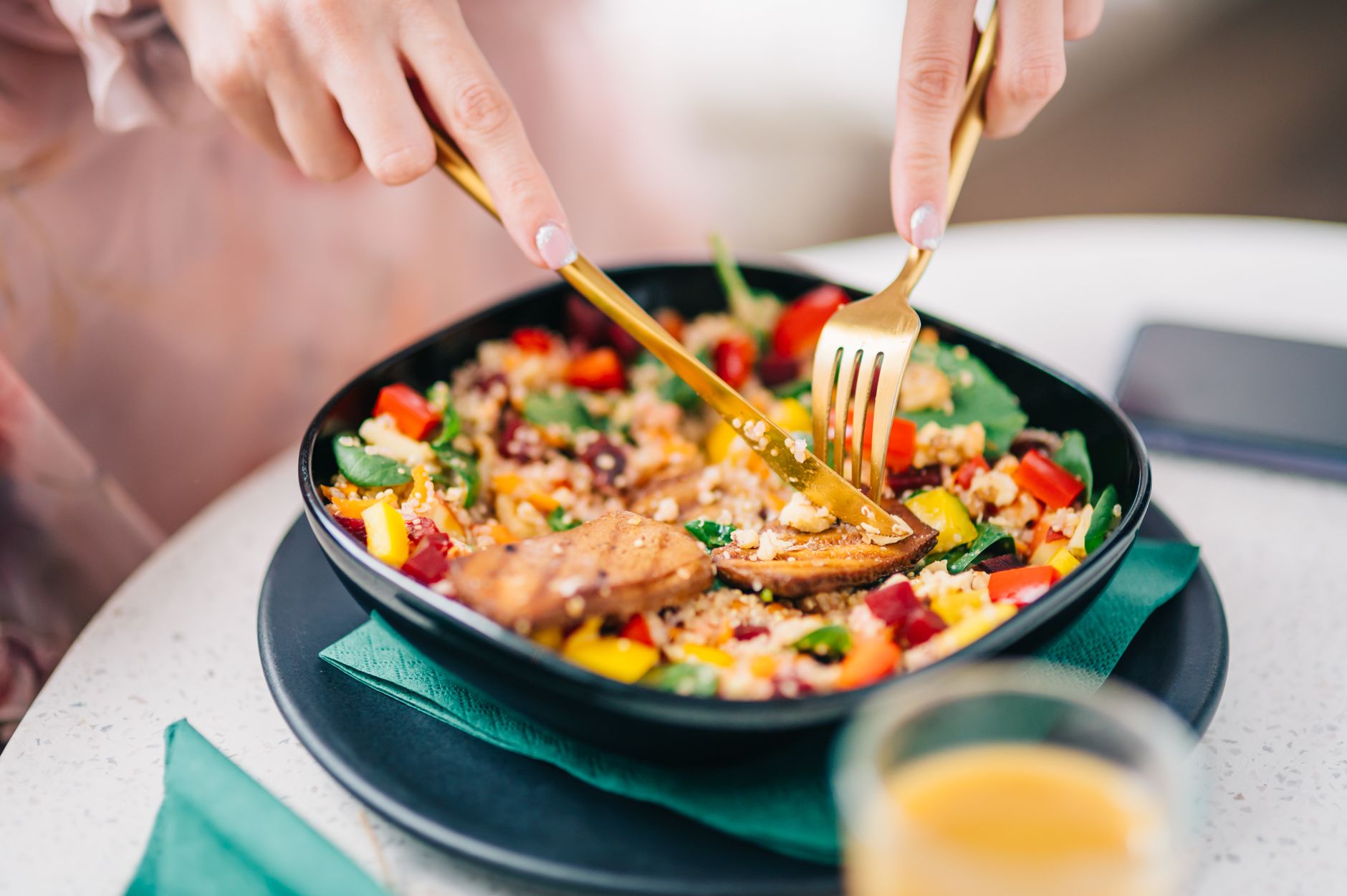
That even balance shows up most clearly when you compare quinoa with standard cereal grains. The quinoa amino acid profile is more complete across the essentials, although the exact numbers still shift across cultivars and growing regions.
Quinoa amino acid composition is not fixed from one bag to the next. Climate, soil, and seed line can change the proportions a little, but the same broad pattern keeps showing up in nutrition facts.
Lysine leads the pack
Lysine is the main gap-filler in grain-heavy diets, and quinoa gives you more of it than rice or wheat. That matters because lysine helps round out the amino acid score in vegetarian and vegan meal patterns.
Evan B. Craine and Kevin M. Murphy have both appeared in work on quinoa seed composition, and the broader finding holds across that research: quinoa leans less on starch and more on a balanced protein package than many breakfast grains. For your lunch bowl, that means a stronger amino acid base before beans or tofu enter the mix.
Methionine and cysteine stay part of the picture
Methionine and cysteine also matter, even when their amounts sit below lysine in some samples. These sulfur-containing amino acids help shape protein quality under FAO standard thinking, which looks at the limiting amino acid in a food.
The practical lesson is simple. Quinoa does not win by being extreme in one amino acid. It wins by being balanced enough that no single gap dominates the profile the way it does in many other grains.
| Amino acid | Relative position in quinoa | Why you should care |
|---|---|---|
| Lysine | High for a grain-like food | Helps offset the common lysine shortfall in cereal-based diets |
| Methionine | Present, not dominant | Supports sulfur amino acid balance in a mixed diet |
| Cysteine | Present, often moderate | Completes the sulfur amino acid pair alongside methionine |
| Leucine | Solid, but not unusually high | Contributes to total protein quality without carrying the whole load |
| Other essentials | All are present | Lets quinoa function as a broad plant protein anchor |
The table only shows part of the picture, because serving size matters just as much as amino acid balance. That is where the quinoa complete protein myth needs a careful reset.
Against that backdrop, quinoa’s strengths become clearer when compared with everyday grains and legumes.
Why Quinoa Counts As A Complete Protein
Containment and adequacy are not the same thing. A food can include all nine essential amino acids and still deliver only a modest amount of each in a normal serving, so protein quality and serving size have to be read together.
Quinoa complete protein myth gets corrected once you separate presence from proportion. The food qualifies as complete, but that label does not mean it beats higher-protein foods by weight.
Complete does not mean unlimited
Quinoa fits the complete-protein label because its amino acid pattern is broad enough to cover the essentials. FAO-style scoring goes further and asks whether the amounts match human needs well enough, not just whether the amino acids appear on the list.
That distinction matters in real life. A bowl with quinoa, vegetables, and beans gives a stronger protein story than quinoa alone, and your total daily intake still depends on the rest of the day.
The myth gets too much credit
“Complete protein” sounds larger than it is. Quinoa is unusual for a plant food, but not because it replaces every protein source in the kitchen; it stands out because its amino acid profile is better balanced than most cereals.
FAO protein quality thinking focuses on the limiting amino acid, the one that runs out first. Quinoa performs well because its profile narrows that gap, not because it removes it.
That nuance keeps the claim honest. You get a better plant-based foundation, but you still need total daily protein from the rest of your meals.
Even so, the way you prepare it can shift how well your body uses those nutrients.
How Quinoa Compares With Grains And Legumes
That balance becomes easier to see once you line quinoa up beside rice, wheat, and beans. Quinoa sits closer to a bridge food, with a protein pattern that looks more even than most cereals while staying plant-based and naturally gluten-free.
Quinoa protein content is useful, but it is not the whole story. Protein quality matters when you compare it with foods that may carry more grams but fewer essentials in a single serving.
Grains versus quinoa
Compared with white rice, wheat, and many oat products, quinoa gives you a tighter essential amino acid spread. That makes it a smarter base when your meal starts with grain and you want better protein quality without jumping straight to soy.
Buckwheat belongs in a similar conversation. It also shows a stronger amino acid balance than standard cereals, which is why buckwheat and quinoa both work well in mixed plant diets. Quinoa shines more clearly on lysine, while buckwheat gets attention for its own seed composition and texture.
Legumes and soy still lead on protein volume
Chickpeas and lentils give you more protein by volume than quinoa in many normal servings, even though quinoa compares well on balance. Soy, tofu, and tempeh usually deliver even more protein per serving, which is why they stay central in plant-based meal planning.
That split is useful for your plate: quinoa helps with balance, legumes help with quantity, and soy helps with both. Put together, they create a more reliable amino acid intake than any single food can offer.
| Food | Amino acid balance | Protein per serving role |
|---|---|---|
| Quinoa | Very balanced for a plant food | Useful anchor in mixed meals |
| Rice | Lower lysine | Better as an energy base than a protein base |
| Wheat | Limited lysine | Strong for texture and calories, weaker for balance |
| Chickpeas | Good, but not as even as quinoa | Higher protein volume in a standard serving |
| Lentils | Strong legume pattern | High protein density for plant meals |
| Soy | Very strong | One of the most protein-dense plant options |
The comparison shows why quinoa earns a place in mixed diets without pretending to be the whole answer. Cooking and kitchen prep still matter, though, because your bowl is shaped by more than the raw seed.
That practical edge matters most when meal planning turns quinoa into part of a larger protein strategy.
Cooking, Rinsing, And Digestibility
Heat does not wipe out quinoa protein in any meaningful kitchen sense. The amino acids stay in place through normal cooking, even though the grain softens, swells, and becomes easier to chew.
Quinoa nutrition facts stay stable enough under normal stovetop cooking that you can focus on texture and taste. Digestibility improves more from softening the seed than from any change in the amino acids themselves.
Rinsing changes taste more than protein
Rinsing can wash away saponins, the bitter surface compounds that coat many quinoa seeds. That step improves taste and may make the grain easier to eat in a larger serving, which indirectly matters more than any tiny surface nutrient loss.
Processing can change digestibility more than home boiling does. Grinding, polishing, extrusion, or heavy industrial heating can alter how proteins sit inside the seed matrix, and that shift can change how easily enzymes in your gut reach them.
Digestibility stays good in the kitchen
Cooking mainly changes texture and water content. From a protein standpoint, the seed still carries the same amino acid pattern after normal preparation, so cooked quinoa remains a solid plant protein base for lunch bowls, soups, and cold salads.
Keep the rinse step simple. It makes quinoa taste cleaner and removes bitterness, while the protein profile stays broadly intact through normal stovetop cooking.
That is the part many meal-prep routines miss. Your biggest change comes from how you pair quinoa, not from worrying that the pot stripped away its amino acids.
A wider mix across meals is usually more realistic than expecting one food to do everything.
Serving Size, Needs, And Smarter Pairings
A standard serving of cooked quinoa gives useful protein, but it still will not cover a whole day on its own. A cup of cooked quinoa often lands around 8 grams of protein, which helps, yet still sits below legumes and soy in protein density.
That serving size explains why quinoa protein content should be read alongside the rest of the plate. You get a dependable base, but the meal works better when another protein source fills the gap.
What a practical portion looks like
For a lunch bowl, that amount can move the needle in a meaningful way, especially when you stack it with beans or tofu. For breakfast, it works well in porridge with yogurt or nuts, where the quinoa adds texture and amino acid balance.
Servings matter because the grain is not a protein isolate. It carries carbohydrates, fiber, minerals such as magnesium and phosphorus, and enough protein to matter, but your daily protein needs still come from the full day’s menu.
Pairings that round out the day
- Beans or lentils: Add protein volume and complement quinoa’s balance.
- Yogurt: Brings more protein to breakfast bowls and snacks.
- Eggs: Add a dense animal protein option beside a quinoa hash.
- Tofu: Fits well in stir-fries and gives a stronger protein base.
- Nuts or seeds: Add texture and a small protein boost to salads.
Those pairings work because they cover different weaknesses. Quinoa supplies balance, legumes supply more total protein, and soy or eggs raise the protein density of the meal without changing the grain’s role.
For vegetarian and vegan diets, that mix is practical, not theoretical. Your plate can stay flexible while still giving a broader spread of essential amino acids across the day, which is more useful than chasing any single perfect food.
With that in mind, the remaining question is how those facts should shape everyday choices.
What To Watch For In Real Life
Quinoa’s strengths do not erase its limits. It is more protein-dense than many grains, but it is still a seed-based food with calories, fiber, and minerals that matter alongside protein.
Search for quinoa nutrition facts and you will also see the tradeoff: a useful amino acid pattern with enough calories to matter in a meal. That balance helps, but it does not turn quinoa into a low-calorie protein concentrate.
Saponins can affect taste, and some people prefer well-rinsed quinoa for that reason. In a small number of diets, oxalate content also enters the conversation, especially for people who manage kidney stone risk with a clinician’s help.
Variety matters too. Washington-grown quinoa and seed lines from other regions can differ in quinoa nutrition facts, amino acid balance, and digestibility because climate and cultivar shape seed composition. That is one reason broad claims can miss the real food on your plate.
One more scientific detail helps explain the protein story. Enzymes in digestion break peptide bonds after cooking, but they work best when the seed’s starch and fiber structure has softened. That is why normal boiling can improve access without rewriting the amino acid profile itself.
Final Thoughts
Quinoa earns its reputation because the quinoa amino acid profile is balanced, not because it behaves like a miracle protein. You get all nine essential amino acids, a strong lysine advantage, and a food that fits neatly into vegetarian or vegan meals without carrying the whole day’s protein burden alone.
Quinoa protein quality is best understood as strong support, not a standalone solution. When you pair it with beans, tofu, dairy, eggs, or nuts, the result is more useful than treating any single serving as the full answer.
FAQ
What amino acids are highest and lowest in quinoa?
Lysine stands out as the strongest amino acid for a grain-like food, while methionine and cysteine can sit lower depending on variety. Even so, the overall mix stays broad enough to support quinoa protein quality in mixed meals.
Is quinoa a complete protein?
All nine essential amino acids are present in quinoa, which is why it gets labeled complete. That label still needs context, because a serving gives moderate protein rather than enough to cover a whole day’s needs by itself.
How much protein does quinoa have per 100g?
Cooked quinoa usually gives about 4 grams of protein per 100 grams, while dry quinoa has much more by weight before water is added. That gap matters because cooking changes water content, not the amino acid pattern.
Does cooking quinoa destroy protein or amino acids?
A brief simmer leaves quinoa protein essentially intact, with normal cooking causing no meaningful loss. Heat changes texture and digestibility more than composition, so the amino acid profile stays broadly intact after rinsing and boiling.
How does quinoa compare with chickpeas or buckwheat for protein quality?
Quinoa compares well on amino acid balance, especially against many grains. Chickpeas and buckwheat also fit well in plant-based diets, but chickpeas usually bring more protein per serving, while buckwheat and quinoa both score well for balance.
Can quinoa help meet daily essential amino acid needs?
A single serving can make a meaningful dent in daily essential amino acid intake, especially in plant-based eating patterns. It works best as part of a mixed day, where legumes, soy, dairy, eggs, or nuts fill in the rest of the protein picture.
