

A half-cup serving of cooked pearled barley delivers roughly 100 to 110 calories, anchored to USDA FoodData Central data and consistent across the major nutrition trackers. The same volume of hulled barley runs 110 to 120 because the bran layer stays intact.
This guide covers half a cup of cooked barley, from the precise calorie count of pearled and hulled varieties to a side-by-side comparison with rice, quinoa, and oats for home cooks tracking their nutrition.
Why Serving Size Matters More Than It Seems With Barley
Dry barley is calorie-dense. One hundred grams of the uncooked grain packs around 350 calories, because the starch, protein, and a thin layer of fat sit packed into a small, dense package. Simmer that same grain in water, though, and the kernels absorb roughly three times their volume in liquid, swelling into a fluffy texture that dilutes the calorie load dramatically.
That single transformation is where most calorie confusion starts. A half-cup of dry barley weighs about 97 grams and holds close to 340 calories. The same half-cup measure, once cooked, weighs closer to 120 grams but delivers only a fraction of the energy. Mixing up those two measurements is the easiest way to misreport intake by 200 calories or more, which can quietly undo a carefully tracked day.
Always weigh or measure barley after it has cooked, or convert dry amounts using a 1-to-3 ratio. A recipe that calls for a half-cup of dry barley will yield about 1.5 cups cooked, and that cooked volume is what every nutrition label and tracker is built around.
That 1.5-cup yield is the starting line for the precise calorie figure that follows.
The Exact Calorie Count for Half a Cup of Cooked Barley
Most major nutrition databases, including the USDA reference, list half a cup of cooked pearled barley at 100 to 110 calories, typically within a 5-calorie margin of each other. Doubling the portion to a full cup lands at 200 to 220 calories, which makes recipe scaling straightforward without recalculating from scratch.
For tracking purposes, 100 calories is the cleanest entry to memorize. It maps neatly to a half-cup volume, fits a standard serving bowl, and matches the FDA labeling convention that MyPlate and most registered dietitians use when teaching portion basics. A kitchen scale confirms the math quickly: half a cup cooked equals roughly 120 grams, and that weight holds the line on the calorie count across cooking methods.
| Portion of Cooked Barley | Approximate Weight | Calories |
|---|---|---|
| 1/4 cup | ~60 g | ~50–55 |
| 1/3 cup | ~80 g | ~67–73 |
| 1/2 cup | ~120 g | ~100–110 |
| 1 cup | ~240 g | ~200–220 |
The Macronutrient Breakdown Behind That Number
Carbohydrates carry roughly 80 to 85 percent of the calories in cooked barley, mostly in the form of starch that the body digests more slowly than refined grains. That slow-release profile is one reason barley earns a place in satiety-focused eating patterns, because glucose enters the bloodstream at a steadier pace than it does after a bowl of white rice or a slice of white bread.
Protein contributes a modest 2 grams per half-cup serving, which is meaningful for a grain but small compared with legumes or animal proteins. Fat stays under half a gram, making barley naturally lean. Fiber lands near 3 grams per half-cup, enough to slow glucose response and support a longer feeling of fullness after a meal.
Beyond macros, cooked barley contributes trace minerals worth noting. A half-cup serving delivers small amounts of selenium and manganese, two micronutrients the American Heart Association highlights for their role in metabolic and antioxidant function. Barley also contains beta-glucan, a soluble fiber that large reviews in nutrition science have linked to support healthy cholesterol levels already within a normal range.
Beta-glucan is one piece of the nutrient picture, but the form of barley you buy quietly reshapes it.
Pearled, Hulled, and Pot Barley Compared
Three forms of barley show up in most US grocery aisles, and the differences matter when you are tracking macros precisely. The main variable is how much bran survives processing, and that single layer shifts both fiber and calories in measurable ways.
Pearled Barley
You’ll spot pearled barley on most supermarket shelves, where it has become the default option for home cooks. The bran layer has been polished away during processing, which removes some fiber and a sliver of the calories. Per half-cup cooked, pearled barley lands at the low end of the range, around 100 calories and roughly 2 to 3 grams of fiber. The texture is softer and the cook time is shorter, which is why most packaged and canned barley products use this form.
Hulled Barley
Keeping the bran fully intact pushes the fiber count higher and nudges the calorie number upward in hulled barley. Expect around 110 to 120 calories per half-cup cooked, with fiber closer to 3 to 4 grams. The chew is heartier and the cook time stretches to 45 minutes or more, which makes hulled barley a better fit for grain bowls and stews than for quick weeknight sides.
Pot Barley
Sitting between the two, pot barley has the bran lightly scoured but not fully removed during processing. The calorie and fiber differences compared with pearled barley rarely exceed 10 calories per half-cup serving, so swapping forms in a recipe will not derail your tracking.
| Barley Type | Calories per 1/2 cup cooked | Fiber per 1/2 cup cooked |
|---|---|---|
| Pearled | ~100 | ~2–3 g |
| Pot | ~105 | ~3 g |
| Hulled | ~110–120 | ~3–4 g |
How Barley Stacks Up Against Rice, Quinoa, and Oats
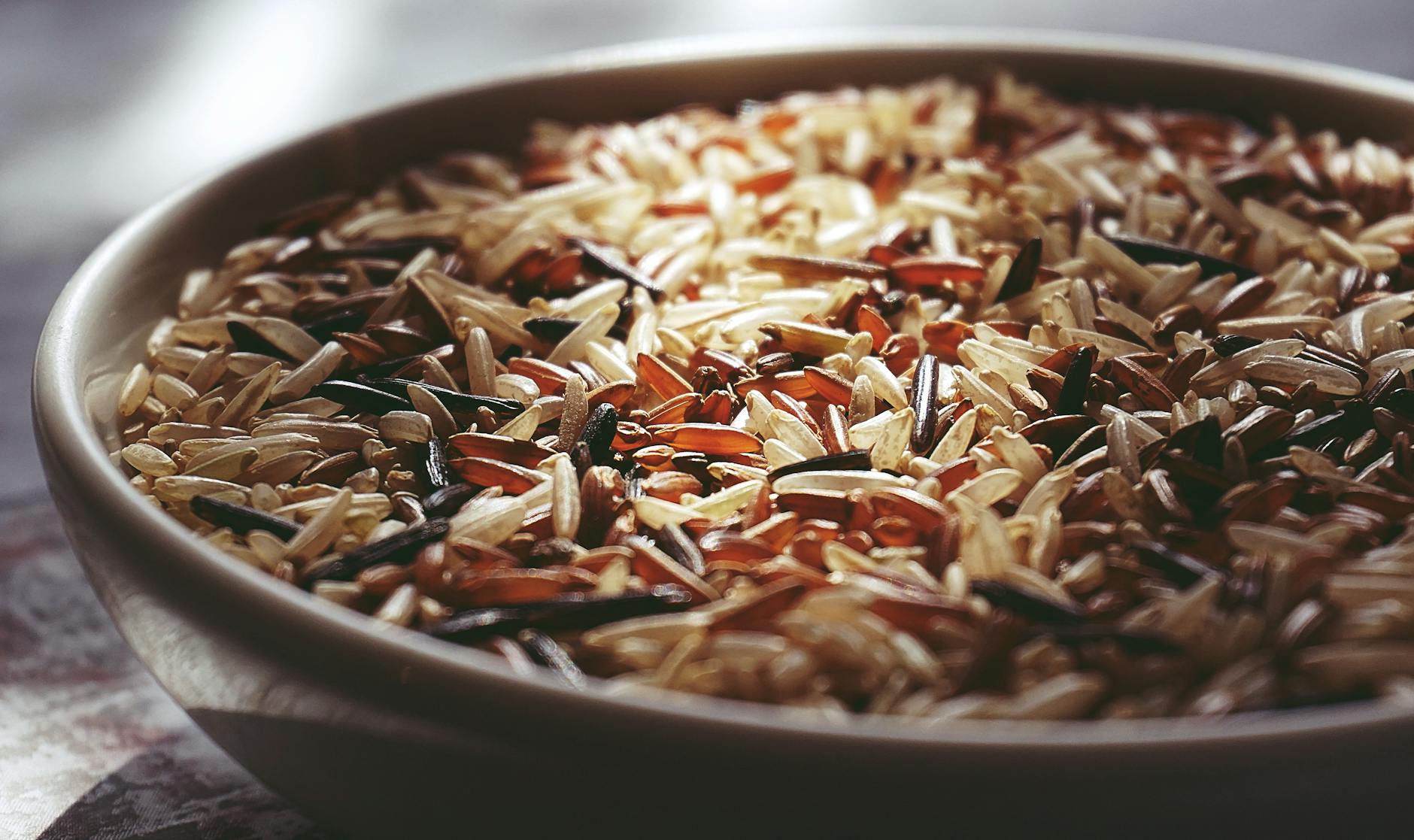
Barley holds its own against other whole grains, especially when fiber is part of the comparison. Half a cup of cooked white rice runs about 100 to 105 calories, brown rice about 110 to 115, and quinoa near 110 to 120. Oats cooked into porridge come in slightly higher, around 150 calories for the same half-cup volume, mostly because oats absorb more water and pack a denser starch profile.
Where barley pulls ahead is fiber. The 3 grams per half-cup serving outpaces white rice (less than 1 gram) and brown rice (around 2 grams), and matches quinoa gram for gram. That fiber-to-calorie ratio is one of the main reasons barley is often recommended in weight management guidelines and in MyPlate’s whole-grain category.
| Grain (1/2 cup cooked) | Calories | Fiber |
|---|---|---|
| Pearled barley | ~100–110 | ~3 g |
| White rice | ~100–105 | <1 g |
| Brown rice | ~110–115 | ~2 g |
| Quinoa | ~110–120 | ~3 g |
| Cooked oats | ~150 | ~4 g |
How Cooking Method and Added Ingredients Shift the Total
Cooking barley in plain water adds zero calories, so the base number stays accurate as long as the grain is simmered without extras. Most of the calorie drift happens after the pot comes off the stove, in the form of fats, salt, and finishing liquids.
A tablespoon of olive oil adds about 120 calories per serving, and a tablespoon of butter adds around 100. Skip them and the half-cup stays at 100.
Broth contributes a small amount of sodium and trace calories, generally under 10 per half-cup, while salt and dried herbs have essentially no caloric impact. Toasting the grains in oil before adding water, a technique that deepens flavor, will tack on roughly 60 to 120 calories per tablespoon of oil used, divided across the servings the recipe produces.
Soups and pilafs are where the math gets slippery. A barley mushroom soup that starts with a mirepoix sautéed in butter can easily push the per-serving count to 200 or more, even though the grain itself stayed at 100. The same goes for risotto-style barley cooked in wine and finished with cheese. When in doubt, weigh the finished portion and log the entire dish, then divide by servings.
Once a recipe is finished, the real test is whether half a cup still holds up in a full day’s eating.
Fitting Half a Cup of Cooked Barley Into a Real Diet Plan
At around 100 calories, a half-cup serving fits comfortably into a 1,500-calorie day as a starch side without dominating the budget. That leaves roughly 1,400 calories for protein, vegetables, fats, and snacks, which is plenty of room for a balanced plate built around lean protein, non-starchy vegetables, and a small portion of healthy fats.
For macro tracking, the serving supplies roughly 22 grams of carbs, 2 grams of protein, and 3 grams of fiber, a clean profile for carb-cycling or balanced-plate frameworks. Pair it with a 4-ounce portion of grilled chicken or fish and a generous serving of roasted vegetables, and the meal lands near 350 to 400 calories with a strong satiety curve that holds for several hours.
Weight-loss eaters can use the fiber-to-calorie ratio to stay full longer than white rice or pasta at the same portion size. The American Heart Association and MyPlate both place barley firmly in the whole-grain category, which means it counts toward the recommended three to five daily servings of whole grains without requiring any special diet label to justify it.
Bottom Line
Half a cup of cooked barley delivers about 100 to 110 calories, anchored to USDA data and consistent across the major nutrition trackers. The serving is carb-heavy, protein-modest, fat-light, and fiber-strong, with a slowly digested starch that supports steadier energy and longer satiety than refined grains. Weigh or measure the cooked portion, account for any added fats, and the rest of the tracking takes care of itself.
FAQ
How many calories are in half a cup of cooked barley?
That of cooked pearled barley contains about 100 to 110 calories, per USDA FoodData Central. Hulled barley runs slightly higher at 110 to 120 calories for the same cooked volume because the bran layer remains intact.
What is the serving size of cooked barley?
Half a cup, weighing roughly 120 grams, is the standard serving size most nutritionists use for cooked barley. That portion provides about 100 calories and fits the FDA labeling convention used on most nutrition facts panels.
How many carbs are in half a cup of cooked barley?
Roughly 22 grams of carbohydrates land in a half-cup serving, with starch accounting for the majority of that total. That starch digests more slowly than the starch in white rice, which helps moderate the post-meal glucose response.
Is cooked barley good for weight loss?
Fiber and slowly digested starch help cooked barley fill you up at a lower calorie cost than refined grains, which can quietly support weight loss goals. A half-cup serving delivers around 100 calories and 3 grams of fiber, a ratio that helps stretch a calorie budget without leaving you hungry an hour later.
How much fiber is in half a cup of cooked barley?
About 2 to 3 grams of fiber fill a half-cup serving of cooked pearled barley, while hulled barley delivers 3 to 4 grams in the same portion. Both forms also contain beta-glucan, a soluble fiber that contributes to the grain’s slow glucose release.
Does barley have more calories than rice?
Barley and white rice land at very similar calorie counts per half-cup cooked, both around 100 to 110. Barley pulls ahead on fiber, which is the more useful number for satiety and blood sugar management.
