


Navy beans are small, oval-shaped legumes that many people in America enjoy in soups and stews. You might like them because they have a nutritional profile packed with protein, fiber, and important vitamins. If you check the nutritional profile, you will see that navy beans offer more fiber and selenium than many other beans. Take a look at this table to compare the nutritional profile of navy beans and black beans:
Nutrient | Navy Beans (½ cup) | Black Beans (½ cup) |
|---|---|---|
Calories | 127 kcal | 114 kcal |
Carbs | 24 grams | 20 grams |
Fiber | 10 grams | 8 grams |
Protein | 8 grams | 8 grams |
Vitamin B1 | 43% DV | 42% DV |
Vitamin B6 | 25% DV | 12% DV |
Folate | 85% DV | 85% DV |
Calcium | 9% DV | 3% DV |
Iron | 31% DV | 26% DV |
Magnesium | 31% DV | 75% DV |
Selenium | 13% DV | 5% DV |
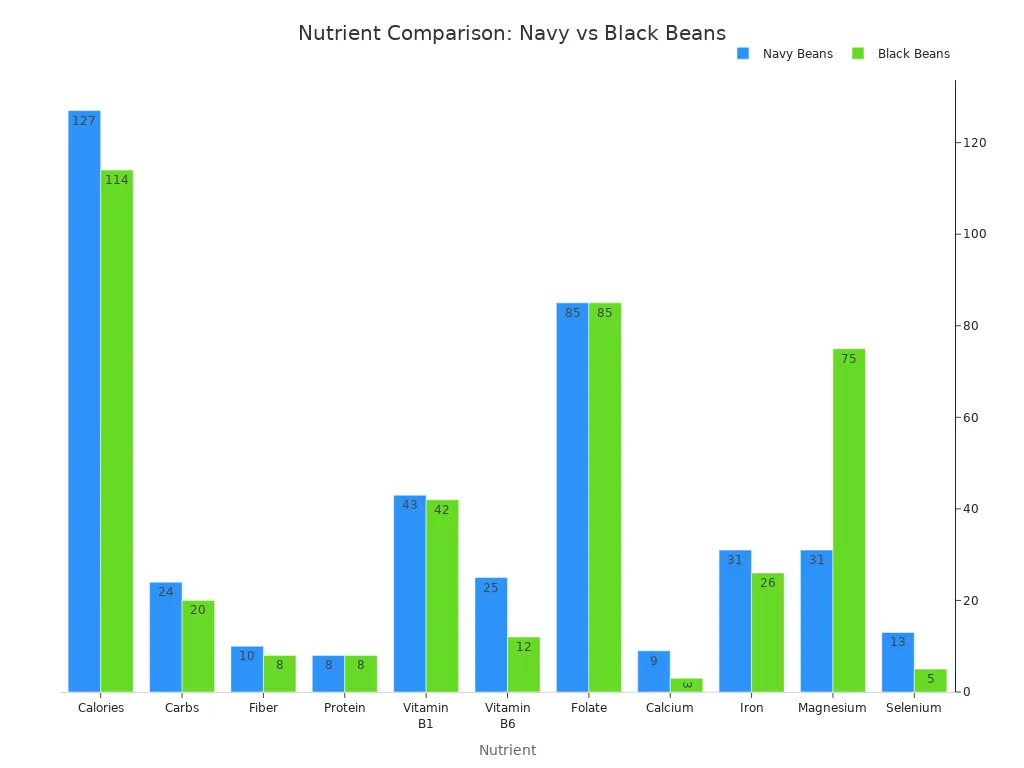
You get a nutritional profile that supports many healthy eating plans, especially if you avoid meat or dairy. Many people with food allergies or special diets choose navy beans for their nutritional profile and mild flavor. If you want to boost your nutritional profile with an easy ingredient, navy beans make a smart choice. Try them in salads, casseroles, or even blended into dips to enjoy their nutritional profile in your daily meals.
Key Takeaways
Navy beans are a nutritious choice, packed with protein, fiber, and essential vitamins. They support healthy eating, especially for those avoiding meat or dairy.
Adding navy beans to your meals can improve heart health by lowering cholesterol levels. Regular consumption may reduce the risk of heart disease.
Navy beans help with weight management. Their high fiber and protein content keep you feeling full longer, aiding in calorie control.
These beans support digestive health due to their high fiber content. They promote regular bowel movements and feed beneficial gut bacteria.
Navy beans have a low glycemic index, making them a smart choice for stabilizing blood sugar levels. They can be beneficial for those with diabetes.
Navy Beans
Origin
You might wonder where navy beans come from. These dried beans have a long history in the Americas. Indigenous people grew dried beans for centuries before Europeans arrived. The name “navy bean” started in the mid-1800s because the U.S. Navy used them as a staple food for sailors. Navy beans offered high protein and lasted a long time, making them perfect for military rations. During the American Civil War and World War I, dried beans became even more popular since they were affordable and easy to store. You can find navy beans in classic dishes like Boston baked beans and Navy bean soup. Even a Civil War song called “The Army Bean” shows how important these dried beans were to soldiers.
Did you know? Navy beans became a favorite in American cuisine because they could feed large groups and stay fresh for months.
Varieties
When you shop for dried beans, you see many options. Navy beans belong to the types of beans known as white beans. You might notice other dried beans like Great Northern, cannellini, and baby lima beans. Navy beans stand out because they are small, oval, and cook up creamy. If you compare dried beans, navy beans have a mild flavor and smooth texture. You can use navy beans in soups, stews, and salads. Some people prefer navy beans over other dried beans because they blend easily into dips and spreads.
Benefits
You get many benefits when you add navy beans to your meals. These dried beans support your health in several ways. Take a look at this table to see what navy beans can do for you:
Health Benefit | What Navy Beans Offer |
|---|---|
Support Brain Health | Navy beans contain phosphatidylserine, which may help slow age-related cognitive decline. |
Rich in Antioxidants | Dried beans are high in polyphenols that fight inflammation and boost your immune system. |
Help Regulate Cholesterol | Eating navy beans can lower total and LDL cholesterol levels. |
Support Heart Health | Navy beans help reduce LDL cholesterol, lowering your risk for heart disease. |
Aid Weight Loss | Dried beans are high in protein and fiber, so you feel full longer and eat less. |
Combat Diabetes | Navy beans help regulate blood sugar and may lower your risk of diabetes. |
You can enjoy navy beans as a tasty way to get more fiber, protein, and important nutrients. If you want a simple ingredient that brings real benefits, dried beans like navy beans make a smart choice for your kitchen.
Navy Beans Nutrition
Macronutrients
You might want to know what makes navy beans a smart choice for your meals. Navy beans give you high quality protein and high fiber, which help you feel full and satisfied. If you look at the macronutrient breakdown, you see that navy beans are low in fat and high in carbohydrates, mostly from fiber. Here’s a table that shows the average macronutrient composition per 100 grams:
Macronutrient | Amount (g) per 100g |
|---|---|
Protein | 9.63 |
Carbohydrates | 13.70 |
Fat | 0.50 |
You get high quality protein from navy beans, which helps build and repair your muscles. The high fiber content makes navy beans a top pick among high fiber foods. If you want a source of fiber that supports your health, navy beans deliver.
Vitamins and Minerals
Navy beans pack a punch when it comes to vitamins and minerals. You get a source of fiber, folate, iron, magnesium, zinc, calcium, manganese, vitamin B1, selenium, choline, vitamin B9, phosphorus, and copper. Take a look at this table to see how much nutrition you get from one serving:
Nutrient | Amount | Daily Value (%) |
|---|---|---|
Fiber | 19.11 g | 65.4% |
Folate | 254.80 mcg | 64.5% |
Manganese | 0.96 mg | 48.3% |
Copper | 0.38 mg | 42.3% |
Phosphorus | 262.08 mg | 37.6% |
Vitamin B1 | 0.43 mg | 36.2% |
Protein | 14.98 g | 30.2% |
Magnesium | 96.46 mg | 24.7% |
Iron | 4.30 mg | 24.7% |
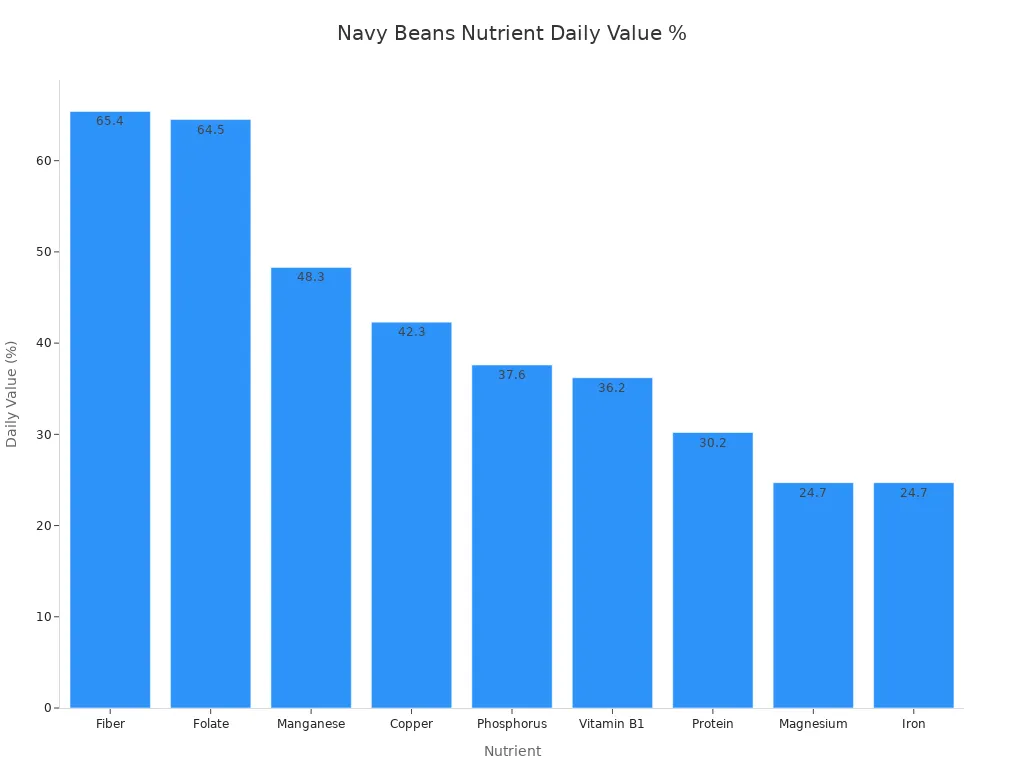
You get a source of fiber and folate, which help your body make new cells and keep your blood healthy. Navy beans also give you magnesium and iron, which support your muscles and energy. If you want high fiber foods that also give you important minerals, navy beans are a great choice.
Here’s a quick look at the vitamins you get from navy beans:
Vitamin C: 3%
Vitamin A: 0%
Vitamin E: 0.2%
Vitamin D: 0%
Vitamin B1: 59%
Vitamin B2: 15%
Vitamin B3: 12%
Vitamin B5: 16%
Vitamin B6: 32%
Vitamin B12: 0%
Vitamin K: 1.5%
Folate: 105%
Navy beans stand out as a source of fiber and folate. You also get choline, which helps your brain and nerves work well. Navy beans give you selenium, which protects your cells from damage.
If you compare navy beans to other white beans, you see some differences. Navy beans have slightly less fiber than great northern beans, but they offer more selenium and choline. Here’s a table to help you compare fiber content:
Bean Type | Fiber Content (grams per serving) |
|---|---|
Navy Beans | 10.2 |
Great Northern Beans | 12.3 |
You get a source of fiber from both, but navy beans give you extra nutrition with more selenium and choline. Great northern beans also provide calcium, iron, magnesium, phosphorus, potassium, selenium, and folate, but navy beans are a top pick if you want cholesterol-lowering fiber and high fiber foods.
Antioxidants
Navy beans offer more than just vitamins and minerals. You get powerful antioxidants that help protect your body. Navy beans are rich in lysine, which supports your heart. You also get ferulic acid, a phytochemical that fights cell damage and keeps your blood vessels healthy.
When you eat navy beans, you increase levels of S-methylcysteine, which helps lower inflammation. Navy beans contain apigenin, a flavonoid that may help prevent cancer. If you want a source of fiber that also gives you antioxidants, navy beans are a smart choice.
Tip: Adding navy beans to your meals gives you high quality protein, high fiber, and antioxidants that support your health every day.
Health Benefits
Heart Health
You might wonder what navy beans can do for your heart. These small beans pack a punch when it comes to supporting cardiovascular health. Navy beans help lower cholesterol and triglyceride levels, which are key risk factors for heart disease. If you eat navy beans regularly, you can see real changes in your cholesterol numbers.
A study from Jenkins et al. found that a diet rich in navy beans led to a drop in total cholesterol by 8 mg/dL and triglycerides by 22 mg/dL.
People who eat legumes like navy beans often have better glycemic control and lower blood pressure.
Eating half a cup of cooked navy beans every day can help lower your total cholesterol. Improved cholesterol profiles mean a lower risk of heart disease.
Take a look at this table to see how navy beans affect cholesterol:
Study | Findings | Reduction in TC | Reduction in LDL-C |
|---|---|---|---|
Anderson et al (1980s) | 275 g navy beans for 3 weeks | 19% | 24% |
Second trial | Similar bean diet | 23% | 23% |
Shutler et al | 2-week intervention | 12% | N/A |
Anderson et al (3 diets) | 3 weeks in metabolic ward | -10.4% | N/A |
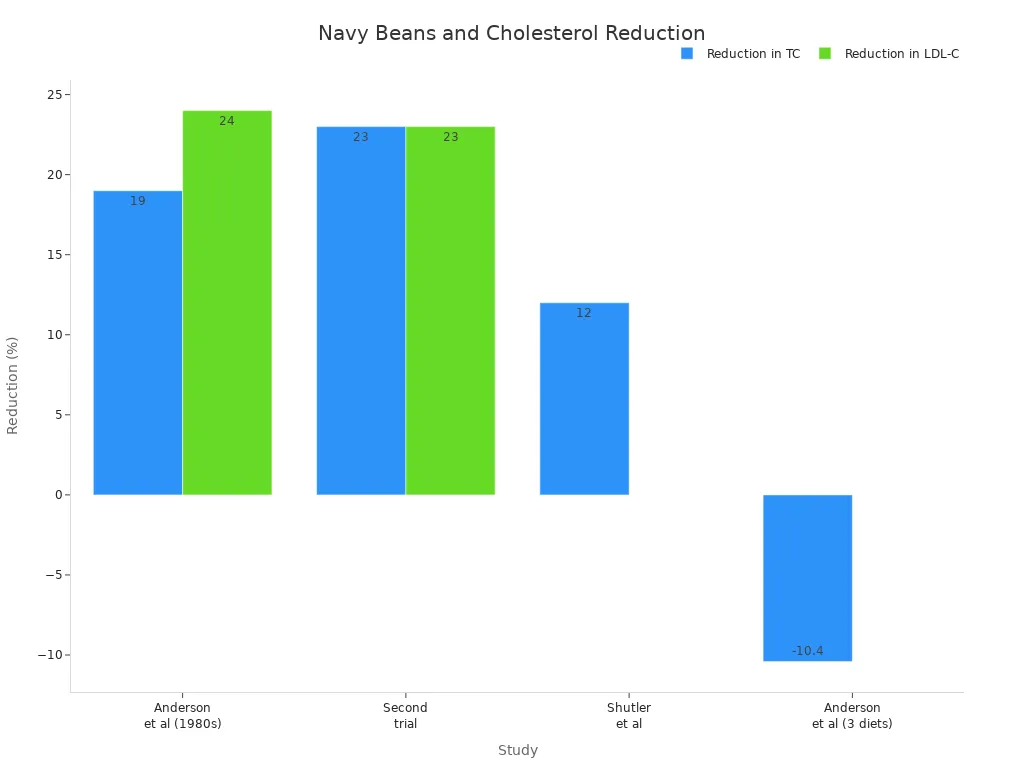
You get these benefits just by adding navy beans to your meals. Navy beans make it easy to support your heart with simple nutrition.
Weight Management
If you want to manage your weight, navy beans offer real benefits. Research shows that people who eat legumes like navy beans gain less weight over time. You might notice that your waist stays leaner and your body mass index stays lower when you include navy beans in your diet.
Navy beans help you feel full because they are high in fiber and protein. One cup of cooked navy beans gives you 19 grams of fiber and 15 grams of protein. These nutrients help you stay satisfied and control your calorie intake.
Navy beans keep you feeling fuller longer.
The protein in navy beans adds to your sense of satiety.
“Beans improve satiety to an extent that is not significantly different from beef in older adults, supporting the role of beans as a nutrient-dense source of protein and dietary fiber as part of a satisfying meal for older adults.”
You can enjoy navy beans in recipes like salads, soups, or casseroles and get the benefits of better weight management.
Digestive Support
Navy beans support your digestive health in several ways. You get a big boost of fiber, which helps keep your gut healthy and your bowel movements regular. Navy beans provide both soluble and insoluble fiber, so you get benefits for your whole digestive system.
Regular consumption of navy beans can improve gut health and regulate immune and inflammatory processes.
One cup of cooked navy beans contains 19 grams of fiber, which is a significant portion of your daily recommended intake.
Navy beans are rich in resistant starch, which acts as a prebiotic and feeds beneficial gut bacteria.
The combination of soluble and insoluble fiber helps maintain regular bowel movements.
If you add navy beans to your meals, you can increase the diversity of good bacteria in your gut. Studies show that people who eat navy beans see more beneficial bacteria and less harmful bacteria. Navy beans also help regulate inflammation and support your immune system.
You can use navy beans in recipes like dips, stews, or even as a side dish to get these digestive benefits.
Blood Sugar
Navy beans help you keep your blood sugar steady. These beans have a low glycemic index (GI) of 39, which is lower than corn, rice, pasta, or potatoes. The high fiber content slows down glucose absorption, so you avoid big spikes in your blood sugar.
Food Source | Glycemic Index (GI) |
|---|---|
Navy Beans | 39 |
Corn | Higher than 39 |
Rice | Higher than 39 |
Pasta | Higher than 39 |
Potatoes | Higher than 39 |
If you have diabetes or want to prevent it, navy beans make a smart choice. You get stable blood sugar levels and better insulin sensitivity. Navy beans fit well into diabetes-friendly recipes and do not cause big increases in blood sugar when you eat them in normal portions.
Evidence Description | Impact on Blood Sugar Levels |
|---|---|
Navy beans have a low glycemic index and are high in fiber. | They help regulate blood sugar levels and improve insulin sensitivity in people with diabetes. |
The fiber content in navy beans slows glucose absorption. | This promotes stable blood sugar levels and prevents significant increases. |
Navy beans can be included in a diabetes-friendly diet. | They do not significantly raise blood sugar levels when consumed in appropriate portions. |
High fiber content improves insulin sensitivity and reduces insulin resistance. | This contributes to better overall glycemic control over time. |
You can add navy beans to recipes like chili or veggie bowls to enjoy these benefits.
Metabolic Syndrome
Navy beans offer benefits for people concerned about metabolic syndrome. Metabolic syndrome includes risk factors like high waist circumference, high cholesterol, and high blood pressure. Navy beans help you address these risks with simple nutrition.
A study showed that eating 5 cups of canned navy beans per week for 4 weeks led to a drop in waist circumference by 2.5 cm in females and 2.1 cm in males. The same study found lower pulse rates, total cholesterol, and LDL cholesterol in males.
If you want to improve your metabolic health, navy beans make a great addition to your recipes. You get benefits for your waistline, cholesterol, and heart health.
Navy beans give you a simple way to support your health. You get nutrition, fiber, and protein, all in one easy ingredient.
Healthy Meals with Navy Beans

Preparation
What makes navy beans a great choice for healthy meals? You get flexibility in preparation. If you use dried navy beans, soaking them overnight helps soften the beans and reduces cooking time. Soaking also breaks down phytic acid, making minerals easier for your body to absorb. You can add aromatics like onion or garlic during soaking for extra flavor. Rinse the beans well before cooking to remove any dirt. If you want to save time, pressure cooking works well and keeps the beans tender. For even more nutrition, try germinating or fermenting navy beans. These methods help your body absorb nutrients better.
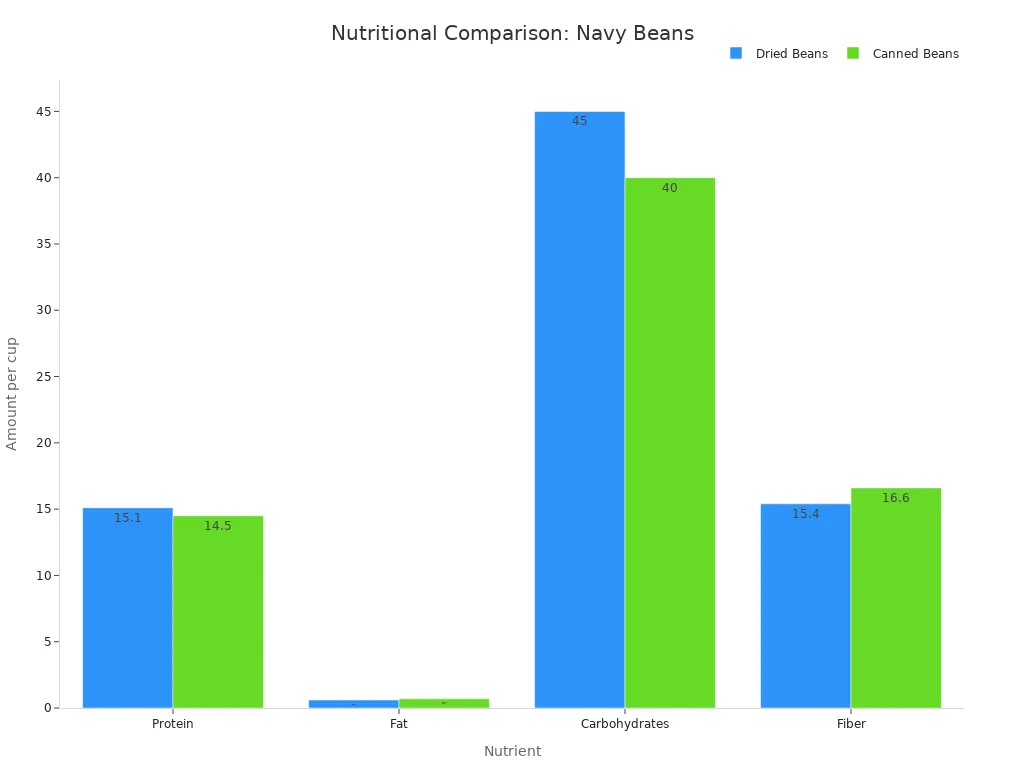
If you use canned navy beans, you get convenience. Canned beans are ready to use, but watch out for sodium. One cup of canned navy beans can have over 900 milligrams of sodium. Rinsing canned beans under water helps lower the sodium. Here’s a quick look at the nutrition differences:
Nutrient | Dried Beans (1 cup) | Canned Beans (1 cup) |
|---|---|---|
Protein | 15.1 grams | 14.5 grams |
Fat | 0.6 grams | 0.7 grams |
Carbohydrates | 45 grams | 40 grams |
Fiber | 15.4 grams | 16.6 grams |
Sodium | Few milligrams | Over 900 milligrams |
Cooking Tips
What are some tips for preparing navy beans that boost flavor and texture? You can cook navy beans on the stovetop with chicken broth and bay leaves for a rich taste. Instant Pot cooking gives you tender beans fast and lets you add aromatics like red pepper flakes. If you want a smoky flavor, toss in a ham bone while cooking. For a spicy kick, sprinkle in hot chile powder. Avoid adding acidic ingredients like tomatoes at the start, since they can make the beans tough. Try simmering at a low temperature for even cooking and better texture.
Tip: Combine navy beans with vitamin C-rich foods, like bell peppers or tomatoes, to help your body absorb more minerals.
Recipe Ideas
What healthy meals can you make with navy beans? You have lots of options for soups, stews, and one-pot dishes. Navy beans with ham and vegetables make a comforting stew. Vegetarian navy bean soup is hearty and gluten-free, perfect for anyone avoiding meat or gluten. One-pot meals with navy beans, green chile, and corn come together quickly and pack a spicy punch. You can add navy beans to salads, blend them into dips, or use them in casseroles. Navy beans work well in stews and soups, giving you a creamy texture and mild flavor. Try pairing navy bean soup with gluten-free bread for a complete meal.
Navy beans fit into many culinary traditions. You can enjoy them in healthy meals whether you follow a vegetarian, gluten-free, or classic American diet.
Risks
Allergies
What should you know about allergies and navy beans? While most people can eat navy beans without problems, some may have an allergic reaction. Symptoms can include itching, swelling, stomach pain, or trouble breathing. If you or your child have never tried navy beans before, you might want to be careful the first time.
Here are some steps you can take to lower the risk of an allergic reaction:
Cook the navy beans until they are soft.
Mash the beans into a paste or flatten each bean before serving.
Start with a small amount to see if you notice any reaction.
If you do not see any problems, slowly increase the amount you eat.
If you have a known legume allergy, talk to your doctor before trying navy beans.
Anti-Nutrients
What anti-nutrients are in navy beans, and how do they affect you? Anti-nutrients are natural compounds that can make it harder for your body to absorb some minerals. Navy beans contain a few types:
Lectins: These can stick to your gut and may block some nutrients from being absorbed.
Phytates: These can lower how much iron and zinc your body takes in.
Oxalates: These can make it harder for your body to use calcium.
You can reduce anti-nutrients in navy beans with simple cooking methods. Here’s what you can do:
Soak the beans in water for at least 8 hours or overnight.
Boil the soaked beans, then simmer until they are tender.
Use fresh water for cooking after soaking.
Try sprouting the beans before cooking.
Choose canned beans, which usually have fewer anti-nutrients.
Soaking beans for 12 hours can cut phytate levels by up to 66%. Canned beans may have up to 92% less phytate than dried beans.
If you prepare navy beans the right way, you can enjoy their nutrition with fewer worries about anti-nutrients.
You get a lot from navy beans. They give you protein, fiber, and important vitamins. You can add them to soups, salads, or dips. You find them easy to prepare, whether you use dried or canned beans. Try navy beans in your next meal. Start with a simple recipe and see how they fit into your healthy eating plan.
FAQ
What are navy beans used for in cooking?
You can add navy beans to soups, stews, salads, and dips. They blend easily and give dishes a creamy texture. Many people use them in baked beans and casseroles.
What do navy beans taste like?
Navy beans have a mild, slightly nutty flavor. You might notice they taste creamy when cooked. Their subtle taste lets them blend well with many ingredients.
What is the best way to store cooked navy beans?
Place cooked navy beans in an airtight container. Keep them in the refrigerator for up to five days. You can freeze them for longer storage.
What nutrients do navy beans provide?
Navy beans give you protein, fiber, folate, iron, and magnesium. They also offer selenium and choline. These nutrients help support your heart, digestion, and energy.
What should you do if navy beans cause stomach discomfort?
Try soaking navy beans overnight before cooking. Rinse them well. Start with small portions and increase slowly. This helps your body adjust and reduces discomfort.