

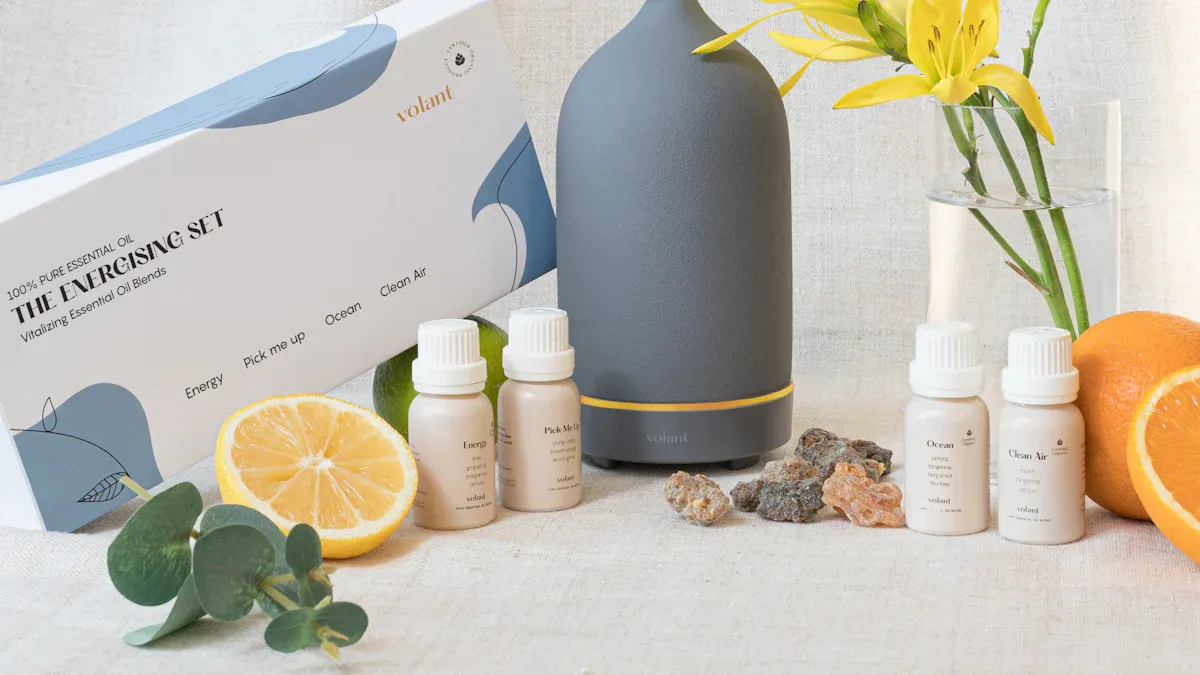
Ylang ylang brings a sweet, floral scent that turns heads in natural wellness circles. You may notice more products featuring ylang ylang, thanks to its rising popularity.
The market for ylang ylang grows fast, with values expected to reach up to $180.10 million by 2032.
People want natural and sustainable ingredients, and ylang ylang fits right in.
You see it used in cosmetics, personal care, and even food.
Cultures have used ylang ylang for centuries. In Polynesia, the flowers add fragrance to coconut oil for massage. Indonesian women scent their hair with ylang ylang, and the flowers often appear in wedding rituals. You might hear about the Health benefits, like soothing stress or boosting skin health, but it’s smart to use ylang ylang safely.
Key Takeaways
Ylang ylang essential oil helps reduce stress and anxiety. Use it in aromatherapy to promote relaxation and improve your mood.
This oil supports heart health by lowering blood pressure and heart rate. Consider inhaling ylang ylang oil or applying it with a carrier oil for cardiovascular benefits.
Ylang ylang oil enhances skin health by balancing oil production and fighting acne. Dilute it with a carrier oil before applying to your skin for best results.
The oil has antibacterial properties that aid in healing minor wounds and protecting against infections. Use it to treat small cuts and burns safely.
Always dilute ylang ylang essential oil before use to avoid skin irritation. Conduct a patch test to check for allergies or sensitivities.
Ylang Ylang Overview
What is Ylang Ylang?
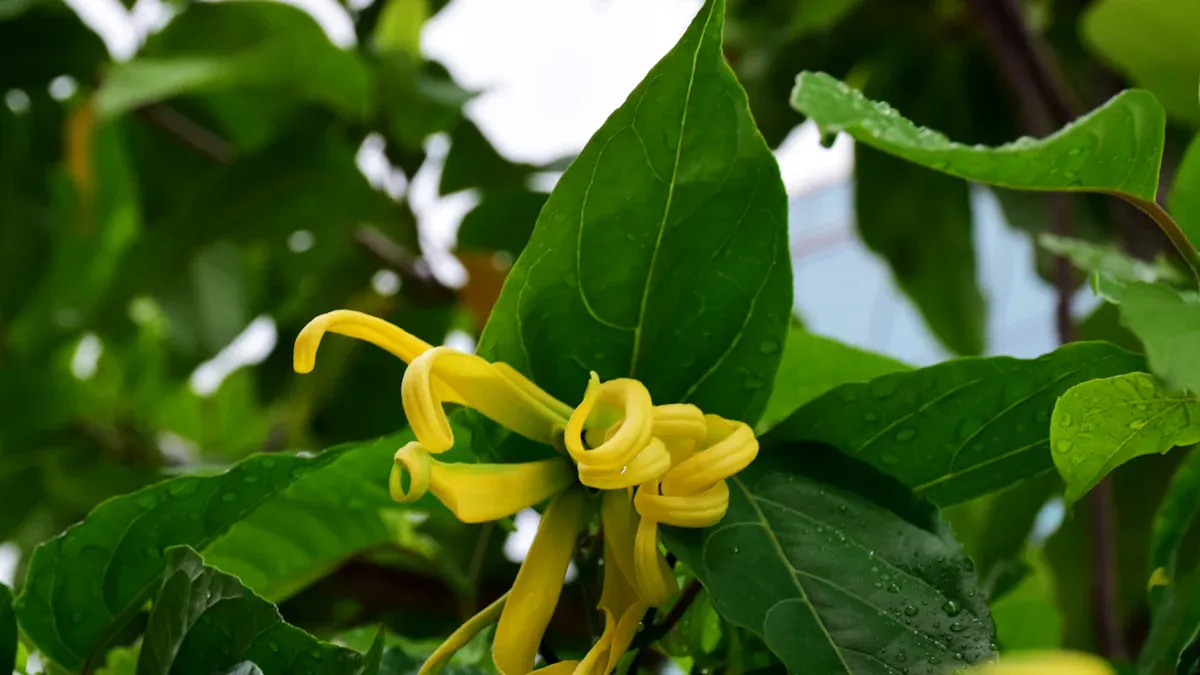
You might wonder what makes ylang ylang stand out among other fragrant plants. Ylang ylang is a tropical tree, known for its beautiful, star-shaped yellow flowers. These flowers give off a sweet, floral scent that you can recognize in many perfumes and wellness products. The tree grows quickly, reaching maturity in just one or two years. Its evergreen leaves stay on the tree most of the time, so you don’t have to worry about a mess underfoot. At night, the flowers attract moths, which help pollinate the plant.
Ylang ylang grows best in warm, humid places. You’ll find it in countries near the equator. Here’s a quick look at where most ylang ylang comes from:
Region | Description |
|---|---|
Philippines | Major producer of ylang ylang oil |
Indonesia | Significant source of ylang ylang cultivation |
Madagascar | Important region for ylang ylang production |
Comoros | Notable for high production levels, especially Anjouan |
Ylang ylang first arrived in the Indian Ocean region in the early 20th century, thanks to French settlers. In Mayotte, people have grown it since the 19th century.
Ylang Ylang Essential Oil
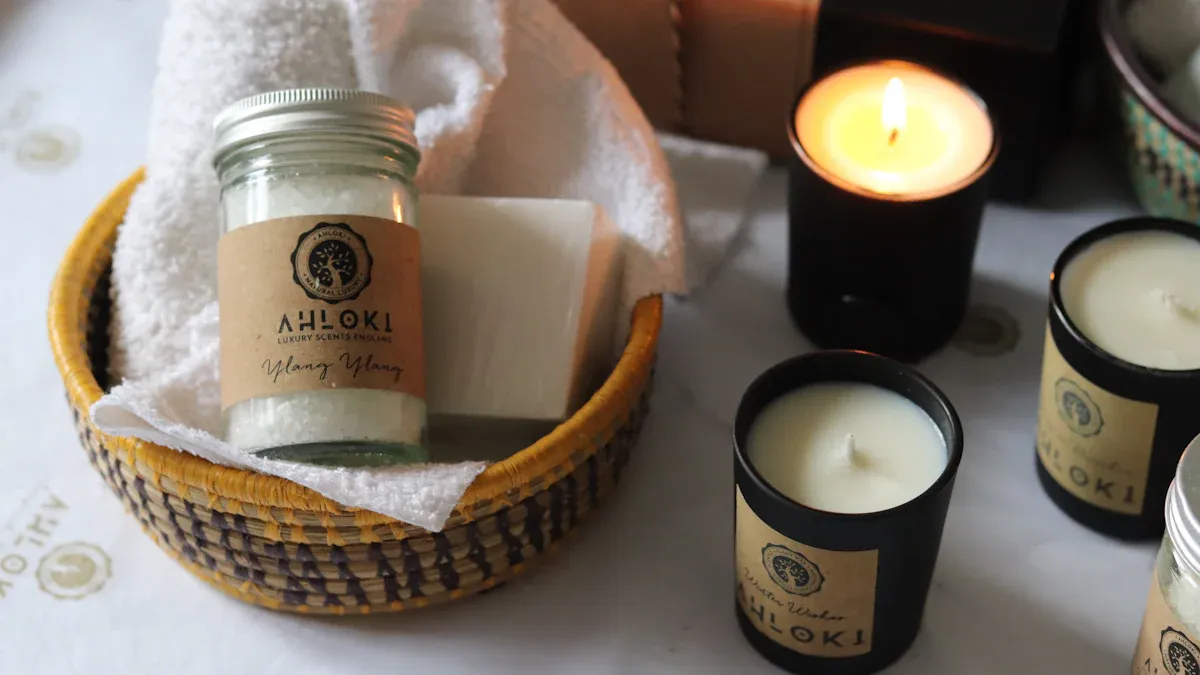
Ylang ylang essential oil is the most popular way you’ll see this plant used. The oil comes from steam-distilling the flowers. You’ll find it in many products, from skin creams to hair conditioners, scented candles, and perfumes. People love it for its relaxing and harmonizing effects in aromatherapy. You can add it to a diffuser to help calm your mind or mix it into massage oils for a soothing experience.
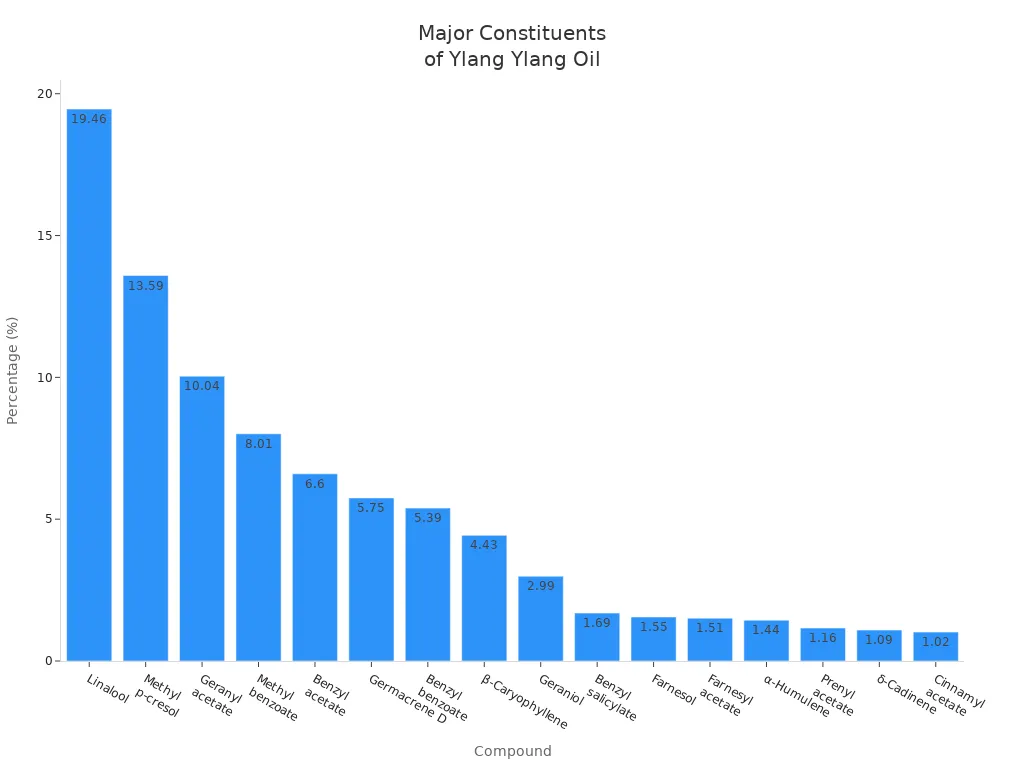
The oil contains several natural compounds that give it its unique scent and benefits. Here’s a chart showing the main chemical ingredients and their percentages:
You’ll also see ylang ylang in commercial products like lotions, shampoos, and even colognes. Some people like to add a drop to their bedsheets or clothing for a gentle, floral aroma. If you want to boost your mood or relax after a long day, ylang ylang essential oil might be just what you need.
Health Benefits of Ylang Ylang Oil
Stress & Anxiety Relief
You might notice that ylang ylang oil is everywhere when people talk about stress-relieving effects. Many people use ylang ylang essential oil in aromatherapy because it helps them relax after a long day. The sweet floral scent can make you feel calm and peaceful. Some studies show that ylang ylang oil may not always reduce anxiety directly, but it does help improve self-esteem and can lower labor pain. Here are some findings:
A study with 34 nurses found that ylang ylang aromatherapy improved self-esteem, even though it did not significantly alleviate anxiety.
Another trial showed that ylang ylang oil reduced labor pain but did not change anxiety levels.
Ylang ylang oil contains benzyl benzoate, which links to its anxiolytic and mood-adjusting effects. You can see how it works in the table below:
Mechanism of Action | Description |
|---|---|
Anxiolytic effects | Benzyl benzoate in ylang ylang oil helps adjust mood and reduce anxiety. |
Sedative-like effects | Some sedative effects are present, but more research is needed. |
Aroma effects | The scent acts through your nervous system and can affect organs directly. |
Reduction of neuroinflammation | Ylang ylang oil lowers markers of neuroinflammation. |
Normalization of neurotrophin levels | It helps keep nerve health stable by normalizing BDNF levels. |
Serotoninergic pathway | The oil influences serotonin, which helps regulate mood. |
Dopaminergic pathway | It also affects dopamine, adding to its anxiolytic effects. |
Stimulation of the nervous system | The aroma stimulates your nervous system through your nose. |
Direct organ interaction | Ylang ylang oil can act directly on organs and tissues. |
If you want to reduce stress and anxiety, ylang ylang essential oil could be a good choice. Many people say it helps them unwind and feel better after tough days. The possible benefits of ylang ylang include helping you feel more relaxed and less tense.
Mood & Depression Support
Ylang ylang oil is a popular mood booster. You might use ylang ylang essential oil when you feel down or need a lift. The oil is linked to relaxation and can help with depression and anxiety disorders. When you breathe in the scent, it increases serotonin levels in your brain, which improves mood. It also suppresses stress pathways, making you feel calmer.
People exposed to ylang ylang oil report feeling more relaxed and calm than those who do not use it.
The oil can lower blood pressure and raise skin temperature, showing a physical relaxation effect.
Ylang ylang essential oil activates your Autonomic Nervous System, which boosts serotonin and helps you feel happier. You can use ylang ylang oil with other oils like lavender and bergamot for even better results. These oils work together to reduce stress and improve emotional well-being. The health benefits of ylang ylang include helping you manage your mood and fight depression. If you want to feel more positive, ylang ylang oil is a natural way to support your mental health.
Tip: Try adding a few drops of ylang ylang essential oil to your diffuser when you need a mood boost or want to alleviate anxiety.
Heart & Blood Pressure
Ylang ylang oil is known for its heart health benefits. You can use ylang ylang essential oil to help lower blood pressure and support your heart. Several studies show that inhaling ylang ylang oil can reduce heart rate and blood pressure. Here is a summary of the research:
Year | Study Description | Findings |
|---|---|---|
2013 | Inhalation by 29 healthy men | Lower heart rate and blood pressure |
2013 | Aroma with other oils | Sedative effect, decreased blood pressure |
2006 | Hypertension patients inhaled essential oil blend | Lower blood pressure and reduced stress responses |
2012 | Prehypertension/hypertension patients inhaled oil blend | Lower daytime blood pressure and salivary cortisol |
If you want to support your cardiovascular health, you can massage a single drop of ylang ylang oil over your heart with a carrier oil. For high blood pressure, some people add one or two drops to water or tea, but only use therapeutic-grade ylang ylang essential oil. The health benefits of ylang ylang oil include helping you relax and keeping your heart healthy.
Skin Health Benefits
Ylang ylang oil is great for your skin. You can use ylang ylang essential oil to balance oil production, soothe inflammation, and fight acne. The oil has antimicrobial properties that target acne-causing bacteria. If you struggle with redness or irritation, ylang ylang oil can help calm your skin.
Ylang ylang oil balances oil, so your skin does not get too oily or too dry.
It soothes inflammation and reduces redness, making your skin look healthier.
The oil fights bacteria that cause acne, helping you keep your skin clear.
You can apply ylang ylang essential oil to your skin by diluting it with a carrier oil. Use about 5-6 drops of ylang ylang oil for every tablespoon of carrier oil like coconut or almond. This method prevents irritation and helps you get the most health benefits. Ylang ylang oil also promotes minor wound healing, which is helpful for acne-prone skin. If you want to improve skin health and beauty, ylang ylang oil is a natural choice.
Antibacterial & Healing
Ylang ylang oil is packed with antibacterial and healing properties. You can use ylang ylang essential oil to protect your skin from infections and speed up healing. The oil contains linalool, which fights bacteria, viruses, and fungi. Here is a table showing how ylang ylang oil works against different pathogens:
Pathogen Type | Pathogen Strain | Minimum Inhibitory Concentration (μg/ml) |
|---|---|---|
Gram-positive | S. aureus MMCC22 | 500 |
Gram-negative | E. coli MMCC24 | 500 |
Yeast | C. tropicalis MMCC12 | 500 |
Yeast | C. parapsilosis MMCC24 | N/A |
Other | Candida species | High potential against fungi |
Ylang ylang oil helps heal small cuts, burns, and insect bites. It protects wounds from infection and speeds up recovery. You can use ylang ylang essential oil to treat skin irritation, regularize sebum production, and fight infections. The health benefits of ylang ylang include pain relief and faster healing for minor wounds.
Heals cuts and burns
Treats insect and snake bites
Reduces skin irritation and redness
If you want a natural way to keep your skin healthy and fight off germs, ylang ylang oil is a smart choice. The benefits of ylang ylang oil cover many areas, from antibacterial action to wound healing.
Note: Always dilute ylang ylang essential oil before applying it to your skin to avoid irritation.
Ylang ylang oil offers a wide range of health benefits. You can use it to reduce stress and anxiety, boost your mood, support heart health, improve skin health and beauty, and promote healing. The possible benefits of ylang ylang go beyond relaxation. Many people say it improves sleep quality and cognitive function, making it a valuable addition to your wellness routine.
Safe Use of Ylang Ylang Essential Oil
Aromatherapy Methods
You might wonder what makes ylang ylang essential oil a favorite in aromatherapy applications. You can use this oil in diffusers, inhalers, or even add a few drops to a bowl of steaming water. These aromatherapy applications help you enjoy the calming scent of ylang ylang oil without touching your skin. Always make sure the room has good airflow. You should avoid using ylang ylang oil for long periods unless a health professional guides you. If you are new to aromatherapy applications, start with short sessions to see how you feel. Never use ylang ylang essential oil internally.
Tip: Keep ylang ylang essential oil away from your eyes and nose. Good ventilation makes aromatherapy applications safer and more pleasant.
Topical Application
Ylang ylang essential oil works well for topical use, but you need to know what to do before you try it. You can add ylang ylang oil to lotions, creams, or carrier oils for skin care. Aromatherapy applications like massage often use ylang ylang oil for its relaxing scent. Do not put undiluted ylang ylang essential oil directly on your skin. This oil can cause irritation or allergic reactions, especially if you have sensitive skin. If you are pregnant or trying to conceive, talk to a doctor before using ylang ylang oil.
Here are the most common adverse reactions to ylang ylang essential oil:
Reaction Type | Description |
|---|---|
Irritation | Irritant contact dermatitis |
Allergic contact dermatitis | Delayed hypersensitivity |
Contact urticaria | Immediate hypersensitivity |
Some people in India have shown skin reactions to ylang ylang oil, especially those with facial skin problems.
Dilution & Patch Test
You should always dilute ylang ylang essential oil before using it on your skin. For safe topical aromatherapy applications, experts recommend a maximum dilution of 0.8%. This means you add less than one drop of ylang ylang oil to every 100 drops of carrier oil. Doing a patch test helps you check for allergies or sensitivities. Place a small amount of diluted ylang ylang essential oil on your inner arm and wait 24 hours. If you see redness or feel itching, do not use the oil.
Do not use ylang ylang essential oil on broken skin.
Avoid using ylang ylang oil on children or pets unless a professional says it is safe.
Always research new oils before trying them in aromatherapy applications.
Note: You should never use ylang ylang essential oil for aromatherapy applications if you have a known allergy to flowers or fragrances.
Risks & Precautions
Skin Reactions
You might wonder what skin reactions can happen when you use ylang ylang oil. Some people notice irritation or redness after applying it. Clinical reports show that ylang ylang is one of the most common plants linked to skin problems. Here are some reactions you should watch for:
Contact dermatitis, which means your skin gets red, itchy, or swollen.
Irritation, especially if you use the oil without diluting it.
Most cases happen to people who use ylang ylang oil often, like aromatherapists or massage therapists.
If you work with ylang ylang oil every day, you have a higher chance of getting these reactions. Always do a patch test before using any new oil on your skin.
Allergies & Sensitivities
Some people are more likely to have allergies or sensitivities to ylang ylang oil. You should be careful if you have sensitive skin or allergies to flowers. People who use large amounts of ylang ylang oil, such as massage therapists, face a bigger risk. If you notice itching, swelling, or a rash, stop using the oil right away. You can talk to your doctor if you are not sure about your reaction.
Special Populations
Certain groups need to take extra care with ylang ylang oil. Here is what you should know:
Do not use ylang ylang oil during pregnancy. Experts say it is best to avoid all essential oils when you are pregnant.
Keep ylang ylang oil away from children and pets. Store it in a safe place where they cannot reach it.
Never ingest ylang ylang oil. The effects on your body, especially during pregnancy, are not well understood.
Protect your skin and eyes from the oil to avoid irritation.
Limit how long you use ylang ylang oil in a vaporizer. Try 15 minutes per hour in a room with good airflow.
Always choose high-quality oils and talk to a health professional before using them.
“As with all essential oils, we recommend you do not use essential oils during pregnancy as this is an emmenagogue. It is 100% to be avoided in pregnancy.”
If you take medication, ask your doctor before using ylang ylang oil. Some oils can interact with medicines or make side effects worse. You can stay safe by following these simple steps and knowing what risks to look for.
Tips for Using Ylang Ylang Oil
Choosing Quality Oil
When you shop for ylang ylang essential oil, you want the best quality for your wellness routine. The oil comes from the flowers of the Cananga odorata tree, mostly grown in Madagascar. You should know that ylang ylang essential oil is made through fractional distillation. This process gives you different grades, each with its own scent and strength. Here’s what you can find:
Grade | Description | Aroma Characteristics |
|---|---|---|
Ylang Ylang Extra | First distillation, highest quality | Sweet, floral, exotic |
Ylang Ylang I | Second distillation, slightly less intense | Delicate, sweet, floral |
Ylang Ylang II | Third distillation, more subdued | Warmer, less intense |
Ylang Ylang III | Later distillations, mildest | Milder, broad appeal |
If you want a strong, sweet scent, look for Ylang Ylang Extra. For a softer aroma, Ylang Ylang III works well. Always check the label for the grade and country of origin. Too much ylang ylang essential oil can cause headaches or nausea, so start with a small amount.
Storage Advice
You want your ylang ylang essential oil to stay fresh and effective. Store it in a dark glass bottle to protect it from light. Keep the bottle tightly sealed and put it in a cool place, around 35-40°F. Try not to leave the cap off for long, since oxygen can make the oil lose its power. Avoid heat and sunlight. A dry, dark cabinet is a good spot for your ylang ylang essential oil.
Tip: Always use dark bottles and close them quickly after each use to keep your ylang ylang essential oil at its best.
Easy Ways to Use
You can add ylang ylang essential oil to your daily routine in many simple ways. Try these ideas:
Add a few drops to your bath for relaxation and soft skin.
Mix it with your body wash or lotion for a floral boost.
Make a linen spray for your pillow or sheets to help you unwind at night.
Use it in a diffuser to fill your room with a calming scent.
Create your own perfume with ylang ylang essential oil for a unique fragrance.
A soothing bath or a gentle spray can make your day feel special. You can enjoy the benefits of ylang ylang essential oil without much effort.
Ylang ylang oil offers many health benefits. You can use it to reduce stress, lower blood pressure, and improve your mood. Studies show it helps with sleep and even eases pain.
Many people say it helps them sleep better and feel calmer.
Some users report lower cholesterol and better heart health.
Always dilute ylang ylang oil before using it on your skin to avoid irritation.
What do you think? Try ylang ylang oil in your wellness routine and share your experience below!
FAQ
What is ylang ylang essential oil used for?
You use ylang ylang essential oil for relaxation, mood support, and skin care. Many people add it to diffusers, massage oils, or beauty products. The sweet scent helps you unwind after a busy day.
What does ylang ylang oil smell like?
Ylang ylang oil smells sweet, floral, and a little fruity. Some people say it reminds them of jasmine or banana. The scent feels rich and exotic, making it popular in perfumes.
What should you do if ylang ylang oil irritates your skin?
Stop using the oil right away. Wash the area with mild soap and water. If you see redness or feel itching, talk to your doctor. Always dilute ylang ylang oil before you use it on your skin.
What is the best way to store ylang ylang essential oil?
Keep your ylang ylang oil in a dark glass bottle. Store it in a cool, dry place away from sunlight. Make sure the cap stays tight. This helps the oil stay fresh and strong.
What are the risks of using ylang ylang oil?
You might get skin irritation or an allergic reaction. Pregnant women, children, and pets should avoid it. Never swallow ylang ylang oil. If you take medicine, ask your doctor before you use it.