


American ginseng (Panax quinquefolius) is a distinctive root with deep historical roots. Native American cultures highly valued this american ginseng for its medicinal properties. For example, the Ojibwe people used the root for digestive issues and pain relief. The Muscogee people applied the root to stop bleeding. This unique ginseng acts as an adaptogen, supporting the body’s resilience against various stressors. American ginseng helps immune function and physical resilience, distinguishing this ginseng from Asian ginseng. This blog explores the specific health benefits of american ginseng and offers a practical guide for the safe use of this ginseng.
Key Takeaways
American ginseng helps your body handle stress. It gives you calm energy without making you feel jumpy.
This ginseng can make your brain work better. It helps with memory and focus.
American ginseng boosts your immune system. It helps your body fight off sickness.
It can help control blood sugar levels. This is good for people with diabetes.
Always talk to a doctor before using American ginseng. This is important if you have health problems or take other medicines.
What is American Ginseng?
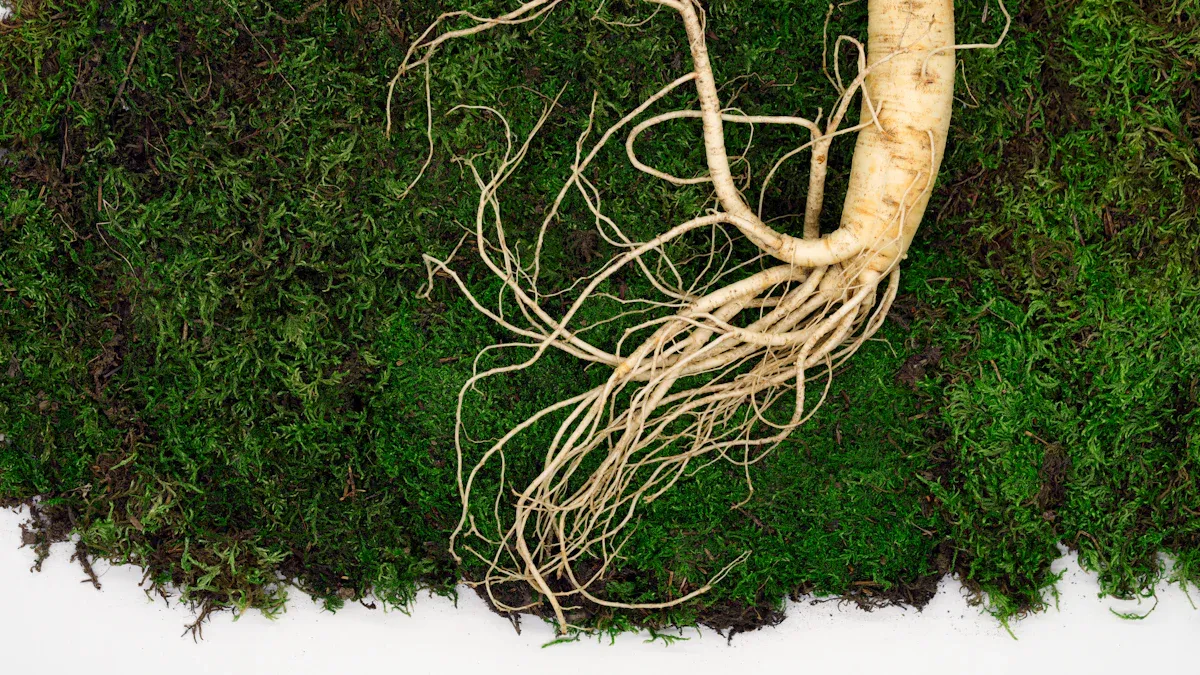
Botanical Profile and Origins
American ginseng, scientifically known as Panax quinquefolius, is a native plant of North America. This perennial, deciduous woody plant grows erect, reaching heights of 20–60 cm. It has a single, smooth, unbranched stem. The plant’s leaves are compound, meaning they consist of multiple leaflets. These leaves are arranged in a whorl, with three or more leaves at each node along the stem. Each leaf typically has 3–5 leaflets, which are obovate or ovate in shape with serrated, or toothed, edges. The leaves are green during the growing season and turn gold or yellow in the fall.
From May to June, American ginseng produces small, fragrant flowers. These flowers are green to brown or white and are radially symmetrical. They have five sepals and five separate petals. The plant then develops showy, bright red berries in clusters from August to October. These berries are less than one inch in size and contain 2-3 white seeds. The root of this ginseng plant is the part valued for its medicinal properties.
Key Active Compounds: Ginsenosides
The primary active compounds in American ginseng are called ginsenosides. These compounds are responsible for many of the plant’s health benefits. Ginsenosides are broadly categorized into two main groups: protopanaxadiol (PPD) and protopanaxatriol (PPT). American ginseng contains several key ginsenosides, which typically make up over 70% of its total ginsenoside content. These include Rb1, Rc, Rd, Re, and Rg1.
Specifically, Rb1, Rc, and Rd belong to the glycosides of 20(S)-protopanaxadiol group. Re and Rg1 are part of the glycosides of 20(S)-protopanaxatriol group. A unique feature of American ginseng is the presence of pseudoginsenoside F11. This compound helps distinguish it from Asian ginseng. The specific balance and types of these ginsenosides give American ginseng its unique effects on the body.
American Ginseng Health Benefits
American ginseng offers many health benefits. It acts as a powerful adaptogen. This means it helps the body adapt to various stressors. This ginseng provides unique advantages for overall health. It gives calm, focused energy without the jitters often associated with coffee. This makes it a good alternative for those seeking sustained energy.
Cognitive Boost
American ginseng can significantly improve brain function. It helps people think more clearly. Studies show that specific forms of american ginseng, like Cereboost™, improve working memory. This is the part of the brain that holds information for short periods. A study with healthy young adults showed better working memory performance across different doses. Participants also reported feeling calmer. They showed improved accuracy in reaction time tests.
American ginseng helps with several brain functions. It improves working memory, both immediately and over time. It also enhances executive function, which helps with tasks like switching between activities. People taking american ginseng made fewer errors on attention tasks. They also maintained performance on tests of attention and executive control. This ginseng can also improve mood and reduce mental fatigue. These benefits show the potential uses and benefits of american ginseng for brain health. It can improve memory.
Immune Support
American ginseng strengthens the body’s immune system. It helps the body fight off illness. High molecular weight polysaccharides from american ginseng extracts are key compounds. They help regulate immune cells in humans. This means they can adjust how the immune system works.
This ginseng boosts the production of important immune chemicals like IL-2 and IFN-γ in spleen cells. It also increases immunoglobulin production by immune cells. American ginseng improves natural immune responses from certain white blood cells. It shows effects against various tumor cells. It also enhances activities that help the immune system clear waste. This ginseng increases the expression of certain immune receptors. It improves the ability of immune cells to engulf foreign particles. It also causes the expression of genes important for immune function. This leads to an improved immune response.
Stress and Fatigue Relief
American ginseng helps the body manage stress and reduce fatigue. It provides a steady source of energy. This ginseng is especially helpful for people experiencing fatigue due to illness or treatment. Evidence suggests that american ginseng can alleviate cancer-related fatigue. Taking 1000 mg twice daily is safe and effective. While overall fatigue did not improve immediately, significant benefits appeared after eight weeks. Patients undergoing active radiation or chemotherapy saw significant improvements in fatigue at both four and eight weeks. This shows ginseng is most effective for those currently receiving cancer treatment.
A large study also supports using 2,000 mg of high-quality american ginseng daily for cancer-related fatigue. This is especially true for patients undergoing active cancer treatment. The American Society of Clinical Oncology–Society for Integrative Oncology recommends american ginseng for managing fatigue in cancer patients. This recommendation comes from studies showing its effectiveness in reducing fatigue. American ginseng helps reduce fatigue and provides increased energy. It helps the body cope with stress and gives a sustained energy boost. This leads to decreased fatigue.
Blood Sugar Regulation
American ginseng plays a role in managing blood sugar levels. It can help treat diabetes. Studies show that american ginseng berry juice and berry extract reduce blood glucose and body weight in mice. The leaf of american ginseng also shows hypoglycemic activity, meaning it lowers blood sugar.
American ginseng can reduce blood sugar spikes after meals in healthy people. It also helps those with type 2 diabetes mellitus. A long-term study found that adding american ginseng extract to standard diabetes treatment improved blood sugar and blood pressure control. Another study showed american ginseng decreased the total amount of glucose in the blood compared to other ginseng types. This helps improve glucose control.
American ginseng works in several ways to treat diabetes. It slows digestion. It stimulates the body to release insulin. It also helps cells take up glucose more effectively. This ginseng regulates certain proteins that prevent insulin resistance. It can also work through the central nervous system. Specific compounds in ginseng reduce lipid accumulation. Other compounds reduce fasting blood glucose and improve insulin resistance. These actions highlight the potential of american ginseng to treat diabetes.
Anti-Inflammatory Effects
American ginseng has strong anti-inflammatory properties. It helps reduce inflammation in the body. American ginseng induces a protein called p53. This protein is present in activated inflammatory cells. It helps these cells undergo programmed cell death. This process helps control inflammation. American ginseng protects against gut inflammation in mice through this p53 mechanism. It causes inflammatory cells to die off.
A compound derived from american ginseng, called Compound K, shows significant anti-inflammatory effects. It works even at low amounts. This compound reduces inflammation in the gut and helps with abdominal pain. It does this by stopping the production of pro-inflammatory chemicals. However, some studies show that an aqueous extract of North American ginseng can increase the expression of inflammatory genes in fat cells and immune cells. It also reduces a protein called PPAR-γ in fat cells. This suggests complex effects on inflammation depending on the specific extract and context. Overall, american ginseng helps reduce inflammation in many ways.
American vs. Asian Ginseng
Key Differences
American ginseng and Asian ginseng come from the same plant family, Panax. However, they have distinct properties. Traditional Chinese Medicine (TCM) views American ginseng as “cooling.” It helps calm the body. Asian ginseng, on the other hand, is considered “warming.” It provides a more stimulating effect. Chemically, American ginseng does not have the exact same makeup as Asian ginseng. Both contain ginsenosides. Yet, the saponins in American ginseng show a stronger effect against cell growth compared to those in Asian ginseng. Steaming also changes both types of ginseng. It reduces certain ginsenoside levels.
Traditional vs. Modern Use
People have used both types of ginseng for centuries. Traditional uses for American ginseng include cooling and nourishing the body’s Qi energy. It also improves physical strength and promotes health. Modern science supports many of these ideas. American ginseng increases energy and reduces fatigue. This happens because it lowers oxidative stress and boosts cellular energy. It also acts as a nootropic and adaptogen. This means it improves focus, short-term memory, and helps the body handle stress. This ginseng also improves immune response. It helps the immune system fight colds and flu. It reduces inflammation, which can help with arthritis and muscle stiffness. American ginseng can also lower blood sugar levels for people with diabetes. It may even slow the growth of cancer cells. It can improve cancer treatment effectiveness and reduce fatigue.
Choosing Your Ginseng
Choosing between American ginseng and Asian ginseng depends on your needs. If you seek a calming effect, American ginseng is often the better choice. It offers sustained energy without overstimulation. If you need a more stimulating boost, Asian ginseng might be more suitable. Always consider your health goals when selecting a ginseng product.
Using American Ginseng Safely
Understanding how to use ginseng safely involves knowing its various forms, appropriate dosages, potential side effects, and possible drug interactions. This knowledge helps individuals make informed decisions about incorporating american ginseng into their health regimen.
Forms of Ginseng
American ginseng comes in several forms. People can consume it in various ways. Common forms include dried root powder, capsules, tablets, and tinctures. Manufacturers also use american ginseng as an additive in energy drinks and ginger candies. For traditional preparations, people often use the whole dried root or granulated ginseng root to make teas and tonics. As dietary supplements, individuals find american ginseng in powder, extract, capsule, and tablet forms.
Side Effects and Warnings
American ginseng is generally safe for most people when they use it appropriately. However, some individuals may experience side effects. These can include gastrointestinal issues such as nausea, diarrhea, and abdominal bloating or discomfort. Headaches, both unilateral and bilateral, have also occurred. Some women report breast pain or mastalgia. Fluctuations in blood pressure, either too high or too low, are also possible. In rare cases, individuals with depression taking antidepressants have experienced mania when combining them with ginseng. More severe, though rare, reactions include cerebral arteritis, Stevens-Johnson syndrome, cholestatic hepatitis, and anaphylactic allergic reactions.
Certain individuals should exercise caution or avoid american ginseng.
Medical Conditions: People with diabetes, hormone-sensitive conditions (like breast, uterine, or ovarian cancer, endometriosis, or uterine fibroids), insomnia, or mental disorders such as schizophrenia should consult a healthcare provider before using ginseng.
Upcoming Surgery: Individuals should stop taking ginseng at least two weeks before any surgery or dental work.
Pregnancy and Breastfeeding: Ginseng is likely unsafe during pregnancy due to its estrogen-like effects. Women should not use ginseng without medical advice if breastfeeding.
Children: Parents should not administer any herbal or health supplements, including ginseng, to a child without medical advice.
Other Supplements: Avoid using ginseng with other herbal or health supplements that can lower blood sugar. These include alpha-lipoic acid, chromium, devil’s claw, fenugreek, garlic, guar gum, horse chestnut, and psyllium.
Sourcing Quality Ginseng
Finding high-quality american ginseng ensures consumers receive its full health benefits. Careful selection helps avoid ineffective or potentially harmful products. Consumers should know what to look for when buying this valuable root.
Identifying Reputable Suppliers
Consumers should seek products from reputable companies. These companies often have positive customer reviews and a long operational history. Their claims should be backed by studies from established medical databases. Be wary of product claims that promise to cure diseases. Also, avoid those offering money-back guarantees. These are often signs of unreliable manufacturers. Consumers should also be cautious of supplements manufactured outside the U.S. These products may be unregulated and potentially contain toxic ingredients.
Wild vs. Cultivated Ginseng
American ginseng comes in wild and cultivated forms. Wild ginseng grows naturally in forests. It is rare and often more expensive. Many believe wild ginseng has higher potency due to its slow growth and natural environment. Cultivated ginseng grows on farms. It is more accessible and affordable. Farmers grow it under controlled conditions. Both types of ginseng contain beneficial compounds. However, the concentration and balance of these compounds can vary. Consumers should consider their budget and preferences when choosing between wild and cultivated root.