

Many people only know a few apple types. Over 7,500 apple varieties grow globally. This incredible diversity extends beyond common choices. The fruit plays a vital role in healthy eating and culinary arts. Global production reached over 95 million metric tonnes in 2022. This blog explores various types of apples, their nutrition, and how to best use them for optimal flavor. Which apple do you enjoy most, or are you ready to discover a new favorite?
Key Takeaways
Apples come in many types, like sweet, tart, and balanced. Each type has a different taste and texture.
Apples are good for you. They have vitamins, minerals, and fiber that help your body stay healthy.
Different apples are best for different things. Some are good for eating fresh, some for baking, and some for making sauces.
To keep apples fresh, store them in the fridge. This helps them stay crisp and juicy longer.
Exploring Types of Apples
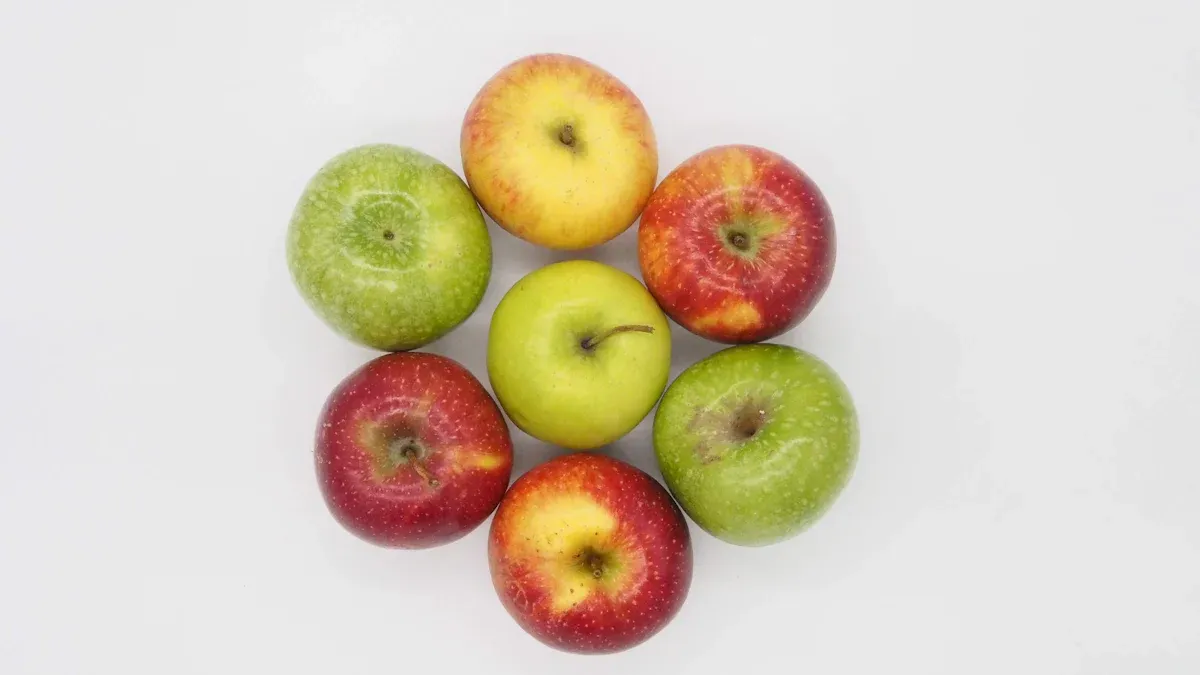
The world of apples offers incredible diversity. Globally, it is estimated that more than 30,000 varieties of apples exist. While this large number exists, only about 30 of these varieties are actively used and traded commercially. The United States cultivates over 100 distinct apple varieties. A smaller subset of these are the most widely produced and commercially available. This section explores various types of apples, guiding you through their unique flavors and textures.
Sweet Apple Varieties
Sweet apples are popular for their high sugar content and often lower acidity. These types of apples are generally crisp and juicy. They make an excellent choice for fresh eating and desserts. Many people find them ideal for snacking.
Some of the most popular sweet apple varieties include:
Fuji: This apple is very sweet and crunchy. It has a firm texture. Fuji apples are great for eating fresh or in salads. They typically have 15-18 grams of sugar on average.
Gala: Gala apples offer a mild, sweet flavor with a crisp texture. They are a favorite for snacking and lunchboxes. Gala apples contain about 12.73 grams of sugar per cup of sliced apples.
Honeycrisp: Known for its explosive crunch and juicy, sweet taste, the Honeycrisp apple is a top choice. It has a balanced sweetness.
Ambrosia: This apple has a low-acid profile, making it very sweet and smooth. It is ideal for snacking.
Several sweet apple varieties consistently rank high in sales.
“We’re harvesting and packing SweeTango apples in Washington State, and excited about the volume and quality we are seeing so far in the new crop. SweeTango consistently ranks in the top 10 apple varieties in October, which is one of the biggest apple promotion months each year,” reports Brianna Shales of Stemilt Growers. “With increased volumes of SweeTango, we can delight SweeTango fans even longer with additional promotions and activity at the point of sale into the winter months that will highlight its fantastic crunch and honey-sweet flavor.”
“SweeTango is an apple that sells itself. It hits all 5 senses, from premium taste to strong shelf appeal, it is that consistency consumers look forward to year after year,” says Shelby Miller of Applewood Fresh.
“Especially now that school’s back in session, SweeTangos are in high demand as the perfect snack for kid’s lunches. Parents always come back for more because their kids actually finish them. Everyone will be filling their carts with crisp, sweet, and zesty, so stock up to keep customers smiling.”
Here are some top-selling sweet apple varieties:
Rank | Apple Variety | Key Features |
|---|---|---|
1 | SweeTango | Sweet-tart flavor, crisp texture |
2 | Honeycrisp | Juicy, balanced sweetness |
3 | Kanzi | Sweet-tart balance, European appeal |
4 | Envy | Long shelf life, crisp flesh |
5 | Pink Lady | Sweet-tart, bright pink skin |
Other popular sweet apples include Cosmic Crisp®, known for its crispness and long storage life.
Tart Apple Varieties
Tart apples have a higher acidity level. This gives them a tangy, sometimes sour taste. Their firm flesh often holds up well during cooking. These apples are perfect for baking, sauces, and ciders.
Some well-known tart apple varieties include:
Granny Smith: This apple is famous for its bright green skin and very tart flavor. It remains firm when baked. Granny Smith apples have the lowest sugar content among popular varieties, with about 10.45 grams per cup.
Braeburn: Braeburn offers a complex tartness with hints of sweetness. It has a firm texture.
McIntosh: McIntosh apples are soft and juicy with a distinct tart flavor. They break down easily when cooked, making them great for applesauce.
Many heritage apples are tart. They offer rich and complex flavor when cooked. These varieties are often considered best for baking. You can find them at farm stands, especially in the fall.
Here are some tart apple varieties frequently recommended for baking:
Macintosh: Great flavor and balance of sweet and tart.
Spartan: Excellent flavor and sweet-tart balance.
Jonathan: More tart with a nice flavor.
Bramley: Very, very tart, with excellent, complex flavor.
Gravenstein: Sweet-tart, excellent flavor, delicious for pie.
Northern Spy: Very tart, nice flavor, excellent for pie.
Balanced Apple Varieties
Balanced apple varieties offer a harmonious blend of sweet and tart notes. This makes them incredibly versatile. They are suitable for fresh eating, baking, and cooking.
Examples of apples with a balanced sweet-tart flavor include:
Pink Lady (Cripps Pink): This apple has a crisp texture and a refreshing sweet-tart flavor. It finishes with a very sweet note.
Golden Delicious: This well-known apple has a mild, sweet taste with a hint of tartness. It is versatile for many uses.
Jonagold: Jonagold apples combine the sweetness of Golden Delicious with the tartness of Jonathan. This creates a great flavor.
Empire: Empire apples are firm-textured and offer a sweet-tart taste. They are an all-purpose apple for juice, sauce, pies, baking, salads, fresh eating, and drying.
Braeburn: This apple presents a perfect sweet-tart balance. It has hints of cider and citrus zest.
Northern Spy: Known for its strong sweet-tart flavor.
Winesap: Features a sweet-tart, spicy flavor.
Heirloom and Specialty Apples
Heirloom and specialty apple varieties offer unique flavors and textures. They often have rich histories. These apples provide a taste experience beyond common supermarket choices.
Some notable heirloom apple varieties include:
Hudson’s Golden Gem: Discovered in Oregon in 1931, this apple has a dull yellow-gold russet skin. It offers crisp, juicy, sugary yellow flesh with a nutty flavor. Many compare it to a firm pear. It is excellent for fresh eating or salads.
King David: Found in Arkansas in the late 1800s, this deep dark red apple has firm, crisp, spicy, juicy yellow flesh. It is versatile for cider, pies, sauce, and eating.
Ashmead’s Kernel: An old English russet apple from around 1700, it is popular for its distinctive pear-like flavor. It often has hints of spices and nuts. This apple is versatile for dessert, cooking, and savory salads.
Gravenstein: This apple is thought to have arrived in western North America with Russian fur traders. It is well-suited to coastal locations.
Junaluska: Named for a Cherokee leader, this apple from western North Carolina was considered extinct until rediscovered in 2001.
Cox Orange Pippin: A classic English apple from 1830, it is a benchmark for flavor. Its flavor is sprightly subacid with hints of cherry and anise.
Apple Nutrition
Apples offer significant health benefits. They are a nutritional powerhouse. This section details the key nutrients found in this popular fruit.
Essential Vitamins and Minerals
Apples provide essential vitamins and minerals. A medium 7-ounce (200g) apple offers 10% of the Daily Value (DV) for Vitamin C. It also provides 5% of the DV for Potassium. Other important micronutrients include Vitamin E, Vitamin B6, Copper, and Vitamin K. Apples contain macroelements like potassium, nitrogen, phosphorus, calcium, and magnesium. They also have trace elements such as boron, zinc, iron, and manganese. These minerals are vital for human tissues and enzyme functions. A 100-gram apple contains about 4.6 mg of Vitamin C.
Dietary Fiber
Apples are an excellent source of dietary fiber. One medium apple typically contains 4.8 grams of fiber. This fiber includes both soluble and insoluble types. Soluble fiber feeds beneficial gut bacteria, supporting a healthy microbiome. Insoluble fiber adds bulk to stool, which helps prevent constipation. The high fiber content also aids in satiety. It ensures a slow release of natural sugars, preventing blood sugar spikes. This combination of fiber is ideal for digestive health.
Antioxidants and Phytonutrients
Apples are rich in antioxidants and phytonutrients. These include polyphenolic compounds like quercetin, catechin, phloridzin, and chlorogenic acid. These plant-based substances protect against free radical damage. They also offer anti-inflammatory effects. Antioxidants may protect the pancreas. Leaving the skin on maximizes fiber and polyphenol intake.
Calorie and Sugar Content
A medium apple, weighing around 182g, contains about 95 calories. It provides approximately 28 grams of carbohydrates. Its high fiber content balances the natural sugars in an apple. This combination helps stabilize blood sugar levels. Apples are very filling despite their low calorie count. This makes them a great snack choice.
Best Apple Uses for Flavor
Matching an apple to its best culinary use unlocks optimal flavor. Some apple varieties excel when eaten fresh. Others transform beautifully with heat. Knowing these differences helps cooks choose the right apple for any dish.
Apples for Fresh Eating
Many people enjoy apples straight from the tree. An ideal fresh-eating apple offers a delightful sensory experience. Consumers often look for specific qualities.
Attribute | Sample 1 (Coefficient) | Sample 2 (Coefficient) | Sample 3 (Coefficient) | Sample 4 (Coefficient) |
|---|---|---|---|---|
Firmness | -0.0750 | -0.0708 | 0.0483 | 0.0630 |
Juiciness | 0.0826 | 0.0016 | 0.0996 | 0.0732 |
Mealiness | -0.0311 | -0.0162 | -0.0398 | -0.0399 |
Sweetness | 0.0914 | 0.0238 | 0.1000 | 0.0942 |
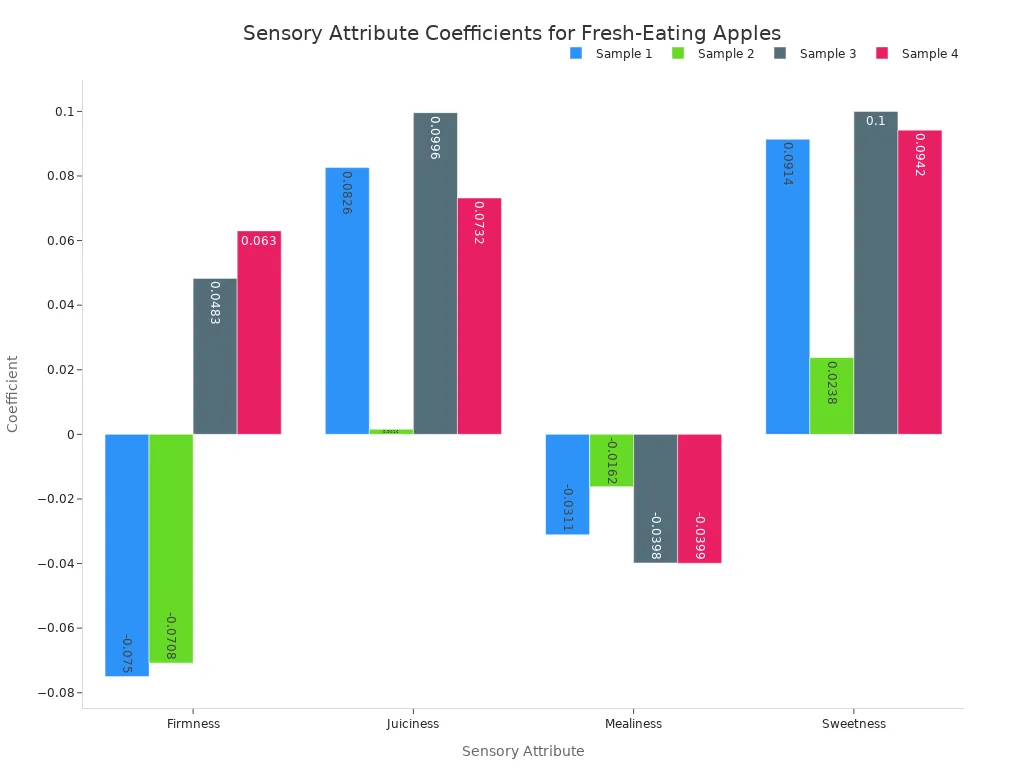
Consumers often prefer apples that are crisp, juicy, and sweet. Mealiness does not significantly affect how much consumers will pay for an apple. Desirable flavors include fruity, tropical, and pear notes. Undesirable traits are mealy, bland, green-grassy, or sour-acidic tastes.
Several varieties stand out for fresh eating:
Jazz: This apple is sweet, bright, and acidic. It has a refreshing, astringent bite.
Paula Red: It offers a bright, juicy flavor. This apple is slightly tart with a crisp texture.
Cortland: It provides a perfect balance of tart and sweet. This apple is wonderfully juicy and fruity.
Prairie Magic: People describe this apple as delightfully sweet and juicy.
Hazen: It is perfectly sweet.
State Fair: This apple has a softer texture for an easier bite. It is sweet and tasty.
Wodarz: It features firm flesh and a mild, pleasant flavor.
Goodland: This apple is attractive with yellow and pink skins. It is excellent for snacking.
Apples for Baking
Baking with apples requires specific characteristics. Apples suitable for cooking often have pectin reinforced with more calcium. They also have higher acidity. These features help them maintain their shape when heated. Apples with more air pockets between cells soften quickly. They are better for sauces. For baking, a mix of tart and sweeter apples often creates the best flavor. Granny Smith apples provide tartness. Honeycrisp or Golden Delicious apples add sweetness.
Some apples hold their shape well during baking. Cook’s Illustrated recommends these varieties for pies:
Golden Delicious
Baldwin
Cortland
Idareds
Other excellent choices for pies and crisps include:
Jonagold: This apple has a good sweet-tart balance. It holds its shape well when baked.
Braeburn: It is a recommended grocery store apple for pie.
Fuji: This apple is very sweet. It has a medium-firm texture when baked. Fuji apples are best when mixed with more flavorful apples like McIntosh.
Honeycrisp: It offers a honey-like flavor. This apple is a bit tart and holds its shape well.
Pink Lady: It has a consistent sweet flavor. This apple retains its flavor and firm slices when baked.
McIntosh: It has an excellent cider-like flavor. However, it breaks down easily into a smooth sauce. Use McIntosh in small amounts mixed with firmer apples.
Jonathan: This apple is flavorful and tart. It softens considerably but its slices hold shape. It is great for adding tartness.
Apples for Sauces and Purees
Certain apples break down easily when cooked. This makes them perfect for smooth sauces and purees. Apples with more air pockets between cells tend to soften quickly. This makes them ideal for sauces. McIntosh apples soften rapidly. They are better for applesauce.
Many varieties create delicious sauces:
McIntosh: This apple melts easily when baked. It creates a smooth, flavorful applesauce.
Jonathan: It is a soft, tangy apple. It delivers a flavorful puree.
Empire: This sweet, crisp apple also yields a flavorful puree.
Cox’s Orange Pippin: It is a juicy heirloom apple. It is excellent for sauce.
Jonagold: Cook’s Illustrated recommends this apple for applesauce.
Pink Lady: Cook’s Illustrated also recommends this apple for applesauce.
Macoun: This apple is another Cook’s Illustrated recommendation for applesauce.
Arkansas Black: Cooks can puree this apple into sauces.
Fuji: This apple can also be pureed into a sauce.
Apples for Salads and Savory Dishes
Apples add crispness, sweetness, and a touch of acidity to salads and savory dishes. Varieties that hold their shape and do not brown quickly are best. Their firm texture and balanced flavor enhance many recipes. Empire apples are crisp, juicy, sweet, and spicy. They are great for salads. Honeycrisp apples also work well in sweet and savory dishes. Pink Lady apples are crunchy and crisp. They are excellent in salads. Cortland apples are wonderfully juicy and fruity. They are also excellent in salads.
Apples for Juicing and Ciders
Juicing and cider production benefit from apples with concentrated flavor and good juice yield. The right apple creates a refreshing and balanced drink.
These varieties are excellent for juicing and cider:
Honeycrisp: It is known for its crispness and balanced flavor.
Braeburn: This apple offers a complex flavor with sweet, tangy, and spicy notes. It has high acidity for refreshing juice. Its firm texture gives a good yield without graininess.
Pink Lady: It features a vibrant balance of sweetness and tartness. Its firm and crisp texture makes for smooth, refreshing juice. It also has high juice content.
Jonagold: This apple provides a perfect balance of sweetness and tartness. Its crisp texture makes for smooth juice. It also offers a high yield.
Fuji: It is highly sweet with a firm texture. It yields a naturally sweet and smooth juice. This apple is excellent for standalone juicing or blending.
Gala: It has a naturally sweet and floral flavor. It is light, crisp, and refreshing. This makes it ideal for a milder, balanced juice. It is also versatile for blending.
Selecting and Storing Apples
Consumers often want to enjoy fresh, crisp apples. Knowing how to choose and store them properly ensures the best flavor and longevity. These tips help maintain quality from the store to the kitchen.
Choosing Quality Apples
Selecting a good quality apple involves a few simple checks. First, examine the skin. It should appear smooth and free from bruises, cuts, or soft spots. A dull skin often indicates an older apple. Next, feel the fruit. A ripe apple feels firm and heavy for its size. Avoid any that feel soft or mushy. Finally, give it a gentle sniff. A fresh apple usually has a subtle, pleasant aroma. If it smells fermented or overly sweet, it might be past its prime.
Optimal Apple Storage
Proper storage significantly extends an apple’s freshness. To maximize freshness, store apples unwashed in the refrigerator. This method keeps them crisp and juicy for up to eight weeks. Wash them under cool running water just before consumption. Remove apples from plastic bags before storing them, as the bags can cause them to ripen faster.
Apples release ethylene gas, which accelerates the ripening of other fruits. Therefore, store apples separately from other produce. If space is limited, wrap apples in paper towels to create a barrier.
For longer-term storage, ideal conditions involve temperatures as close to freezing as possible, combined with high humidity. The best temperature for long-term apple storage is between 30 and 35 degrees Fahrenheit, with approximately 90 percent humidity. This environment helps keep apples fresh for six to eight weeks when stored in a refrigerator’s crisper drawer.
Chilling Sensitive? | Storage Conditions (°F) | Storage Conditions (°C) |
|---|---|---|
Yes | 37-39 | 3-4 |
No | 32-33 | 0-1 |
Optimal storage also requires specific environmental controls:
Ideal storage humidity conditions are 90-95% to prevent dehydration.
Proper air circulation is essential to maintain uniform temperature, humidity, and gas content. Spacing out storage containers achieves this.
Low oxygen concentration (1-3%) is crucial to prevent fruit respiration.
Carbon dioxide levels should be monitored and kept at least at 3% to prevent undesirable skin and flesh browning.
The vast world of types of apples offers incredible diversity. They provide significant nutrition and culinary flexibility. We encourage you to experiment with different varieties. Discover their unique flavor profiles and enjoy their distinct flavor. This exploration will enhance your cooking and snacking. Share your favorite apple varieties or culinary uses in the comments below!
FAQ
What are the main categories of apple varieties?
Apple varieties generally fall into sweet, tart, and balanced categories. Sweet apples are ideal for snacking. Tart apples work best for baking. Balanced apples offer versatility for many uses. Heirloom apples provide unique flavors.
What key nutrients do apples provide?
Apples offer essential vitamins like Vitamin C and minerals such as potassium. They are rich in dietary fiber, which aids digestion. Apples also contain antioxidants and phytonutrients that help protect the body.
Which apple varieties are best for baking pies?
For baking pies, apples that hold their shape well are ideal. Good choices include Golden Delicious, Baldwin, and Cortland. Many bakers also use a mix of tart apples like Granny Smith with sweeter ones like Honeycrisp for balanced flavor.
Why are apples considered a healthy snack?
Apples are a healthy snack due to their high fiber content, which promotes fullness. They are low in calories and provide natural sugars balanced by fiber, preventing rapid blood sugar spikes. Apples also deliver important vitamins and antioxidants.
What makes an apple good for juicing?
Apples good for juicing typically have concentrated flavor and high juice yield. Varieties like Honeycrisp, Braeburn, and Pink Lady offer a good balance of sweetness and tartness. Their firm texture also results in smooth, refreshing juice.