


<<>>
Introduction
You might know grapefruit, but have you met the impressive pomelo? This large citrus fruit often goes unnoticed. However, its outstanding nutritional profile offers significant pomelo nutrition benefits. A single pomelo provides an incredible 412% of your daily value for vitamin C. This tropical pomelo also contains good dietary fiber. These qualities mean pomelo offers various health benefits, from boosting immunity to aiding digestion. You can discover why this unique pomelo deserves a spot in your diet. <<>>
Key Takeaways
Pomelo is a large citrus fruit. It gives you a lot of Vitamin C. This helps your body fight sickness.
Pomelo has good fiber. Fiber helps your stomach work well. It also helps with digestion.
Pomelo has antioxidants. These protect your body’s cells. They keep you healthy.
Pomelo can help your heart. It can also help you manage your weight. This is because it has few calories and much fiber.
Pomelo can affect some medicines. Always ask your doctor if you take medicine. This is important before you eat pomelo.
Pomelo Nutrition Benefits: A Profile
Macronutrient Breakdown
You want to understand the core nutritional makeup of pomelo. This large fruit offers significant pomelo nutrition benefits. A single cup of pomelo contains approximately 72.2 calories. This makes it a low-calorie option for your diet. When you examine a 100-gram serving of pomelo, it provides 9.62 grams of carbohydrates. One gram of this amount is dietary fiber, leaving 8.62 grams as net carbs. This fruit is a great source of fiber. It helps keep your digestive system functioning smoothly.
Here is a quick look at other macronutrients in a 100-gram serving:
Nutrient | Amount per 100g serving |
|---|---|
Protein | 0.76g |
Fat | 0.04g |
As you can see, pomelo contains very low amounts of both protein and fat. This makes it an excellent choice if you are managing your calorie intake.
Vitamins and Minerals
Pomelo truly stands out for its impressive vitamin and mineral content. It is a powerful source of vitamin c. One whole pomelo can give you over 400% of your daily value for vitamin c. Some reports even indicate it provides 619% of your daily recommended needs in one fruit! A typical serving offers 61 mg of vitamin c, which accounts for 68% of the Daily Value (DV).
Look at the table below to see the vitamin percentages you receive from a typical pomelo serving:
Vitamin | Daily Value Percentage (DV) |
|---|---|
Vitamin C | 412% |
Thiamine | 17% |
Riboflavin | 15% |
Vitamin B6 | 12% |
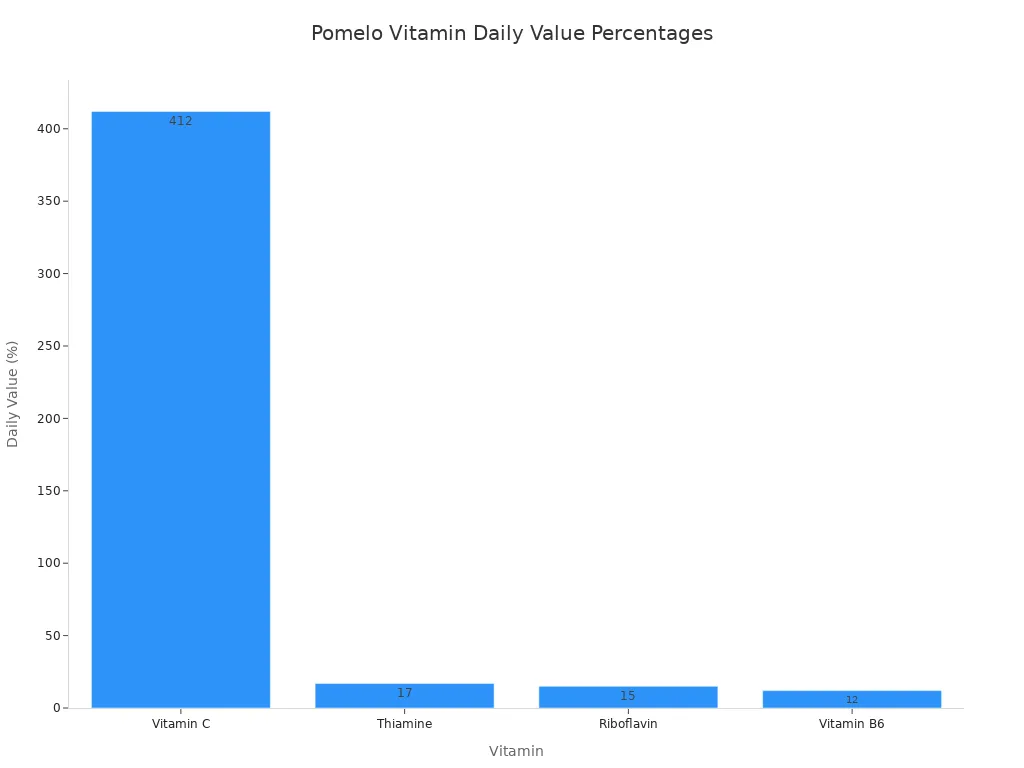
Beyond vitamins, pomelo also supplies important minerals. You get 0.11 mg of Iron (1% DV) and 6 mg of Magnesium (1% DV). It also contains a good amount of potassium.
Nutrient | Amount |
|---|---|
Potassium | 216 mg |
Potassium is essential for maintaining healthy blood pressure and proper nerve function.
Antioxidants and Phytochemicals
Pomelo is rich in antioxidants. These compounds protect your body’s cells from damage caused by free radicals. This makes pomelo a powerful antioxidant. You find several types of antioxidants in pomelo.
These include:
Five flavonoids: naringin, narirutin, rhoifolin, methyl hesperidin, and vicenin-2.
Two phenolic acids: vanillic acid and ferulic acid.
Other important antioxidants present in pomelo are:
Vitamin C
Phenols
Flavonoids
The fruit also contains many beneficial phytochemicals. These plant compounds contribute to its overall health properties. Pomelo is a great source of antioxidants.
Some of these phytochemicals include:
Flavonoids
Polyphenols
Coumarins
Limonoids
Acridone alkaloids
Essential oils
You also find:
Aroma-active volatiles
Pectin
Phenolic acids
Carotenoids
Polysaccharides
Specific compounds like naringin and naringenin are also present. These contribute to the unique pomelo nutrition benefits.
Pomelo’s Health Benefits
You can gain many advantages by adding pomelo to your diet. This fruit offers significant health benefits that support your overall well-being.
Immune Support: Vitamin C
Pomelo is an excellent source of vitamin c. This nutrient is vital for a strong immune system. Vitamin c helps maintain the integrity of your body’s protective barriers, like your skin and internal mucosal linings. It also acts as an antioxidant, helping to control inflammation. You find that vitamin c supports the function of various immune cells. These include phagocytes, natural killer cells, T-cells, and B-cells.
The pomelo‘s vitamin c and other antioxidant compounds boost your immune health. This vitamin c can reduce the duration of respiratory tract infections, such as the common cold. Antioxidants protect your immune cells from damage caused by free radicals and oxidative stress.
Scientific studies confirm these effects.
Bozonet et al. (2015) showed a 20% increase in neutrophil chemotactic activity after vitamin c supplementation.
Prinz et al. (1977) found a significant increase in serum levels of IgA, IgG, and IgM in healthy young adult males after vitamin c supplementation.
Mikirova et al. (2012) observed decreased levels of certain cytokines (IL-1 alpha, IL-2, IL-8, and TNF-alpha) in cancer patients after high-dose vitamin c infusion.
Jeng et al. (1996) indicated that vitamin c supplementation with vitamin E in healthy adults increased the production of cytokines IL-1 beta and TNF-alpha.
Vitamin c is crucial for optimal immune cell function. This includes neutrophils, monocytes, T cells, and B lymphocytes. It plays a role in the initial chemotactic response of neutrophils. It also contributes to phagocytosis and killing of microbes. Furthermore, it upregulates the maturation, proliferation, and viability of T cells. Vitamin c directly affects the number of immunoglobulins released from B cells. It also modulates cytokine levels to regulate inflammatory responses. Its presence in white blood cells at concentrations up to 100 times greater than plasma suggests its essential role in leukocyte immune functions.
Digestive Health: Fiber
The dietary fiber in pomelo significantly contributes to healthy digestion. One hundred grams of pomelo contains 1 gram of dietary fiber. This amount contributes 4% to the daily value based on a 2,000-calorie diet. Approximately 83% of the fiber in pomelo fruitlets is insoluble dietary fiber.
Pomelo peel-derived dietary fibers (PP and PP-C) increase the relative abundances of beneficial bacteria. These include Parabacteroides, Enterococcus, Phascolarctobacterium, and Bacteroides. They also decrease the relative abundances of harmful bacteria like Escherichia-Shigella and Streptococcus. A high abundance of Bacteroides promotes the production of short-chain fatty acids (SCFAs) like acetic acid and propionic acid. These SCFAs improve obesity and maintain intestinal barrier function. They do this by regulating energy metabolism and reducing intestinal permeability. The reduction in harmful bacteria like Enterobacteriaceae decreases endotoxin release and reduces inflammation. Pomelo peel-derived dietary fibers increase the contents of acetic acid, propionic acid, and n-valeric acid, especially propionic acid, at the late stage of fermentation. This helps your digestion and aids digestion overall.
You can see the diverse effects of pomelo fibers on gut microbiota:
Material | Microbiota Effects | Functional and Mechanistic Insights |
|---|---|---|
Pomelo peel dietary fiber (PPDF) | ↑ Bifidobacterium, Alloprevotella; ↓ Staphylococcus | Reduced obesity markers in HFD mice; improved glucose tolerance. PPDF reverses F/B ratio; dual mechanism via physical properties and fermentability. |
Super-comminuted pomelo peel fiber (SCPPDF) | ↑ Lactobacillus, Alloprevotella, Faecalibaculum; ↓ Staphylococcus saprophyticus | Improved lipid profiles, reduced weight gain, enhanced HDL-C. First report on specific pathogen reduction; enhanced SDF content (51.78%) via advanced milling techniques. |
Modified Guanximiyou pomelo peel pectin (MGGP) | ↑ Akkermansia, Lactobacillus, Dubosiella, Ruminococcaceae; ↓ Proteobacteria, Muribaculaceae, Lachnospiraceae_NK4A136_group | Reduced blood glucose, improved lipid metabolism, enhanced antioxidant capacity and SCFA production in diabetic mice; effective anti-inflammatory response. |
E-beam-treated pomelo pectin | ↑ Eubacterium maltosivorans, butyrate-producing bacteria | Improved fermentability by SCFA producers; dose-dependent Mw reduction. |
Enzyme-modified pomelo pectin | ↑ Bacteroides; ↓ Escherichia/Shigella | Increased SCFA production, particularly acetate and butyrate. |
Pomelo by-products, such as the peel, sponge layers, and fruitlets, contain fermentable fibers and pectins with prebiotic properties. These fibers significantly influence gut microbiota composition. They promote beneficial bacterial growth and enhance short-chain fatty acid (SCFA) production. SCFAs are essential for intestinal health and systemic metabolism. Pomelo peel dietary fiber (PPDF) ameliorates gut microbiota dysbiosis. It reduces the Firmicutes/Bacteroidetes ratio. It also promotes beneficial genera like Bifidobacterium, Alloprevotella, and Lactobacillus. Super-comminuted pomelo peel fiber (SCPPDF) enhances fermentability. It enriches probiotics and SCFA-producing bacteria. It also reduces pro-inflammatory bacteria like Staphylococcus saprophyticus. Soluble dietary fibers (SDF) from pomelo sponge layers promote the growth of beneficial bacteria (Lactobacillus, Bifidobacterium). Pomelo peel polysaccharides alleviate symptoms in inflammatory bowel conditions. They do this by enhancing beneficial bacterial colonization and modulating linoleic acid metabolism. Dietary fiber from pomelo fruitlets, especially SDF, improves glycemic control. It increases beneficial genera like Lactobacillus and Firmicutes. It also decreases dysbiotic Ruminococcaceae.
Pomelo fruitlet dietary fibers (Total, Soluble, and Insoluble) scavenged free radicals and reduced ferric cations. The water-holding, oil-holding, and swelling capacities of these fibers retarded glucose diffusion. They inhibited α-amylase and influenced cholesterol micelle formation. In a mouse model of alloxan-induced diabetes, soluble dietary fiber (SDF) improved glucose tolerance. It controlled blood glucose and reduced serum insulin. All fiber types decreased the prevalence of Bacteroidetes, Proteobacteria, and Ruminococcaceae. They increased the abundance of Firmicutes, Lactobacillus, and Prevotellaceae in hyperglycemic mice. Dietary fiber produces short-chain fatty acids after fermentation. This improves the breeding environment of beneficial bacteria and inhibits saprophytes.
Heart Health
You can support heart health by including pomelo in your diet. Preliminary animal studies suggest that pomelo extract and juice may help lower total cholesterol, LDL cholesterol, and triglyceride levels. This effect is likely due to its rich content of antioxidants like vitamin c, flavonoids (especially naringin), and dietary fiber. These compounds can modulate lipid metabolism and promote cholesterol excretion.
Pomelo has been traditionally used in Asian cultures for heart and cardiovascular support. Traditional Chinese Medicine (TCM) recommends it for ‘clearing heat’ and aiding digestion. Its high vitamin c content is believed to maintain vascular health. It is also a source of potassium and antioxidants. These are generally associated with cardiovascular well-being in nutritional science.
Pomelo contains essential vitamins like vitamin c and B-complex. These are vital for overall health. Its mineral composition, including potassium, contributes to healthy bodily functions. Flavonoids such as naringin, hesperidin, dihydrochalcone, and neohesperidin provide antioxidant properties. They combat oxidative stress. These bioactive compounds have shown potential to reduce the risk of cardiovascular diseases and combat inflammation. Pomelo, like other citrus fruits, is rich in vitamin c, fiber, and flavonoids. These can benefit conditions like hypertension and metabolic syndrome. It contains potent antioxidants such as naringenin and naringin, common in citrus fruits. Pomelo is also a good source of the antioxidant lycopene.
Animal studies have indicated that pomelo extract and juice may contribute to reducing total cholesterol, LDL cholesterol, and triglyceride levels. This effect is likely attributed to the fruit’s rich content of antioxidants, such as vitamin c, flavonoids (particularly naringin), and dietary fiber. These can influence lipid metabolism and promote cholesterol excretion. For instance, a 2006 study published in the ‘Journal of Agricultural and Food Chemistry’ observed decreased cholesterol levels in hypercholesterolemic rats after pomelo juice administration.
Research conducted by Dr. Shela Gorinstein and a team at Kaplan Hospital in Rehovot involved 72 patients with hypercholesterolemia who had undergone bypass surgery. These patients, aged 43 to 71, were divided into groups and given daily supplements of pomelit (a grapefruit-pomelo hybrid) juice for 30 days. The results showed a definite lowering of LDL (‘bad’) blood cholesterol and an increase in blood antioxidant activity in patients who consumed the juice, particularly those with the highest daily supplement. These positive changes suggest a potential for preventing heart diseases.
A study investigated the effects of Monascus ruber fermented pomelo sponge (MFPS) on cholesterol metabolism and gut microbiota in high-fat diet mice. Oral MFPS treatment effectively inhibited body weight gain. It reduced liver and epididymal fat accumulation. It also improved blood cholesterol metabolism in these mice. Additionally, MFPS consumption enhanced the liver’s antioxidant capacity and cleared free radicals. HE staining demonstrated its effectiveness in repairing liver damage. These are some of the significant health benefits of pomelo fruit.
Antioxidant Power
Pomelo is a powerful antioxidant. Its antioxidants, particularly flavonoids, combat oxidative stress. They do this by inhibiting free radical formation, scavenging reactive oxygen species, and reducing peroxyl radicals. They achieve this by donating electrons to unstable free radicals, making them more stable and less reactive. Pomelo extract also reduces Fe3+ to Fe2+. This suppresses the Fenton reaction and the formation of highly reactive hydroxyl radicals. These actions contribute to the inhibition of protein oxidation and glycation. These processes are linked to oxidative stress. The pomelo nutrition benefits include these protective effects.
You also find anti-inflammatory effects attributed to pomelo consumption.
Inhibition of Swelling: Pomelo peel extracts and coumarin compounds inhibited xylene-induced ear edema and carrageenan-induced paw edema in mice.
Reduction of Inflammatory Cytokines: Extracts and 18 coumarins from pomelo peel inhibited the production of inflammatory cytokines (interleukin 1β, prostaglandin 2, and tumor-necrosis factor α) in lipopolysaccharide-induced RAW 264.7 cells. Specific coumarins (compounds 4, 6, 7, 10, 17) showed pronounced effects comparable to dexamethasone.
Primary Active Compounds: Coumarin compounds found in the pomelo peel are primarily responsible for these anti-inflammatory effects. These properties contribute to the cancer-fighting antioxidants found in the fruit.
Weight Management
Pomelo can support your weight management efforts. It is a low-calorie fruit rich in fiber. Fiber is beneficial for weight loss as it promotes satiety. This reduces the likelihood of overeating. Pomelo is low in calories and high in water content. This contributes to its ability to support weight management. It also contains natural enzymes that may aid digestion and fat metabolism.
You can see how pomelo compares in calorie density:
Fruit | Calories (kcal per 100g) |
|---|---|
Pomelo | 38 |
Grapefruit | 42 |
Both pomelo and grapefruit are considered low-calorie foods. A 100g serving of pomelo contains 38 calories. It also has a low Glycemic Index.
Dietary fiber (DF), which is indigestible by human enzymes, plays a significant role in weight control. It reduces fat absorption, body fat percentage, and blood lipid levels. It also helps maintain gut microbiota balance and stability. This acts as an important dietary supplement for obesity prevention. Both soluble and insoluble DFs, found in pomelo, are crucial for lowering obesity risk. These are among the many health benefits of pomelo fruit.
Pomelo vs. Grapefruit
<<>>
Pomelo vs. Grapefruit
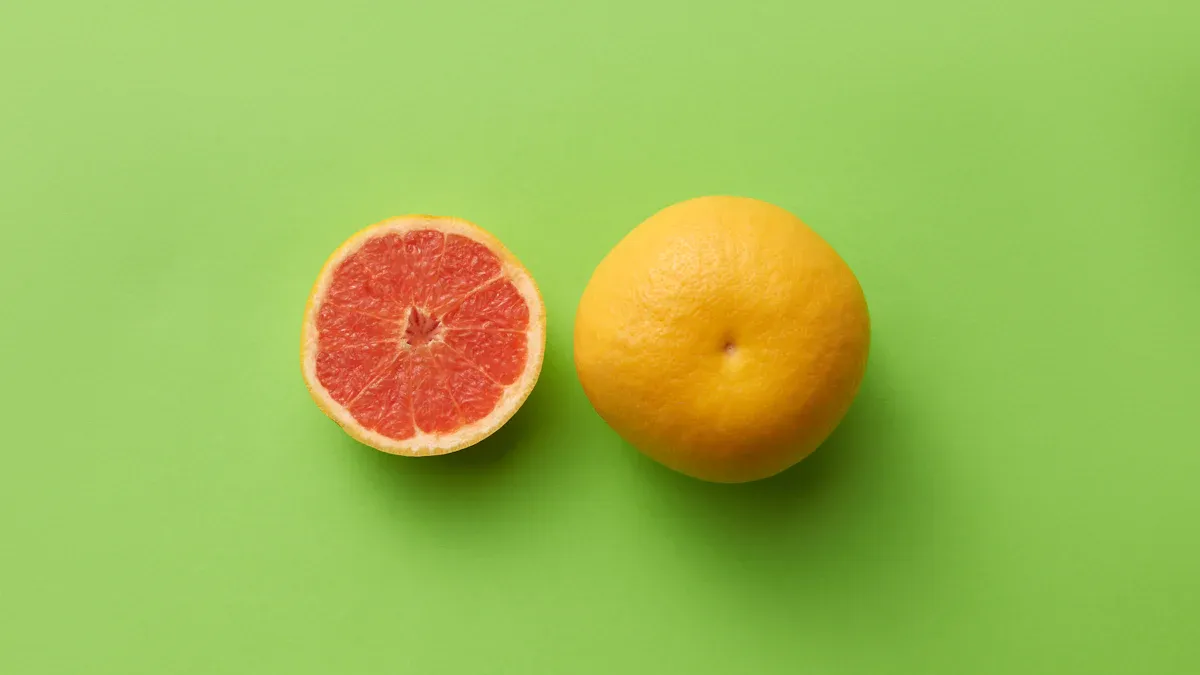
You might wonder how pomelo compares to its more famous cousin, grapefruit. Both are citrus fruits, but they have distinct differences.
Nutritional Differences
Both pomelo and grapefruit offer many nutrients. They both contain fourteen flavonoid compounds. However, their specific flavonoid profiles vary. Grapefruit has major flavonoids like naringin and cigranoside C. It also contains hesperidin, neohesperidin, and narirutin. Some pomelo cultivars, like Shatianyu, have melitidin as a main flavonoid. Yuhuanyu pomelo has rhoifolin. These flavonoids give both fruits strong antioxidant power. They also show potential anti-obesity benefits.
Here is a quick look at how some nutrients compare:
Nutrient | Pomelo | Grapefruit |
|---|---|---|
Calories | Significantly higher | Lower |
Iron | Significantly higher | Lower |
Fiber | Significantly higher | Lower (but still rich in fiber) |
Potassium | Significantly higher | Lower |
Vitamin A | Less | More |
Vitamin C | Rich | Rich |
Antioxidants | Rich | Rich |
Flavor and Uses
You will find a clear difference in taste between the two fruits. The flesh of a pomelo is less acidic than grapefruit. Both fruits can range from sweet to bittersweet. However, pomelo‘s taste is notably sweeter. It often has subtle flavor overtones. Many describe pomelo as a milder, more floral grapefruit. It is generally less bitter than grapefruit.
Drug Interactions
You should know that both pomelo and grapefruit can interact with certain medications. Pomelos contain furanocoumarins, just like grapefruit. Other fruits like tangelos, limes, and bitter Seville oranges also have these compounds. These substances can change how your body processes drugs. This can lead to dangerously high levels of medication in your bloodstream.
This happens because these fruits can inhibit enzymes like cytochrome P450 3A4 and P-glycoprotein. These enzymes help break down and remove drugs from your body. When they are inhibited, drugs stay in your system longer.
Specific medications that interact with grapefruit juice include sildenafil, cyclosporine, and atorvastatin. Pomelo juice has similar interactions. It can increase the bioavailability of cyclosporine and tacrolimus. It can also decrease the bioavailability of sildenafil by 40%. Always be careful when you consume pomelo juice with certain drugs. This is similar to grapefruit juice. You want to avoid problems like low blood pressure or kidney issues. <<>>
Enjoying Pomelo

Selection and Peeling
You want to choose the best pomelo. Look for a fruit that feels heavy in your hand. A heavy one means it is juicy. Its skin should be smooth and firm. Avoid any with soft spots, blemishes, or discolored areas. These signs mean the fruit might be old or damaged. Peeling this fruit is different from peeling an orange. Its rind is very thick and spongy. First, use a sharp knife to score the skin. Cut around the circumference, but do not cut into the flesh. Then, you can easily peel away the thick rind. You might need to use your fingers or a spoon to help. After removing the outer rind, you will see the white pith. This pith is bitter. Carefully remove as much of this white pith as you can. Then, separate the fruit into individual segments. Each segment has a thin, bitter membrane. You should also remove this membrane before eating. This ensures you get only the sweet, juicy flesh.
Serving Ideas
You can enjoy this citrus fruit in many delicious ways. Eat the fresh segments on their own as a healthy snack. Their sweet and slightly tart flavor is very refreshing. Add the fruit to your favorite fruit salads. It pairs well with berries, grapes, and other citrus fruits. You can also mix segments into yogurt, cottage cheese, or oatmeal for breakfast. Blend the fruit into smoothies or fresh juices. For a savory twist, try adding it to Asian-inspired salads. It works well with grilled chicken, shrimp, or even tofu. The bright flavor can elevate many dishes. You can also make a simple dessert by drizzling honey over the segments.
Storage Tips
Store a whole, unpeeled pomelo at room temperature. It will stay fresh on your counter for about one week. If you want to keep it longer, place the whole fruit in your refrigerator. It can last for up to two weeks there. Once you peel the pomelo and separate the segments, store them properly. Put the segments in an airtight container. Keep this container in the refrigerator. The peeled segments will remain fresh for about 3 to 5 days. Always check for any signs of spoilage before eating.
Risks and Considerations
Drug Interactions
You need to be aware of potential drug interactions when you consume pomelo. Pomelo contains furanocoumarins. These compounds inhibit the CYP3A4 enzyme. This enzyme helps your body process about 50% of all drugs. When this enzyme is inhibited, drugs stay in your body longer. This increases their concentration in your bloodstream. It also raises the risk of overdose and adverse effects. This effect is irreversible and can last for about three days. Pomelo also contains flavonoids like naringin and hesperidin. These can block the organic anion transporting polypeptide (OATP). OATP helps transport drugs into your cells. Its blockage can reduce drug absorption and effectiveness. This interaction is temporary, lasting approximately four hours. The U.S. Food and Drug Administration (FDA) warns against consuming pomelo or pomelo juice while taking certain medications due to these potential interactions.
Allergies and Sensitivities
You might experience allergic reactions to citrus fruits like pomelo. These reactions can vary.
Skin reactions: You might see a rash, itchiness, hives, redness, or swelling. This often happens where your skin touched the fruit.
Digestive issues: You could feel nausea, vomiting, stomach pain, or diarrhea. These symptoms typically occur soon after you eat the fruit.
Respiratory symptoms: You might have a runny or stuffy nose, coughing, shortness of breath, or wheezing. In severe cases, this can lead to anaphylaxis.
Swelling of the mouth and throat: Your mouth, throat, lips, or tongue might swell. This can make it difficult to talk or breathe.
Lightheadedness or fainting: You might feel dizzy, lightheaded, or faint due to a drop in blood pressure.
Anaphylaxis: This is a severe, life-threatening reaction. It involves difficulty breathing, a sudden drop in blood pressure, a rapid heart rate, and confusion. You might also experience severe tingling and itching in your lips, tongue, and throat immediately after eating citrus fruits. Redness or mild swelling around your lips and gums can also occur.
Moderation
You should enjoy pomelo in moderation. This helps you get its benefits without overdoing it. A typical serving size is about one-quarter of a pomelo.
Nutrient | Amount Per Serving |
|---|---|
Serving Size | 1/4 pummelo (152g) |
Calories | 90 |
Total Fat | 0.5g |
Saturated Fat | 0g |
Cholesterol | 0mg |
Sodium | 0mg |
Total Carbohydrate | 20g |
Dietary Fiber | 4g |
Total Sugars | 11g |
Protein | 1g |
This serving provides a good amount of nutrients. It also keeps your sugar intake balanced. Always consider your overall diet.
You now understand the many pomelo nutrition benefits. This large fruit offers significant vitamin c, fiber, and antioxidants. These support your immune function, aid digestion, and boost overall health benefits. Remember, pomelo can interact with some medications. Always consult your doctor if you take prescription drugs. Incorporate this unique pomelo into your healthy diet. It provides a delicious boost for your digestion and well-being.
FAQ
What does pomelo taste like?
You will find pomelo tastes sweet and mild. It has a less bitter flavor than grapefruit. Many people describe its taste as floral or honey-like. It is also very juicy and refreshing.
How do you eat a pomelo?
You first peel its thick skin. Then, you remove the white pith from the segments. You can eat the juicy flesh directly. You can also add it to salads or smoothies.
What are the main health benefits of pomelo?
Pomelo offers many benefits. It provides lots of Vitamin C for your immune system. Its fiber helps your digestion. Antioxidants in pomelo protect your cells. It also supports heart health and weight management.
Is pomelo the same as grapefruit?
No, pomelo is not the same as grapefruit. Pomelo is generally larger and sweeter. It has a thicker rind. Both fruits contain compounds that can interact with medicines. Always check with your doctor if you take medication.
Can you eat pomelo skin?
You should not eat pomelo skin. The outer rind is very thick and bitter. It also contains compounds that can be unpleasant to taste. You only eat the juicy flesh inside. 🍊