

A refreshing slice of melon defines summer. This sweet fruit offers a cool escape on warm days. Many different types of melons exist beyond common varieties. These delicious fruits provide significant health benefits. Readers will learn about various types of melons, their nutritional value, and practical tips for enjoying them. Discover the full potential of these summertime melons.
Key Takeaways
Melons are sweet fruits. They come in many types like watermelon, cantaloupe, and honeydew. Each type has its own special taste and texture.
Melons are good for your body. They have lots of water to keep you hydrated. They also give you vitamins, minerals, and antioxidants to stay healthy.
You can pick a good melon by checking its color, weight, and a yellow spot on the bottom. Store whole melons at cool temperatures. Cut melons go in the fridge.
Melons are great for snacks. You can also use them in salads, drinks, or even savory dishes. Try different recipes to enjoy them in new ways.
What are Melons?
Defining Melons
Melons are plants. They belong to the Cucurbitaceae family. This family also includes cucumbers and squash. Melons produce a sweet, edible, and fleshy fruit. People enjoy these fruits worldwide. They are especially popular during warm summer months.
Botanical Classification
Botanists classify all melons into two main species. These species are Cucumis melo and Citrullus lanatus.
Genus | Common Melon Varieties |
|---|---|
Citrullus | Watermelon |
Cucumis | Cantaloupe, Honeydew |
Cucumis melo shows great diversity. It includes many different types of melons. Scientists classify Cucumis melo into two subspecies: C. melo ssp. melo and C. melo ssp. agrestis. These subspecies differ in the hair type on their ovaries. Melons in this species vary greatly in size, shape, and color.
For example, the Cantalupensis Group includes cantaloupes. These melons have furrowed but smooth skin. The Reticulatus Group contains muskmelons. These muskmelons have netted rinds. The Inodorus Group includes winter melons like honeydew and casaba. These melons often have smooth rinds and a longer shelf life. Other unique groups exist, such as the Flexuosus Group, which produces long, slender snake melons. These are often eaten when immature. Breeding efforts have created new varieties, like orange-fleshed honeydew melons. This shows the wide range of characteristics within the Cucumis melo species.
Popular Types of Melons
Many common types of melons offer unique flavors and nutritional benefits. These popular varieties are often found in grocery stores and farmers’ markets. They provide refreshing options for healthy eating.
Watermelon: Hydration
Watermelon is a favorite summer fruit. People enjoy its sweet taste and refreshing qualities. This popular sweet melon is known for its high water content. It helps keep the body hydrated, similar to cucumbers.
Watermelon, the symbol of summer, stands out for its incredible water content, sometimes reaching up to 92%, which makes it a real asset for hydration on hot days.
This fruit is an excellent choice for staying cool.
Fruit | Water Content |
|---|---|
Watermelon | Up to 91% |
Watermelon also provides vitamins A and C, along with beneficial antioxidants.
Cantaloupe: Vitamin A
Cantaloupe is another widely enjoyed melon. It has a netted, light brown rind and bright orange flesh. This melon offers a sweet, musky flavor. Cantaloupe is a type of muskmelons. It is especially rich in Vitamin A.
A single cup of diced cantaloupe provides a significant amount of Vitamin A. This serving contains approximately 5200 IU of Vitamin A. This amount fulfills 100% of the recommended Daily Value for adults. One cup of diced raw cantaloupe offers more Vitamin A than the entire daily recommended intake for adult men and women.
Honeydew: Sweetness
Honeydew melons have a smooth, pale green rind and sweet, light green flesh. They offer a distinct sweetness. Many people enjoy honeydew for its juicy texture. It is a refreshing choice for desserts or snacks.
Honeydew is also a good source of vitamins and minerals.
Serving Size | Calories |
|---|---|
1 cup diced | 61 |
1 cup balls | 64 |
One cup of honeydew melon provides a good amount of Vitamin C. It contains about 34% to 56% of the Recommended Daily Intake for vitamin C. This melon also offers potassium, which supports healthy body functions.
Galia Melon: Aroma
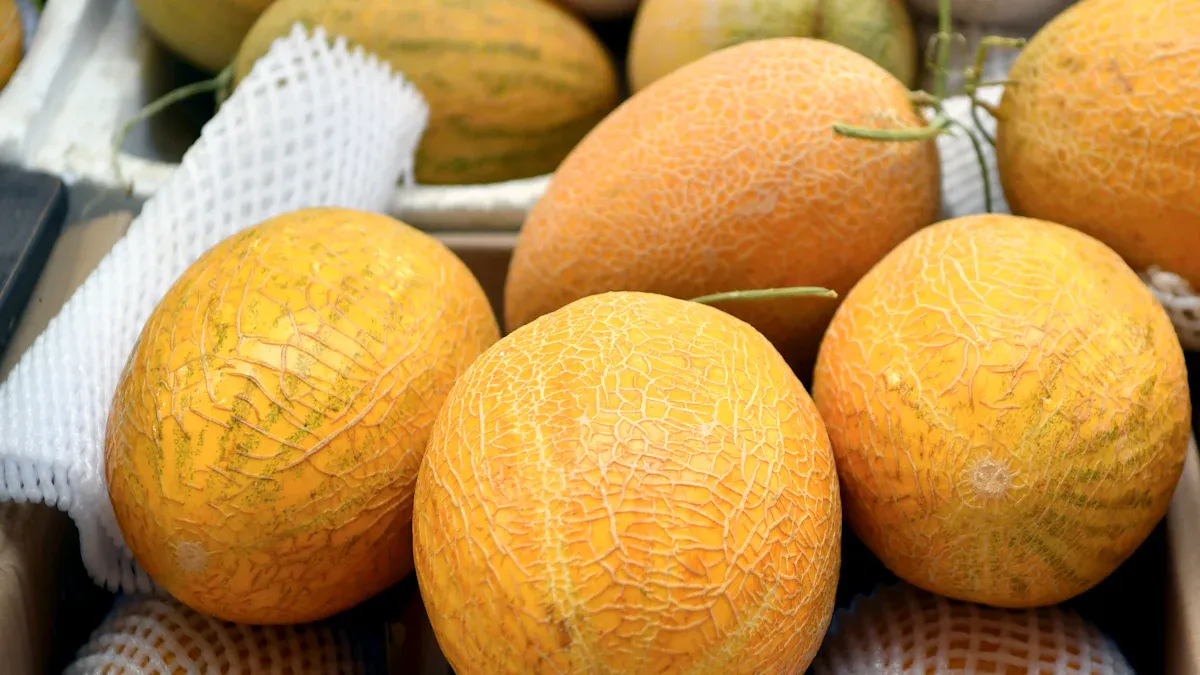
Galia melons are known for their strong, sweet aroma. They have a yellowish to greenish rind that often develops a netted pattern when ripe. The flesh is pale green and very juicy. Galia melons are a delightful addition to any fruit platter.
Like other melons, Galia melons are low in calories. They contain important vitamins and minerals.
Proteins: 0.75g
Fiber: 0.7g
Fat: Low quantity (0%)
Sugars: Moderate quantity (8.21g)
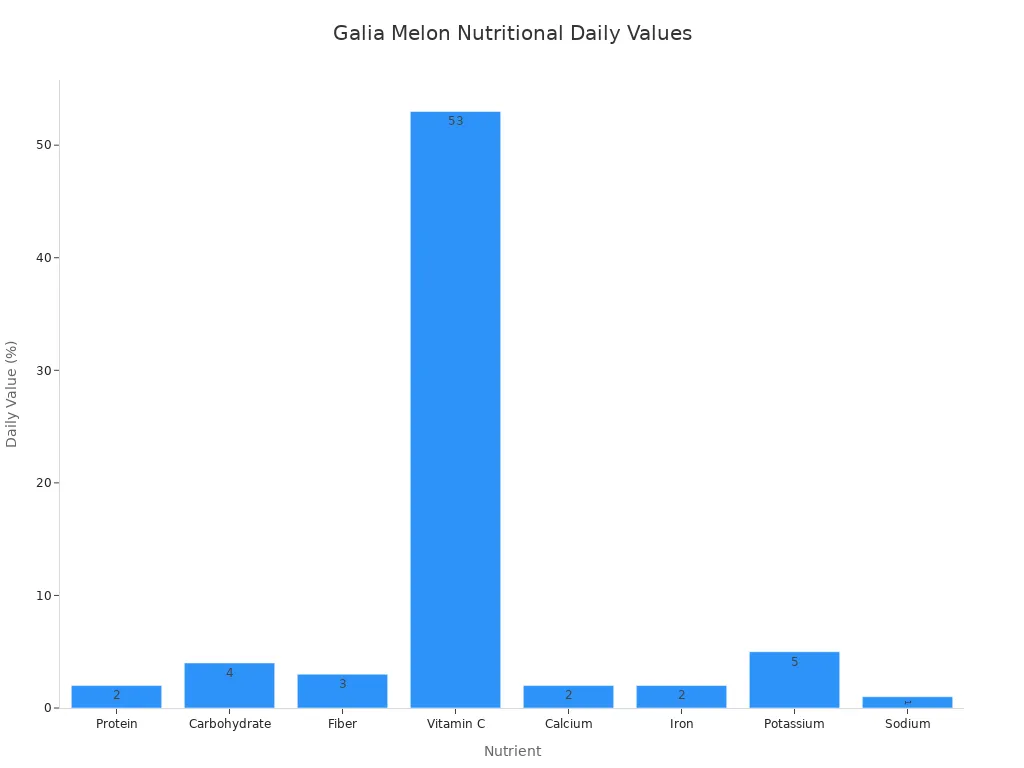
Galia melons provide vitamins C and A, fiber, and beta-carotene. These nutrients support overall health.
Nutrient | Amount (per 134g serving) | Daily Value (DV) |
|---|---|---|
Macronutrients | ||
Protein | 1.00 g | 2 % |
Carbohydrate | 12.01 g | 4 % |
Fiber | 0.94 g | 3 % |
Sugars | 11.00 g | |
Fat | 0.000 g | 0 % |
Vitamins | ||
Vitamin C (Ascorbic acid) | 48.0 mg | 53 % |
Minerals | ||
Potassium | 239.86 mg | 5 % |
Exploring Less Common Types of Melons
While many people know common varieties, the world of melons offers much more. Exploring less common types of melons reveals a spectrum of flavors and textures.
Casaba Melon: Texture
Casaba melon offers a unique experience. It has a distinctive wrinkled, yellow rind. People often enjoy its mild flavor. The flesh is light whitish yellow and juicy. It also has a smooth, tender texture. This makes it a pleasant addition to fruit salads. Its mildness allows it to pair well with stronger flavors.
Persian Melon: Flavor
Persian is a variety of muskmelons. It boasts a beautiful netted rind. Its flavor profile is complex. Some describe it as having a mild flavor. Others find it mildly sweet with an earthy quality. Many appreciate its exceptionally sweet and aromatic taste. It also offers a rich and honeyed flavor. The texture is juicy and refreshing. This makes Persian melon a delightful treat on its own.
Canary Melon: Tangy Taste
The Canary melon stands out with its bright yellow rind. It resembles a large, yellow football. This melon offers a distinct tangy taste. It also has a slightly sweet flavor. Its pale green to white flesh is firm. People enjoy it in fruit salads or as a refreshing snack. Its vibrant color also makes it visually appealing.
Other Unique Melons
Beyond these, many other unique types of melons exist. Each offers its own special characteristics. These varieties showcase the incredible diversity within the melon family.
Melon Variety | Distinguishing Features |
|---|---|
Sprite Melon | Small, round, white rind, sweet, crisp white flesh. |
Korean Melon | Yellow skin with white stripes, crisp, sweet, slightly pear-like flavor. |
Santa Claus Melon | Green and yellow striped rind, long shelf life, sweet, juicy green flesh. |
Piel de Sapo Melon | Dark green, mottled skin, white, sweet, firm flesh. |
These less common types of melons provide diverse flavors and textures. They invite exploration for new culinary experiences. Trying these different varieties can broaden one’s appreciation for this versatile fruit.
Nutritional Benefits of Melons
Melons offer more than just a refreshing taste. They provide significant nutritional value. These fruits pack essential vitamins and minerals. They contribute to overall health benefits.
Vitamins and Minerals
Melons are rich in many vital nutrients. Different melon types offer unique vitamin and mineral profiles.
Honeydew contains Vitamin C, potassium, copper, and Vitamin B.
Cantaloupe provides carotenoids, folates, Vitamin C, potassium, and Vitamin A.
Watermelon offers lycopene, phytonutrients, Vitamin A, Vitamin C, and potassium.
Other melons also contribute to daily nutrition. Muskmelon is high in Vitamin A, from beta-carotene, and potassium. Galia melon is rich in potassium, magnesium, phosphorus, and Vitamin C. Honeydew melons are notably richer in potassium, beta-carotene, and Vitamin A compared to watermelon.
These vitamins and minerals support various body functions.
Ascorbic acid, or Vitamin C, acts as an antioxidant. Wild melon varieties contain high amounts of it.
Pro-vitamin A, known as carotenoids, contributes to antioxidant activity. Deep orange and yellow melons are good sources.
Polyphenols, including flavonoids, tannins, and phenolic acids, indicate healthful properties. They act as antioxidants. Wild varieties show 2.5- to 3-fold higher content of these compounds.
Melons exhibit ACE inhibition activity. This helps limit the start of chronic diseases. These include cardiovascular disease and cancer.
Galia melons are rich in Vitamin A. People call Vitamin A the ‘beauty vitamin’. It benefits skin, hair, and nails.
Hydration
Melons are excellent for hydration. They have a high content of water. Raw fruits and vegetables, including melons, contribute significantly to fluid needs.
Melon Type | Water Content |
|---|---|
Watermelon | 92% |
Cantaloupe | 90% |
Honeydew | 90% |
Watermelon is highly effective for hydration. It contains 91% to 92% water. Fruits like watermelon contribute approximately 20% of a person’s total daily water intake. Melons, especially watermelon, contain naturally occurring electrolytes. These include potassium. Electrolytes play a crucial role in maintaining water balance. They help the body absorb water faster into cells. Potassium specifically helps prevent muscle cramping. It also maintains proper nerve function. This further supports hydration.
Antioxidants
Melons contain powerful antioxidants. These compounds protect the body from damage.
Melon Type | Antioxidant | Health Benefit |
|---|---|---|
Cantaloupe | Beta-carotene | Supports vision and reproductive health |
Watermelon | Lycopene | May lower the risk of prostate cancer |
Watermelon, Honeydew, Cantaloupe | Vitamin C | Good source of this antioxidant |
Lycopene gives watermelon its red color. This powerful antioxidant can help prevent cardiovascular diseases. Melons also show high radical-scavenging activity. Ascorbic acid, carotenoids, and polyphenols contribute to this. This activity helps decrease the risk of chronic diseases. It combats free radicals in the body. A specific melon juice concentrate, SODB, comes from a non-GMO Cucumis melo L. variety. It is notably rich in superoxide dismutase (SOD). This concentrate is processed to preserve its activity.
Fiber Content
Melons also provide dietary fiber. Fiber is important for digestive health. Cantaloupe melons are rich in fiber. This nutrient aids in maintaining a healthy digestive system. It helps regulate blood sugar levels. Fiber also contributes to a feeling of fullness. This can assist with weight management.
Choosing and Enjoying Melons
Selecting Ripe Melons
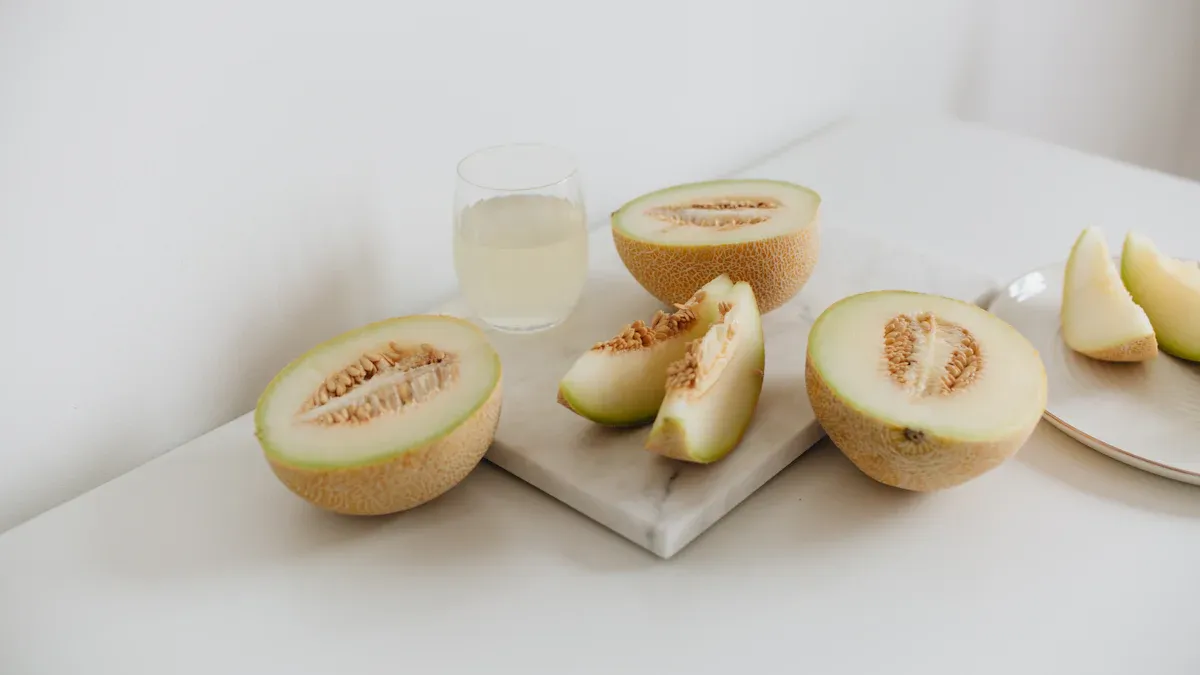
To choose ripe melons, look for specific signs. For watermelon, a completely dead and black/brown tendril is the most reliable indicator. A lumpy or bumpy feel when rubbed also suggests ripeness, though some commercial varieties stay smooth. Look for a large ground spot, either yellow or white; larger spots mean higher ripeness. A ‘muffled thud’ sound when thumped indicates ripeness, but this takes practice. A ‘dead weight’ feel when lifted also suggests a good watermelon. An orange creamy field spot, with darker yellow, means longer vine time and more flavor. A white spot suggests under-ripeness. Larger ‘webbing’ or ‘sugar spots’ signify sugar seeping out, indicating a sweet melon. Dark and dull melons are ripe, while shiny ones are under-ripe. Choose a uniform size (oval or round) without irregular bumps. It should feel heavy for its size, suggesting sweetness and high water content.
For cantaloupe, a slightly softer blossom end may begin to crack. A net-like pattern should climb up the stem. Green skin should have become creamy in color.
Storing Melons
Proper storage keeps melons fresh. Whole melons have different optimal storage conditions.
Melon Type | Storage Temperature (°F) | Relative Humidity (%) | Duration (weeks) |
|---|---|---|---|
Cantaloupe | 40 | 95 | N/A |
Honeydew | 45-50 | 95 | N/A |
Watermelon | 50-60 | 95 | 2-3 |
Once cut, store all melon types in an airtight container in the refrigerator. Consume cut melon within a few days for best quality.
Serving Ideas
Melons offer versatile serving options. Enjoy them as a refreshing snack or incorporate them into meals. Consider these creative ideas:
Bacon, Cantaloupe, & Arugula Salad
Feta Almond Watermelon Salad
Melon, Fig, and Prosciutto Salad
Watermelon Jalapeno Bruschetta
Watermelon Salad with Cucumber, Feta and Mint
Cantaloupe Prosciutto Mozzarella Salad Recipe
Tilapia Sliders with Watermelon Salsa
Watermelon Goat Cheese Salad
Pan Seared Tuna Steak with Gingered Melon
Watermelon Summer Salsa
Watermelon Brie Bites These ideas show how melons can enhance both savory and sweet dishes.
Melon Recipes
Many popular and innovative recipes feature melons. They suit different meal types.
Rockmelon and Prosciutto: A classic appetizer, perfect for entertaining. It features delicate slices of prosciutto with melon wedges and basil.
Rockmelon Drink (Filipino): A refreshing and delicious drink. Make it with honeydew, rockmelon, or cantaloupe.
Candy Corn Fruit Kebabs: A fun, visually appealing fruit dish.
Cantaloupe Salsa: A sweet and zesty fresh salsa. It works as a dip with tortilla chips or a topping for fish or chicken tacos.
Chilled Cucumber Melon Soup: A slightly sweet and refreshing soup. It is ideal as a cooling appetizer for dinner or enjoyed on its own as a light snack.
Honeydew Mint Ice Pops: Made with just four ingredients, these minty pops use melon well. Enjoy them as a refreshing treat.
This exploration revealed the vast diversity among types of melons, showcasing their unique flavors and textures. Melons offer significant health benefits, making them an excellent choice for a healthy diet, especially during summer. Their versatility allows for many culinary uses. We encourage everyone to experiment with different varieties and enjoy this wonderful fruit’s refreshing taste and health advantages.
FAQ
What is the difference between a cantaloupe and a muskmelon?
Cantaloupe is a type of muskmelon. 🍈 All cantaloupes are muskmelons, but not all muskmelons are cantaloupes. Muskmelons include many varieties with netted rinds and musky aromas.
What is the best way to tell if a watermelon is ripe?
A ripe watermelon often has a dull appearance. It will feel heavy for its size. Look for a creamy yellow spot on its underside. This spot shows where it rested on the ground and ripened in the sun. ☀️
What nutrients do melons provide?
Melons offer many essential nutrients. They provide vitamins A and C, potassium, and dietary fiber. Watermelon contains lycopene, an antioxidant. Honeydew offers copper and B vitamins. These nutrients support overall health. 💪
Can you freeze melons?
Yes, you can freeze melons. Cut the melon into cubes or balls. Remove the seeds. Freeze the pieces on a baking sheet. Then, transfer them to an airtight container or freezer bag. Frozen melon is great for smoothies. 🧊
What is a Galia melon?
A Galia melon is a hybrid melon. It has a yellowish-green, netted rind. Its flesh is pale green and very aromatic. Galia melons taste sweet and juicy. They are a cross between a cantaloupe and a honeydew. 👃