


Sweeteners provide sweetness to foods and drinks. A growing interest exists in sugar alternatives beyond traditional table sugar. Nearly 75% of Americans actively limit or avoid sugar in their diet. The global sweeteners market reached USD 86.42 billion in 2024. Natural options alone represent USD 25.78 billion of this market. This guide explores various types of sweeteners. These include natural sweeteners, artificial sweeteners, and sugar substitutes. Understanding their differences helps people make informed choices.
Key Takeaways
Sweeteners come in three main types: natural, artificial, and sugar alcohols. Each type has different sources and properties.
Natural sweeteners like stevia and monk fruit come from plants. They often have fewer calories than sugar and can offer unique flavors.
Artificial sweeteners are made in labs. They are much sweeter than sugar and have very few or no calories, making them popular for diet foods.
Sugar alcohols like erythritol and xylitol taste sweet. They have fewer calories than sugar and do not cause tooth decay, but large amounts can upset your stomach.
Choosing a sweetener depends on your health goals. Consider how each sweetener affects blood sugar, gut health, and potential side effects.
Natural Sweeteners
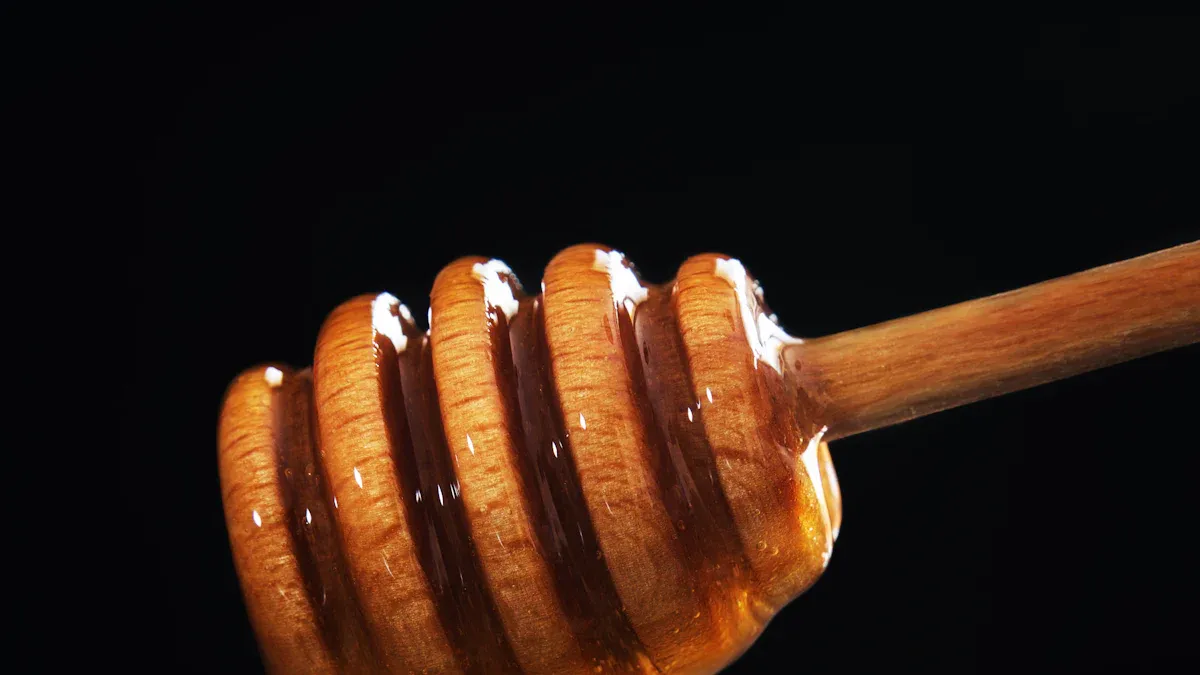
Natural sweeteners come from plants or other natural sources. Manufacturers often minimally process these sweeteners. Many people choose natural sweeteners for their perceived health benefits or unique flavors. These options include familiar choices like honey and maple syrup, alongside newer alternatives such as stevia, monk fruit, and allulose. Allulose is a rare sugar that provides sweetness. Other natural sweeteners like date sugar and coconut sugar also offer distinct profiles.
Honey
Honey is a sweet, viscous food. Bees produce honey from the nectar of flowers. Its flavor and color vary based on the flower source. People use honey in baking, beverages, and as a spread. Honey has an average glycemic index of 60. Some varieties show an average glycemic index of 55, with slight variations.
Maple Syrup
Maple syrup comes from the sap of maple trees. It is a popular natural sweetener, especially in North America. Maple syrup primarily contains sucrose and water. It also has small amounts of glucose and fructose. A 100g serving contains 67% carbohydrates, mostly sugars, and 32% water. Maple syrup offers high levels of manganese and riboflavin. It also provides moderate amounts of zinc and calcium. This natural sweetener contains up to 24 different antioxidants, including phenolic compounds like benzoic acid and gallic acid.
Agave Nectar
Agave nectar, or agave syrup, comes from the agave plant. It is sweeter than sugar and has a thinner consistency. Agave nectar contains a high amount of fructose.
Sweetener | Fructose Percentage | Glucose Percentage |
|---|---|---|
Agave Nectar | 55%-90% | (present) |
Table Sugar | 50% (bound) | 50% (bound) |
This high fructose content makes agave nectar a unique natural sweetener.
Stevia
Stevia is a natural sweetener derived from the leaves of the Stevia rebaudiana plant. It provides sweetness without calories. Stevia is much sweeter than sugar. The main sweet compounds in stevia are steviol glycosides. Stevioside and rebaudioside A are two well-known stevia compounds. Regulatory bodies have approved these stevia compounds for use. The FDA granted ‘Generally Recognized As Safe’ (GRAS) status to stevia leaf extract. Many products now use stevia as a sugar alternative. Stevia is a popular choice among natural sweeteners. People often choose stevia for its zero-calorie profile. Stevia offers a sweet taste. Stevia is a versatile natural sweetener.
Monk Fruit
Monk fruit is a small, round fruit native to Southeast Asia. Extracts from monk fruit serve as a natural sweetener. Monk fruit sweetener is calorie-free. The sweet compounds in monk fruit are mogrosides. Mogroside V is the primary sweetening compound in monk fruit extract. It is 100 to 250 times sweeter than sucrose. Monk fruit sweetener does not raise blood sugar levels. Many people prefer monk fruit for its clean taste. Monk fruit is a popular natural sweetener. Monk fruit offers a strong sweetness. Monk fruit is a good option for those avoiding sugar. Monk fruit is gaining popularity.
Date Sugar
Date sugar comes from dried, ground dates. It retains the nutrients found in whole dates, such as fiber and minerals. Date sugar has a caramel-like flavor. People use it in baking and as a topping. It is a less processed natural sweetener.
Coconut Sugar
Coconut sugar comes from the sap of the coconut palm tree. It offers a caramel-like flavor. Coconut sugar contains some nutrients found in the coconut palm. The glycemic index (GI) of coconut sugar can vary. Some studies report a GI of 35, classifying it as low. Other sources indicate an average GI of 50–54, similar to regular white sugar. This natural sweetener is a popular alternative.
Fruit Puree
Fruit purees are simply blended fruits. They provide natural sweetness along with vitamins, minerals, and fiber. Manufacturers use fruit purees in many commercial products. These include baking, cooking, brewing, and cocktail mixers. Fruit purees also appear in frozen treats like ice creams and popsicles. They enhance flavors in drinks and pastries without added sugars. Allulose, another natural sweetener, also finds use in various products.
Artificial Sweeteners
Artificial sweeteners are synthetic substances. Scientists create these sweeteners in laboratories. They provide sweetness without calories or with very few calories. These sweeteners are often much sweeter than sugar. Regulatory bodies approve them for use in many foods and drinks. Many products use these artificial sweeteners to create sugar-free or low-calorie options.
Aspartame
Aspartame is a common artificial sweetener. It is about 200 times sweeter than sugar. People often find aspartame in diet sodas, chewing gum, and other sugar-free products. The FDA has set the acceptable daily intake (ADI) for aspartame at 50 milligrams per kilogram (mg/kg) of body weight per day. Both the Joint FAO/WHO Expert Committee on Food Additives (JECFA) and the European Food Safety Authority (EFSA) recommend a slightly lower ADI of 40 mg/kg/day for aspartame. This ADI represents the amount of aspartame a person can safely consume each day over their lifetime.
Sucralose
Sucralose is another widely used artificial sweetener. It is about 600 times sweeter than sugar. Manufacturers often use sucralose in baked goods, beverages, and dairy products. Sucralose has a sweetness growth rate of 0.65. This is lower than sucrose’s rate of 1.31. This means changes in concentration produce smaller changes in sweetness intensity for sucralose. However, sucralose shows a higher peak sweetness intensity (35) than sucrose (33) at the highest concentration tested.
Sweetener | Slope (Sweetness Growth Rate) |
|---|---|
Sucralose | 0.65 |
Sucrose | 1.31 |
Acesulfame-K | 0.68 |
Aspartame | 0.84 |
Fructose | 1.08 |
Stevia | 0.71 |
Xylitol | 1.30 |
Saccharin
Saccharin is one of the oldest artificial sweeteners. It is 200 to 700 times sweeter than sugar. People often find saccharin in diet drinks and as a tabletop sweetener. Saccharin has received approval as a food additive from regulatory bodies in various countries. This has helped its widespread use.
The U.S. Food and Drug Administration (FDA) has approved saccharin.
Saccharin maintains its status as a preferred ingredient due to its extensive safety record and broad regulatory acceptance.
Acesulfame Potassium
Acesulfame potassium, also known as Ace-K, is a calorie-free artificial sweetener. It is about 200 times sweeter than sugar. Acesulfame potassium is identified as the potassium salt of 6-methyl-1,2,3-oxathiazine-4(3H)-one 2,2-dioxide. Manufacturers often combine it with other sweeteners to create a more sugar-like taste.
Neotame
Neotame is a high-intensity artificial sweetener. It is 7,000 to 13,000 times sweeter than sugar. This makes it one of the most potent zero calorie sweeteners. Neotame is stable under heat, so it works well in baked goods.
Advantame
Advantame is another high-potency artificial sweetener. It is about 20,000 times sweeter than sugar. The acceptable daily intake (ADI) for advantame is 1,970 mg/p/d. This determination came from a 1-year chronic toxicity study.
Cyclamate
Cyclamate is an artificial sweetener about 30 to 50 times sweeter than sugar. It is often used in combination with other artificial sweeteners.
Cyclamate was banned in the United States in 1970.
Despite overwhelming scientific evidence supporting its safety, cyclamate remains restricted in the U.S.
A petition for its reapproval is currently under review by the U.S. Food and Drug Administration (FDA). The safety of artificial sweeteners like cyclamate is a topic of ongoing discussion.
Sugar Alcohols: Key Sugar Substitutes
Sugar alcohols are a type of carbohydrate. They have a chemical structure similar to both sugar and alcohol. However, they do not contain ethanol, the alcohol found in alcoholic beverages. These sugar alcohols provide sweetness but with fewer calories than regular sugar. They also do not cause tooth decay. Many people use them as sugar substitutes in various products. They can have a mild laxative effect if consumed in large amounts.
Erythritol
Erythritol is a popular sugar alcohol. It is considered almost completely noncaloric. Nutritional labeling for erythritol varies by country. For instance, Japan and the European Union label erythritol as zero-calorie. In the United States, under FDA requirements, erythritol has a caloric value of zero. Erythritol contains only 0.24 calories per gram. This is significantly lower than table sugar’s 4 calories per gram. This low caloric profile is a key characteristic of erythritol. Many products use erythritol for its clean taste. Erythritol does not typically cause digestive upset in small amounts. People often choose erythritol for baking and beverages. Erythritol is a versatile ingredient.
Xylitol
Xylitol is another common sugar alcohol. It offers several dental health benefits. Xylitol reduces the levels of mutans streptococci (MS) in plaque and saliva. It disrupts their energy production processes. This leads to cell death. Xylitol also reduces the adhesion of microorganisms to teeth surfaces. It reduces their acid production potential. Xylitol promotes mineralization by increasing salivary flow. This happens when people use it as chewing gum or in large pastilles. Xylitol decreases the incidence of dental caries by increasing salivary flow and pH. The European Food Safety Agency has approved a health claim that ‘xylitol chewing gum reduces the risk of caries in children’.
Sorbitol
Sorbitol is a sugar alcohol found naturally in fruits like apples and pears. Manufacturers also produce it commercially. It provides about 60% of the sweetness of sugar. Sorbitol has fewer calories than sugar. It is often used in sugar-free candies and chewing gum. The laxative threshold for sorbitol consumption in adults has been identified as 70 g/day. This means consuming more than this amount may cause digestive issues.
Maltitol
Maltitol is a sugar alcohol with a sweetness similar to sugar. It has a glycemic index (GI) of 35. This is significantly lower than regular table sugar, which has a GI of 65. Maltitol syrup has a glycemic index of 52. This makes maltitol a good option for people managing blood sugar levels. It is often found in chocolate and other confectionery products.
Isomalt
Isomalt is a sugar alcohol derived from beet sugar. It is less sweet than sugar. Isomalt is very stable and resists crystallization. This makes it ideal for certain industrial applications.
Hard and soft caramels
Hard candies and cough drops
Chewing gums
Chocolates
Decorative cake toppings
Baked goods
Pharmaceutical products
Isomalt is a popular choice for creating clear, hard candies and decorative sugar work. These sweeteners offer unique properties.
Comparing Sweeteners
People often compare different types of sweeteners based on several key characteristics. These include their caloric content, how sweet they are, their common uses, and their taste. Regulatory bodies also play a role in approving these sweeteners for consumption.
Caloric Content & GI
Sweeteners vary greatly in their caloric content and glycemic index (GI). The glycemic index measures how quickly a food raises blood sugar levels.
Sweetener | Calories (cal/g) | Glycemic Index |
|---|---|---|
Sucrose | 4 | 65 |
Glucose | 4 | 100 |
Fructose | 4 | 19 |
Lactose | 4 | 46 |
Maltose | 4 | 105 |
Allulose | <1 | <1 |
Maltodextrin | 4 | 80-120 |
Honey | 4 | 35-64 |
High Fructose Corn Syrup | 4 | 58 |
Agave Syrup | 4 | 30 |
Fruit Juices | 4 | 5-80 |
Erythritol | 0.2 | 0 |
Isomalt | 2.0 | 9 |
Maltitol | 2.1 | 34 |
Sorbitol | 2.6 | 5 |
Xylitol | 2.4 | 8 |
Sucralose | 0 | N/A |
Acesulfame K | 0 | N/A |
Aspartame | 4 | N/A |
Saccharin | 0 | N/A |
Stevia | 0 | N/A |
Allulose is a low-calorie sugar, providing only 0.2 calories per gram. It also has a low glycemic index. People find allulose naturally in foods like figs and raisins. It tastes and has a composition similar to table sugar. Erythritol is a notable sugar alcohol. It offers 0.2 Kcal per gram and a glycemic index of 0. Erythritol is known for its high digestive tolerance. It occurs naturally in fruits like grapes and melons.
Artificial sweeteners provide sweetness with minimal calories. They are hundreds to thousands of times sweeter than sugar. This means manufacturers need only small amounts. The body does not fully absorb them. They typically have a glycemic index of 0 or 1. Sugar alcohols, such as erythritol and xylitol, offer fewer calories per gram than other sweeteners. The body does not fully absorb them. This can lead to gastrointestinal symptoms in some individuals. Stevia, a natural sweeteners, has zero calories and a glycemic index of 0.
Sweetener | Glycemic Index |
|---|---|
Maltodextrin | 110 |
Corn Syrup | 75 |
Glucose | 100 |
Lactose | 45 |
Sucrose | 65 |
Molasses | 55 |
Maple Syrup | 54 |
Mannitol | 2 |
Honey | 50 |
Sorghum | 50 |
Brown Rice Syrup | 25 |
Xylitol | 12 |
Agave Syrup | 11 |
Table Sugar | 80 |
HF Corn Syrup | 87 |
Stevia | < 1 |
Sweetness Intensity
Sweeteners vary significantly in their sweetness intensity compared to table sugar. Erythritol is approximately 70% as sweet as sugar. Sucralose is much sweeter than erythritol. It requires 800 times more erythritol to match sucralose’s sweetness. Stevia is a natural high-intensity sweetener.
Common Uses
Different sweeteners suit various applications in food and beverage manufacturing.
Aspartame works as a tabletop sweetener.
Manufacturers use it in frozen desserts.
Other applications include gelatins.
It is found in beverages.
Aspartame is used in chewing gum.
Xylitol is a versatile sugar substitutes. It has applications across multiple industries, including food manufacturing. Extracts from monk fruit, also known as Swingle fruit or Luo Han Guo, are recognized as safe sweeteners.
Taste & Aftertaste
The taste and aftertaste of sweeteners greatly influence consumer preference. Saccharin is known for an “alienating aftertaste,” specifically bitterness. Stevia, in its original form, also had a bitter taste. However, newer variants are described as more sugary and less lingering. This is due to advancements in understanding and processing the stevia leaf.
Stevia samples with lower rebaudioside A concentrations (e.g., 40%) consistently showed higher intensities of bitter taste and bitter aftertaste. This was true compared to other sweeteners and higher rebaudioside A concentrations (e.g., 95%).
Increasing the concentration of rebaudioside A in stevia extracts significantly decreased the intensity of bitter taste and aftertaste.
Stevia samples with 40% and 95% rebaudioside A showed higher averages for astringency compared to sucralose and sweetener blends.
Rebaudioside A was the only sweetener among those tested (sucrose, sucralose, erythritol, rebaudioside A, and tagatose) that presented high bitterness. This bitterness intensified with increasing concentration.
Regulatory Status
Regulatory bodies around the world approve sweeteners for human consumption. The Food and Drug Administration (FDA) in the United States has approved advantame. Similarly, the European Food Safety Authority (EFSA) has approved advantame (E969) for use in foods and drinks within the European Union.
Sweetener | FDA (mg/kg body weight) | SCF/EFSA (mg/kg body weight) | JECFA (mg/kg body weight) |
|---|---|---|---|
Advantame | 32.8 | 5 | 5 |
Cyclamate | Not approved | 7 | 11 |
The FDA banned cyclamate (E-952) in the United States in 1970. This was due to concerns about bladder tumors in rodents. However, cyclamate remains approved for use in over 50 other countries, including the European Union. Following its classification as Generally Recognized As Safe (GRAS) in 1958, the FDA banned cyclamate after a chronic study in rats suggested an increase in tumor incidence. Despite the US ban, many countries did not follow this decision. They continued to use cyclamate as a food additive. Regulatory bodies like JECFA and SCF established an Acceptable Daily Intake (ADI) of 0–11 mg/kg/day for cyclamate.
Health & Informed Choices
Sweeteners offer diverse options for reducing sugar intake. However, people must understand their health implications. Different sweeteners affect the body in unique ways. These impacts range from blood sugar regulation to gut health and weight management. Making informed choices about sweeteners requires knowledge of these effects.
Blood Sugar Impact
Sweeteners have varying effects on blood sugar levels. Natural sweeteners like stevia, monk fruit, and allulose generally do not raise blood glucose. These options provide sweetness without the caloric load of table sugar. Erythritol, a sugar alcohols, also has a minimal impact on blood sugar. It offers a sweet taste without affecting insulin levels.
Research on artificial sweeteners and blood sugar shows mixed results. Some studies indicate sucralose can impair insulin sensitivity in healthy individuals. Long-term sucralose usage has contributed to impaired glucose regulation in mice. These mice showed deterioration in glucose utilization and insulin sensitivity after two weeks. Obese individuals who did not regularly consume nonnutritive sweeteners experienced a greater increase in peak plasma glucose concentrations after sucralose ingestion. They also saw a larger increase in insulin and a decrease in insulin sensitivity. This suggests sucralose affects the glycemic response to an oral glucose load. It also potentiates glucose-stimulated insulin secretion. Conversely, a 12-week clinical trial found no significant differences in fasting glucose, insulin, C-peptide, or HbA1c between sucralose and placebo groups in normoglycemic men. This study concluded sucralose has no effect on glycemic control. These findings highlight the complexity of sweetener effects on blood sugar.
Gut Health
The impact of sweeteners on gut health is an area of growing interest. Some artificial sweeteners can disrupt the gut microbiota. Saccharin, for example, has links to inflammatory bowel diseases. It can cause gut microbiota disruption, increased intestinal permeability, and dysbiosis. These gut health issues can lead to metabolic disturbances. They include impaired glucose tolerance, insulin resistance, and heightened systemic inflammation. Disruptions in gut microbiota reduce the production of short-chain fatty acids. These fatty acids are crucial for insulin sensitivity. This further contributes to the development of metabolic disorders like type 2 diabetes mellitus.
Erythritol, stevia, monk fruit, and allulose generally have a more favorable profile for gut health. Erythritol is largely absorbed before reaching the large intestine. This minimizes its impact on gut bacteria. Stevia and monk fruit extracts also pass through the digestive system without significant fermentation. This means they do not typically cause the same gut issues as some other sweeteners.
Weight Management
Many people choose sweeteners to manage their weight. They aim to reduce calorie intake by replacing sugar. Intervention studies on low-calorie sweeteners (LCS) and body weight generally report neutral effects or modest benefits. This is especially true when LCS replace sugar-sweetened beverages in weight loss contexts. Some studies show reductions in visceral, skeletal, and liver fat. They also show lowered triglycerides and cholesterol with aspartame compared to sucrose in overweight and obese individuals without diabetes. Children who replaced daily sugar-sweetened beverages with flavor-matched non-caloric beverages experienced less weight gain over 18 months. Overweight adults consuming aspartame-sweetened drinks lost weight over a 10-week intervention. Those consuming sucrose-sweetened beverages gained weight.
However, high consumption of artificial sweeteners has links to increased risks of metabolic disorders and, paradoxically, weight gain. Many intervention studies compare LCS to sucrose or high-fructose corn syrup. They often lack a true control group, such as plain water or unsweetened seltzer. Researchers need future well-designed studies to understand the health consequences of LCS consumption under real-life conditions. These studies should consider diverse populations.
Side Effects
Sweeteners can cause various side effects, depending on the type and amount consumed. Sugar alcohols, such as sorbitol and maltitol, are known for gastrointestinal disturbances. These can include osmotic diarrhea, rumbling sounds in the intestines (borborygmus), and gas (flatus). These symptoms are particularly noticeable in individuals unaccustomed to sugar alcohols. Factors like a person’s weight, diet composition, and the specific molecular structure of the sugar alcohols influence these effects. For example, consuming around 90g of maltitol can lead to osmotic diarrhea. Doses of 20g to 50g of sorbitol can also cause osmotic diarrhea.
Sugar Alcohol | Dose | Side Effects |
|---|---|---|
Maltitol | 30g | No significant symptoms |
Maltitol | 40g | Mild borborygmus and flatus, no laxation |
Maltitol | ~90g | Osmotic diarrhea |
Maltitol | 45g | Transitory osmotic diarrhea in 85.3% of subjects |
Sorbitol (d-glucitol) | 20g to 50g | Osmotic diarrhea |
Concerns about the safety of artificial sweeteners extend beyond gut health. High consumption of artificial sweeteners has links to increased risks of cardiovascular diseases and certain cancers. They have also been associated with adverse pregnancy outcomes and potential risks for individuals with low seizure thresholds. Studies, including the Women’s Health Initiative, have connected artificially sweetened beverages to an elevated risk of stroke, coronary heart disease, and mortality.
Informed Choices
Choosing the right sweetener involves considering individual health goals and potential impacts. For those managing blood sugar, stevia, monk fruit, allulose, and erythritol offer good options. People concerned about gut health might prefer these natural alternatives over some artificial sweeteners. When aiming for weight management, replacing sugar with low-calorie sweeteners can be beneficial. However, people should also consider the broader dietary context. Moderation remains key for all sweeteners. Consulting a healthcare professional or registered dietitian can provide personalized guidance. They help individuals make the best choices for their unique needs.
This exploration covered various types of sweeteners, including natural options, artificial compounds, and sugar alcohols. Each of these types of sweeteners offers unique properties and considerations. No single sweetener is universally superior. Individuals should align their choices with personal health goals and dietary needs. Moderation remains crucial for all sugar alternatives. A balanced diet forms the foundation for healthy eating.
FAQ
What is the main difference between natural and artificial sweeteners?
Natural sweeteners come from plants. Manufacturers minimally process them. Artificial sweeteners are synthetic. Scientists create them in laboratories. They offer sweetness with few or no calories.
What are sugar alcohols?
Sugar alcohols are carbohydrates. They resemble sugar and alcohol chemically. They provide sweetness with fewer calories than sugar. They do not cause tooth decay. Examples include erythritol and xylitol.
Do all artificial sweeteners affect blood sugar?
Most artificial sweeteners do not directly raise blood sugar. Some studies suggest certain ones, like sucralose, might affect insulin sensitivity. This impact can vary among individuals.
Can sweeteners cause digestive problems?
Yes, some sweeteners can. Sugar alcohols, such as sorbitol and maltitol, may cause gas or diarrhea. This happens if people consume them in large amounts. Individual tolerance varies.