


Gouda cheese is a beloved Dutch classic. It offers great versatility and wide appeal. This creamy Gouda cheese began as a simple farm product. Today, Gouda stands as a global culinary staple. Its journey highlights a rich tradition. Gouda provides unique flavor profiles for every palate. This delicious cheese also offers excellent nutrition. It is a must-try for cheese enthusiasts and health-conscious individuals alike.
Key Takeaways
Gouda cheese is a Dutch cheese. It has a creamy texture and sweet taste. It comes in many types.
Gouda cheese changes with age. Young Gouda is mild. Aged Gouda has a strong, nutty flavor.
Gouda cheese is good for you. It has protein, vitamins, and minerals. It is also low in lactose.
Gouda cheese pairs well with many foods and drinks. You can use it in cooking or eat it alone.
Store Gouda cheese in the fridge. Wrap it in paper and a container. This keeps it fresh.
What is Gouda

Gouda cheese is a well-known variety of cheese. It is famous for its creamy texture and sweet flavor. This semi-hard cheese typically appears in shades from light to dark yellow.
Origins and History
Gouda cheese is a famous Dutch cheese. People named this cheese after the city of Gouda in South Holland. This city was a major trading hub for cheese. Gouda cheese has been made since at least 1184. This makes it one of the oldest cheeses still produced today. The city of Gouda gained special market rights for cheese during the Middle Ages. This gave it a monopoly on cheese sales in the County of Holland. By the 17th century, modern Gouda had fully developed. Traditionally, women in Dutch culture made cheese. They passed their skills down through many generations.
Production Process
Making Gouda cheese involves several careful steps. First, cheesemakers select high-quality cow’s milk. Sometimes they use sheep’s or goat’s milk. They pasteurize this milk. Then, they add specific starter cultures. These cultures help turn lactose into lactic acid. Rennet is also added. Rennet makes the milk curdle. Workers cut the curd into small pieces. This releases whey. A special washing process follows. They wash the cut curd with water. This removes some lactose. This washing gives Gouda its milder flavor, yellow color, and soft texture. Next, they mold the curd into its classic wheel shape. They press it to remove more whey. This makes the product firm. After pressing, the cheese goes into a brine solution. This adds salt and helps form a natural rind. It also protects the cheese. Finally, cheesemakers coat the cheese. This coating protects it and helps it mature. The cheese then ripens in a controlled room. It develops its full flavor and texture there.
Characteristics
So, what is Gouda? This Gouda has a semi-hard texture. Its color ranges from light to dark yellow. Young Gouda is creamy and sweet. As it ages, its flavor becomes richer and nuttier. Gouda is easy to shred and melts well. Its melting behavior changes as it ripens. It is also generally easy to slice. However, very old Gouda can become brittle. Sometimes, small white crystals appear on the surface. These are calcium lactate crystals. They are harmless. Young Gouda also often has small “eyes” or holes. These form from gas during ripening. This classic dairy product is truly versatile.
Types of Gouda
Gouda cheese offers many different types. Each type provides a unique experience. Aging significantly impacts the texture and flavor of this popular Dutch cheese. Other processes, like smoking or infusing, also create distinct varieties. These varieties of gouda cheese cater to many different preferences.
Young Gouda
Young Gouda is known for its mild and creamy flavor. Cheesemakers age this type for a short period. It typically ages for 2 to 4 months. Some young Gouda ages for approximately 8 to 10 weeks. Others age for around four weeks. This short aging time gives it a smooth and soft texture. Many people enjoy its ease of melting.
Characteristic | Young Gouda |
|---|---|
Texture | Smooth, soft |
Flavor | Mild, creamy |
Aging Time | ~4 weeks |
Young Gouda often has subtle notes of butterscotch and caramel. This makes its taste sweet and approachable. This young gouda is a favorite for those who prefer a less intense cheese.
Mature Gouda
Mature Gouda represents the next stage in the aging process. It ages longer than young Gouda. This allows its flavors to develop further. Mature Gouda has a firmer texture. It offers a more pronounced nutty taste. Its creaminess remains, but with added depth. This type of gouda cheese provides a balanced flavor profile. It is not as mild as young Gouda, but not as sharp as aged varieties.
Aged Gouda
Aged Gouda undergoes an extended aging period. This can range from one to several years. This long process transforms the cheese significantly. Aged Gouda develops a rich, nutty, and intense flavor. It often features distinct notes of caramel and butterscotch. Other complex flavors emerge, such as toasted hazelnuts and cooked cream. Its texture becomes firm and crumbly. Small, crunchy protein crystals often appear. These crystals add to the unique experience of aged Gouda. This type of gouda cheese offers a strong and complex taste.
Smoked Gouda
Smoked Gouda has a distinct smoky flavor. Cheesemakers achieve this by cold smoking the cheese. This process infuses smoke without cooking the cheese. Ideal outside temperatures for cold smoking are under 40°F. If temperatures are warmer, cheesemakers use an ice modification. They place ice in a baking sheet. The cheese sits on a cooling rack above the ice. They rotate the cheese every 15 minutes. This maintains a cold environment.
Common wood types for smoking include applewood, maple, and cherry. Applewood provides a mild, fruity, and sweet taste. Maple wood offers a delicate, sweet aroma. Cherry wood gives a light, sweet smoke. After smoking, the cheese rests for several weeks. This allows the smoked flavor to mellow and distribute evenly. This smoked gouda offers a unique and savory taste.
Herb-Infused Gouda
Herb-infused Gouda incorporates various herbs and spices. Cheesemakers add these ingredients during production. This creates many different varieties. Common additions include chilies, garlic, and cumin seeds. Some varieties feature Italian herbs like sun-dried tomato, onion, pepper, basil, and thyme. Others use fenugreek seeds or black summer truffle. Iberian herbs, such as basil, thyme, black pepper, and paprika, also create unique flavors. Green pesto herbs, including basil, black pepper, garlic, and oregano leaf, are another popular choice. These additions give the gouda cheese a distinct and aromatic taste.
Gouda Cheese Nutrition Facts
Gouda cheese offers a rich nutritional profile. Understanding its nutritional content helps consumers make informed dietary choices. This section details the macronutrients, vitamins, minerals, and health benefits of Gouda. It also discusses its lactose content and digestibility.
Macronutrients
Gouda cheese provides essential macronutrients. A 1.5-ounce (42-gram) serving of Gouda contains about 150 calories. It has 11.5 grams of total fat, with 5 grams saturated, 2.2 grams monounsaturated, and 0.8 grams polyunsaturated fat. This serving also offers 10.5 grams of protein and 0.9 grams of net carbs. A 1-ounce (28-gram) serving of Gouda has 110 calories, 9 grams of total fat, 30 mg of cholesterol, and 230 mg of sodium. It also provides 6 grams of protein. Dutch Girl® Red Wax Gouda, in a 1-ounce (30-gram) serving, contains 110 calories, 8 grams of total fat (12% DV), and 5 grams of saturated fat (25% DV). Per 100 grams, Gouda cheese has approximately 356 kcal.
Here is a breakdown of macronutrients per 100 grams:
Nutrient | Value per 100g |
|---|---|
Protein | 25g |
Fats | 27g |
Carbs | 2.2g |
Vitamins and Minerals
Gouda cheese is a good source of many vitamins and minerals. It contributes significantly to daily nutrient intake.
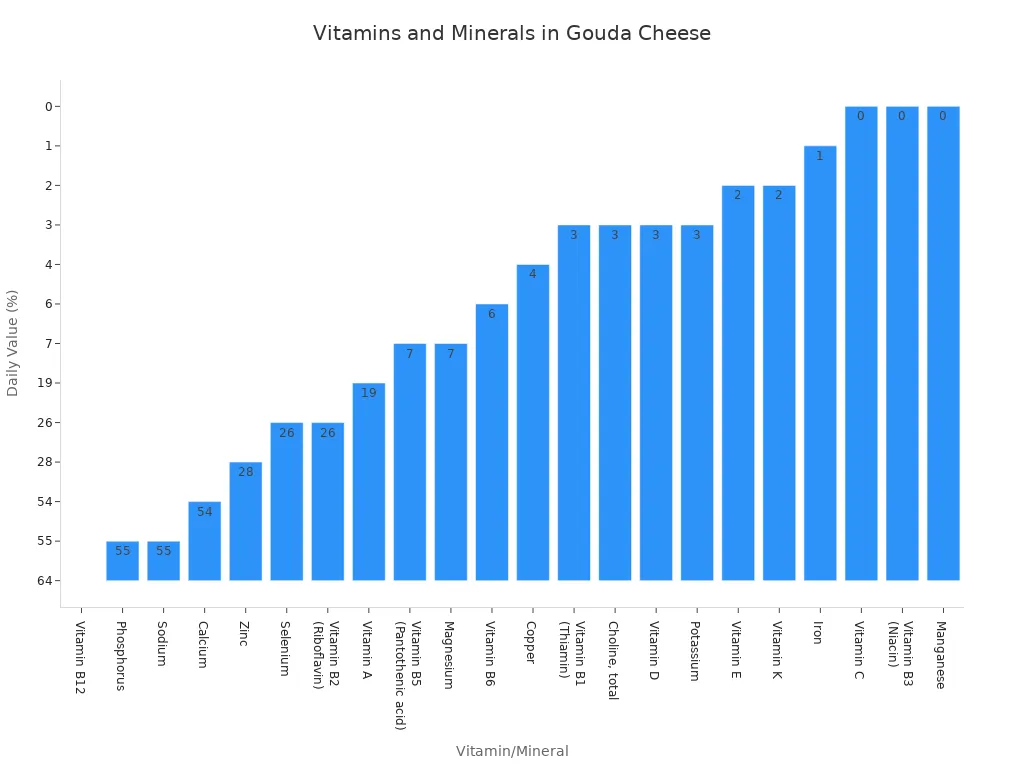
Gouda is an excellent source of Vitamin B12, providing 27% of the daily value per 1.5-ounce serving. It also offers 23% of the daily value for calcium in the same serving size. Keystone Farms Gouda provides 198mg of calcium per 1 ounce. This nutritional content makes Gouda a valuable addition to a balanced diet.
Health Benefits
The health benefits of Gouda cheese are notable. Its rich nutritional profile supports several bodily functions. Gouda cheese is recognized for its positive impact on bone health. It contains high amounts of calcium and phosphorus. This combination is crucial for maintaining strong bones and teeth. Regular consumption of Gouda cheese may help reduce the risk of osteoporosis. This is especially true for older adults and postmenopausal women.
A study showed that daily consumption of vitamin D3-enriched Gouda-type cheese increased vitamin D levels in postmenopausal women. It also reduced bone resorption, which helps prevent bone loss. Aged Gouda is a rich source of Vitamin K2 (MK-7). This vitamin is crucial for skeletal health. It directs calcium into bones. Gouda also contains Conjugated Linoleic Acid (CLA). CLA aids in fat loss and inflammation control. Both are beneficial for muscle support. The aging process breaks down its protein and fats. This makes them highly usable. It ensures easy absorption and provides nourishment without digestive stress. These health benefits make Gouda a smart choice.
Lactose and Digestibility
Many people wonder about the lactose content of Gouda. Gouda cheese is generally low in lactose. This makes it suitable for many individuals with lactose intolerance. The lactose content of Gouda typically ranges from 0-2 grams per 100 grams. Harder and more aged varieties of Gouda have even lower lactose content. Aged Gouda, especially varieties aged 12 months or more, has a very low lactose content. It typically contains less than 0.1 grams per serving. Gouda’s lactose content decreases as it ages. It becomes increasingly lactose-free. For the lowest lactose content, look for “aged” or “extra-aged” Gouda. Studies confirm that aged cheeses, including Gouda, typically contain negligible lactose. This is particularly true for farm-made versions. They often use traditional methods and slower, more careful natural aging processes. This further reduces lactose content. If you are unsure, start with small portions. Observe your body’s reaction. Avoid young Gouda (under 4 months) as it is creamier and may still contain lactose.
Gouda Flavor Profile and Pairing

Gouda cheese offers a remarkable range of flavors. Its taste evolves significantly with age. This makes Gouda a versatile cheese for many palates.
Flavor by Age
The flavor of Gouda cheese changes dramatically as it ages. Young Gouda has a mild and creamy taste. It often features subtle notes of butterscotch and caramel. As the cheese matures, its flavor deepens.
8 months: This Gouda is super creamy. It has pale caramel aromas. It offers a sweet and salty balance. Some crystallization begins to form.
18 months: The cheese becomes more friable and waxy. It shows distinct crystals. Hints of darker caramel and butterscotch appear. A fruity pineapple scent also develops.
36 months: This Gouda is drier and more brittle. It has an intense, sharp, fudgy, and candylike taste. It features a full butterscotch scent with whiskey notes. More apparent saltiness and a crystalline crunch are present.
60 months: This very dry, brittle, and hard Gouda has deep aromas of whiskey and butterscotch pudding. It shows pronounced saltiness. This leads to a very concentrated and intense flavor. It can be tiring after a small amount, similar to salted caramel.
The strength of Gouda ranges from mild to strong. Younger Gouda is milky and slightly sour. Aged Gouda develops fruity, caramel, malty, and nutty notes. It also has a brothy quality. Aged Gouda has higher concentrations of organic acids, fat, and salt. It has lower moisture content compared to younger Gouda. This contributes to its complex taste.
Characteristic | Younger Gouda | Aged Gouda |
|---|---|---|
Flavor Profile | Milky, whey, sour aromatic, diacetyl | Fruity, caramel, malty/nutty, brothy |
Organic Acid Concentration | Lower | Higher |
Fat Content | Lower | Higher |
Salt Content | Lower | Higher |
Moisture Content | Higher | Lower |
Texture and Aroma
Gouda cheese has distinct textural qualities and aromatic notes. Young Gouda is smooth, creamy, and slightly elastic. As it ages, the texture becomes firmer and crumbly. Fully aged Gouda (over 10 months) has a rich taste. It has strong sweet undertones reminiscent of butterscotch. Smoked Gouda has a creamier texture. It offers a more buttery, nuttier, and sweeter flavor. It also has distinct smokey flavor undertones.
The aroma of Gouda cheese is typically buttery. It is a bit earthy and slightly nutty. This is characteristic of semi-hard cheeses. The aroma becomes more pronounced and complex with age.
Food Pairings
Gouda pairs well with many foods. Its versatility makes it a favorite for cheese boards and culinary dishes.
Young Gouda, with its mild and creamy taste, complements:
Apples 🍎
Pears
Almonds
Walnuts
Honey 🍯
Dried figs
All types of Gouda also pair well with:
Fruits
Crackers
Bread 🍞
Mustard
Aged Gouda, with its rich, nutty, and sweet caramel flavor, stands up to stronger flavors. It is excellent with crusty bread, cured meats, and dark chocolate.
Beverage Pairings
The right beverage enhances the Gouda experience. The pairing depends on the age and flavor profile of the cheese.
Young Gouda: This cheese pairs well with light-bodied white wines. Examples include Sauvignon Blanc or Pinot Grigio. It also goes well with crisp ciders or light lagers.
Mature Gouda: Medium-bodied red wines, such as Merlot or Pinot Noir, complement mature Gouda. Amber ales and dry ciders are also good choices.
Aged Gouda: This robust cheese demands bolder beverages. Full-bodied red wines like Cabernet Sauvignon or Zinfandel are excellent. Port wine also creates a luxurious pairing. Dark beers, stouts, and even some whiskies can match the intensity of aged Gouda. The complex taste of aged Gouda also works with strong black tea.
This Dutch cheese offers a delightful journey for the senses. Its evolving flavor and texture make it a truly special cheese.
Enjoying Gouda Cheese
Gouda cheese offers many ways to enjoy its rich flavor. People use this versatile cheese in various dishes. Proper storage keeps it fresh.
Culinary Uses
Gouda cheese shines in many recipes. Its creamy texture and distinct flavor make it a favorite. People melt gouda on a panini or shred it into stew or chili. It adds great flavor atop sandwiches. You can melt it on burgers. Many recipes use gouda in mac & cheese. It also works well shredded into dips and spreads. Consider these delicious options:
Jerk TurkeyTM and Chipotle Gouda Sub
Smoked Gouda Pimiento Cheese
Spicy Pasta Salad with Smoked Gouda, Tomatoes and Basil
Grilled Pimento Cheese
Smoked Gouda Beer Dip
Pretzel-Crusted Cheese Balls
Alley Fries With Balsamic Glaze
Western Hash Brown Omelet
Crispy Gouda Chicken with Herb Salsa
Cheesy Baked Frittata
Hot Honey and Gouda Grilled Chicken Sandwiches topped with melty gouda and Smoked Gouda cheeses. These sandwiches are drizzled with homemade hot honey. They are served with lettuce, tomato, and onion.
Gouda also makes an excellent choice for fondue.
Storage
Properly storing gouda cheese helps maintain its quality. Wrap gouda tightly in parchment paper or wax paper. Then, place it in an airtight container or plastic wrap. Store it in the refrigerator’s crisper drawer. This area offers stable temperatures and humidity. Avoid freezing gouda. Freezing can change its texture. It makes the cheese crumbly. For optimal freshness, consume gouda within a few weeks of opening.
Dietary Considerations
Gouda cheese fits into many diets. It provides good nutrition. As discussed, aged gouda has very low lactose content. This makes it suitable for many with lactose intolerance. When selecting gouda cheese, consider its age. Younger gouda has more moisture and a milder taste. Older gouda offers a richer flavor and firmer texture. Always check nutrition labels for specific dietary needs.
Gouda cheese offers remarkable versatility and rich nutrition. This Dutch classic provides a wide spectrum of flavors across its many types. From young and creamy to aged and nutty, Gouda truly stands out. It remains a cherished culinary icon. Readers can explore the diverse world of Gouda. Discover its health benefits, complex flavors, and ability to elevate any meal. This exceptional cheese promises a delightful experience. Each type of Gouda cheese brings unique qualities. Enjoy Gouda in many culinary applications.
FAQ
What is the main difference between young and aged Gouda?
Young Gouda has a mild, creamy taste. It features a soft texture. Cheesemakers age it for a short time. Aged Gouda develops a rich, nutty, and sweet flavor. It has a firm, crumbly texture. Its aging process takes much longer.
What causes the sweet taste in Gouda cheese?
The production process gives Gouda its sweet taste. Cheesemakers wash the curds with water. This removes some lactose. This step prevents too much lactic acid from forming. It results in a naturally sweeter and milder cheese.
What are the white crystals found in aged Gouda?
The white crystals in aged Gouda are tyrosine or calcium lactate. They are harmless. These crystals form during the long aging process. They indicate a well-aged cheese. They add a pleasant crunch to the texture.
What kind of milk do cheesemakers use for Gouda?
Cheesemakers primarily use cow’s milk for Gouda. Some varieties also use sheep’s or goat’s milk. The milk choice affects the final flavor and texture. Cow’s milk gives Gouda its classic creamy profile.
What is the best way to store Gouda cheese?
Store Gouda cheese in the refrigerator. Wrap it tightly in parchment or wax paper. Then, place it in an airtight container. This method keeps it fresh. It prevents the cheese from drying out.