

You may wonder about Kamut, also known as Khorasan wheat. This ancient grain has a rich past. Farmers grew it for thousands of years. Now, health-conscious people seek out Kamut for its unique qualities. The ancient grains market shows significant growth, projected to reach USD 10.52 billion by 2032. This blog explores Kamut flour nutrition. We focus on its protein and fiber content. You will discover the overall health benefits of Kamut. Kamut grain is a highly nutritious ingredient. It makes a valuable addition to your healthy diet.
Key Takeaways
Kamut is an ancient grain. It has more protein and fiber than regular wheat. This makes it a healthy food choice.
Kamut is full of important vitamins and minerals. It has selenium, zinc, and B vitamins. These help your body stay strong.
Eating Kamut can help your digestion. It also helps your heart and keeps your blood sugar steady. This gives you lasting energy.
You can use Kamut flour in baking. You can also cook whole Kamut grains. It adds a nutty flavor to your meals.
Kamut has gluten. People with celiac disease should not eat it. Some people with wheat sensitivity might tolerate it better.
Kamut: An Ancient Grain
History and Origin
Kamut is an ancient grain, also known as Khorasan wheat. You might wonder about its long history. This grain, Triticum polonicum, gets its name from an Egyptian word for ‘wheat.’ Farmers cultivated it for centuries. They valued its rich, nutty flavor. However, after World War II, its popularity declined. Farmers then chose higher-yielding, hybridized wheat varieties.
Fortunately, Kamut is now experiencing a resurgence. This ancient variety has remained largely unchanged by breeding over centuries. Bob Quinn first noticed this grain at a Montana county fair in the mid-1960s. Years later, Bob and his father, Mack, found the seed. They began growing it organically. Bob recognized its culinary and health benefits. He trademarked the name ‘KAMUT®’ to protect the strain. This prevents hybridization or modification. A key condition of the trademark is that all grain branded KAMUT® must grow organically. Products using it must also be certified organic. You can trace the first Khorasan wheat seeds in America to 1949. Farmer Earl Dedan brought them from Portugal. His father, Rube Dedan, planted these seeds in Fort Benton, Montana. The crop grew there for over six years. In 1964, farmer Clinton Stranahan shared seeds at a California county fair. A 16-year-old Bob Quinn acquired them. Bob Quinn and his father started growing the kamut grain in Montana in 1977. By 1989, they trademarked the name ‘Kamut’ for Khorasan wheat.
Unique Characteristics
Kamut grain stands out from other wheat varieties. Its kernels are unusually large. They are more than twice the size of other commonly grown wheat varieties. You will notice a distinctive hump shape on each kernel. The grain also has a harder husk. This protects the kernel.
Kamut is exclusively cultivated on certified organic farms. This commitment ensures its purity. You will find it frequently grows in environments with low input. It thrives in reduced fertility and more marginal land conditions. This shows the resilience of kamut.
Kamut Nutrition Facts
You want to understand what makes Kamut so special. Let’s look at the specific nutritional content of this ancient grain. Kamut offers a powerful package of macronutrients, vitamins, minerals, and beneficial plant compounds. These elements contribute to its reputation as a healthy food choice.
Macronutrient Profile
Kamut provides excellent energy and essential building blocks for your body. A one-cup serving of cooked Kamut gives you 227 calories. It contains 1.4 grams of fat. You get 47.5 grams of carbohydrates from this serving. Kamut is also a high-protein grain. It provides 9.8 to 10 grams of protein. This makes it a significant source of this vital macronutrient. Kamut contains between 11-15% protein content. For example, Kamut flour contains approximately 14 grams of protein per 100-gram serving. Some whole grain stone ground Kamut flour even offers 15 grams of protein per 100 grams. You also get 7 grams of fiber from one cup of cooked Kamut. This is 30% of your daily value for fiber. This high fiber content helps your digestive system. Overall, Kamut is rich in protein and fiber, making it a satisfying and nutritious food.
Vitamins and Minerals
Kamut is a powerhouse of essential vitamins and minerals. You will find it a good source of many micronutrients. Kamut provides 100% of your daily value for selenium. This is an important antioxidant mineral. Kamut flour is also a good source of zinc, potassium, magnesium, phosphorus, iron, and B vitamins.
You get significant amounts of specific B vitamins from Kamut.
Kamut contains high levels of thiamin (B1).
It also provides niacin (B3).
You will find vitamin B6 in Kamut.
Here is a closer look at some B vitamin amounts:
Vitamin | Amount (per serving) | % Daily Value |
|---|---|---|
Thiamin (B1) | 0.16 mg | 13.5% |
Niacin (B3) | 4 mg | 33% |
Kamut is richer in magnesium, selenium, zinc, and phosphorus compared to regular wheat. Its good phosphorus content benefits kidney function.
You can see the levels of some key minerals in Kamut:
Mineral | Amount (per 100g) |
|---|---|
Zinc | 3.7 mg |
Magnesium | 130.0 mg |
Phosphorus | 364.0 mg |
Antioxidants and Phytonutrients
Kamut offers more than just basic nutrition facts. It also contains powerful antioxidants and phytonutrients. These compounds protect your body at a cellular level.
Selenium is an antioxidant. Khorasan pasta has almost 20 times more selenium than durum wheat pasta.
Kamut also contains higher concentrations of total polyphenols.
Ferulic acid is a major polyphenol found in wheat, including Kamut wheat bran.
These phytonutrients provide potent antioxidant properties. They help prevent chronic diseases like cancer and heart disease. They also protect your body from damage caused by free radicals. Free radicals can lead to premature aging and other health issues.
Studies show the benefits of a Kamut-based diet.
A trial with people having Irritable Bowel Syndrome (IBS) showed that a Kamut diet significantly improved IBS symptoms.
Kamut flour and semolina have higher levels of antioxidant phytochemicals. These include polyphenols, flavonoids, and carotenoids. They also contain more selenium compared to control wheat flour.
A trial with patients having acute coronary syndrome (ACS) showed that a Kamut diet reduced risk factors. It lowered blood glucose, insulin, total cholesterol, and LDL cholesterol. It also improved redox status and reduced inflammation.
Another trial with type 2 diabetes patients showed that a Kamut diet improved metabolic profiles. It reduced blood glucose, insulin, total cholesterol, and LDL cholesterol. It also increased total antioxidant capacity.
These Kamut nutrition facts highlight its value. You gain many health advantages from this ancient grain.
Kamut Flour Health Benefits
Kamut offers many health benefits. You can improve your well-being by including this ancient grain in your diet. These benefits come from its rich nutritional profile.
Digestive Health
Kamut flour is excellent for your digestive system. It contains a natural abundance of dietary fiber. This fiber encourages regular bowel movements. It also helps foster a healthy gut microbiome. Kamut’s high fiber content helps maintain healthy bowel function. It reduces your risk of constipation and other digestive problems. The fiber in Kamut feeds beneficial gut bacteria. This is vital for your overall digestive health. Kamut is rich in prebiotics. This type of fiber promotes the growth of good gut bacteria.
Kamut contains both insoluble and soluble fiber. These fibers work together to help maintain digestive regularity. They address common digestive issues like constipation, bloating, and diarrhea. The soluble fiber in Kamut acts as a prebiotic. It feeds the healthy bacteria in your gut microbiome. This support for your gut microbiome influences digestion, immune responses, and overall well-being.
A scientific study looked at Kamut’s effects on human gut microbiota. Researchers studied 30 healthy volunteers. They ate foods based on either Kamut or durum wheat. The study found that a whole Kamut-based diet released short-chain fatty acids (SCFA) and phenol compounds. It also showed a slight increase in health-promoting bacterial species in the gut. This happened when compared to a durum wheat diet. This research shows Kamut’s positive impact on your gut microbial ecology.
Blood Sugar and Energy
Kamut can help manage your blood sugar levels. It also provides sustained energy. Its complex carbohydrates digest slowly. This prevents sharp spikes in blood sugar. This makes Kamut a high-energy grain.
A systematic review compared wholemeal wheat to white wheat. It found no significant reduction in postprandial blood glucose AUC. However, other studies show Kamut’s positive impact.
Wheat Type | Blood Glucose Change |
|---|---|
KAMUT wheat | -9.1% |
Modern wheat | No significant effect |
This table shows Kamut can help lower your blood glucose. This is important for stable energy throughout your day. You avoid the energy crashes often linked with refined grains.
Heart Health
Kamut flour offers significant benefits for your heart. Its nutritional components protect your cardiovascular system. Kamut flour has a higher protein content than control flour. It also shows greater antioxidant activity. This is due to its higher levels of polyphenols, flavonoids, and carotenoids. Kamut flour contains more potassium, magnesium, phosphorus, zinc, iron, and vanadium.
Consuming Kamut products improves your metabolic, lipid, antioxidant, and inflammatory blood profiles. You may see reductions in total cholesterol and LDL cholesterol. Blood glucose and oxidative stress markers also decrease. Pro-inflammatory cytokines like IL-6, IL-12, TNF-α, and VEGF go down. At the same time, your serum potassium and magnesium levels increase.
Clinical research supports Kamut’s role in reducing heart disease risk factors. A trial with 22 healthy subjects replaced standard wheat products with Kamut products. This led to significant reductions in metabolic risk factors. Key reductions included total cholesterol (4%) and low-density lipoprotein cholesterol (7.8%). Blood glucose also decreased. The study showed improved redox status. This means a 21.5% reduction in thiobarbituric acid reactive substances and a 17.6% reduction in carbonyl levels. Kamut consumption also increased serum potassium and magnesium. Circulating levels of key pro-inflammatory cytokines significantly reduced.
Another study involved 21 patients with type-2 diabetes mellitus. A Kamut-based diet reduced total and LDL cholesterol, insulin, blood glucose, and ROS production. It also improved some inflammatory risk factors.
Bone Health
Kamut flour contributes to strong, healthy bones. It contains high levels of calcium, manganese, and zinc. Regular consumption of these minerals can help increase your bone mineral density. The protein in Kamut is crucial for maintaining healthy bones. Magnesium is also abundant in Kamut. It is essential for healthy bone formation.
Kamut flour supports skeletal health through its rich content of magnesium, phosphorus, and manganese. Magnesium and phosphorus play a role in bone health. Manganese is essential for bone development and maintenance. It contributes to stronger bones. It may also reduce your risk of osteoporosis. Kamut is also rich in zinc, which supports bone health.
Immunity and Inflammation
Kamut flour helps boost your immune system and fight inflammation. It contains specific compounds with anti-inflammatory properties.
Polyphenols: Kamut flour has a rich profile of polyphenols. These are known for their antioxidant and anti-inflammatory properties.
Carotenoids: Kamut has a high content of carotenoids. These link to anti-inflammatory markers.
Selenium: Kamut wheat bread has more selenium than modern durum wheat bread. This improves antioxidant markers and provides anti-inflammatory effects.
β-glucan: Kamut contains β-glucan. This substance has positive health effects.
GABA: Kamut contains GABA. This substance also has positive health effects.
Selenium has antioxidant properties. It helps protect against free radicals. It reduces inflammation and stimulates your immune system.
The micronutrients in Kamut flour also contribute to immune system function.
B Vitamins (B2, B6, B12, folate): These play a crucial role in immune system balance. They help with methylation, cell metabolism, and brain health. Chronic illness or infection can easily deplete these vitamins.
Zinc: Zinc affects many parts of your immune system. It helps with skin barrier function and gene regulation. It is essential for the normal development and function of immune cells. This includes macrophages, which are vital for immunologic functions. Zinc may help prevent the common cold. It interferes with mucus and bacteria buildup in nasal passages. It also has an antiviral effect.
Iron: Iron is fundamental for the proper development and maintenance of your immune system. Iron deficiency can lead to an inability to mount an appropriate immune response. Your immune cells need iron.
Kamut flour nutrition provides a powerful combination of nutrients. These support your body’s defenses and reduce inflammation. These health benefits make Kamut a valuable addition to your diet.
Kamut vs. Other Grains
Compared to Modern Wheat
You might wonder how Kamut stacks up against modern wheat. Kamut offers a superior nutritional profile. It has more protein and amino acids.
Flour Type | Protein Content (percent) |
|---|---|
Kamut flour | 12–15 |
High-gluten flour | 14 |
All-purpose flour | 10–12 |
Whole wheat flour | 12–14 |
You can see Kamut flour often has a high protein content compared to other common flours. Kamut has a rich and more varied nutritional value than traditional wheat flour. Modern wheat has a lower protein content compared to Kamut. Kamut has a higher amount of protein but a similar amino acid profile compared to hard red wheat. Kamut also contains more potassium than regular wheat. This makes kamut grain a more nutrient-dense choice.
Gluten Content and Sensitivity
You should know that Kamut contains gluten. It is a type of wheat. Therefore, people with celiac disease must avoid it. However, some individuals with non-celiac wheat sensitivity (NCWS) report better tolerance to Kamut. Research is exploring why this happens. Kamut is tetraploid with 28 chromosomes. Modern wheat is hexaploid with 42. These genetic differences might play a role.
A study looked at 223 NCWS patients. Some consumed ancient grain wheat after diagnosis. Five reported milder symptoms. Three experienced excellent tolerability. Kamut® was among the ancient grains consumed.
This suggests some NCWS patients might find kamut easier to digest.
Other Ancient Grains
You can also compare kamut to other grains like quinoa and farro. Each offers unique benefits.
Nutrient | Kamut (per 100g) | Kamut (per cup) | Quinoa (per 100g) | Quinoa (per cup) | Farro (per 100g) | Farro (per cup) |
|---|---|---|---|---|---|---|
Protein | 15g | 10g | 14g | 8g | – | 13g |
Fiber | – | 7g | 7g | 5g | 9g | 11g |
Other Nutrients | Selenium, Zinc | Selenium, Zinc, Niacin | Antioxidants, Iron, Magnesium | Antioxidants, Iron, Magnesium | Magnesium, Zinc, Antioxidants | Magnesium, Zinc, Antioxidants |
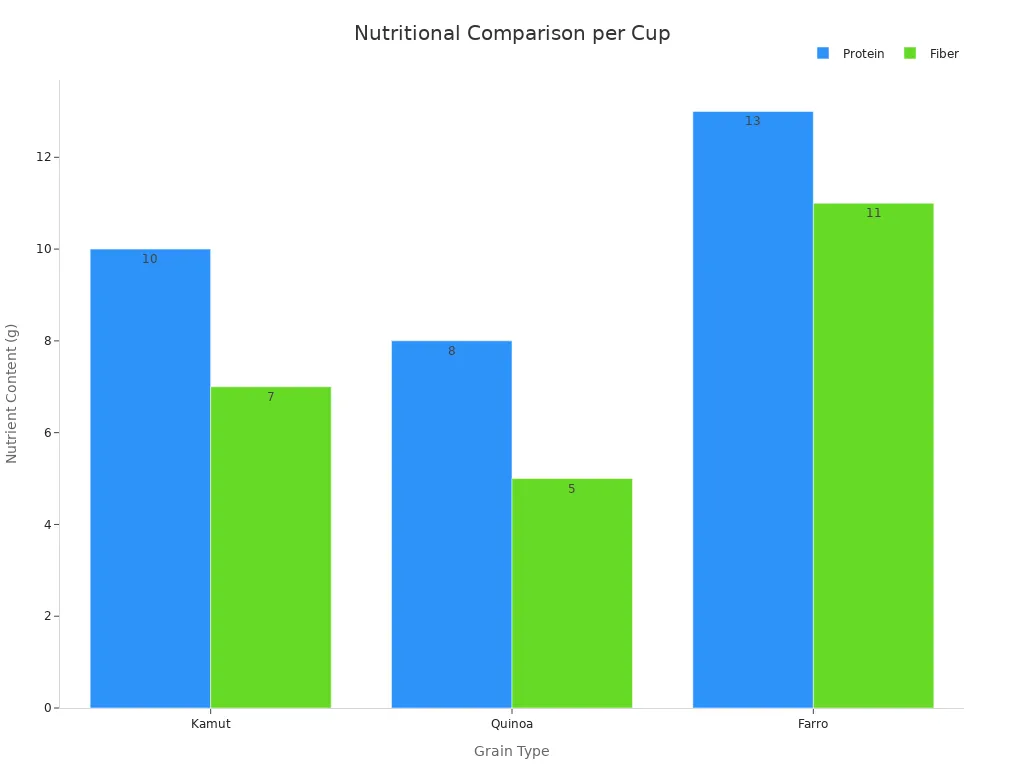
You can see Kamut offers a high protein content. It also provides good fiber. Quinoa is also a good source of protein and fiber. It gives you manganese, magnesium, and phosphorus. Farro often has the highest protein and fiber among these three. Each grain brings different nutrients to your diet. Kamut stands out as a high protein option.
Using Kamut Flour

You can easily incorporate kamut into your daily meals. This ancient grain offers versatility in both baking and cooking. You will find it a delicious and nutritious addition to many dishes.
Baking with Kamut Flour
Baking with kamut flour gives your baked goods a rich, nutty flavor. You can substitute kamut flour for all-purpose or whole wheat flour in many recipes. Start by replacing 25% to 50% of the regular flour with kamut flour. This helps you get used to its unique texture. Kamut flour absorbs more liquid than modern wheat flour. You might need to add a little extra water or milk to your dough or batter. This ensures your baked goods stay moist. Kamut flour works well in breads, muffins, pancakes, and cookies. You will notice a slightly denser texture and a pleasant, sweet taste.
Cooking Whole Kamut Grain
Cooking whole kamut grains is simple. You prepare them much like rice or other whole grains. First, rinse the whole kamut grains under cold water. Then, combine one part kamut grain with three parts water or broth in a pot. Bring the mixture to a boil. Reduce the heat to low, cover, and simmer for 40 to 60 minutes. The grains should become tender but still have a slight chew. You can use cooked kamut grain in salads, pilafs, or as a side dish. It adds a hearty texture and a boost of nutrition to your meals.
Kamut Recipe Ideas
You can explore many delicious ways to use kamut.
Kamut Bread: Bake a loaf of bread using kamut flour for a wholesome, flavorful option.
Kamut Salad: Mix cooked kamut grain with roasted vegetables, feta cheese, and a lemon vinaigrette.
Kamut Pilaf: Sauté onions and garlic, then add cooked kamut grain, herbs, and vegetable broth.
Kamut Pancakes: Use kamut flour in your morning pancake batter for a nutritious breakfast.
Kamut Berry Bowl: Combine cooked kamut grain with fresh berries, nuts, and a drizzle of honey for a healthy start.
Kamut offers a fantastic way to enhance your diet with its unique taste and health benefits.
Risks and Considerations
You should understand potential risks and considerations before adding kamut to your diet. While kamut offers many benefits, it is not suitable for everyone.
Allergies and Sensitivities
You might experience allergies or sensitivities to kamut. This is rare, but it can happen with any food. Symptoms can include skin rashes, digestive upset, or respiratory issues. If you notice any unusual reactions after eating kamut, you should stop consumption. Consult a healthcare professional for advice. You should always listen to your body.
Gluten Intolerance and Celiac Disease
You must know that kamut contains gluten. It is a type of wheat. Therefore, if you have celiac disease, you must strictly avoid kamut. Consuming kamut can trigger severe reactions in individuals with celiac disease.
While some people with non-celiac wheat sensitivity (NCWS) report better tolerance to kamut, it is not gluten-free. You should exercise caution if you have NCWS. Always consult your doctor or a registered dietitian before trying kamut if you have any gluten-related condition.
Kamut is not a safe option for a gluten-free diet.
Moderation and Balanced Diet
You should consume kamut as part of a balanced diet. Even healthy foods require moderation. Kamut is nutritious, but it should not be your only grain source. A varied diet ensures you get a wide range of nutrients. You can enjoy kamut in many forms. You should also include other whole grains, fruits, vegetables, and lean proteins. This approach supports overall health and well-being.
You now understand the excellent kamut flour nutrition. This ancient kamut grain offers high protein and high fiber content. Kamut also provides a rich micronutrient profile. These qualities bring significant health benefits. You can experience improved digestion, better heart health, and stable blood sugar control. Kamut is a versatile and nutritious ancient grain. It makes a valuable addition to your balanced diet. Explore kamut and discover its benefits firsthand.