

Nine essential amino acids, including lysine and methionine, are found in potato protein. Potatoes qualify as a complete protein by amino acid presence, but a medium baked russet provides only about 3 to 4 grams of protein, so you need other foods to build a protein-rich meal.
You’ll see how serving size, limiting amino acids, cooking methods, skins, and practical pairings affect your potato meals across vegan, vegetarian, dairy-based, and omnivore eating patterns.
Potatoes Provide All Nine Essential Amino Acids but Little Total Protein
That protein limit starts with an important distinction: potatoes contain histidine, isoleucine, leucine, lysine, methionine, phenylalanine, threonine, tryptophan, and valine. Your body needs these nine essential amino acids from food because it cannot make enough of them on its own.
Complete Protein Describes Amino Acid Presence
A complete protein contains all nine essential amino acids in usable amounts. Potatoes meet that definition, so the answer to “do potatoes contain all 9 essential amino acids” is yes.
Presence is not the same as quantity. You can eat a food containing every essential amino acid and still get only a few grams of total protein from a normal serving, which is exactly what happens with a plain potato.
Egg protein, dairy, fish, poultry, meat, and soy foods also provide all nine essential amino acids. Potatoes belong in that group for amino acid completeness, yet their high water and starch content means you get far less protein per bite than you would from eggs, Greek yogurt, tofu, lentils, or chicken.
A potato is a carbohydrate-rich vegetable with protein, not a concentrated protein food. Using it as the main protein can leave your meal short on total protein even though every essential amino acid appears in the tuber.
Patatin Makes Up Much of Potato Protein
Most of the protein in Solanum tuberosum comes from patatin, the tuber’s main storage protein. Patatin helps the plant store nitrogen for sprouting, which explains why potatoes contain measurable protein despite being mostly starch and water.
That biology also explains the tradeoff on your plate. A potato is not protein-free, but starch makes up a much larger share of the food than patatin does, so serving size becomes the practical issue. Its amino acid balance adds another layer to meal planning.
That balance matters most when considering how much protein an ordinary potato serving actually contributes.
Potato Protein Has Useful Lysine but Lower Sulfur Amino Acids
Because total protein is modest, the quality of those few grams matters most when potatoes make up a large share of your meal. Potato protein has a relatively strong lysine contribution for a plant food, while methionine and cysteine remain lower.
Lysine Strengthens a Mixed Meal
Lysine is an essential amino acid involved in body protein turnover and other cellular functions. Rice, wheat, and corn generally provide less lysine than potatoes, so combining potatoes with grains can give your day a broader amino acid pattern.
Foods do not need to meet in the same bite for that pattern to matter. Digestion releases amino acids into a circulating pool, and your meals across the day contribute to it. That makes varied eating more useful than rigid food-combining rules.
Cooked Potato Values Show the Small Serving Scale
Potato protein content per 100g remains low even though each essential amino acid is present. The values below use 100 grams of baked potato with flesh and skin, which is a little under three-fourths of a medium russet potato.
| Essential amino acid | Amount per 100 g cooked potato | What it means for your meal |
|---|---|---|
| Histidine | About 0.05 g | Present, though the serving contains little total protein. |
| Isoleucine | About 0.08 g | Contributes to the branched-chain amino acid pool. |
| Leucine | About 0.12 g | Present at a modest level beside egg or dairy servings. |
| Lysine | About 0.12 g | A relative strength beside cereal grains. |
| Methionine | About 0.03 g | One of the lower essential amino acid values. |
| Phenylalanine | About 0.08 g | Appears alongside tyrosine in potato protein. |
| Threonine | About 0.07 g | Present in a small cooked serving. |
| Tryptophan | About 0.02 g | Present in a very small amount. |
| Valine | About 0.10 g | Adds to the total amino acid contribution. |
Data: Values are rounded from USDA FoodData Central nutrient data for baked potato with skin. Cultivar, moisture level, storage conditions, and preparation can cause small differences between potato samples.
Methionine is one of the limiting amino acids in potato protein. Cysteine is not essential for most adults, yet it works with methionine as a sulfur-containing amino acid, and potatoes contain both in relatively small amounts rather than none at all.
Russet potatoes and other cultivars do not have identical amino acid values. Still, the same general pattern holds: potatoes provide lysine and all nine essential amino acids, while sulfur amino acids stay lower. That brings the discussion back to the amount of protein in a realistic serving.
Even a favorable amino acid profile has limited impact when the serving itself provides only a few grams.
A Medium Baked Russet Supplies Only 3 to 4 Grams of Protein
That amino acid profile becomes more useful once you see the serving math. A medium plain baked russet potato supplies about 3 to 4 grams of protein, with larger restaurant potatoes providing more protein along with substantially more starch and calories.
Daily Value Math Gives the Portion Context
The U.S. Daily Value for protein on Nutrition Facts labels is 50 grams. A potato with 3.5 grams of protein provides about 7 percent of that reference amount, leaving roughly 46.5 grams for the rest of your day.
Your actual protein need may differ from the 50-gram label value. Body size, age, activity level, pregnancy, illness recovery, and medical conditions can affect the amount that fits your situation. A registered dietitian or qualified clinician can help you set a personal target when health needs affect eating.
Basic adult protein guidance uses 0.8 grams per kilogram of body weight per day as a reference intake. That number is not a meal prescription, because appetite, training, food access, and health history also shape what works for you.
Potato-Only Protein Requires a Large Volume
Reaching 25 grams of protein from medium baked potatoes alone would take roughly seven to eight potatoes. That amount can bring more than 1,100 calories and well over 250 grams of carbohydrate before you add butter, cheese, oil, or other toppings.
- One medium russet: A plain potato gives you about 3 to 4 grams of protein and a substantial starch portion.
- Two medium potatoes: Your meal reaches about 6 to 8 grams of protein, still below a protein-centered entree.
- Six medium potatoes: The plate may approach 21 grams of protein while becoming very large in volume and carbohydrate.
- Potato plus beans: Beans raise protein density without requiring a mountain of potatoes.
- Potato plus yogurt: Greek yogurt or cottage cheese shifts the meal toward a more substantial protein contribution.
White potatoes also provide potassium, vitamin C, and dietary fiber, especially when you keep the skin on. Those nutrients make potatoes worthwhile, but they do not change the protein arithmetic. Comparing potatoes with eggs, beans and legumes, rice, and dairy puts that limit in focus.
Against more protein-dense staples, the potato’s contribution becomes easier to place in context.
Eggs, Beans, Rice, and Dairy Deliver More Protein per Serving
Once portion size is clear, the role of potatoes becomes easier to place. A medium potato contributes useful amino acids, while an egg, a cup of beans, or a serving of Greek yogurt adds much more protein to your plate.
Common Portions Show the Protein Difference
| Food and realistic serving | Protein per serving | Essential amino acid pattern |
|---|---|---|
| Medium baked russet potato | About 3 to 4 g | All nine present; methionine is lower. |
| One large egg | About 6 g | All nine present in a dense serving. |
| 1 cup cooked black beans | About 15 g | Strong lysine contribution; methionine is lower. |
| 1 cup cooked white rice | About 4 g | Less lysine than potatoes or beans. |
| 3/4 cup plain Greek yogurt | About 15 to 18 g | All nine present in a concentrated serving. |
In a practical meal, potatoes work best as a starch and micronutrient base. Eggs and Greek yogurt work better as protein anchors, while beans and legumes suit plant-forward meals because they add far more protein in a familiar serving size.
Egg Protein Provides a Dense Reference Point
Egg protein contains all nine essential amino acids in about 6 grams of protein per large egg. That density helps explain why two eggs can turn a potato-based breakfast into a more balanced meal without requiring several potatoes.
Claims that eggs contain “all 20 amino acids” can become confusing because food analysis may group amino acids differently. Human proteins use 20 standard amino acids in genetic coding, but nutrition discussions usually focus on the nine essential amino acids your body must obtain from food.
Digestibility Scores Measure More Than Presence
Protein digestibility affects how much of a food’s amino acid content becomes available after digestion. PDCAAS, short for Protein Digestibility-Corrected Amino Acid Score, adjusts amino acid quality for digestibility, while DIAAS measures digestibility nearer the end of the small intestine.
Whole cooked potatoes and potato protein isolate are very different foods. Potato protein isolate concentrates protein after starch and much of the water are removed, which makes it useful in some plant-based products for protein enrichment, texture, and foaming.
Protein-quality scores describe food under defined research conditions. Your full meal still matters because serving size, digestibility, and the foods beside the potato determine the protein you actually eat.
That comparison points to the most useful kitchen move: keep the potato for its texture and nutrients, then add a denser protein source beside it.
Rather than replacing the potato, a complementary protein turns it into the foundation of a more complete meal.
Balanced Potato Meals Build Protein Around the Tuber
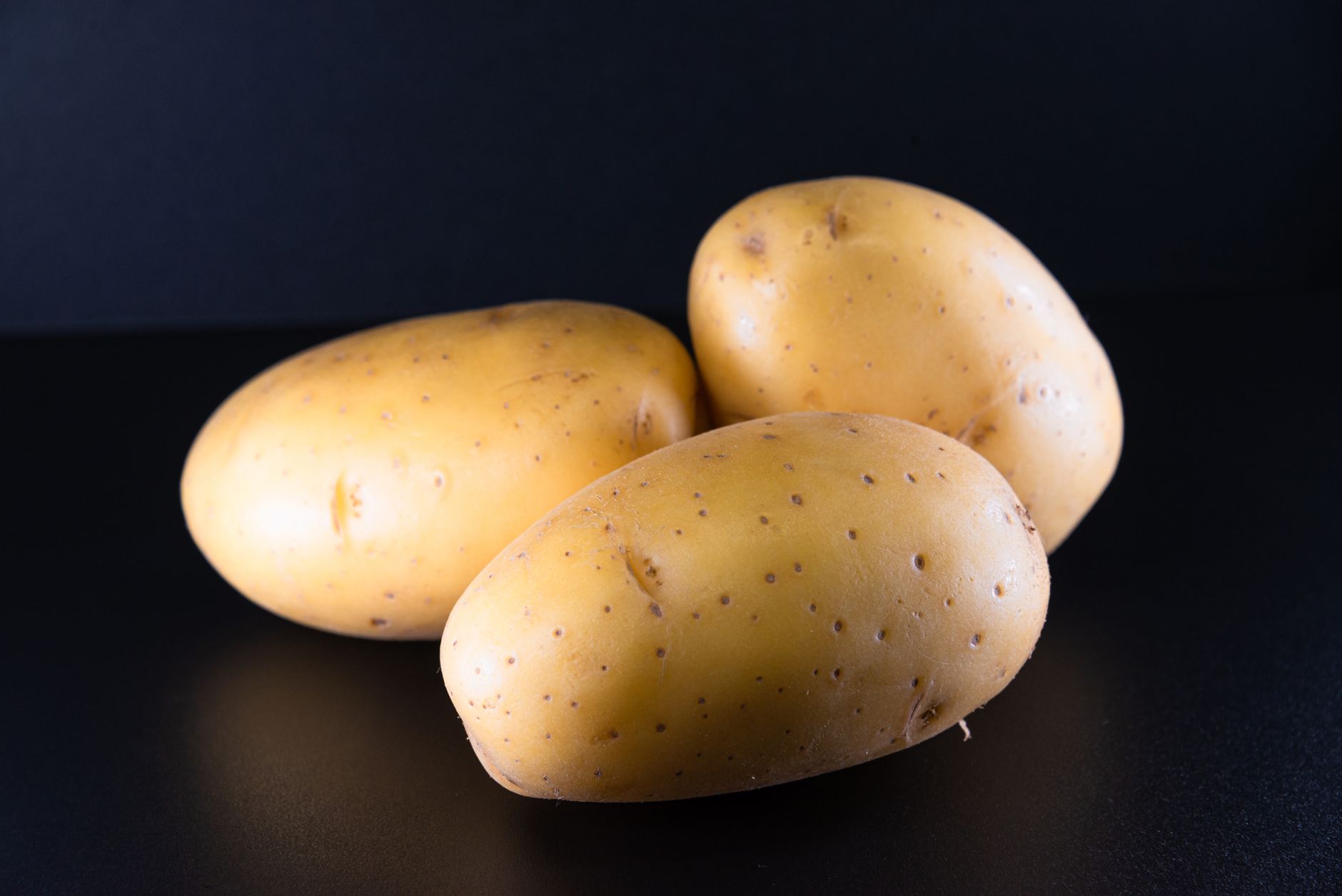
With protein density in mind, a satisfying potato meal starts with a plain or lightly seasoned potato and adds a food with more protein. You do not need chemical precision at every forkful; you need enough total protein and a broader amino acid mix across the meal and day.
Plant-Forward Pairings Add Protein and Fiber
Beans and potatoes make a natural pairing because beans add far more protein while also bringing fiber and a fuller texture. Lentils work in the same role, especially in soups, curries, stuffed potatoes, and shepherd-style fillings.
- Black bean bowl: Top a roasted potato with black beans, salsa, cabbage, and avocado for a filling plant-forward meal.
- Lentil filling: Spoon seasoned lentils under mashed potatoes to add protein and a soft, savory texture.
- Tofu skillet: Mix crisp tofu cubes with diced potatoes, peppers, onions, and greens for a vegan breakfast-style plate.
- Tempeh wedges: Serve roasted potato wedges with tempeh and broccoli for a firmer plant protein option.
- Soy chili topping: Split a baked potato and add soy-based chili, tomatoes, beans, and scallions.
Soy foods deserve special attention because tofu, tempeh, and edamame contain all nine essential amino acids and provide much more protein than a potato. What to pair with potatoes for complete protein depends on your dietary pattern, but soy, beans, and lentils all make the meal more substantial.
Dairy, Eggs, Fish, and Meat Raise Protein Quickly
A potato-and-egg hash gives you a simple example of the difference. Two eggs with a medium potato can bring the meal near 15 grams of protein before vegetables or cheese, while the potato adds potassium, vitamin C, and satisfying bulk.
A baked potato also works well with plain Greek yogurt or cottage cheese instead of butter alone. Your topping supplies more protein and pairs naturally with chives, black pepper, roasted mushrooms, steamed broccoli, or chopped tomatoes.
Fish, chicken, turkey, and lean meat fit beside boiled potatoes, roasted baby potatoes, or mashed potatoes. A palm-sized serving creates a clear protein center, while the potato provides carbohydrate that helps round out the meal.
Meal Structure Keeps the Pairing Useful
Start with the protein food you already enjoy, then choose the potato form that suits it. Bean chili works with a baked potato, salmon suits boiled new potatoes and green beans, and scrambled eggs pair well with diced russet potatoes and peppers.
- Choose a protein anchor: Center your meal on beans, tofu, eggs, dairy, fish, or meat.
- Use useful toppings: Pick yogurt, cottage cheese, chili, lentils, or eggs instead of relying only on butter or sour cream.
- Add produce color: Include greens, tomatoes, peppers, cabbage, or broccoli for fiber and micronutrients.
- Watch portion drift: Keep fried toppings and rich sauces from turning the meal into mostly added fat.
Pairing fixes the main protein-density problem, but cooking method still changes the wider nutrition picture. The preparation affects calories, fat, sodium, fiber, and fullness more than it changes basic amino acid presence.
Protein pairings matter, yet preparation choices still shape the meal’s calories, sodium, and satiety.
Cooking Method Changes Calories and Sodium More Than Amino Acids
After you choose a pairing, preparation becomes the next practical decision. Boiling, baking, and steaming leave much of the potato’s protein structure intact, and cooking does not make essential amino acids disappear from the potato.
Plain Methods Keep Potatoes Closer to Their Original Form
Baked and boiled potatoes have similar protein amounts at comparable cooked weights. Baking removes some water, which can make nutrients look more concentrated per 100 grams, while boiling adds moisture and can lower values per 100 grams without removing the protein itself.
Boiled potato nutrition facts can look lower per 100 grams because the cooked potato holds more water. Your actual serving still contains protein, potassium, and carbohydrate, while sauces and added fats usually create the bigger nutritional shift.
Mashing changes the meal through what you add to the bowl. Milk, butter, cream, cheese, and salt can raise protein, calories, saturated fat, and sodium far more than mashing changes the amino acid profile.
| Preparation | Effect on protein and amino acids | Main meal change |
|---|---|---|
| Baked potato | Protein remains modest; all essential amino acids remain present. | Portion size and toppings shape the meal. |
| Boiled potato | Protein remains present; added fat stays low without rich sauces. | Water content can lower nutrients per 100 g. |
| Mashed potato | Potato amino acids remain, with dairy additions changing totals. | Butter, cream, cheese, and salt can raise energy and sodium. |
| French fries | Protein remains low per serving. | Oil absorption raises energy density, and salt can raise sodium. |
| Potato chips | Protein remains a minor nutrient. | Small portions pack starch, oil, sodium, and less meal-level fullness. |
High Heat Can Slightly Affect Lysine Availability
Long, intense heating can cause Maillard reactions between amino acids and sugars. Lysine is especially reactive in browning chemistry, so heavy dry heat and processing can modestly reduce the lysine available for digestion.
A golden roasted potato is not a nutrition failure. But fries and chips usually add substantial oil and sodium while offering little extra protein, so they can crowd out the protein-rich foods that would make your meal more balanced.
Skins Improve Fiber Without Creating a High-Protein Food
Keeping the skin on modestly improves fiber and micronutrient intake. Potato skins also contain compounds such as chlorogenic acid, a plant phenolic with antioxidant activity in laboratory analysis, but the skin does not transform potatoes into a high-protein food.
Green skin and bitter sprouts need separate caution because they can contain higher glycoalkaloid levels, including solanine and chaconine. Cut away green areas and sprouts, discard potatoes that taste bitter or look heavily green, and pair minimally processed potatoes with a substantial protein food.
With those practical choices in mind, the key takeaway is to enjoy potatoes alongside substantial protein sources.
Bottom Line
Potatoes contain all nine essential amino acids, including useful lysine, but their protein amount stays modest at about 3 to 4 grams in a medium baked russet. You can treat potatoes as a satisfying base for carbohydrate, potassium, vitamin C, and some fiber, then add beans, lentils, tofu, eggs, dairy, fish, or meat for the protein density they lack.
FAQ
The practical answer stays consistent across common potato questions: amino acid completeness matters, but your serving size and meal pairing determine whether the plate supplies enough protein.
Do potatoes contain all 9 essential amino acids?
Yes. Potatoes contain histidine, isoleucine, leucine, lysine, methionine, phenylalanine, threonine, tryptophan, and valine. Your serving still supplies only a modest amount of total protein, so amino acid presence does not make a plain potato a substantial stand-alone protein source.
Are potatoes a complete protein?
All nine essential amino acids are present in potatoes, making them complete in the narrow sense. Your practical meal choice should also account for quantity, since a medium baked potato has only about 3 to 4 grams of protein.
How much protein is in a baked potato?
A medium plain baked russet potato provides about 3 to 4 grams of protein. Your exact amount changes with potato size, variety, skin use, and cooking method, but potatoes remain much lower in protein density than eggs, dairy, legumes, tofu, fish, or meat.
Which amino acids are relatively low in potatoes?
Methionine is one of the lower essential amino acids in potato protein, and cysteine is also low compared with several other amino acids. Your potato still contains both sulfur-containing amino acids, but a protein-rich pairing gives the full meal a stronger pattern.
What foods should you pair with potatoes to make a complete protein meal?
Pair potatoes with beans, lentils, tofu, tempeh, eggs, Greek yogurt, cottage cheese, fish, chicken, or lean meat. Your meal gains more total protein, while the added food also helps offset the potato’s lower methionine and cysteine contribution.
Are potato skins more nutritious than peeled potatoes?
Potato skins add modest fiber and small amounts of micronutrients, so keeping the skin can improve the overall nutrient profile. Your skin-on potato still provides only modest protein, which means the skin does not change its role as a carbohydrate-rich vegetable.
