

In USDA MyPlate, these tubers appear in the vegetable group as a starchy choice. Their starch makes them a carbohydrate-rich staple, but it does not place them in the grain group. Preparation, portion size, and the rest of your meal shape their nutritional role.
You will see how botanical terms, U.S. food guidance, nutrient differences, and cooking methods help you use potatoes sensibly on your plate.
Potatoes Fit the Starchy Vegetable Category
That food-group distinction starts with the plant itself. A potato is the edible tuber of Solanum tuberosum, a nightshade-family plant. Tubers grow underground and store energy for new growth, which explains the potato’s dense texture and high starch content.
Vegetable and carbohydrate describe two different things. A vegetable is a food-group classification, while carbohydrates are one of the three main macronutrients. Potatoes are starchy vegetables because much of their carbohydrate comes from starch molecules called amylose and amylopectin.
A medium baked Russet can feel more filling than a cup of lettuce because it contains far less water and much more starch. Your potato can still contribute to the vegetable food group, even while it fills a role similar to corn, peas, or winter squash. That distinction becomes clearer through three useful classification lenses.
Those lenses separate botanical structure, culinary use, and dietary guidance without treating any one perspective as the only answer.
Three Classification Lenses Explain Potatoes
Those separate labels do not conflict because each one describes a different feature. A potato is botanically a tuber, nutritionally a starchy vegetable, and practically a carbohydrate-rich staple food.
| Lens | How potatoes fit | What it tells you |
|---|---|---|
| Botanical | Tubers | Potatoes grow below ground as swollen stems that store nutrients. |
| Culinary | Vegetables | Potatoes appear in savory soups, salads, side dishes, and casseroles. |
| Nutritional | Starchy vegetables | Potatoes provide carbohydrates along with dietary fiber, potassium, and vitamin C. |
| Meal planning | Staple carbohydrate | A potato can take the place of rice, pasta, bread, or another starch on your plate. |
Leafy greens, broccoli, and bell peppers also contain carbohydrates, but their water content is much higher and their starch content is much lower. That is why a baked potato usually satisfies the starch portion of your meal more than it replaces a large serving of non-starchy vegetables.
Potatoes are not grains. Wheat, rice, oats, and corn are cereal grains grown for their seeds, while potatoes are underground stems. Your meal plan may group both as starches, but their plant parts and USDA food-group placement differ. That U.S. placement matters when you count vegetable servings.
Among those perspectives, federal dietary guidance provides the practical framework most Americans use when planning daily meals.
USDA MyPlate Counts Potatoes in the Vegetable Group
Federal dietary guidance places these starchy tubers with vegetables rather than grains. Corn, green peas, and winter squash appear in the same starchy-vegetable subgroup.
| Guidance system | How potatoes are classified | What it means for your meal |
|---|---|---|
| USDA MyPlate | Vegetable group, starchy-vegetable subgroup | Potatoes can count toward your vegetable intake. |
| Dietary Guidelines for Americans | Starchy vegetable within varied vegetable choices | Potatoes fit best alongside dark green, red, orange, and other vegetables. |
| UK NHS 5 A Day | Starchy staple food | Potatoes do not count toward the five daily fruit and vegetable portions. |
The U.S. approach recognizes that potatoes provide vegetable nutrients, including potassium and vitamin C. The Dietary Guidelines for Americans also emphasize variety across vegetable subgroups, so your weekly pattern should not rely only on white potatoes, corn, or peas. That approach aligns with USDA MyPlate guidance.
The UK NHS uses a different public-health rule for its 5 A Day message. Potatoes are treated as starchy staples because bread, rice, pasta, and potatoes already make up a regular part of meals there. Your potato does not count toward a UK 5 A Day portion, but that policy does not change its botanical or culinary identity.
Food-assistance programs can use separate package rules. WIC eligibility depends on program categories and local guidance, not on whether a potato is botanically a vegetable. The next distinction involves the types you see in the produce aisle.
Within that broad vegetable designation, familiar potato varieties still differ substantially in color, flavor, and nutrient profile.
White Potatoes and Sweet Potatoes Offer Different Strengths
That produce-aisle comparison is more useful than declaring a single winner. White potatoes and sweet potatoes are both starchy vegetables, but each brings a different nutrient profile to your meals.
White potatoes supply carbohydrates, potassium, dietary fiber, and vitamin C, especially in a plain baked potato with its skin. Orange-fleshed sweet potatoes also provide carbohydrates and fiber, while their orange color signals beta-carotene, which your body can convert to vitamin A.
| Type | Notable nutrients | Practical use |
|---|---|---|
| White potatoes | Potassium, vitamin C, dietary fiber | Work well baked, boiled, roasted, or added to soups. |
| Orange sweet potatoes | Beta-carotene, potassium, dietary fiber | Add color and mild sweetness to savory meals. |
| Purple potatoes | Carbohydrates, dietary fiber, plant pigments | Bring visual variety to roasted or boiled dishes. |
| True yams | Carbohydrates and varying nutrients by type | Are botanically different from sweet potatoes. |
Your best choice depends on the rest of the plate. A white potato can bring vitamin C beside spinach and salmon, while a sweet potato can bring beta-carotene beside black beans and cabbage. Potato nutrition and health depend more on your overall pattern than on a contest between two vegetables.
Supermarket labels can add confusion. In many U.S. stores, orange sweet potatoes are labeled as yams, although true yams belong to the genus Dioscorea and have rough, bark-like skin. Preparation creates an even larger nutritional difference than that label does.
Yet even those natural differences can be overshadowed by the ingredients and techniques used at the stove.
Cooking Methods Change the Finished Dish
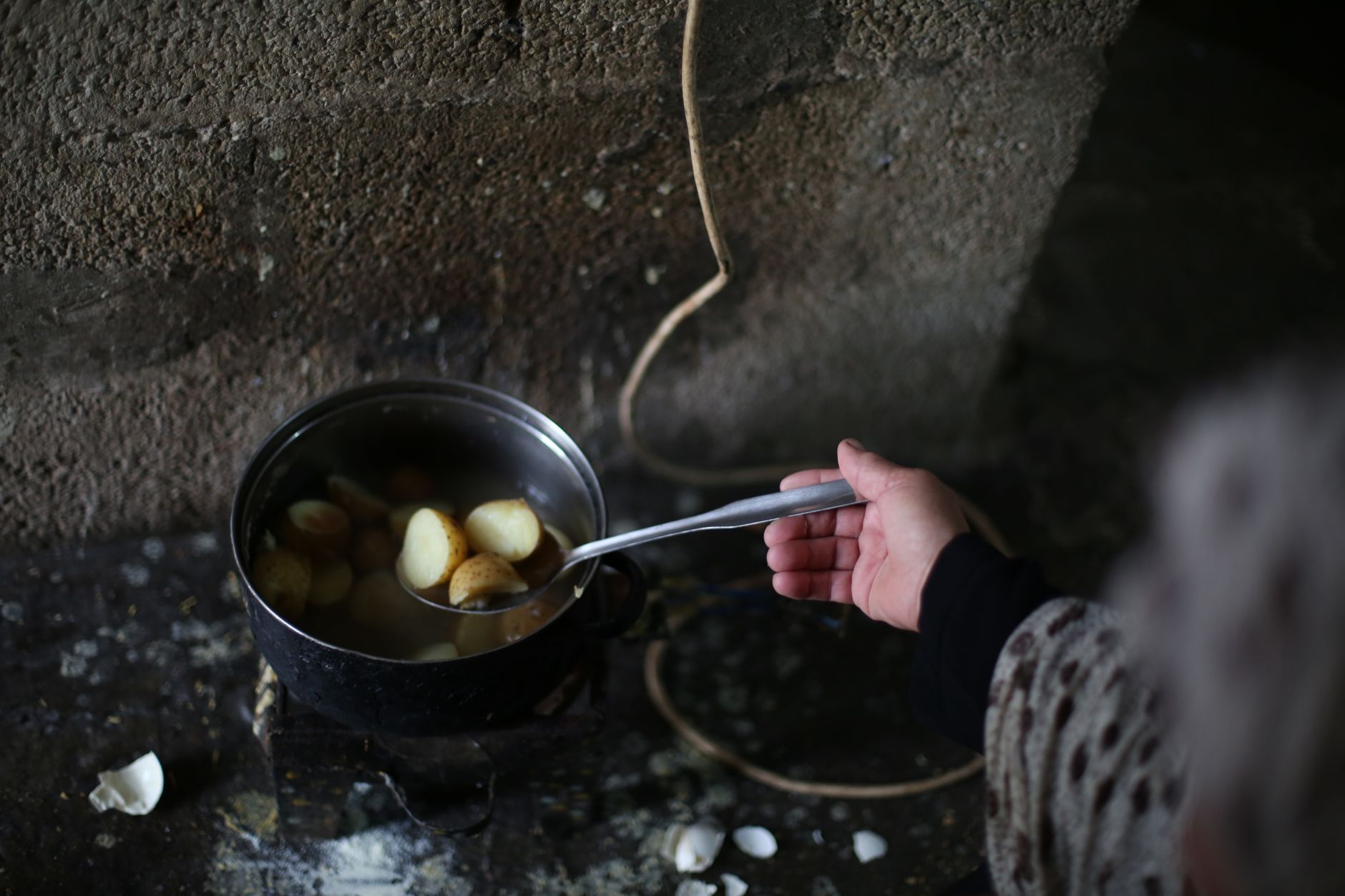
That preparation difference can shift calories, sodium, and added fat without changing the fact that the potato began as a vegetable. Heat softens potato cell walls and gelatinizes starch, creating the fluffy center of a baked potato and the smooth texture of mashed potatoes.
| Preparation | What changes | What to watch on your plate |
|---|---|---|
| Baked | Uses dry heat with few added ingredients | Choose toppings such as beans, yogurt, herbs, or vegetables. |
| Boiled | Uses water instead of added oil | Season after cooking so salt does not dominate the dish. |
| Roasted | Oil amount depends on the recipe | A light coating can crisp the surface without soaking the pan. |
| Mashed | Butter, cream, cheese, and salt can raise calories and sodium | Keep rich mix-ins proportional to your serving size. |
| French fries | Frying removes water and adds oil | French fries work better as an occasional side than a default vegetable serving. |
| Potato chips | Thin slices are fried or processed with oil and sodium | Potato chips provide little of the volume of a baked or boiled potato. |
French fries and potato chips can still contain potato, but their oil, sodium, and small serving volume change the practical nutrition of the food. A plain potato and a large order of fries do not have the same effect on your meal, even though both started with the same crop.
Blood sugar can vary with portion size, cooking method, skin, meal composition, and your individual health needs. Cooling cooked potatoes changes part of their starch into resistant starch through retrogradation, and reheating does not remove all of that change. Pairing potatoes with protein, fiber-rich vegetables, and fats can slow the pace of digestion. That meal context leads directly to portion and plate-building choices.
Because the rest of the meal shapes their impact, potatoes work best as one component of a thoughtfully composed plate.
Balanced Plates Pair Potatoes With Other Foods
Because potatoes supply substantial carbohydrate, they work best as one part of a mixed meal. A potato alone cannot provide the protein, fats, and range of plant compounds your body needs across the day.
- Add a protein Pair a baked potato with salmon, eggs, beans, chicken, lentils, or tofu to make the meal more satisfying.
- Bring non-starchy vegetables Add broccoli, peppers, green beans, cabbage, carrots, or a large salad for color and volume.
- Use measured fats Olive oil, avocado, nuts, seeds, or yogurt can add flavor without turning the potato into a heavy side dish.
- Keep the skin Eat clean potato skin for more dietary fiber and a firmer texture.
- Rotate your starches Use potatoes on some meals and choose beans, squash, whole grains, or other vegetables on others.
- Watch rich toppings Bacon, cheese sauce, sour cream, butter, and salty seasoning blends can outweigh the plain potato’s simple nutrition.
A baked potato with salmon and broccoli gives you a starchy vegetable, protein, and a non-starchy vegetable in one meal. Roasted potatoes with chicken and cabbage salad create a similar balance, while vegetable soup with potato, celery, carrots, and beans spreads the starch across a fuller bowl.
Your portion can be smaller when rice, bread, or pasta also appears at the meal. Potatoes are healthier than rice or bread only in the context of the recipe, serving size, and nutrients around them; no single starch wins in every situation. That balanced view brings the classification question into focus.
Taken together, those choices clarify why potatoes can be vegetables while still requiring context on the plate.
Bottom Line
USDA MyPlate places potatoes among vegetables, specifically in its starchy-vegetable subgroup. Their carbohydrate content does not erase that status, but it does explain why a potato can replace rice, pasta, or bread in your meal.
Choose baked, boiled, or lightly roasted potatoes more often than heavily salted French fries and potato chips. Your strongest everyday plate includes potatoes alongside protein, healthy fats, and several non-starchy vegetables rather than using one starchy food as the entire vegetable portion.
FAQ
These answers separate food-group labels from nutrient content and cooking choices. Your serving, preparation, and local nutrition guidance determine how potatoes fit into a specific meal plan.
Are potatoes vegetables?
U.S. dietary guidance classifies them as vegetables.S. nutrition guidance, where USDA MyPlate places them in the starchy-vegetable subgroup. Your potato also provides carbohydrates, so it can serve as a filling starch on the plate.
What food category do potatoes belong to?
USDA MyPlate places this tuber in its vegetable food group. Botanically, they are tubers, while nutritionally they are carbohydrate-rich starchy vegetables.
Are potatoes a vegetable or a starch?
Botanically and nutritionally, this tuber is a vegetable rich in starch. Vegetable describes their food-group role, while starch describes the main carbohydrate in their flesh.
Why does MyPlate classify potatoes as starchy vegetables?
Its underground storage tissue accumulates substantial carbohydrate, so MyPlate lists it as a starchy vegetable. Your potato belongs with corn, peas, and winter squash in that subgroup, not with grains.
Are white potatoes healthy?
A medium baked white potato provides potassium, vitamin C, carbohydrates, and dietary fiber. Your preparation matters, since deep frying and salty toppings add more fat, sodium, and calories.
Are sweet potatoes healthier than regular potatoes?
Preparation and nutrient priorities prevent a universal health ranking between the two types. Orange sweet potatoes provide beta-carotene, while white potatoes provide vitamin C and potassium, so your best choice depends on the full meal.
