

Bearberry is a low, evergreen shrub that spreads by trailing woody stems and produces glossy leaves, pale urn-shaped flowers, and red berries. You can grow it as a ground cover in dry, acidic sites, but successful planting, careful identification, foraging, and uva ursi herbal use each require different decisions.
For gardeners, foragers, and herbal-product shoppers, the details below cover habitat, soil, light, seasonal care, wildlife value, edible-fruit limits, and practical safety boundaries.
A Northern Shrub Suited to Lean, Exposed Ground
That need for different decisions starts with knowing what grows at your feet. Bearberry, Arctostaphylos uva-ursi, is a member of the Ericaceae family, alongside blueberries, azaleas, and rhododendrons. Common names include uva ursi and kinnikinnick, so nursery labels, field guides, and herbal products may use different names for the same species.
Its native range reaches across northern temperate and Arctic parts of North America, Europe, and Asia. You may find it in open pine woods, rocky barrens, sandy dunes, dry banks, and sunlit slopes. Sharp drainage matters more than rich soil in each of those habitats.
| Plant detail | What you can expect | Why it matters in your yard |
|---|---|---|
| Growth form | Low woody stems that creep across the soil | It forms a mat instead of a tall border shrub. |
| Spread rate | Slow growth after planting | Your ground cover may need several growing seasons to knit together. |
| Native habitat | Dry, acidic, exposed ground | The planting site must shed water instead of holding it around roots. |
| Family connection | Ericaceae | Blueberry-like soil preferences offer a useful planting clue. |
New plantings can look sparse for a while because stems root and branch at a measured pace. That slow habit works well on a gravelly slope, where a thirstier groundcover may fail, but it also means your plant choice needs patience. The growth pattern leads naturally to the features that confirm identification.
Patience is worthwhile, because close attention to foliage, blooms, and berries reveals whether you have the right shrub.
Leaves, Flowers, and Fruit Confirm the Plant
The creeping stems provide a useful first clue, but foliage gives you a clearer field mark. Small leaves are leathery, dark green, oval to spoon-shaped, and smooth along the edges, with a paler underside. Woody runners hug the soil rather than rising into the upright branches seen on several other red-fruited shrubs.
Seasonal Changes Strengthen Field Identification
Cold weather can turn the leaves red or purple, especially on exposed ground. Pink-to-white urn-shaped flowers appear in spring, followed by red berries that can persist into fall and winter. You get the most reliable identification by matching leaves, stems, flowers, fruit, and habitat instead of trusting berry color alone.
| Plant | Key visual difference | Useful field clue |
|---|---|---|
| Bearberry | Low creeping stems and smooth-edged leathery leaves | Red fruit follows clusters of small urn-shaped flowers. |
| Manzanita | Larger, more upright shrub form | Many species show striking smooth reddish bark. |
| Lingonberry | Smaller upright shoots with leaf undersides marked by dark dots | The fruit is more useful as a tart culinary berry. |
| Wintergreen | Toothed leaves and a low woodland habit | Crushed foliage has a strong wintergreen scent. |
- Check leaf edges Smooth margins support identification, while wintergreen leaves show fine teeth.
- Inspect stem direction Ground-hugging woody runners separate this plant from upright manzanita forms.
- Watch flower shape Small hanging urns offer stronger evidence than red fruit by itself.
- Read the site Dry, acidic ground fits this species better than damp, shaded woodland soil.
Red berries alone can mislead a hurried forager. Once you have confirmed the plant, the next concern is whether your garden can provide the same dry-root conditions found in its native range.
Matching those identifying details is only the beginning; sunlight and drainage ultimately decide how well it thrives.
Sun and Soil Determine Long-Term Performance
Those field conditions explain why a bright, sharply drained planting site produces the best results. Full sun to partial shade can work, but fuller sun usually creates denser foliage, stronger flowering, and heavier fruiting. A sandy bank, gravelly rock garden, or dry slope may suit your planting far better than a rich black-soil bed.
Direct Light Supports Dense Growth
Partial shade can keep plants alive, especially in hot inland climates, yet reduced light usually means a thinner mat and fewer flowers. Give your planting several hours of direct light where possible, with afternoon shade reserved for areas where summer heat is unusually harsh. Strong light also helps stems dry after rain.
Acidic Drainage Protects the Roots
Well-drained acidic soil is the central requirement for bearberry plant care. Clay can pack tightly after rain, reducing oxygen around roots and increasing root-rot risk. Alkaline ground may limit iron uptake, leaving leaves pale or yellow while the veins remain greener.
Rich compost, manure, and high-fertility products can push soft growth that does not fit a dry-site shrub. Skip low pockets where water stands for a full day after a storm, because drainage failure can outweigh a sunny exposure. Morton Arboretum and NC State Extension both describe this species as a sun-loving plant for acidic, well-drained sites.
Choose a planting area that drains quickly after rain. Water held around the crown is a more serious threat than modest summer dryness.
USDA hardiness zones can narrow the plant choices available to you, while a local native-plant source can offer a closer climate match than a distant selection. With the site settled first, your planting method becomes much simpler.
Even a climate-appropriate plant needs careful placement and preparation to establish a dense, resilient mat.
Planting Builds a Durable Ground Cover
Good drainage makes shallow planting more effective than a deep amended bed. Keep the crown, where stems meet roots, at the same level as the nursery soil line. You can place several plants along a sunny slope and allow the runners to fill gaps gradually rather than expecting a complete carpet in one season.
A Practical Planting Sequence
- Check drainage first Dig a small hole, add water, and choose another location if water lingers.
- Test soil reaction Use a soil test kit to confirm an acidic range before plants go into the ground.
- Loosen a small zone Break up only the planting area so surrounding soil remains firm against erosion.
- Set the crown high Keep the original soil line level with finished grade rather than burying stems.
- Allow wide spacing Follow the nursery label because a full bearberry groundcover takes years, not one season.
- Use airy mulch Spread gravel, pine fines, or coarse bark without packing damp material against the stems.
During the first establishment period, water deeply enough to settle roots, then allow the soil surface to dry between visits. Mature plants need much less irrigation because constant moisture works against their dry-site adaptation. Your watering should become less frequent as roots spread into the surrounding soil.
Sunny erosion-prone slopes, dry banks, rock gardens, and sandy native plantings show the strongest results. A strip beneath a roof edge works only where runoff does not pour directly onto the mat. Those site choices also shape the seasonal care and troubleshooting that follow.
Good installation reduces later problems, while seasonal observations reveal how the planting supports wildlife and signals stress.
Seasonal Care Connects Wildlife Value With Plant Health
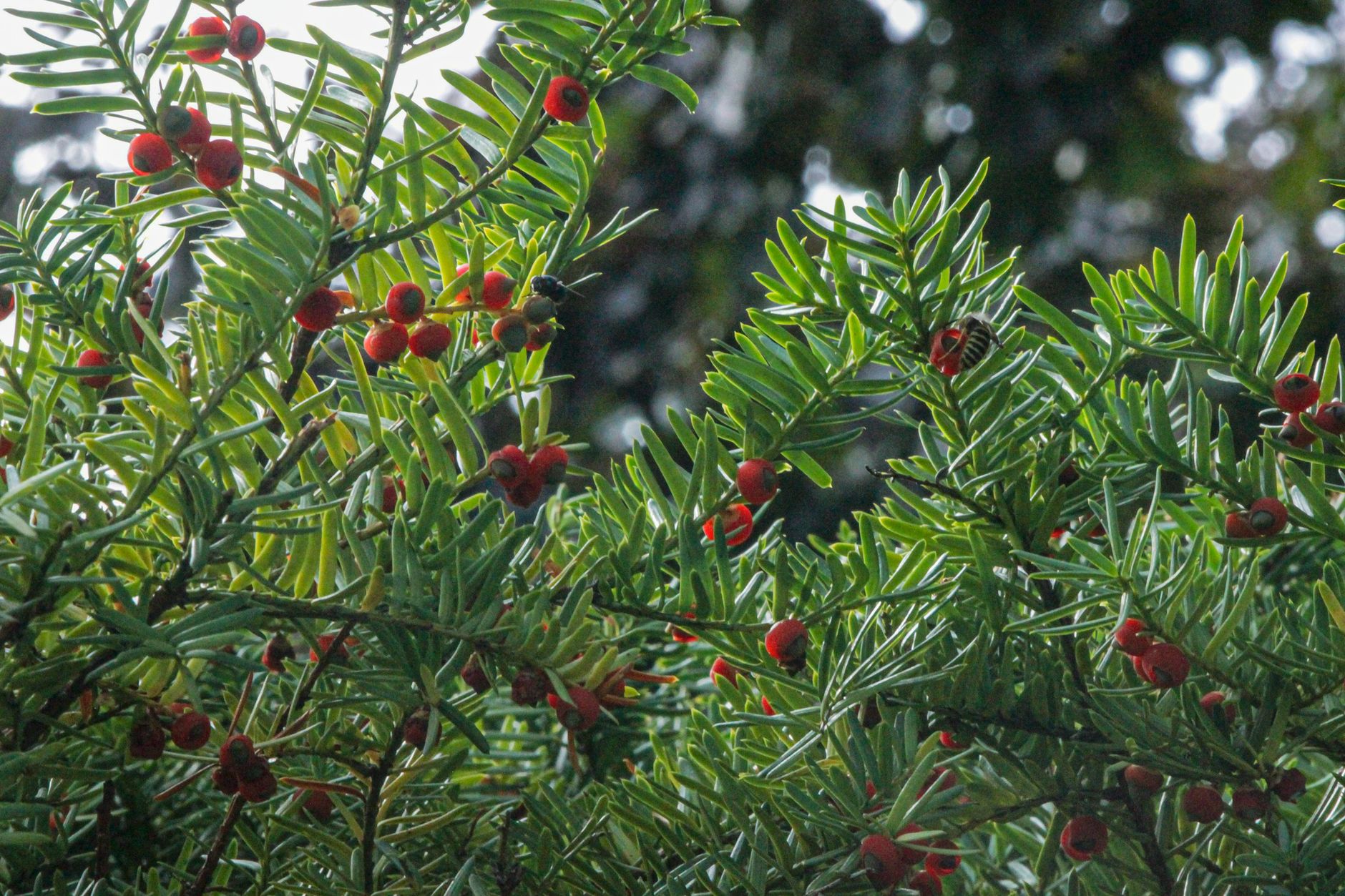
Once stems begin to settle in, seasonal checks are usually more useful than frequent intervention. Spring brings small flowers that pollinators visit, while autumn shifts attention toward fruit and moisture. Check the soil beneath mulch before watering in summer, since a dry surface can hide damp soil below.
Flowers and Fruit Support Wildlife
Nectar supports pollinators, low stems provide cover, and red berries feed wildlife through colder months. Young plants can suffer deer or rabbit browsing, so a temporary barrier can protect fresh shoots without changing the soil conditions. Leave ripe fruit in place where wildlife activity is high.
Visible Symptoms Point to Site Problems
| Visible problem | Probable cause | Practical response |
|---|---|---|
| Sparse stems | Too much shade or slow establishment | Add light exposure where feasible and allow more time for spread. |
| Yellow foliage | Alkaline soil or nutrient imbalance | Check soil reaction before adding fertilizer. |
| Weak flowering | Low sun exposure or excess fertility | Reduce rich amendments and favor a brighter position. |
| Stem dieback | Wet roots, transplant stress, or hard pruning | Remove damaged tips lightly and correct drainage before replanting. |
Cut only broken or dead growth because old woody stems can be slow to send out fresh shoots after hard trimming. That restraint protects the plant’s low structure, but it also reminds you that leaves and fruit serve very different purposes. The distinction matters most when berries appear on a trail or in a garden.
When bright berries arrive, their appeal can obscure the important difference between ornamental interest and edible use.
Red Berries Offer Limited Human Food Value
Correctly identified fruit is edible, but it is rarely a culinary highlight. The red berries are mealy, dry, and bland to mildly astringent rather than juicy or sweet. You may see them described as a historical food, yet they do not perform like blueberries, lingonberries, or cultivated cranberries.
Some traditional preparations dried the fruit or mixed it with other foods, which fits its dry flesh. Gathering a small amount from a thriving patch differs from stripping a site bare, especially where birds depend on winter fruit. Yes, but their texture and flavor limit their appeal.
- Confirm several traits Match leaf shape, growth habit, flowers, fruit, and habitat before picking anything.
- Follow local rules Harvest only on land where gathering is permitted by the land manager.
- Avoid contaminated sites Leave fruit near roadsides, sprayed yards, and runoff channels untouched.
- Leave ample fruit Wildlife and future seedlings benefit when berries remain on the plant.
- Separate pet advice Do not assume a wild edible food is suitable for dogs, cats, or livestock.
After pet ingestion, contact a veterinarian or poison resource instead of relying on human food rules.
Fruit and leaves are not interchangeable plant parts. Uva ursi products use leaf material, which brings firmer safety boundaries than casual tasting or foraging.
That distinction becomes especially important with leaf-based preparations, whose potential effects demand more caution than the fruit.
Uva Ursi Use Requires Clear Safety Boundaries
That difference between fruit and leaf matters because uva ursi has a separate history of herbal use. Bearberry medicinal uses commonly focus on leaf preparations for urinary symptoms, but longstanding use does not prove that a product treats urinary tract disease. The European Medicines Agency describes uva ursi leaf as a traditional herbal product for minor urinary complaints based on traditional use rather than strong clinical evidence.
Arbutin Explains Interest and Caution
Arbutin is a major compound in the leaves. The body may metabolize arbutin into hydroquinone-related compounds, which explains historical interest and concern about high intake or extended use. Product strength and extraction methods vary, so your label does not provide the full safety picture.
Urinary Symptoms Need Timely Evaluation
Persistent burning, fever, back pain, recurrent symptoms, or blood in urine call for prompt clinical evaluation. Those signs can point to conditions that need diagnosis, and self-treatment may delay care that your situation requires. A pharmacist or clinician can also review possible interactions with medicines and supplements.
Pregnancy, breastfeeding, childhood, kidney disease, and liver disease raise added concerns. You should speak with a qualified clinician before using any uva ursi product when your health history includes those factors. Some Indigenous and historical smoking blends included kinnikinnick leaves, but inhaling burned plant material exposes lungs to harmful combustion products and is not a safe medicinal route.
Because combustion adds its own risks, responsible decisions about cultivation, foraging, and use depend on keeping safety central.
Final Thoughts on Growing, Foraging, and Safety
it succeeds through restraint: dry acidic soil, direct light, and time. Your strongest results come from matching its northern, rocky habitat rather than trying to feed or water it into faster growth. A healthy mat can offer wildlife value, erosion control, evergreen texture, and seasonal red fruit without demanding intensive care.
Foraging requires the same patience. Confirm the plant through several traits, treat the berries as a modest wild food, and leave enough fruit for wildlife. Keep uva ursi leaf products within careful evidence and safety boundaries, especially where urinary symptoms persist, worsen, or include fever, back pain, or blood in urine.
FAQ
What is bearberry, and what are its common names?
it is an evergreen trailing shrub known botanically as Arctostaphylos uva-ursi. Your plant may also be labeled uva ursi or kinnikinnick, and it belongs to the Ericaceae family with blueberries, azaleas, and rhododendrons.
Where is bearberry found in North America?
it occurs across northern temperate and Arctic parts of North America. You may encounter it in open pine woods, sandy dunes, rocky barrens, dry banks, and exposed slopes with acidic soil and rapid drainage.
Does bearberry grow in shade?
Partial shade can keep the plant alive, especially in hotter climates, but sun produces denser mats, more flowers, and better fruit set. Your planting site should provide direct light and sharply drained acidic soil for stronger long-term growth.
How do you plant and care for bearberry as a ground cover?
Plant it at its nursery depth in a sunny, sharply drained site and allow several growing seasons for stems to spread. You should water new plants deeply during establishment, then reduce irrigation as roots settle into the surrounding soil.
What soil type and pH does bearberry need?
it needs well-drained acidic soil and performs poorly in wet clay or alkaline ground. Your soil test should guide amendments, because alkaline conditions can limit iron uptake and cause pale leaves with greener veins.
Can humans eat bearberries?
When correctly identified, the dry, mealy fruit is safe to eat but mildly astringent rather than sweet. Your safest approach is to verify several plant traits, gather only where permitted, avoid contaminated sites, and leave much of the crop for wildlife.
