

One striking number sets this small tropical cherry apart: it carries roughly 50 to 100 times more vitamin C by weight than an orange or a lemon, making it one of the richest natural sources of the nutrient ever recorded. A single ripe fruit can outperform a glass of orange juice. That concentration is why researchers have studied it so closely.
The sections ahead cover the fruit’s botanical identity, its full nutritional profile, all nineteen documented advantages, skin science, comparisons with synthetic vitamin C, practical amounts, and safety limits, written for anyone weighing whether concentrated acerola belongs in their routine.
A Tiny Cherry With an Extraordinary Nutrient Story
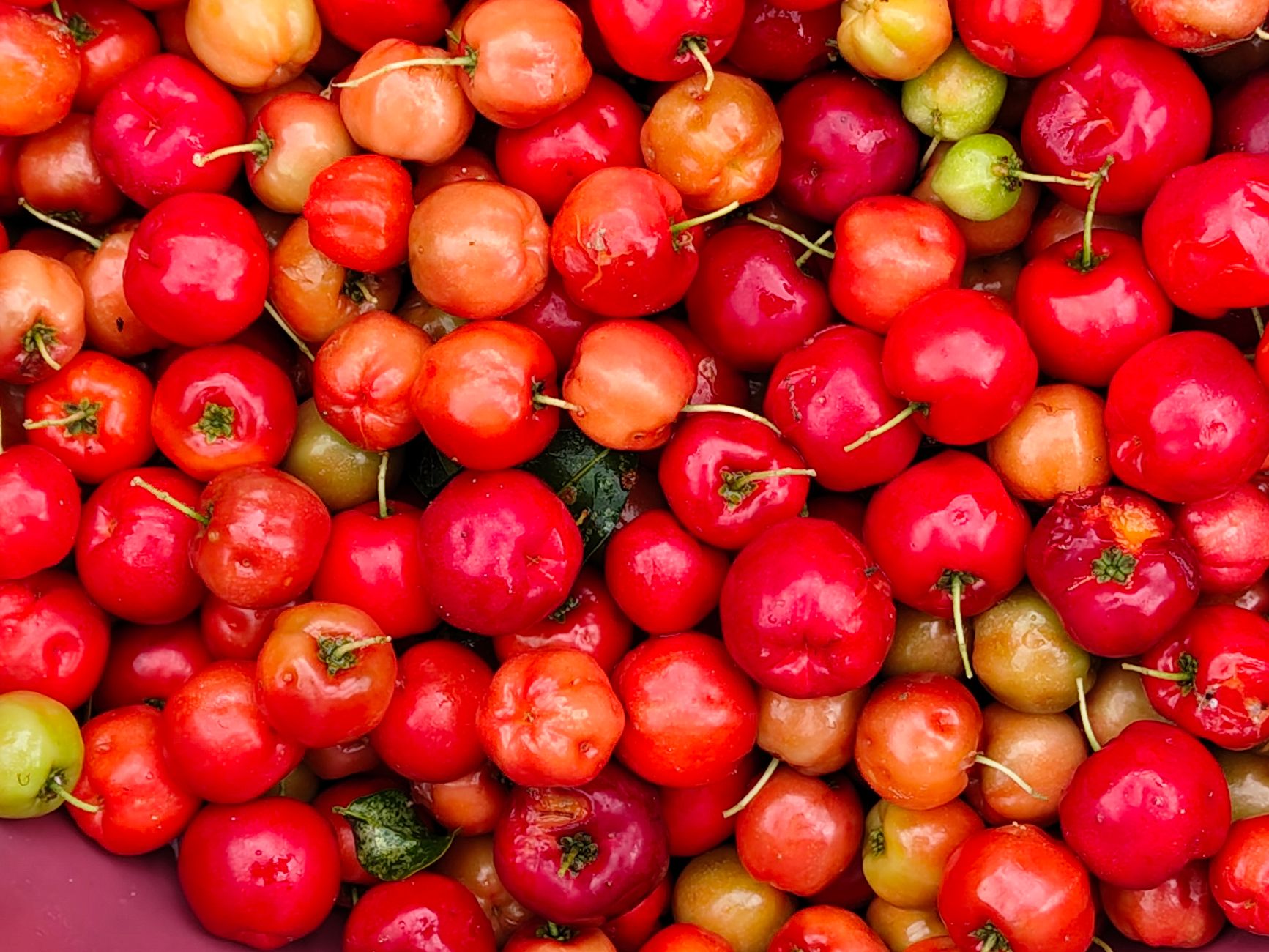
Botanists know it as Malpighia emarginata or Malpighia glabra, two closely related species in the Malpighiaceae family. The tree grows across the Caribbean, Mexico, Central America, and northern South America, and Brazil now cultivates it at industrial scale. The fruit looks like a bright red cherry about one to two centimeters wide, with three ridges running down its sides and a tart, acidic flavor.
The vitamin C content is what sets it apart. Fresh acerola pulp has been recorded at 1,000 to 4,500 milligrams of ascorbic acid per 100 grams, depending on ripeness and variety. An orange sits near 50 milligrams for the same weight. Riper fruit contains less vitamin C than fruit picked before full ripeness, which surprises growers the first time they check it.
That potency comes with a catch. The fruit begins losing vitamin C within hours of harvest because ascorbic acid degrades rapidly in heat, light, and oxygen. Commercial operations in Brazil and Puerto Rico process acerola into juice, puree, freeze-dried powder, or capsules right after picking. Once the fruit reaches your kitchen in any form, it will have been stabilized through drying or freezing rather than shipped fresh. And what survives that processing turns out to be only part of the story.
Drying and freezing keep the fruit’s nutrients intact, but vitamin C is only the headline act in a much longer list.
The Full Nutritional Profile Beyond Vitamin C
Vitamin C dominates the conversation, yet the whole fruit brings more to your plate than a single nutrient. Acerola contains detectable amounts of thiamine, riboflavin, and niacin, along with potassium, magnesium, calcium, phosphorus, and small quantities of vitamin A in carotenoid form. A 100-gram serving of fresh fruit contributes meaningful potassium for a food this low in calories.
The phytonutrient fraction deserves equal attention. Acerola supplies anthocyanins, the pigments behind its red color, plus carotenoids, flavonoids, and other polyphenols. Dozens of these compounds have been catalogued and linked to antioxidant and anti-inflammatory activity in laboratory models, a body of work summarized in systematic reviews indexed on PubMed Central. The American Botanical Council’s publication HerbalGram has profiled acerola as a food-as-medicine crop precisely because of this layered chemistry.
Here’s the part casual coverage misses: these compounds appear to work together rather than in isolation. Polyphenols may slow the oxidation of vitamin C inside the fruit itself, and some research suggests flavonoids influence how your body handles ascorbic acid once absorbed. Eating the whole-food matrix differs chemically from swallowing an isolated nutrient, and that difference shapes several sections below, starting with the full benefit list.
Because whole foods deliver nutrients alongside cofactors and fiber, their effects run deeper than any single compound can explain.
All Nineteen Evidence-Based Benefits, Counted One by One
You asked for nineteen, so here they are, numbered and honest about the evidence behind each one. Strong backing means human trials or well-established physiology. Preliminary means preliminary lab or animal work, or small human studies that need confirmation.
- Immune function. Vitamin C contributes to normal immune cell activity, and adequate intake keeps defenses working as designed during physical stress.
- Collagen production. Your body cannot synthesize collagen without vitamin C acting as a cofactor, which affects skin, tendons, cartilage, and blood vessels alike.
- Antioxidant defense. Ascorbic acid neutralizes free radicals directly, and acerola’s polyphenols add a second layer of antioxidant activity.
- Iron absorption. Vitamin C converts plant-based iron into the form your intestine absorbs most readily, so pairing acerola with lentils or spinach raises uptake.
- Skin structure. Collagen synthesis driven by vitamin C underlies skin firmness and elasticity over time.
- Wound healing. Repair tissue depends on new collagen, and low vitamin C status slows closure of cuts and surgical wounds.
- Gum health. Bleeding gums are a classic early sign of vitamin C deficiency, since gum tissue is collagen-rich.
- Heart health markers. Some observational research ties higher vitamin C intake to healthier blood pressure and lipid profiles, though causation remains unproven.
- Blood sugar regulation. A few small studies suggest acerola extract influenced post-meal glucose responses, but the evidence base is thin.
- Joint comfort. Cartilage depends on collagen for structure, so adequate vitamin C intake matters for joint tissue upkeep.
- Bone strength. Bone mineral sits on a collagen scaffold; vitamin C aids the formation of that scaffold.
- Eye nutrition. Carotenoids in the fruit contribute to the pool of pigments associated with retinal health.
- Mood and stress response. Several trials have observed modest mood improvements with higher vitamin C intake, a finding still under study.
- Exercise recovery. Intense exercise raises oxidative stress; vitamin C participates in the antioxidant response, though megadoses may blunt training adaptations.
- Anti-inflammatory activity. Acerola polyphenols showed anti-inflammatory effects in preclinical models, a promising but unconfirmed line of research.
- Cellular protection during aging. Cumulative oxidative damage is one proposed contributor to aging, and dietary antioxidants are one lever among many.
- Potassium intake. The fruit’s potassium contributes to normal fluid levels and nerve signaling.
- Nutrient density per calorie. Few foods deliver this much micronutrient content for so few calories, useful when your appetite runs small.
- Hair and nail environment. Keratin structures sit near collagen-rich tissue, so severe deficiency shows up there too; benefit beyond correcting deficiency is speculative.
Items 1 through 7 rest on solid physiological ground. Items 8 through 15 fall into the promising-but-preliminary category, and items 16 through 19 describe general nutritional value rather than targeted effects. Treat any product page claiming all nineteen as proven fact with skepticism.
| Benefit Area | Evidence Strength | Key Compound |
|---|---|---|
| Immune function | Strong | Vitamin C |
| Collagen and skin | Strong | Vitamin C |
| Iron absorption | Strong | Vitamin C |
| Antioxidant defense | Strong | Vitamin C, polyphenols |
| Heart health markers | Moderate | Vitamin C, potassium |
| Blood sugar regulation | Preliminary | Polyphenols |
| Anti-inflammatory activity | Preliminary | Anthocyanins, flavonoids |
Skin claims deserve their own closer look, since they drive much of the commercial interest in this fruit.
Collagen synthesis depends on steady vitamin C supply, which explains why this cherry keeps showing up in beauty marketing.
Skin, Collagen, and Healthy Aging From the Inside Out
Because skin drives so much of the marketing, the underlying mechanism matters. It’s exact biochemistry, not advertising language. Two enzymes, prolyl hydroxylase and lysyl hydroxylase, require vitamin C to stitch collagen fibers into their stable triple-helix shape. Without enough ascorbic acid, those enzymes stall, and the collagen your cells produce comes out weak and unstable. That’s why sailors with scurvy saw old wounds reopen: the structural protein literally fell apart.
Acerola benefits for skin flow from that same pathway. Adequate vitamin C intake gives your fibroblast cells the raw material dermal collagen requires, the layer responsible for firmness and fine-line resistance. On top of that, the fruit’s anthocyanins and carotenoids add antioxidant capacity against UV-related oxidative stress, one contributor to premature skin aging. Sunscreen still does the heavy lifting there; diet plays a helping role.
Topical extracts occupy a different lane. Cosmetic formulas containing acerola extract aim vitamin C and polyphenols directly at the skin surface, where stability and penetration vary widely between products. Dietary intake works systemically and reliably reaches the dermis. For most goals, the two approaches complement each other rather than compete, and neither substitutes for sun protection or dermatologic care.
That said, food and pills behave differently once they leave the bottle or the branch.
Acerola Versus Synthetic Ascorbic Acid Supplements
On absorption, controlled comparisons give a layered answer. Natural and synthetic vitamin C have been found broadly similar at moderate doses, so the molecule itself behaves the same in your bloodstream. What differs is everything riding along with it.
Whole acerola delivers ascorbic acid inside a matrix of flavonoids, carotenoids, and polyphenols. Some researchers propose this co-nutrient package influences how tissues retain the vitamin and adds independent antioxidant activity, though the size of that effect in humans remains debated. A 2018 review in Nutrients noted that food-derived vitamin C appears at least as well retained as purified forms, with apparent advantages at lower doses.
Synthetic supplements still earn their place in specific situations. Purified ascorbic acid offers a standardized, verifiable dose at low cost, and clinicians who prescribe exact amounts rely on that consistency. Whole-food powders vary batch to batch with growing conditions. Matching the form to your goal beats arguing about which one wins outright, and the next section gets concrete about amounts.
Whichever form you pick, the dose and delivery method determine how much benefit actually survives.
Forms, Dosage, and Practical Ways to Take It
Fresh acerola rarely leaves the tropics, so your realistic options are processed ones. Each form trades potency against convenience differently.
| Form | Average Vitamin C Content | Best Fit |
|---|---|---|
| Freeze-dried powder | Roughly 400 to 800 mg per teaspoon, varies by brand | Smoothies, cost per gram |
| Capsules | 250 to 500 mg per capsule | Travel, taste-sensitive users |
| Juice or concentrate | Varies widely with dilution | Culinary use, beverages |
| Puree | Moderate, heat-processed | Desserts, sauces |
For reference on amounts: the recommended dietary allowance for vitamin C is 90 milligrams daily for adult men and 75 for adult women, with an upper limit of 2,000 milligrams from all sources combined. A quarter-teaspoon of many acerola powders already exceeds a full day’s requirement, so portion carefully rather than scooping freely. More is not better past adequacy, and excess simply exits in urine or, at high doses, triggers the digestive problems covered shortly.
Practical ways to work it into your routine:
- Smoothie base. Blend half a teaspoon of powder with frozen mango and banana; the tartness reads as tropical brightness.
- Yogurt bowl topping. Stir a small pinch into Greek yogurt with honey to soften the acidity.
- Salad dressing. Whisk acerola powder into olive oil and vinegar for a citrusy vinaigrette without squeezing fruit.
- Iron-pairing trick. Add a pinch to lentil soup or oatmeal; the vitamin C lifts the iron your meal already contains.
- Post-workout drink. Mix a small amount into coconut water for potassium alongside antioxidants.
Heat destroys ascorbic acid quickly, so cold applications preserve far more of the nutrient than baking or boiling. That preservation question leads straight into safety territory.
Heat sensitivity matters most when you’re preparing the fruit yourself, but safety concerns apply no matter how you take it.
Kidney Health, Side Effects, and Who Should Be Careful
The kidney question surfaces constantly, and the answer separates concern from evidence. Vitamin C metabolizes partly into oxalate, and oxalate binds calcium to form the most common type of kidney stone. Men taking 1,000 milligrams or more of supplemental vitamin C daily showed roughly double the risk of incident kidney stones versus non-users in large cohort analyses published in JAMA Internal Medicine, drawing on Harvard-affiliated cohorts. Acerola itself was not the exposure in those studies, but its concentrated vitamin C places it in the same risk conversation.
For healthy kidneys at ordinary food-level intakes, no evidence suggests harm. Risk concentrates at sustained high supplemental doses, particularly in people with prior stones or reduced kidney function. Anyone in those groups should discuss any concentrated source with a nephrologist before adding it to their routine.
Other cautions apply more broadly:
- Digestive upset. Doses above roughly 1,000 to 2,000 milligrams daily can cause diarrhea, cramping, and nausea in sensitive individuals.
- Blood thinners. Very high vitamin C intake may interact with warfarin monitoring; consistent intake matters more than avoidance.
- Estrogen products. Ascorbic acid can raise estrogen blood levels when taken concurrently with oral estrogen therapy.
- Chemotherapy. Some oncologists advise against high-dose antioxidants during certain treatments; coordination with the care team comes first.
- G6PD deficiency. Rare but documented, high-dose ascorbic acid poses risks in this inherited enzyme condition.
Anyone with kidney stones, kidney disease, prescription medication use, pregnancy, or nursing should talk with a qualified healthcare professional before adding concentrated acerola to a routine.
Assuming your situation clears those cautions, quality varies enormously between products, and label literacy protects both your wallet and your expectations.
Once you know what to avoid, the challenge becomes finding a product that actually delivers what its label promises.
Choosing a High-Quality Acerola Powder or Supplement
Since product quality varies so widely, start with the label’s numbers, not its imagery. A legitimate product states vitamin C content per serving in milligrams, lists the plant species (Malpighia emarginata), and names the country of origin. Third-party verification seals from programs like USP Verified or Informed Choice signal that an outside lab confirmed the contents match the label.
Packaging matters as much as sourcing. Because ascorbic acid degrades in heat, light, and oxygen, opaque containers with tight seals preserve potency longer than clear jars sitting on a sunny shelf. Freeze-dried powders generally retain more vitamin C than spray-dried ones, and harvest date information, when a brand provides it, tells you how fresh the raw material was.
Price per gram of actual vitamin C beats price per ounce of powder every time. Divide the cost by the stated milligrams per serving to compare brands honestly. A slightly pricier powder with verified content often costs less per milligram than a bargain jar with vague labeling.
Frequently Asked Questions
Can I eat fresh acerola cherries?
Yes, where they grow. The fruit is edible raw, tart, and highly perishable, which is exactly why almost all commercial supply arrives as powder, juice, or capsules.
Is acerola better than oranges for vitamin C?
By concentration, dramatically so, often 50 to 100 times more per gram. Oranges remain cheaper and easier to find fresh, so the practical choice depends on your budget and access.
How much acerola powder should I take daily?
Enough to stay within the 2,000-milligram upper limit for total vitamin C from all sources. Many people do well with a quarter to half teaspoon of powder, but check your specific brand’s label and any other supplements you take.
Does cooking destroy acerola’s vitamin C?
Largely yes. Heat breaks down ascorbic acid quickly, so cold applications like smoothies and dressings preserve far more than baking or boiling.
