

A blood pressure monitor earns its place by delivering a clear reading, fitting your arm comfortably, and making the numbers easy to revisit. That matters most in a busy morning routine, when a cluttered screen, tight cuff, or confusing memory system can discourage consistent use. The models below cover different priorities, from app-based tracking and multi-user records to wider displays and added heart-rhythm screening.
One important distinction: these are upper-arm monitors for spot measurements, not continuous 24-hour systems. Check the cuff range, storage method, and app features before choosing one for long-term home tracking.
The Main Contenders

OMRON Bronze BP Monitor

Microlife Series 200 Upper Arm Monitor with Wide Cuff

iMATCHME NAC 900mg Supplement

HuBDIC HubiCare Bluetooth Monitor with Adjustable Cuff

VIEYKEA Upper Arm Monitor

OMRON Complete 2-in-1 Monitor
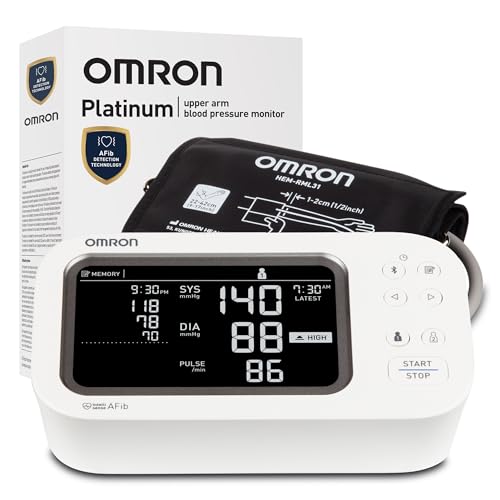
OMRON Platinum BP Monitor
What Each Pick Brings To The Table
The Bronze BP Monitor balances dependable physical features with phone-based record keeping. That combination works well for someone who wants an uncomplicated cuff at home but still wants a longer history than the monitor’s 14 onboard readings can provide. The upper-arm format also feels more natural for a daily routine than a wrist device, provided the cuff sits correctly.
Bluetooth connection through the OMRON Connect app adds long-term trend storage, notes, and report sharing. Apple Health and Google Fit compatibility can reduce the friction of keeping a broader health record, although the app adds another step for anyone who prefers to review everything on the monitor itself.
Useful Touches
- The 9-17 inch wide-range cuff accommodates many adult arm sizes.
- Bluetooth records go beyond the 14 readings held on the device.
- Heartbeat irregularity detection adds context to routine measurements.
- A hypertension indicator flags readings that fall outside the expected range.
- The storage case, batteries, and quick guide support a tidy setup.
Trade Offs
- Long-term history depends on using the app rather than the 14-reading onboard memory.
- The 9-17 inch cuff range may not suit measurements taken outside that range.
Feature Snapshot
Made For
This monitor suits connected users who want app-based trends and flexible record sharing.
Consider Something Else When
Choose the Microlife Series 200 Upper Arm Monitor with Wide Cuff for a simpler setup that keeps 30 results without app-based storage.
The Series 200 keeps daily monitoring pleasantly direct. A one-touch control starts and stops the measurement, while the large numbers make the result easy to check before leaving the kitchen table. Compared with the app-focused OMRON Bronze BP Monitor, this model puts more emphasis on immediate readings and a compact physical footprint.
Its cuff is a meaningful strength. The contoured 8.7-16.5 inch range, soft outer fabric, and Gentle+ inflation approach are useful for people who dislike a tight or prolonged squeeze. The monitor also calculates an average from its stored results, which gives short-term context without requiring a separate chart.
Positive Points
- The AA accuracy rating adds a clear purchasing reference.
- One-touch operation reduces the number of steps before a reading.
- The wide cuff and Gentle+ approach prioritize comfort.
- Thirty stored measurements cover more sessions than many basic monitors.
- Pulse and irregular heartbeat information appears in the same session.
Small Caveats
- The AC adapter is sold separately, so plan for batteries or another power source.
- Without app support, long-term history remains limited to the 30 onboard readings.
Quick Facts
Right Fit For
This model suits people who want accurate readings, a comfortable cuff, and useful history without managing an app.
A Better Fit Elsewhere
The HuBDIC HubiCare Bluetooth Monitor with Adjustable Cuff suits anyone who needs reminders, notes, and a seven-day trend graph.
This formula sits outside the blood pressure monitor category. It is a dietary supplement built around 900 mg of N-acetyl cysteine, milk thistle, turmeric, dandelion, artichoke, quercetin, and black pepper extract. That makes it relevant to a liver-support routine, but it cannot measure blood pressure, detect heart rhythm, or replace an upper-arm monitor.
Within its own category, the ingredient variety is the main attraction. The 180-count package provides a substantial supply, and the formula is designed for people who want several complementary ingredients in one capsule. Anyone shopping specifically for a home blood pressure machine should set this option aside.
Positive Takeaways
- Each serving supplies 900 mg of N-acetyl cysteine.
- The formula combines NAC with several botanical extracts.
- Black pepper extract is included to support ingredient absorption.
- The capsules are vegetarian-friendly and made without gluten.
Things To Consider
- The product provides no blood pressure reading, pulse measurement, or cuff.
- Its many active ingredients require a closer label review than a single-ingredient supplement.
- It does not address the core need for 24-hour home measurement records.
Who Will Love This
This supplement suits adults building a liver-focused routine around several botanical ingredients and NAC.
Another Choice May Suit
The OMRON Bronze BP Monitor is the relevant choice for anyone who needs actual blood pressure and pulse measurements.
The HubiCare monitor offers the strongest built-in trend view in this group. Its screen can graph the previous seven days and show daily systolic and diastolic averages, along with weekly highs and lows. That visibility is useful before opening the app, especially for a household that wants a quick look at how readings have changed.
Bluetooth expands those features through the HealthHub app, which supports reminders, notes, and longer-term records. Two personal profiles plus a guest mode prevent household measurements from becoming mixed together. The large 5.7-inch display and cuff-fit warning make the physical interaction straightforward for a shared bathroom or bedroom.
Good Reasons To Consider
- The seven-day graph supports on-device trend review.
- Separate profiles keep two users’ records organized.
- The 5.7-inch display presents results at a readable scale.
- App reminders can structure a repeatable measurement schedule.
- The cuff warning helps identify an improper fit.
Practical Considerations
- The USB-C cable must be purchased separately for wired power.
- Each personal account holds 250 records, so review the app before building a long archive.
Core Details
Built With In Mind
This monitor fits households that want shared hardware, separate records, reminders, and accessible trend graphs.
Swap It Out When
The Microlife Series 200 Upper Arm Monitor with Wide Cuff is a better fit when you want more readings stored directly on a simple device without app management.
The VIEYKEA monitor is built around visibility and two-person use. Its square four-inch backlit screen presents pressure, pulse, date, time, battery status, and a blood pressure classification indicator. That makes it a practical evening choice, particularly when a person wants a large display without navigating an app.
Each of the two profiles stores 90 readings, and the monitor can calculate an average from the latest three results. Compared with the HuBDIC HubiCare Bluetooth Monitor with Adjustable Cuff, the VIEYKEA is less dependent on phone-based history. Its stated measurement tolerance is plus or minus 3 mmHg for pressure and plus or minus 5 percent for pulse.
A Favorable Mix
- The backlit four-inch display remains easy to scan in dim conditions.
- Two separate users receive 90 stored readings each.
- A three-reading average adds context to recent measurements.
- Irregular heartbeat and blood pressure classification indicators are included.
- Automatic shutdown follows three minutes without operation.
Details To Watch
- The cuff covers 8.7-16.5 inches, so confirm that range fits your upper arm.
- Classification and rhythm indicators provide context but do not replace professional interpretation.
The Right Fit
This model suits couples or caregivers who value a large display, separate records, and basic two-person operation.
Where A Sibling Pick Shines
The HuBDIC HubiCare Bluetooth Monitor with Adjustable Cuff is stronger for reminders, notes, and a seven-day graph.
The Complete 2-in-1 Monitor serves two purposes in one upper-arm device: standard blood pressure measurement and an EKG reading. EKG, short for electrocardiogram, records the heart’s electrical activity as a waveform. For someone who already tracks blood pressure, that added function can provide a more rounded view of heart activity without reaching for two separate devices.
The monitor stores up to 90 readings, making its onboard history larger than the OMRON Bronze BP Monitor’s 14-entry memory. The honest caveat is that an EKG function is not a substitute for clinical assessment, and some users may find the two measurement routines more involved than a basic cuff.
Noteworthy Benefits
- Blood pressure and EKG functions share one upper-arm device.
- Ninety stored readings provide a practical on-device history.
- The combined format reduces the number of separate devices to manage.
- Advanced Accuracy Technology supports routine blood pressure measurement.
Potential Compromises
- The dual-function format may feel more complex than a basic pressure monitor.
- Its 90-reading memory is smaller than the Platinum model’s 100 readings per user.
Essential Details
Whose Shelf It Belongs On
This monitor belongs with someone who wants an upper-arm cuff and a home EKG function in one device.
Reach For A Different Pick When
The OMRON Bronze BP Monitor is simpler for routine blood pressure tracking without EKG measurement.
The Platinum BP Monitor targets households that want detailed heart-rhythm screening alongside blood pressure records. Its AFib detection technology looks for unusual rhythms during a standard measurement, adding context that a basic systolic and diastolic display cannot provide. That makes it more relevant for two people who each maintain an independent history.
Dual-user support stores up to 100 readings for each person, so the records remain separate rather than forming one shared log. Compared with the OMRON Complete 2-in-1 Monitor, the Platinum focuses on AFib detection instead of producing an EKG waveform. That distinction matters when choosing between added rhythm screening and a dedicated electrical tracing.
Bright Spots
- AFib detection adds rhythm screening to routine blood pressure checks.
- Each of two users can store 100 readings.
- Separate records suit couples comparing their own histories.
- Advanced Accuracy Technology supports the core pressure measurement.
Where It May Fall Short
- It does not provide the EKG waveform offered by the Complete 2-in-1 Monitor.
- Confirm that the included upper-arm cuff fits before making it your main monitor.
Key Product Details
Best Suited To
This monitor suits couples who want separate histories and AFib screening in each user’s routine.
Look Elsewhere When
The OMRON Complete 2-in-1 Monitor is a better fit for someone who specifically wants a home EKG waveform.
What Matters Most For At-Home Measurements
Cuff Fit Comes First
A monitor is only useful when its cuff fits properly. Most options here cover roughly 8.7 to 16.5 inches, while the OMRON Bronze BP Monitor specifies a 9-17 inch range. Measure your upper arm and compare it with the listed limits before ordering, since a cuff that is too small can affect comfort and measurement consistency.
Memory And App Support
Onboard memory provides a quick record without a phone, while an app supports longer histories, notes, and reminders. The Microlife Series 200 stores 30 results, the OMRON Bronze stores 14, and the OMRON Platinum stores 100 for each of two users. HuBDIC adds app-based records and a seven-day graph for people who prefer visible trend summaries.
Screening Features Have Limits
Heartbeat irregularity, AFib, and blood pressure classification indicators can highlight readings that deserve attention. They remain screening aids, not clinical diagnoses. Anyone using these features should understand their purpose and discuss recurring concerns with a healthcare professional.
Power And Storage Fit
Battery-powered models offer placement flexibility without a nearby outlet. Some also accept USB power, but the required cable or adapter may not be included. Choose a storage case size that fits your medicine cabinet, bedside table, or travel bag, especially for a monitor intended for daily use.
Common Shopping Slip Ups
Pitfalls Shoppers Hit
The biggest mistake is expecting a spot monitor to provide continuous 24-hour data. These devices take individual upper-arm measurements rather than tracking readings around the clock. Another common error is overlooking cuff range or assuming phone synchronization comes with every model.
What The Higher Tier Buys
What Separates Premium From Basic
Premium models tend to add capacity, multi-user organization, app connectivity, or additional heart-rhythm screening. Those extras help households that want closer longitudinal records, while a basic monitor can serve someone who only needs a comfortable cuff, clear numbers, and several recent readings.
Frequently Asked Questions for 24 Hour Blood Pressure Machine
Do these monitors record for 24 hours?
No. Each listed device is an upper-arm monitor for individual measurements, not a continuous 24-hour recording system. True continuous tracking requires a different type of ambulatory equipment.
Which monitor has the widest cuff range?
The OMRON Bronze BP Monitor lists a 9-17 inch range, while most other options top out at 16.5 inches. Measure your arm and confirm the range before ordering.
Which model is easiest for two people?
The HuBDIC HubiCare Bluetooth Monitor with Adjustable Cuff and OMRON Platinum BP Monitor both maintain separate records for two users. HubiCare adds a guest mode, while Platinum provides more onboard memory per profile.
Which option stores the most readings without an app?
The OMRON Platinum BP Monitor stores up to 100 readings for each of two users. The VIEYKEA follows with 90 readings per user, and the Microlife Series 200 stores 30 total.
Do any of these include an EKG function?
The OMRON Complete 2-in-1 Monitor includes EKG measurement alongside blood pressure. The OMRON Platinum BP Monitor instead provides AFib detection, which is a different screening function.
Final Verdict
The OMRON Bronze BP Monitor is the most balanced choice for connected daily tracking, while the Microlife Series 200 offers the simplest route to useful history. HuBDIC leads in household trends and app organization, and the OMRON Platinum adds separate records with AFib screening. The Complete 2-in-1 Monitor stands apart for EKG measurement, while VIEYKEA focuses on a large display and two-user storage. Choose the feature you will actually use, then confirm cuff fit and power needs.
