

At 2 a.m., a leaky bottle or a slow-flow nipple can turn a routine feeding into a prolonged struggle. You need a bottle that matches your baby’s pace, handles regular washing, and fits the way your family combines breast and bottle feeding. These seven options cover different priorities, from soft silicone construction to glass, PPSU, venting systems, and newborn-sized portions.
A Side-By-Side Look

Philips Avent Natural PPSU Bottles, 9 oz

Dr. Brown’s Natural Flow Bottles, 8 oz

Comotomo Gen 2 Silicone Bottles, 8 oz
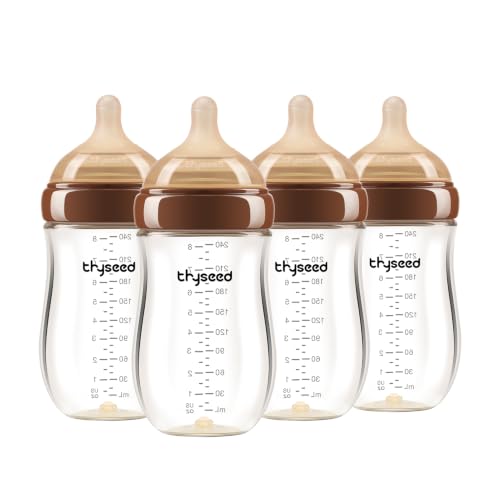
Thyseed 8 oz Glass Anti-Colic Bottles, 4-Pack

Philips Avent Natural Glass Bottles, 8 oz

Thyseed 5 oz Glass Bottle, Extra Slow Flow

Thyseed 5 oz PPSU Bottle, Extra Slow Flow
The Philips Avent Natural PPSU Bottles, 9 oz suit families who want the lightness of plastic without giving up the substantial feel of glass. PPSU is a heat-resistant plastic, so the bottles handle warming and everyday handling while staying lighter than the glass models in this roundup.
For combination feeding, the Natural Response nipple lets your baby control the milk flow rather than receiving a continuous stream. That makes the bottle more familiar for breastfed babies, although the two-bottle set may be smaller than the larger household sets below.
Why It Works Well
- PPSU keeps the weight down during late-night and on-the-go feeds.
- Baby-led flow supports a more natural feeding pace.
- The wide nipple shape helps with breast-to-bottle transitions.
- Medium Flow and no-drip design suit routine daily feeding.
Practical Considerations
- The set includes only two bottles, so daycare and travel require careful packing.
- Flow 3 is a medium flow, making a slower nipple worth checking for a newborn.
Feature Snapshot
Made For
You’ll appreciate these bottles most in a combination-feeding home that values a light, durable body and a natural feeding pace.
Another Choice May Suit
Dr. Brown’s Natural Flow Bottles, 8 oz suit you better when a six-bottle set and internal venting matter more than the compact two-piece arrangement.
Dr. Brown’s Natural Flow Bottles, 8 oz focus on keeping air away from the milk through an internal vent system. Unlike the Philips Avent Natural PPSU Bottles, which rely on a valve in the nipple, this design directs air through the bottle body, making the venting approach the central feature.
The six-bottle pink set works well for families who want several bottles ready for the next day. Each nipple is designed to deliver consistent flow, while the soft silicone shape gives breastfed babies a familiar surface to latch onto.
The Good Stuff
- The internal vent is designed to reduce swallowed air during feeds.
- Consistent nipple flow makes each feeding more predictable.
- Soft silicone supports a natural latch for breastfed babies.
- Top-rack dishwasher and sterilizer use simplify cleanup.
- Compatibility with most breast pumps helps with combination feeding.
Things To Consider
- Six full-size bottles occupy more drying and storage space than the two-bottle sets here.
Right Fit For
This set fits you best when you need a generous bottle rotation, dependable venting, and frequent breast-pump use.
Where A Sibling Pick Shines
Comotomo Gen 2 Silicone Bottles, 8 oz suit you better when a squeezable body and soft all-silicone construction matter more than a six-bottle household set.
The Comotomo Gen 2 Silicone Bottles, 8 oz feel more like a soft feeding accessory than a conventional rigid bottle. Compared with Dr. Brown’s Natural Flow Bottles, the entire body is squeezable, and milk only contacts food-grade silicone rather than a plastic interior.
The redesigned base is 40% wider than the earlier version, which should make the bottle more stable on a tray or beside you during a feed. The two-bottle pack remains modest, though, so households rotating multiple feeds may want a larger set.
Everyday Advantages
- The soft body is easy to grip and squeeze during feeds.
- A wider base reduces the chance of the bottle tipping over.
- Dual vents are designed to limit air entering the milk.
- The wide opening makes bottle-brush access easier.
Minor Gripes
- The two-bottle pack may be light on supplies for daycare or travel.
- All-silicone construction may not appeal to anyone looking for a lighter plastic body.
Quick Facts
Who Will Love This
You’ll appreciate the soft grip and simple wide-neck cleaning if your baby accepts a squeezable silicone bottle.
Consider Something Else When
Philips Avent Natural PPSU Bottles, 9 oz offer a better fit when lower weight and heat-resistant plastic matter more than an all-silicone body.
The Thyseed 8 oz Glass Anti-Colic Bottles, 4-Pack combine borosilicate glass with a base vent intended to separate air from milk. Borosilicate glass is designed to tolerate temperature changes, while the vent focuses on reducing bubbles and swallowed air during feeds.
Unlike Philips Avent Natural Glass Bottles, which arrive with a medium flow, this set gives you access to six flow rates. That makes it useful as a baby grows, although the supplied medium-fast nipple is intended for babies around three months and older.
Strong Points
- Glass construction gives the bottles a substantial, familiar feel.
- Multiple micro-openings create a steadier flow for the baby.
- The wide base supports a deeper latch during transition feeding.
- Six flow rates offer room to adjust as feeding develops.
- A wide neck and reduced part count make cleaning more direct.
Trade Offs
- Glass is heavier than PPSU or silicone during travel and late-night handling.
- The included medium-fast flow may need replacing for a newborn.
Technical Highlights
Built With In Mind
This set best fits breastfed families that want glass, adjustable flow, and a four-bottle rotation in one package.
A Better Fit Elsewhere
Thyseed 5 oz Glass Bottle, Extra Slow Flow suits you better when your baby needs a newborn stage and a smaller milk portion.
Philips Avent Natural Glass Bottles, 8 oz bring together a borosilicate glass body and the Natural Response feeding approach. The glass can move from refrigerator storage to warming and washing, while the soft, wide nipple gives breastfed babies a familiar shape to latch onto.
This option feels more traditional than the Thyseed 8 oz Glass Anti-Colic Bottles, since it focuses on a medium flow rather than a six-rate system. The honest read is that its appeal lies in a straightforward glass-and-natural-nipple setup, not a broad range of interchangeable parts.
Useful Highlights
- Borosilicate glass provides a durable body that tolerates temperature changes.
- Baby-controlled flow supports a slower, more natural feeding rhythm.
- The wide breast-shaped nipple assists with latch comfort.
Possible Compromises
- Glass carries more weight than the PPSU and silicone options in this roundup.
- A medium flow may not suit a newborn who needs a slower nipple.
Whose Shelf It Belongs On
You’ll appreciate this bottle most in a home that wants a simple glass design for routine bottle or combination feeding.
Reach For A Different Pick When
Thyseed 8 oz Glass Anti-Colic Bottles, 4-Pack suit you better when several flow stages and a larger household set are priorities.
The Thyseed 5 oz Glass Bottle, Extra Slow Flow narrows the focus to newborn feeding and smaller portions. Compared with the Thyseed 8 oz Glass Anti-Colic Bottles, this smaller format can leave less unused milk after a short feed, while the extra-slow nipple offers a gentler starting flow.
Its glass body and base vent follow the same design direction as the larger thyseed set. You lose the convenience of a four-bottle rotation, though, so this single-bottle option works best alongside other bottles in your collection.
The Case For It
- The 5 oz capacity suits smaller newborn portions.
- Extra-slow flow provides a gentler option for early feeding stages.
- Glass and the base vent keep the design simple and focused.
Details To Watch
- One bottle offers less rotation during a busy feeding schedule.
- Glass adds weight compared with the compact PPSU alternative.
Core Details
Made For
This bottle suits newborns who feed in smaller portions and need an extra-slow nipple with a glass body.
Swap It Out When
Thyseed 5 oz PPSU Bottle, Extra Slow Flow fits you better when lower travel weight matters more than glass construction.
The Thyseed 5 oz PPSU Bottle, Extra Slow Flow combines a lightweight plastic body with the newborn-focused flow of the thyseed glass option. PPSU keeps the bottle lighter than glass, which can matter during airport days, caregiver handoffs, or late-night feeds.
Its breast-like silicone nipple is shaped to support a natural latch, while the base vent is designed to keep air out of the milk. The paced, baby-led delivery adds another practical layer for families accustomed to combination feeding.
Bright Spots
- Lightweight PPSU is easier to carry than the glass alternative.
- The breast-shaped silicone nipple supports a natural latch.
- Baby-led flow and base venting encourage a paced feeding approach.
Some Limits To Know
- The single 5 oz bottle provides little rotation on its own.
- You may need additional bottles for daycare, travel, or regular household use.
Feature Breakdown
Best Suited To
You’ll find this bottle especially useful for newborn combination feeding where a light body and slow flow are the main concerns.
Look Elsewhere When
Thyseed 5 oz Glass Bottle, Extra Slow Flow suits you better when glass construction matters more than a lightweight travel weight.
What Matters Before Your Next Bottle Purchase
Material and Heat Handling
Bottle material affects weight, cleaning, and how the bottle handles temperature changes. PPSU is a heat-resistant plastic that offers a lighter alternative to glass, while borosilicate glass is designed to tolerate warming, refrigeration, and thermal shock. Silicone provides the softest squeeze of this group, and your baby’s acceptance of the nipple and body shape may matter more than any material preference.
Nipple and Flow Fit
A breast-like shape can make transitions less disruptive, but the flow rate still needs to match your baby’s stage. Extra-slow flow suits early feeding, while medium and medium-fast rates fit more established feeding patterns. For breastfed babies, watch the latch and feeding pace rather than choosing solely by age label.
Cleaning, Storage, and Rotation
A wide neck and fewer components generally make bottle cleaning less cumbersome. You’ll also want to account for drying space, packed bags, and the number of bottles your routine requires. A six-bottle set offers convenient rotation, while a single compact bottle makes more sense as an addition to an existing collection.
Two Details That Shape Bottle Decisions
Mistakes Worth Dodging
Avoid choosing solely by appearance, since a breast-like nipple does not guarantee a comfortable latch for every baby. Check the flow rate, opening size, included parts, and cleaning method before ordering, especially when your baby is still adjusting to bottle feeding.
What Separates Premium From Basic
Premium designs often combine higher-end materials, refined venting, or multiple flow options. Those additions are worth considering when you value temperature handling, lighter weight, or fewer feeding changes over the simplest design.
Frequently Asked Questions for 8 Baby Bottles
Are glass or PPSU baby bottles easier to care for?
Both materials work well with routine washing and sterilization, but glass feels substantial while PPSU weighs less. Choose according to your handling preference and your baby’s acceptance.
What flow rate should a newborn bottle have?
Extra-slow flow is a common starting point for newborns because it supports a slower pace. Observe your baby’s latch, sucking rhythm, and comfort before deciding whether a different rate is needed.
Do anti-colic vents make bottles easier to use?
Vent systems are designed to reduce the amount of air reaching the milk. Your baby’s response remains the best measure of whether the bottle suits the feeding routine.
Is a multi-bottle pack more practical?
A larger pack helps with rotation, cleaning, and caregiver handoffs. A smaller set may suit you better when storage space is limited or you already own other bottles.
Can breastfed babies use standard baby bottles?
Many babies adapt to a bottle with a breast-like nipple, but latch and flow still vary. Start with one bottle and observe the feeding before building a larger rotation.
Final Thoughts
The right bottle depends on the details your household handles every day: flow, weight, latch, venting, and how many bottles need to be ready at once. Glass suits families who favor a substantial body, PPSU favors lighter handling, and soft silicone provides a gentler squeeze. Match the bottle to your baby’s pace and your actual routine, and the choice becomes much easier.
