

A twisting move on the court leaves your knee painful, swollen, and uncertain about which movements are safe. The right brace can add stability while limiting motion during rehabilitation, and it can also sit beneath a rigid support without rubbing your skin raw. Your care plan and brace type should work together, not compete.
Your Options, Compared

DOUKOM Hinged ROM Knee Brace

DOUKOM Right ROM Elbow Brace

DOUKOM Left Unloader Brace
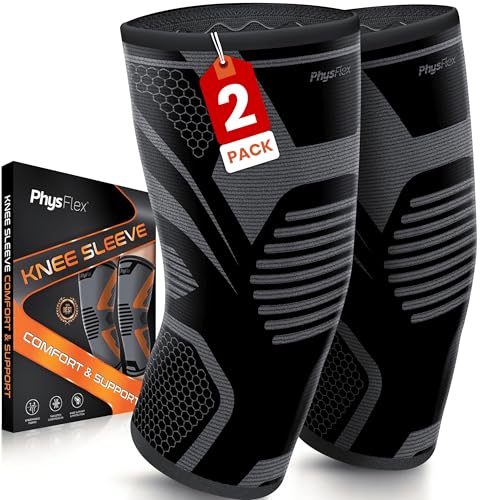
PhysFlex Knee Compression Sleeve for Workouts and Sports

Bodyprox Hinged Knee Brace for ACL and Meniscus

DOUKOM Right Unloader Brace

DOUKOM Knee Brace Undersleeve for Sensitive Skin and Chafing, Black Small
Meet The Standout Selections
The DOUKOM Hinged ROM Knee Brace is built for periods when your care team wants controlled movement rather than unrestricted bending. Range of motion, or ROM, is the portion of movement a joint can complete. Hinged dials let you set that range, making this a strong option for someone progressing through ACL, ligament, fracture, or post-operative rehabilitation.
Unlike the compression sleeve later in this list, this brace uses rigid hinges and a locking system to control extension and flexion. That makes it more structured for early-stage recovery, although you may find it bulkier than a sleeve during long workdays or casual travel.
Practical Pluses
- Locking dials support gradual changes to prescribed movement limits.
- The bilateral settings span -10° to 110° of flexion and -10° to 90° of extension.
- Adjustable length accommodates different heights and fits either leg.
- Quick-release buckles simplify daily dressing after the initial setup.
- A removable long strap adds support and helps limit downward slipping while walking.
Trade Offs
- The hinged structure takes more room than a flexible compression sleeve.
- Its exact adjustment range should align with the limits set by your clinician.
Key Specs
Made For
You benefit most from this brace during a structured knee-rehabilitation program that uses controlled ROM settings.
Where Another Pick Suits Better
The PhysFlex Knee Compression Sleeve suits you better when low-profile support during training matters more than adjustable hinges.
This pick supports the elbow rather than the knee, so it belongs beside the ACL options only as a companion for someone recovering from more than one injury. The DOUKOM Right ROM Elbow Brace combines hinged stabilization with adjustable straps for a right arm dealing with sprains, fractures, tendon irritation, or post-operative motion control.
For an athlete returning to training, the main benefit is repeatable support rather than a soft sleeve that simply follows the joint. You may find the rigid shell less flexible than the DOUKOM knee brace because it focuses entirely on the elbow.
Useful Highlights
- The hinged shell supports the right elbow during rehabilitation and limited daily activity.
- Adjustable straps let you tune the fit around the upper arm and forearm.
- The open design can accommodate swelling and changes in arm position.
- ROM adjustment supports controlled movement after an elbow injury or procedure.
Practical Considerations
- This model is shaped for the right elbow rather than the left.
- The plastic shell does not adjust, so checking your measurements before purchase matters.
- Long exercise sessions may be less comfortable with a rigid shell than with a sleeve.
At A Glance
Who Should Grab It
You benefit most from this brace when your right elbow needs controlled motion during a rehabilitation program.
Consider Something Else When
The DOUKOM Hinged ROM Knee Brace is the relevant choice when your support needs are limited to the knee rather than the right elbow.
The DOUKOM Left Unloader Brace takes a different approach from an ACL support designed mainly to stop bending. Its three-point leverage system redirects some load away from an uncomfortable joint compartment, which makes it a practical option for left-knee osteoarthritis, especially when stairs or standing work aggravate your symptoms.
The ventilated polymer frame is designed to remain low-profile beneath loose trousers. Compared with the DOUKOM Hinged ROM Knee Brace, it shifts the focus from limiting motion to supporting an osteoarthritic joint during routine walking.
Positive Points
- Three-point leverage spreads load rather than concentrating it at the knee joint.
- A single hinge with adjustable ROM adds control against hyperextension and buckling.
- High-friction strap liners help the brace remain positioned during long days.
- The ventilated frame and foam liners add comfort without a bulky solid shell.
- Independent adjustment points accommodate changes in swelling and leg shape.
Small Caveats
- This model is intended for the left knee.
- Setup takes more adjustments than a pull-on compression sleeve.
- Looser trousers may be needed to accommodate the frame and straps.
Technical Sheet
Right Fit For
You benefit most from this brace when left-knee osteoarthritis makes standing, stairs, or walking uncomfortable.
Not Your Match When
The DOUKOM Hinged ROM Knee Brace suits you better when your priority is a staged postoperative movement plan with adjustable hinges.
The PhysFlex Knee Compression Sleeve fills a different gap from the hinged and unloading choices here. Compression means a snug fabric design that supports the knee while you train, walk, or work. For someone returning to volleyball, weightlifting, or ordinary gym sessions, the lighter profile may be easier to wear than a brace with rigid stays.
Fit deserves particular attention because compression depends on correct sizing. Measure your thigh four inches above your kneecap and compare that measurement with the size chart before ordering. You may find the sleeve more comfortable during activity, but it offers no hinge-based range restrictions.
Bright Spots
- The flexible sleeve stays close to the knee without a rigid frame or locking dial.
- Balanced compression supports movement during training and everyday activity.
- Its simple shape suits gym sessions, volleyball, and casual wear.
A Few Limitations
- It does not provide the adjustable ROM control found in the DOUKOM Hinged ROM Knee Brace.
- Accurate thigh measurement is important for getting the intended compression fit.
- It offers less structural support than a hinged brace during unstable movement.
Who Will Love This
You benefit most from this sleeve when exercise support and a low-profile fit matter more than rigid motion control.
A Better Fit Elsewhere
The DOUKOM Left Unloader Brace serves you better when your left-knee symptoms call for load distribution during standing and walking.
The Bodyprox Hinged Knee Brace is aimed at people who need more structure than a compression sleeve offers. Its hinged construction is intended to support swollen ACL, tendon, ligament, and meniscus injuries, with an emphasis on stability while your knee recovers. That makes it relevant during the less active phase of rehabilitation.
Compared with the DOUKOM Hinged ROM Knee Brace, the Bodyprox option has a more injury-focused positioning. The DOUKOM model foregrounds adjustable ROM limits, while this choice centers on general hinged support for several common knee injuries.
Reasons It Performs
- The heavy-duty hinged frame adds stability during transfers, walking, and daily activity.
- Its support targets ACL, tendon, ligament, and meniscus recovery needs.
- Rigid bracing can suit a rehabilitation phase where controlled movement is important.
- The unisex design accommodates men and women seeking structured knee support.
Worth Noting
- The rigid construction is less discreet than the PhysFlex compression sleeve.
- Your leg size and brace fit should be checked before committing to this model.
- It may feel more substantial than an unloader designed mainly for osteoarthritis.
Core Details
The Right Fit
You benefit most from this brace when an injury-focused, hinged design fits your rehabilitation needs better than compression or unloading alone.
Look Elsewhere When
The DOUKOM Left Unloader Brace is a better fit for left-knee osteoarthritis that becomes uncomfortable during prolonged standing or stair use.
The DOUKOM Right Unloader Brace mirrors the left-sided model for people whose osteoarthritis symptoms affect the right knee. Unloading means redirecting part of the load that passes through the joint, and the brace’s three-point leverage design is intended to shift that load away from a painful compartment. It is a practical choice for walks, standing shifts, and stairs.
A single-hinge mechanism and adjustable ROM controls add alignment support without requiring the larger structure of some post-operative braces. You may find the ventilated polymer frame useful under loose trousers, although the straps and anchors still take time to adjust correctly.
What Helps Most
- Three-point leverage reduces concentrated loading around the affected joint area.
- Adjustable ROM helps control bending and hyperextension during daily activity.
- Anti-slip strap liners reduce the need for repeated position adjustments.
- The open polymer frame promotes ventilation while adding structural support.
- Multiple independent anchors accommodate swelling and changing leg contours.
Details To Watch
- This version is shaped for the right knee.
- Correct strap tension is important for both comfort and stable positioning.
- Its setup is more involved than pulling on a compression sleeve.
Best Suited To
You benefit most from this brace when right-knee osteoarthritis affects your ability to stand or walk comfortably.
Another Choice May Suit
The Bodyprox Hinged Knee Brace suits you better when your main concern is recovery from an ACL, ligament, tendon, or meniscus injury.
Some braces feel secure but leave you aware of every hinge and strap edge. The DOUKOM Knee Brace Undersleeve creates a soft layer between your skin and a rigid support, which is useful during post-surgery recovery or any period when prolonged brace contact makes your skin tender. It does not replace the brace itself; it makes wearing the complete setup more comfortable.
The tapered compression shape follows the lower leg while the breathable fabric helps manage heat around the area. Because this version is black and sized small, confirm that it fits your calf and knee measurements before ordering.
Where It Delivers
- The fabric barrier keeps rigid hinges and straps from rubbing directly against sensitive skin.
- Breathable material suits extended wear beneath a structured brace.
- The tapered shape supports a close fit around the lower leg.
- Black fabric remains practical beneath trousers or other dark clothing.
Factors To Consider
- Small is a specific size, so compare your measurements with the sizing guidance.
- This is an undersleeve rather than a standalone knee support.
- You still need a separate brace for hinge control or mechanical support.
Feature Snapshot
Built With In Mind
You benefit most from this sleeve when sensitive skin makes the straps or hinges of your rigid brace difficult to tolerate.
Swap It Out When
The DOUKOM Hinged ROM Knee Brace is the better choice when you need the brace itself to provide adjustable motion control.
Matching Support to Your Recovery Needs
ROM Control Or Compression
A hinged ROM brace uses adjustable stops to limit how far your knee bends or straightens. That structure suits staged rehabilitation, while a compression sleeve offers lighter support for activity and everyday movement. Choose the mechanism that matches the movement limits your care team has established.
Unloading For Osteoarthritis
An unloader brace uses leverage to redirect part of the load passing through the knee. It is especially relevant when a painful compartment becomes uncomfortable during standing, stairs, or long walks. Your left-versus-right requirement also determines which model fits.
Laterality And Fit
Side-specific braces require careful confirmation before ordering. For flexible sleeves, measure the thigh four inches above the kneecap and compare the result with the sizing chart. Adjustable-length models offer more flexibility, but their buckles and straps still need to sit properly around the leg.
Layering And Skin Comfort
A rigid brace can create pressure where hinges, straps, and edges meet your skin. A breathable undersleeve provides a protective barrier, but it does not add mechanical support. Consider one when prolonged wear or sensitive skin makes layering part of your daily routine.
Lessons Before You Buy
Mistakes Worth Dodging
A common mistake is selecting a brace by injury name alone. Support type, side, fit, and movement control all affect daily use. Measure your leg, check the orientation, and compare the brace’s structure with the activity you expect to perform.
What Separates Premium From Basic
A more elaborate brace may add adjustable hinges, load distribution, multiple anchor points, or a skin-protective layer. That added structure helps only when it matches your needs. A basic sleeve can be the more comfortable choice for lower-impact activity, while a rigid system may serve a more restricted rehabilitation plan.
Frequently Asked Questions
How long should I wear an ACL knee brace?
Your wearing schedule depends on your injury, procedure, and rehabilitation plan. Your clinician should specify when to wear the brace and when to remove it for exercises or daily activities.
Do I need a left or right knee brace?
Yes, many braces are made for a specific side. Check the product title and measure the intended leg before ordering, especially for unloading and post-operative models.
What is a hinged ROM knee brace?
A hinged ROM brace uses adjustable stops to control knee bending and straightening. The hinge can remain open within the permitted range or lock at a selected setting.
Can a compression sleeve support an ACL injury?
A compression sleeve can provide light support and a secure fit during movement. It does not replace a hinged brace when your rehabilitation plan requires rigid stability or controlled motion.
How should I measure for a knee brace?
Measure the thigh four inches above the kneecap for the PhysFlex sleeve. For other braces, follow the listed sizing instructions and confirm whether the model is side-specific.
Final Verdict
Your best ACL knee brace depends less on the injury label than on the support your daily life requires. Controlled ROM suits staged rehabilitation, unloading designs address osteoarthritic loading, and flexible sleeves prioritize lighter activity support. Match the brace to your care plan, confirm the fit, and account for skin comfort before you make your choice.
