

A home blood pressure monitor should make daily checks easier to understand, not turn you into a data analyst. You may want quick readings, detailed trend reports, a cuff that fits properly, or storage that separates your measurements from another household member’s.
The advanced monitors below approach those needs differently, with features ranging from movement prompts and heartbeat pattern indicators to app-based tracking, rechargeable power, and EKG measurements. Your decision should start with cuff fit, but storage, display clarity, and the type of follow-up information you actually need matter just as much.
The Leading Options At A Glance

Greater Goods Upper Arm BP Monitor

OMRON Iron BP Monitor

OMRON Bronze BP Monitor

easy@Home Upper Arm BP Monitor

Checkme Bluetooth Upper Arm Blood Pressure Monitor for iOS & Android

OMRON Complete 2-in-1 BP Monitor + EKG
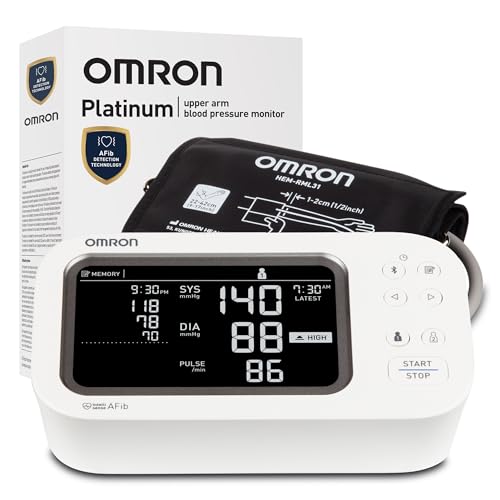
OMRON Platinum Upper Arm BP Monitor
The Strengths Of Each Pick
The Greater Goods Upper Arm BP Monitor favors a practical setup over a crowded feature list. The supplied wall adapter, four AAA batteries, cuff, and travel case cover the basics, so you can begin checking at home or pack the monitor for a trip without assembling a separate accessory kit.
An irregular pulse indicator gives the display a little more context when a reading looks unusual. Compared with the app-heavy OMRON Bronze, this pick feels easier to approach as a dedicated household monitor, particularly for anyone who prefers a simple routine.
Positive Points
- The complete kit includes both plug-in and battery power options.
- A travel case makes storage and transport more practical.
- Additional cuff sizes are available through support for households with different arm sizes.
- The irregular heartbeat display provides a prompt during a measurement without turning the monitor into a diagnostic device.
Practical Considerations
- Confirm the cuff size before settling on the included version.
- Using the same arm and consistent cuff position makes repeated measurements easier to compare.
Key Specs
Made For
You get the most from this monitor if you want a straightforward upper-arm setup with flexible cuff sizing and both home and travel power options.
A Better Fit Elsewhere
The easy@Home Upper Arm BP Monitor suits households that need two onboard user profiles and manual phone-app entry without relying on built-in Bluetooth.
The OMRON Iron BP Monitor keeps daily operation to one button, which suits anyone building a blood pressure routine for the first time. Advanced Accuracy Technology supports the measurement process, while the display gives you clear feedback without requiring a phone.
Two practical prompts set it apart from the Greater Goods model. Body Movement Detection highlights movement that may affect a measurement, and Irregular Heart Beat Detection indicates an unusual pulse pattern during the reading, giving you a reason to repeat the check or speak with a healthcare professional.
Where It Helps
- One-touch operation reduces the learning curve for new users.
- Movement detection helps you recognize a reading taken with an unsettled arm.
- The heartbeat-pattern indicator adds useful context during routine checks.
- The wide-range D-ring cuff supports arm circumferences from 9 to 17 inches.
Worth Noting
- The 9-to-17-inch cuff makes fit a decisive pre-purchase check.
- Those who want automatic phone syncing may prefer a monitor with direct Bluetooth support.
Right Fit
You will appreciate this model if you want a simple upper-arm monitor with movement and heartbeat-pattern prompts but no dependency on a phone app.
Consider Something Else When
The OMRON Bronze BP Monitor is a stronger fit for people who want Bluetooth syncing, unlimited app storage, and shareable trend reports.
Tracking a condition over weeks calls for more than isolated numbers, and the OMRON Bronze BP Monitor places app access near the center of the experience. Bluetooth sends readings to OMRON connect, where you can review unlimited entries, examine trends, and create reports to share with a healthcare professional.
The monitor also retains 14 readings on the device, which preserves some recent context when your phone is not nearby. Compared with the OMRON Iron, the added connectivity and hypertension indicator make this the more useful choice for organized, long-term tracking.
Where It Excels
- Bluetooth removes manual entry from your app-based routine.
- Unlimited app storage expands beyond the 14 onboard readings.
- Apple Health and Google Fit compatibility support familiar health platforms.
- A hypertension indicator provides an elevated-reading prompt.
- Shareable reports help organize information for healthcare appointments.
Trade Offs
- Unlimited storage depends on using the connected app.
- The included cuff fits arms from 9 to 17 inches, so check your measurement before ordering.
Quick Facts
Built With In Mind
This model fits people who want automatic phone syncing, broader report sharing, and a clear picture of changes over time.
Where A Sibling Pick Shines
The Checkme Bluetooth Upper Arm Blood Pressure Monitor for iOS & Android may suit you better when rechargeable portability and a compact phone-centered design matter more than onboard memory.
A shared monitor becomes awkward when each person’s readings are mixed together, so the easy@Home Upper Arm BP Monitor separates storage for two people. Each profile holds 60 measurements, and the backlit screen keeps the numbers visible during early-morning or evening checks.
The monitor also averages the latest three readings, which can give you a more stable figure to record. Its wide cuff is the practical standout, spanning 22 to 42 centimeters, or 8.66 to 16.53 inches, so you can check arm size before placing the order.
Useful Strengths
- Two separate profiles prevent household readings from getting mixed together.
- Three-reading averaging gives you another way to interpret repeated measurements.
- A backlit display makes the systolic and diastolic numbers easier to read in dim conditions.
Some Limits To Know
- The monitor is not Bluetooth-enabled, so MyHeartPal entries require manual transcription.
- The color-coded hypertension display simplifies interpretation but still leaves you responsible for understanding the categories.
- Four AA batteries make wall-free operation possible, though replacements become another household item to track.
Feature Snapshot
Shared-Space Pick
You will find this model especially useful when two people need independent profiles, broad cuff coverage, and a large display in one monitor.
Another Choice May Suit
The OMRON Platinum Upper Arm BP Monitor offers a better fit for couples who want automatic phone syncing alongside separate onboard profiles and AFib detection.
The Checkme Bluetooth Upper Arm Blood Pressure Monitor for iOS & Android is built around mobility and phone-based organization. Its listing describes readings in 30 seconds, built-in history, and an app for iOS and Android, which makes it a natural fit for checking away from a permanent bathroom counter.
Rechargeable power adds another layer of convenience. One full charge is stated to last up to three months, and the phone-like size makes the monitor easier to pack than a larger home setup, especially for frequent travelers.
Features That Help
- Bluetooth app support creates a direct route from readings to phone records.
- The stated 30-second measurement time suits quick morning or evening checks.
- Built-in storage keeps recent history on the monitor.
- Rechargeable power removes the need to keep spare batteries in the travel bag.
Details To Watch
- The strongest tracking workflow depends on having your phone nearby.
- The 30-second figure is a listed measurement time, so your own routine may feel slightly different.
Core Details
On-The-Go Choice
You will like this monitor if you regularly measure away from home and prefer a compact rechargeable device that sends readings to your phone.
Reach For A Different Pick When
The Greater Goods Upper Arm BP Monitor is a better fit for travel setups that prioritize replaceable batteries, a wall adapter, and a dedicated storage case.
Blood pressure and an EKG answer different questions, and the OMRON Complete 2-in-1 BP Monitor + EKG brings both into one device. The upper-arm measurement provides cuff-based blood pressure data, while the EKG function adds a separate view of heart rhythm for discussions with a healthcare professional.
Up to 90 readings can be stored for progress tracking, giving you a more substantial onboard history than the OMRON Iron. Compared with the Bronze, however, this model shifts toward a broader measurement setup rather than phone-centered trend storage.
Why It Works Well
- Combining blood pressure and EKG functions reduces the need for separate devices.
- Ninety stored readings create a useful recent history for daily tracking.
- The EKG measurement provides additional rhythm information beyond a blood pressure number.
- Advanced Accuracy Technology supports both parts of the monitoring setup.
Possible Compromises
- The broader feature set may be unnecessary for a routine focused only on blood pressure.
- Onboard storage is convenient, but the Bronze provides a stronger app-based history workflow.
Professional Pick
You gain the most from this model when you want a home setup that records both blood pressure and EKG information without maintaining two separate units.
Look Elsewhere When
The OMRON Bronze BP Monitor suits people who prioritize Bluetooth syncing, unlimited app storage, and trend reports over combined EKG measurement.
The OMRON Platinum Upper Arm BP Monitor builds on the dual-user approach of the easy@Home model with a more advanced rhythm focus. AFib Detection Technology screens for unusual heart rhythms during blood pressure measurements, giving the display a more useful prompt when a pattern needs attention.
Each of the two user profiles can hold 100 readings, which creates substantial onboard history for couples or family members. That makes it a thoughtful option for shared monitoring, although you will need to establish clear profiles from the beginning to keep the records separated.
Bright Spots
- AFib detection adds a rhythm-related prompt to standard blood pressure checks.
- Dual-user support separates records for two household members.
- One hundred readings per user provide a generous onboard history.
- Advanced Accuracy Technology supports the measurement system.
- The upper-arm format suits a familiar home monitoring routine.
Points To Note
- AFib detection is a screening prompt rather than a diagnosis.
- Dual-user organization takes a little more attention during setup than a single-profile monitor.
The Key Facts
Whose Shelf It Belongs On
This monitor fits couples or households that want separate profiles, generous onboard memory, and AFib detection in one upper-arm device.
Swap It Out When
The easy@Home Upper Arm BP Monitor is a better fit for shared family use that values a broader cuff range, a backlit display, and manual app entry.
What Matters Most in an Advanced Home Monitor
Cuff fit comes before extra features
An upper-arm cuff must fit the intended user correctly, so measure your arm and compare it with the stated range before ordering. The easy@Home model covers 22 to 42 centimeters, while several OMRON choices specify 9 to 17 inches; a roomy cuff is not a substitute for a secure fit.
Decide how much history you need
Onboard memory is useful when you want recent readings without opening an app. Dual-user storage helps couples keep records separate, while Bluetooth models offer a more continuous paper trail through synchronized phone records.
Choose prompts that match your routine
Movement detection, irregular-heartbeat flags, hypertension indicators, and AFib detection each provide a different type of feedback. You do not need every prompt, and a simpler display can make daily use more consistent.
Account for power and portability
Rechargeable power suits travel, while replaceable batteries or an included adapter may fit a permanent home setup. The travel case, cuff range, and required connection method should match where you plan to take each measurement.
Key Details That Change the Decision
Mistakes Worth Dodging
Avoid choosing by the longest feature list, and do not ignore cuff size. Compare the display, storage method, power source, and connection requirements with your actual routine before deciding which details will matter after the first week.
What Separates Premium From Basic
Premium models tend to add more detection prompts, profiles, onboard history, or connectivity. Those additions are worthwhile when you need a detailed record or a second user, while a simpler monitor may serve a single-person routine more easily.
Frequently Asked Questions
Is an upper-arm blood pressure monitor easier to use than a wrist model?
Upper-arm monitors generally require less wrist positioning, so you place the cuff on the arm, sit comfortably, and start the measurement. Wrist models can be more compact, but their readings are more sensitive to position and movement.
How tight should a blood pressure cuff be?
The cuff should sit snugly over a bare upper arm without pressing painfully into the skin. Its stated arm range should match you, and the tube should remain in the position shown in the instructions.
What does an irregular heartbeat indicator mean?
The indicator shows that the monitor noticed an unusual pulse pattern during a measurement. A repeated result can be worth discussing with a healthcare professional, but the monitor does not diagnose the cause.
Is Bluetooth necessary for tracking blood pressure trends?
Bluetooth is useful when you want readings transferred to a phone automatically. Manual entry or onboard memory can still support tracking, although you will need to enter each reading yourself.
Can one monitor store readings for two people?
Several choices support two onboard profiles, including the easy@Home Upper Arm BP Monitor and OMRON Platinum Upper Arm BP Monitor. Separate profiles keep household records from being combined, while connected models can add phone-based organization.
Closing Remarks
The right advanced monitor depends less on having the longest feature list and more on matching cuff fit, storage, and feedback to your routine. Start with the measurements you actually need, then decide whether connectivity, multiple profiles, or an EKG function will make your daily process clearer.
