Your stride can feel different from one shoe to the next, especially when your arches roll inward during impact. Arch support means a shoe insert that reshapes the space beneath your foot, while overpronation describes that inward rolling. The right insole depends on your arch shape, running volume, shoe type, and how much structure you want underfoot.
The Shortlist At A Glance
PickWhy We Picked ItBest ForAction

Top PickSuperfeet Run Support Medium Arch Insoles
Medium-arch support for daily runs
Runners with medium arches
Heavy Duty PickPowerStep Pinnacle Maxx Insoles for Flat Feet, Overpronation, Angled Heel
Stable angled-heel correction
Flat-footed stability seekers
Fitness FocusPowerStep Pulse Maxx Running Insoles for Overpronation, M 6-6.5 / W 8-8.5
Rigidity tuned for running
Overpronating distance runners
Space SaverSpenco Rx Orthotic 3/4-Length Shoe Insoles
Three-quarter-length support
Walkers needing roomier shoes
Performance LeaderSof Sole High Arch Foam Insoles
Full-length cushioning for high arches
Men with high arches
![]()
Everyday FavoriteSuperfeet Casual Women’s Easyfit Insoles
Women’s casual-shoe support
Women in flat shoes
![]()
Well Rounded PickPowerStep Pinnacle Low Arch Insoles for Flat Feet, Overpronation, Heel Support
Low-arch stability with cushioning
Flat feet and low arches
What Each Pick Brings To The Table
A medium arch often needs support that feels present without taking over the shoe. The Superfeet Run Support uses a semi-firm underfoot feel, giving your foot a defined platform as you move through a run. Runners with medium arches may find that balance especially useful in shoes where the original footbed feels too soft.
Compared with the low-arch PowerStep Pinnacle Low later in this list, this insert follows a more pronounced arch shape. It also feels less rigid than the running-focused PowerStep Pulse Maxx, based on its semi-firm cushioning profile. The honest read is that it suits regular runs, brisk walks, and long days where moderate structure is useful.
Noteworthy Benefits
- ✓Medium arch height targets the space beneath a moderately curved foot.
- ✓Semi-firm cushioning gives each step a more defined surface.
- ✓The focused profile suits everyday running shoes without extra bulk.
- ✓Men’s and women’s sizing ranges make the fit easier to narrow down.
Things To Consider
- •Low or unusually flat feet may prefer a lower arch contour.
- •Semi-firm support can take several runs to feel familiar.
Key Specs
| | Feature | Specification | Why It Matters |
|---|
| Arch height | Medium | Matches moderately curved feet. |
| Underfoot cushioning | Semi-firm | Balances support and cushioning. |
| Sizing | Men’s 2.5-5; women’s 4.5-6 | Helps narrow the correct size. |
Who It Suits Best
You benefit most from these insoles when you run regularly, have medium arches, and want structured support without the very rigid feel of a motion-control insert.
Where Another Pick Suits Better
PowerStep Pinnacle Low Arch Insoles are a better fit for you when low arches and pronounced overpronation are your main concerns.
Check Latest Price
Some shoes need more than a gentle contour, especially when your foot moves inward noticeably. The PowerStep Pinnacle Maxx combines firm, flexible construction with an angled heel for a more directed response. You may find that structure particularly useful during long runs or on days when your feet feel less settled.
Its emphasis differs from the Superfeet Run Support. The Superfeet model centers on a medium arch and semi-firm cushioning, while the Pinnacle Maxx prioritizes stability for flat feet and overpronation. People who spend substantial time standing or walking may also appreciate the steadier platform, although the firmer feel is intentional.
The Practical Payoff
- ✓The angled heel gives inward-rolling feet a more structured platform.
- ✓Firm yet flexible construction balances stability with movement.
- ✓Men’s and women’s versions serve a broad range of shoe sizes.
- ✓Its substantial support suits demanding walking and running schedules.
Trade Offs
- •Its firm profile may feel more intrusive than a soft foam insert.
- •The angled heel is less appropriate for feet that do not roll inward.
Built With In Mind
You are the best match for this insert if flat feet and inward rolling are recurring concerns during long, active days.
Consider Something Else When
PowerStep Pulse Maxx Running Insoles suit you better when your priority is a rigid structure developed specifically for running shoes.
View Latest Price
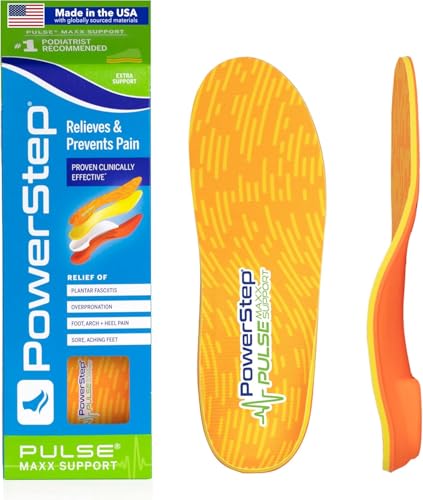
Running shoes have a different shape from casual footwear, and the PowerStep Pulse Maxx is built around that difference. Its rigid shell and angled heel deliver structured motion control for feet that roll inward. Runners with pronounced overpronation may find this focused approach more relevant than a general-purpose foam insert.
The trade-off appears in its firmness. Compared with PowerStep Pinnacle Maxx, which serves broader daily wear, the Pulse Maxx narrows its purpose toward running and advanced athletic footwear. You may notice its rigidity more during shorter runs, while higher-mileage sessions can make that stability easier to appreciate.
A Favorable Mix
- ✓The rigid shell provides a stable base for repeated foot strikes.
- ✓An angled heel supports alignment when your foot rolls inward.
- ✓The design is specifically shaped for running shoes.
- ✓Polyester construction gives the insert a defined overall structure.
Points To Note
- •The rigid shell can feel more noticeable than a flexible insole.
- •The listed size covers men’s 6-6.5 and women’s 8-8.5.
Technical Sheet
| | Feature | Specification | Why It Matters |
|---|
| Shell | Rigid | Creates a stable platform during running. |
| Heel | Angled | Supports feet that roll inward. |
| Material | Polyester | Forms the main insert structure. |
| Selected sizes | Men’s 6-6.5; women’s 8-8.5 | Identifies this variant’s fit. |
Right Fit For
You benefit most from this model when running is your primary activity and your foot visibly rolls inward during the stride.
Not Your Match When
Spenco Rx Orthotic 3/4-Length Shoe Insoles are a better fit for you when you want supportive cushioning without occupying the full length of the shoe.
View on Amazon
A three-quarter-length insert leaves the front portion of the shoe open, which can make it easier to pair with roomier footwear. The Spenco Rx combines that shorter format with a customizable heel and arch plate. You may find it useful for walking shoes or casual pairs where full-foot coverage feels unnecessary.
Unlike the full-length Superfeet Run Support, this model concentrates its support across the heel and midfoot. Spencore cushioning softens the feel beneath each step, while the supportive plate is designed to move with your foot. The practical trade-off is less forefoot coverage in exchange for a less crowded shoe interior.
Key Advantages
- ✓The three-quarter length preserves space near the toes.
- ✓Customizable heel and arch components accommodate individual contours.
- ✓Spencore cushioning softens contact during walking and standing.
- ✓Nylon construction creates a practical foundation for the insert.
Worth Noting
- •Forefoot coverage is less complete than with a full-length model.
- •Adjustable components may need time to settle into your shoes.
Feature Snapshot
| | Feature | Specification | Why It Matters |
|---|
| Length | Three-quarter length | Leaves the forefoot less covered. |
| Support system | Customizable heel and arch plate | Concentrates support around the midfoot. |
| Material | Nylon | Forms the supporting insert structure. |
Made For
You are the right match for these insoles when walking and standing dominate your day and roomier footwear matters.
Look Elsewhere When
Superfeet Casual Women’s Easyfit Insoles are a better fit for you when your main shoes are flat women’s styles or low-heeled boots.
View Latest Price
Not every arch needs a low, flat-footed shape. The Sof Sole Insoles use a high-arch profile with full-length foam coverage, making them a distinct choice for feet with a pronounced arch. You may find the additional coverage useful in sneakers, walking shoes, and other roomy footwear.
This design differs from the Superfeet Run Support, which uses a medium and semi-firm profile. The Sof Sole offers more coverage and a different arch target rather than the same support in a different package. For flat feet, that distinction matters because a high arch can leave too much space between the insert and your foot.
Notable Upsides
- ✓High-arch geometry serves feet with a pronounced curve.
- ✓Full-length coverage fills the entire footbed area.
- ✓Foam construction gives the insert a softer overall character.
- ✓The men’s design suits footwear without a narrow interior.
Where It May Fall Short
- •The high-arch profile is less targeted to low or flat arches.
- •Full-length coverage can feel excessive in very shallow shoes.
Who Should Grab It
You should choose these insoles when your foot has a clearly high arch and you want full-length foam coverage beneath it.
A Better Fit Elsewhere
Superfeet Run Support Medium Arch Insoles suit you better when your arches are moderate and you want a semi-firm running profile.
View on Amazon
Flat shoes and low-heeled boots leave little room for a bulky insert, which makes the Superfeet Casual Women’s Easyfit a practical choice. Its women’s-specific design adds support without using a pronounced heel wedge. You may find it especially useful for commuting, errands, and full days spent in lighter footwear.
Plush microsuede adds a softer contact surface than the semi-firm Superfeet Run Support, while the shorter silhouette fits within casual shoes more easily. The main limitation appears with higher heels, since the stated shoe range covers footwear with a one-inch heel or less. This is a lifestyle and walking pick rather than a rigid running insert.
Reasons It Performs
- ✓A women’s-specific shape supports the intended foot profile.
- ✓Plush microsuede provides a soft contact surface.
- ✓The low-profile format fits flat shoes and low-heeled boots.
- ✓Its moderate support suits everyday walking and standing.
Soft Spots
- •Footwear with a heel above one inch falls outside the stated range.
- •The casual profile offers less structure than the Pulse Maxx.
Quick Facts
| | Feature | Specification | Why It Matters |
|---|
| Top material | Plush microsuede | Creates a softer surface against the foot. |
| Design | Women’s specific | Matches the intended foot profile. |
| Shoe range | Flat shoes and boots with a 1-inch heel or less | Shows where the low-profile fit applies. |
The Right Fit
You are the best match for these insoles when you wear flat shoes or low-heeled boots and want supportive cushioning for everyday activity.
Where A Sibling Pick Shines
Spenco Rx Orthotic 3/4-Length Shoe Insoles are a better fit for you when a customizable heel and arch plate matter more than a women’s-specific casual design.
View Latest Price
Low arches can leave your foot feeling less contained, and the PowerStep Pinnacle Low addresses that with a contoured low-arch profile. Its deep heel cradle provides a stable base for flat feet and overpronation. You may find the combination useful across running, walking, and long periods of standing.
Compared with the medium-arch Superfeet Run Support, this model follows a lower contour and places more emphasis on heel containment. Dual-layer cushioning adds a softer layer beneath the firm, flexible structure. The stated handling of more than 250 pounds may also make it worth considering for heavier users, though the firm feel remains the central trade-off.
Features That Help
- ✓The low arch contour sits closer to flatter feet.
- ✓A deep heel cradle adds containment during forward movement.
- ✓Dual-layer cushioning softens the firmer supporting structure.
- ✓The design handles body weights of 250 pounds and more.
Possible Compromises
- •The firm construction may feel more substantial than foam-only inserts.
- •A high or medium arch may need more contour beneath the midfoot.
Core Details
| | Feature | Specification | Why It Matters |
|---|
| Arch profile | Low | Matches flatter foot contours. |
| Heel | Deep cradle | Adds stability around the heel. |
| Cushioning | Dual layer | Combines structure with a softer underfoot layer. |
| Stated weight handling | 250+ pounds | Extends the intended user range. |
Whose Shelf It Belongs On
You benefit most from these insoles when you have flat or low arches and need both heel containment and everyday cushioning.
Reach For A Different Pick When
PowerStep Pulse Maxx Running Insoles suit you better when a rigid running shell and angled heel are your main requirements.
View on Amazon
What To Match Before Your Next Run
Arch height provides the first filter, but it rarely tells the whole story. Medium arches generally suit a moderate contour, while low or flat feet may need a shallower shape and stronger heel containment. A high-arch insert leaves more space under the middle of the foot, which is why the Sof Sole option belongs with high-arch users rather than everyone.
Your running shoes matter too. The PowerStep Pulse Maxx is shaped specifically for running footwear, while the Superfeet Casual Women’s Easyfit is designed for flat shoes and boots with a one-inch heel or less. Fit comes before appearance: remove the existing factory insert, note the available depth, and keep the replacement within the shoe’s expected footprint.
Cushioning and control describe different priorities. Soft foam may feel comfortable during ordinary walking, whereas a rigid shell and angled heel create a more directed response for inward rolling. For high weekly mileage, you may prefer the running-specific PowerStep design, while a mixed training schedule can make a more moderate Superfeet profile easier to wear.
Persistent discomfort deserves an assessment from a qualified healthcare professional. An insole can change how a shoe feels, but it cannot identify the source of recurring symptoms on its own.
A Few Details That Change the Fit
Common Shopping Slip Ups
Arch category is only one part of the equation, so choosing solely by a label can leave out important fit details. Measure both feet, check the inside width of your shoes, and compare the insole shape with the original footbed. Your usual running shoes should be the main test since replacing the insert in one pair may not represent how another fits.
What Separates Premium From Basic
Higher-tier inserts add features such as a rigid shell, an angled heel, deeper heel cradles, or multiple cushioning layers. Those details make sense when you need specific motion control or have a pronounced arch pattern. A simpler foam insert may be enough for casual walking, while a structured model is more relevant to frequent running and substantial overpronation.
Frequently Asked Questions
QAre arch supports suitable for every type of flat feet?
No, flat feet can have different arch heights, heel positions, and movement patterns. A low-arch model such as the PowerStep Pinnacle Low may suit some feet, while the medium-arch Superfeet Run Support fits a different profile.
QWhich insoles are the most focused on running?
The PowerStep Pulse Maxx is designed specifically for running shoes and uses a rigid shell with an angled heel. Its structure is more specialized than the casual or general-purpose options in this list.
QCan women use the men’s insoles?
Some PowerStep listings provide separate men’s and women’s sizing, and the Superfeet Casual Easyfit is explicitly designed for women’s feet. Compare the available size range and shape before placing an order.
QHow much space should be left above an insole?
The replacement should fit beneath the footbed without creating a raised platform that makes the shoe feel uneven. A three-quarter-length option such as the Spenco Rx may suit roomier shoes, while full-length models need more complete coverage.
QShould I use different insoles for running and casual shoes?
Using different insoles can help because running shoes and casual shoes have different shapes and heel heights. The PowerStep Pulse Maxx suits running footwear, while the Superfeet Casual Women’s Easyfit is intended for flat shoes and low-heeled boots.
Closing Remarks
The right insert starts with your arch shape and ends with the shoes you actually wear. Medium-arch runners may favor the Superfeet Run Support, flat feet and overpronation point toward PowerStep, and casual footwear calls for a lower-profile option. Choose the design that matches your stride, then give the shoe and insert a real walk before taking them farther.