

A reliable arm blood pressure cuff starts with a fit that suits your upper arm, not a long feature list. Daily users need a snug, correctly sized cuff, while households sharing a monitor also need separate profiles, readable displays, and a practical way to review changes over time.
The seven options below cover straightforward one-button monitors, app-connected models, replacement cuffs, dual-user devices, and a talking monitor for spoken results. Their useful differences come down to cuff range, memory capacity, connectivity, and how easily each display can be read.
The Shortlist At A Glance

OMRON Bronze Monitor with Upper Arm Cuff
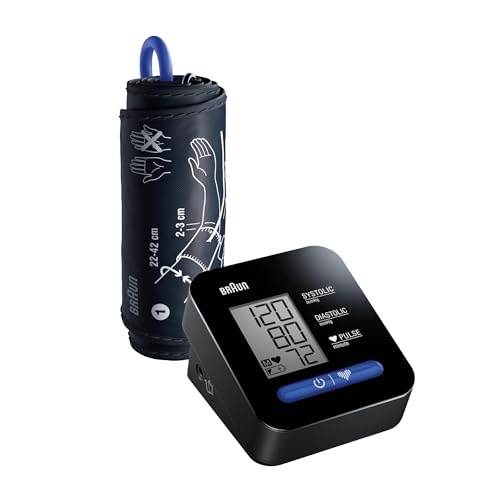
Braun ExactFit 1 Monitor BUA5000

HealthTree Upper Arm Monitor, 8.7–16.5 in Cuff

A&D Medical UA-280A Medium Cuff

OMRON Complete 2-in-1 Monitor + EKG
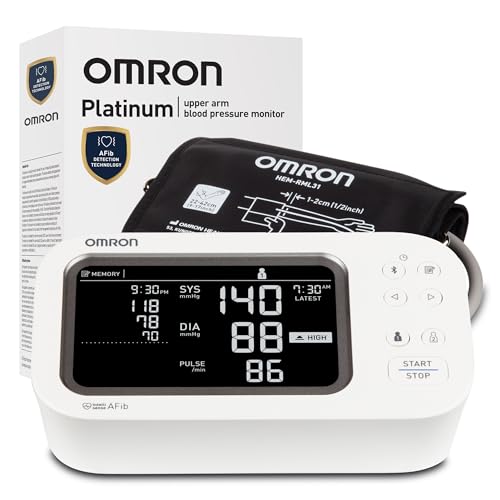
OMRON Platinum Monitor & Upper Arm Cuff

Maynovia Talking Upper Arm Monitor
A Closer Look At Each Pick
The OMRON Bronze fits neatly into a morning routine where you want more than a single number. Its wide-range D-ring cuff accommodates upper arms from 9 to 17 inches, while the included case, batteries, and quick guide make setup straightforward.
Bluetooth connectivity gives this model an edge for anyone who wants a longer record of readings. The cuff also supports irregular-heartbeat detection and a hypertension indicator, though these on-screen signals are indicators rather than substitutes for professional interpretation.
What It Does Well
- Stores 14 measurements directly on the monitor.
- Syncs readings through the OMRON Connect app.
- Supports Apple Health and Google Fit.
- Offers both irregular-heartbeat and hypertension indicators.
Points To Note
- The 9-inch cuff minimum may not suit smaller arms.
- App setup adds a step compared with screen-only models.
Feature Snapshot
Who It Suits Best
You benefit most from the OMRON Bronze if you want connected trend tracking without moving to a more complex upper-arm model.
A Better Fit Elsewhere
The Braun ExactFit 1 Monitor BUA5000 suits you better when one-button operation and a screen-only routine matter more than app connectivity.
For a first home monitor, fewer controls can be reassuring. The Braun ExactFit 1 starts with one button and presents systolic pressure, diastolic pressure, and pulse readings on a large display, reducing the need to learn a complicated menu before each check.
Its 8.6-to-16.5-inch universal cuff closely matches the range offered by the HealthTree model, but the Braun takes a simpler storage-first approach. The latest measurement remains available for recall, making this a practical choice for a person checking at the same table each morning.
Benefits That Matter
- One-button operation keeps daily checks approachable.
- The large display favors quick result reading.
Trade Offs
- Only the latest result is stored on the device.
- No app-based history is listed for this model.
- The cuff range stops at 16.5 inches.
Quick Facts
Made For
You will find the Braun ExactFit 1 especially useful as a first monitor or for anyone who prefers a display and a single control.
Consider Something Else When
The HealthTree Upper Arm Monitor offers a better fit for a shared household that needs two separate memory profiles and a backlit display.
A shared monitor becomes much more useful when each person has a separate profile. The HealthTree model stores 90 readings for each of two users and adds date and time stamps, so a couple can review separate histories without continually overwriting the same slot.
The oversized backlit display is another practical strength, particularly during a dim bedroom check or for a user who has trouble reading small characters. Compared with the Braun ExactFit 1, this model emphasizes history and two-user organization rather than minimal operation.
Positive Takeaways
- Two users receive 90 readings each.
- Date and time stamps organize the stored history.
- Backlighting improves visibility in low light.
- The display presents blood pressure, pulse, and heartbeat alerts.
- One-touch operation simplifies repeated measurements.
Small Caveats
- Its 16.5-inch maximum cuff size requires a fit check before purchase.
Right Fit For
You get the most from the HealthTree model when two people regularly use the same monitor and want separate on-device histories.
Another Choice May Suit
The OMRON Bronze Monitor with Upper Arm Cuff fits you better when phone-based history and health platform compatibility are central to your routine.
Not every cuff problem requires another monitor. The A&D Medical UA-280A is a medium replacement cuff for people who already own one of three listed A&D models and need a better-fitting arm band.
Its 9.4-to-14.2-inch range makes it a sensible second cuff for a household with different arm sizes. The adjustable, latex-free construction also allows the same monitor to be used by two people, provided each receives a cuff that fits correctly.
A Few Highlights
- Works with the UA-789AC, UA-787EJ, and UA-705V.
- Supports two users with different arm sizes.
- The latex-free cuff adjusts around the upper arm.
Worth Bearing In Mind
- It is a replacement cuff, not a complete monitor.
- Compatibility is limited to the three named A&D models.
- Arms over 14.2 inches need a larger cuff.
Feature Card
Built With In Mind
You need this A&D Medical cuff when you own a compatible A&D monitor and want a medium replacement or a second-user fit.
Look Elsewhere When
The Braun ExactFit 1 Monitor BUA5000 is the better choice when you need a complete monitor and cuff rather than a replacement component.
The OMRON Complete 2-in-1 expands the usual home check by combining an upper-arm blood pressure measurement with an EKG function, which records the heart’s electrical activity. That added measurement makes the device most relevant to people who want more information to discuss during routine clinical visits.
It stores up to 90 readings, giving you a useful record between appointments. The honest distinction from the OMRON Bronze is function: this model prioritizes the combined blood pressure and EKG routine rather than app-based trend storage.
Useful Touches
- Combines blood pressure and EKG functions.
- Stores up to 90 measurements.
- Uses OMRON Advanced Accuracy technology.
- Offers a broader home measurement routine.
Possible Compromises
- The combined routine takes more attention than a basic cuff.
- Its 90-reading total is below the Platinum model’s per-user storage.
Who Will Love This
You will find this OMRON useful when adding an EKG function to your home routine matters more than app-based history or a two-person memory system.
Where A Sibling Pick Shines
The OMRON Platinum Monitor & Upper Arm Cuff suits you better for dual-user tracking, 100 readings per person, and AFib detection.
Shared monitoring becomes more organized with the OMRON Platinum, which keeps separate histories for two people. Its capacity reaches 100 readings per user, so both profiles can retain a substantial record without constantly overwriting older entries.
AFib detection adds a rhythm-related screening signal during checks, while Advanced Accuracy technology anchors the basic measurement function. Compared with the OMRON Complete 2-in-1, this model shifts the emphasis from EKG recording toward multi-user history and AFib detection.
Points In Its Favor
- Supports two separate user profiles.
- Stores 100 readings for each person.
- Includes AFib detection technology.
- Uses OMRON Advanced Accuracy technology.
- Suits a shared household better than single-user models.
Details To Watch
- Two-user storage adds profile management to the routine.
Technical Highlights
Whose Shelf It Belongs On
You benefit most from the OMRON Platinum when two people need separate histories and rhythm-related indicators in one home setup.
Reach For A Different Pick When
The OMRON Complete 2-in-1 Monitor + EKG fits you better when recording an EKG alongside blood pressure is the priority.
Reading a small display becomes less demanding when the monitor speaks the result aloud. The Maynovia Talking Upper Arm Monitor offers English or Spanish audio with six volume levels, giving you a practical way to follow systolic pressure, diastolic pressure, pulse, and the time.
A large backlit LCD provides a second route to the same information, and one-touch operation keeps the controls uncomplicated. Unlike the screen-focused Braun ExactFit 1, this model gives spoken results equal standing in the measurement flow.
Where It Helps
- Spoken results work in English and Spanish.
- Six volume levels support different listening preferences.
- The backlit display remains readable in dim rooms.
- One-touch operation simplifies routine use.
Less Ideal Details
- Spoken output may not suit a shared quiet room.
- The cuff tops out at 16.5 inches.
Feature Facts
The Right Fit
You benefit most from the Maynovia model when spoken results make routine readings easier to follow or hear.
Swap It Out When
The HealthTree Upper Arm Monitor is the better fit for a shared household that prioritizes two profiles and a backlit screen over spoken output.
Cuff Size and Features That Shape Daily Use
A dependable upper-arm measurement begins with the correct cuff size. Measure your upper arm at the midpoint between shoulder and elbow, then compare that circumference with the manufacturer’s stated range. A cuff that is too loose or too tight can affect the reading, so fit deserves more attention than extra buttons.
Find the Correct Cuff Range
The OMRON Bronze and Maynovia monitors cover 9 to 17 inches and 8.6 to 16.5 inches respectively. The HealthTree model and Braun ExactFit 1 also reach 16.5 inches, while the A&D Medical UA-280A replacement stops at 14.2 inches. Measure first rather than assuming a universal cuff will fit.
Decide How You Will Track Results
The OMRON Bronze stores 14 readings and adds Bluetooth history through its app. HealthTree provides 90 readings for each of two users, while the OMRON Platinum retains 100 per person. The Braun keeps only the latest result, making manual record keeping more important for that workflow.
Look Beyond the Display
A large display helps in dim conditions, but the Maynovia model adds spoken English and Spanish results with six volume levels. That distinction matters for a user who has difficulty reading small characters or prefers audio guidance during a measurement.
Check Compatibility Before Ordering a Cuff
The A&D Medical UA-280A is a replacement component rather than a complete monitor. It supports the UA-789AC, UA-787EJ, and UA-705V. Confirm your existing model and the connector before ordering, especially when a second user needs a different cuff size.
Where The Extra Monitor Features Matter
Common Shopping Slip Ups
A cuff-size mistake is easy to make because many models are described as universal. Measure your arm rather than estimating, and check whether the stated range uses inches or centimeters. Also confirm that a replacement cuff supports your exact monitor model, since similar-looking connectors may belong to different product families.
What The Higher Tier Buys
Added storage, connectivity, and specialized indicators expand what a monitor can do with the same cuff. A connected model suits trend tracking, dual-user storage separates household records, and EKG or AFib features add information to discuss with a healthcare professional.
Frequently Asked Questions
How Do I Choose the Right Cuff Size?
Measure your upper arm midway between your shoulder and elbow, then compare the circumference with the listed cuff range. A snug fit is essential because an unsuitable size can affect measurement consistency.
Do These Monitors Fit Smaller Upper Arms?
Several models start around 8.6 or 8.7 inches, while the OMRON Bronze begins at 9 inches. Measure your arm before choosing, particularly if you are close to the lower end of a listed range.
Can Two People Use the Same Monitor?
The HealthTree and OMRON Platinum models include separate user profiles, and the A&D Medical cuff can serve as a second cuff for compatible monitors. Each person still needs a cuff that fits their arm correctly.
Is a Talking Monitor Useful?
The Maynovia model reads results aloud in English or Spanish and offers six volume levels. It suits you better if spoken output makes the routine easier to follow than relying on the display alone.
Do I Need an App to Track Readings?
An app helps with longer-term phone-based storage, as on the OMRON Bronze, but it is not essential for displaying a measurement. Choose based on whether you want connected records or prefer keeping the routine on the monitor itself.
The Takeaway
Start with cuff fit, then choose the features that match your routine. A simple one-button model suits solo users, dual profiles help shared households, connected storage supports trend tracking, and spoken results improve access. Check the arm range and monitor compatibility before ordering, and choose the option that makes regular use easiest to maintain.
