

A hospital bedside, a busy home, or a long day out can leave simple requests harder to express. Augmentative communication devices help you point, write, select symbols, or trigger recorded speech, while wireless intercoms support room-to-room conversation across homes and offices. The right choice depends on the messages you need, the environment, and how much setup you want to manage.
A Side-By-Side Look


Geyoga Nonverbal Communication Cards

AbleNet iTalk2 Portable AAC Two-Message Communication Device
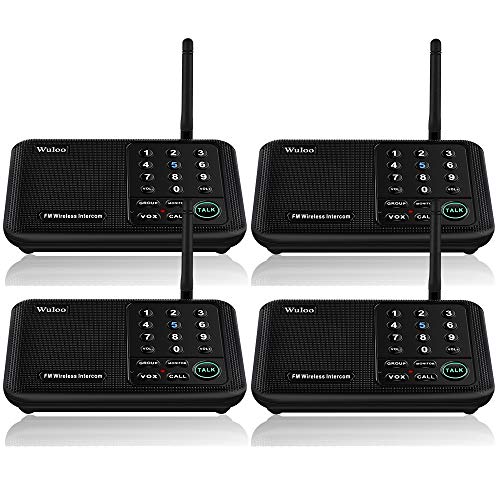
Wuloo Wireless Home Intercom 5280-Foot Range 10 Channels 3 Codes 4-Unit Black Set

Wuloo Wireless Home Intercom 1-Mile Range 22 Channels 100 Codes Display 3-Station Black Set
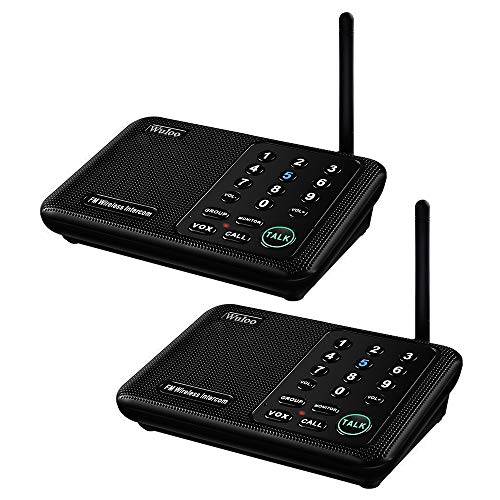
Wuloo Wireless Home Intercom 1-Mile Range 10 Channels 2-Station Black Set
A Deeper Look At The Lineup
A bedside board can turn a temporary need into a much easier exchange. You can write short prompts, needs, or questions on the dry-erase surface, then clear them for the next use. That directness makes the Vidatak EZ Board useful in care rooms, at a family table, or anywhere written communication takes less effort than sustained speech.
Unlike the symbol cards and recorded-speech options later in this list, this board places the message directly under your control. Each board arrives individually wrapped, which supports a clean handoff in shared care environments. The trade-off is that someone must be able and willing to write.
A Strong Showing
- Supports freely written messages rather than a fixed symbol set.
- The wipeable surface can be reused throughout the day.
- Individual wrapping suits controlled care and household setups.
Things To Consider
- Writing can be slower or less useful for someone with limited fine-motor control.
- The listing classifies it for single-patient use and says returns are not accepted, so verify your needs before ordering.
Quick Facts
Who It Suits Best
This board suits people who can write brief messages and need a reusable option for questions, comfort, or everyday needs.
A Better Fit Elsewhere
The Geyoga Nonverbal Communication Cards suit you better when pointing to familiar symbols is easier than writing.
A bright board laid on a table can turn a pointing motion into a complete message. These 12 dual-sided communication cards cover common needs through symbols, and their large format makes them easier to notice than a dense chart. For hospital visits, care conversations, or daily support at home, that visual approach can reduce the pressure to speak.
Compared with the Vidatak EZ Board, these cards call for less writing, though they offer less freedom for a sentence that is not pictured. The 300-gram paperboard and coated finish should handle regular handling, while marker notes can be wiped away. You may find that a small, personalized set of symbols works better for a particular routine.
Good Reasons To Consider
- Large, colorful symbols support quick visual recognition.
- Twelve boards support repeated use and individual placement around a room.
- The coated surface accepts marker notes and allows them to be erased.
- Dual-sided layouts make each board more useful without adding another sheet.
Minor Gripes
- The roughly 16.73-by-11.22-inch size needs suitable table or wall space.
- Fixed symbols cannot cover every personal message, so written supplements may still be needed.
- Twelve separate boards need a deliberate storage and care routine.
Feature Snapshot
Made For
These cards suit people who communicate reliably through pointing and need ready-made prompts for common needs.
Consider Something Else When
The AbleNet iTalk2 suits you better when audible recorded speech is more useful than visual symbols.
Two large switch tops make the iTalk2 easy to approach with a hand, finger, or supported pointing action. Pressing a button plays its recorded message through the built-in speaker, giving the person using it a voice-like way to share a phrase. That makes the device especially practical during school, therapy sessions, family meals, and community outings.
Unlike the Geyoga Nonverbal Communication Cards, this device produces sound rather than requiring someone else to read a board. You can record personal messages on each button and organize them across three recording levels. Two external switches can also be connected for alternative activation, though the setup may take some adjustment.
What Makes Sense
- Two customizable message buttons support personal phrases.
- The built-in speaker delivers audible messages without a separate screen.
- Its compact, lightweight body travels easily in a bag or on a wheelchair.
- Three recording levels provide more organization than a single pair of buttons.
Possible Compromises
- Two primary messages cannot cover a wide vocabulary without additional levels or switches.
- Recording and level selection require a setup process before regular use.
- The recording capacity of four minutes should be checked against your message length.
Technical Highlights
The Right Fit
This device suits people who benefit from consistent, audible messages and can reliably activate one of two large buttons.
Another Choice May Suit
The Vidatak EZ Board suits you better when written prompts offer more flexibility than recorded speech.
Moving between a bedroom, kitchen, garage, or office can become frustrating when someone cannot call out clearly. This four-station Wuloo system creates a private room-to-room voice channel, with a stated 5,280-foot range for homes spread across a wider floor plan. It also fits small offices where a quick call beats walking across the building.
These intercoms support spoken conversation rather than producing speech for a nonverbal person, so they work alongside AAC tools instead of replacing them. Ten channels and three digital codes help separate paired stations, which can be useful in a busy household. For most homes, four units offer a sensible balance between coverage and setup.
Strengths Worth Knowing
- Four black stations support several important rooms.
- The stated long range suits homes with separated wings, garages, or offices.
- Multiple channels and codes provide pairing options for different station groups.
- Wireless room-to-room calling avoids relying on wall wiring.
Practical Considerations
- This is a household voice intercom, not an AAC speech-generating device.
- Placing and charging four units adds more setup than a two-station system.
- Building materials and placement can affect real-world signal performance, so check your environment before purchase.
Whose Shelf It Belongs On
This set suits households or small offices that need private voice calls across four separate locations.
Where Another Pick Shines
The Wuloo 1-Mile Range 22-Channel system suits you better when greater channel control and a display matter more than four stations.
A home that spans several floors or a property with outbuildings needs more than a two-room call system. This three-station Wuloo set has a stated one-mile range, 22 channels, and 100 digital codes, giving you finer control over how station groups connect. The display adds visible feedback that can make channel or code adjustments less confusing.
Compared with the four-unit 5,280-foot set, this model offers more channel and code choices but includes one fewer station. That makes it appealing for a larger layout that needs organized communication more than it needs a fourth room covered. Its voice calls can support family members who can speak but struggle to be heard from another room.
Points In Its Favor
- The stated one-mile range suits properties with substantial separation between rooms.
- Twenty-two channels offer more grouping options than a 10-channel set.
- One hundred digital codes support organized station pairings.
- The display provides visual feedback during configuration.
Some Limits To Know
- Only three stations are included, so you cannot cover four separate locations.
- Wireless performance can vary with distance, walls, and interference.
- The larger channel and code system adds more configuration than a basic pair.
Key Product Details
Built With In Mind
This set suits larger homes, offices, or properties that need organized calls across three distant locations.
Look Elsewhere When
The four-unit 5,280-foot Wuloo set suits you better when covering more rooms matters than expanding channel choices.
Two stations are often enough for the practical need behind an intercom: answering from another part of a house. This two-unit Wuloo set pairs a one-mile stated range with 10 channels, supporting wireless communication between a living space and kitchen, office, or garage. Its smaller package makes it easier to introduce than a three- or four-station setup.
The trade-off appears in coverage. Unlike the four-station 5,280-foot set, you cannot place this system in three or four separate rooms, and its 10 channels provide fewer pairing options than the 22-channel model. For most two-location needs, though, the simpler arrangement may be the more practical fit, particularly in a home office or accessible living space.
Practical Advantages
- Two stations provide a straightforward room-to-room calling arrangement.
- The stated one-mile range covers widely separated areas.
- Ten channels offer more pairing flexibility than a single fixed channel.
- Wireless placement avoids running cables through the property.
Where It May Fall Short
- Only two locations can be included in the set.
- The product supports live voice calls rather than messages for a nonverbal person.
- Range is a stated specification, so walls and interference remain practical checks.
Who Will Love This
This set suits couples, roommates, or home offices that need voice communication between two distant locations.
Swap It Out When
The three-station 1-Mile Range 22-Channel Wuloo system suits you better when a display and more coded connections are valuable.
What Matters Before You Bring Home a Communication Aid
Match the output to the message
Written boards, visual cards, and recorded speech serve different needs. A writing board gives you freedom to form new messages, while symbol cards make familiar needs quicker to indicate. A speech-generating device adds audible output and can be especially useful when another person cannot read notes easily. For a medically complex communication plan, an appropriate specialist can help determine which format fits the person’s abilities and daily routines.
Account for access and mobility
Portability matters when communication needs follow someone throughout the day. A compact device with large activation targets may be easier to carry and press than a collection of wall-mounted boards. For wireless intercoms, station placement, charging access, and the distance between rooms deserve attention before setup begins.
Think about setup and care
Personalizing recorded messages takes planning, but it makes those buttons more useful for everyday needs. Wipeable boards need a nearby dry-erase marker, while symbol cards may need a clear place to stay flat or mounted. A three-station or four-station intercom involves more device placement and pairing than a two-station set, so a simpler system may suit a household better.
Common Mistakes and Upgrade Choices
Mistakes Worth Dodging
Do not judge a communication aid by its feature count alone. Test the real action with the intended person, from writing or pointing to pressing a switch or answering a station. Accessories and specialist guidance matter too, especially when speech, motor control, vision, or hearing needs shape the interaction.
What Separates Premium From Basic
A higher-tier setup usually adds recording capacity, display controls, more channels, codes, or stations. Those extras help when a person needs more message variety or a property needs more connection options. A simple board or two-station intercom can be the better fit when the intended task is narrow and straightforward.
Frequently Asked Questions
What is an augmentative and alternative communication device?
An augmentative and alternative communication device adds another way to express a message. Depending on the model, that may mean pointing to symbols, writing, pressing a button, or playing recorded speech.
Are communication cards useful for someone who cannot speak?
Yes, when the person can reliably point to or recognize the symbols they need. The Geyoga cards work best for common, familiar messages rather than arbitrary sentences.
Can the AbleNet iTalk2 work with external switches?
Yes, the device supports two external switches for alternative activation. Setup and switch compatibility should be confirmed with the appropriate communication specialist before regular use.
Which Wuloo intercom suits a large property best?
The three-station 1-Mile Range 22-Channel model offers the most detailed channel and code controls in this group. The four-station 5,280-foot set covers more locations, while the two-station version keeps the setup simpler.
Are wireless intercoms the same as AAC devices?
No. Wireless intercoms carry live spoken conversations between rooms, while AAC devices help a person express messages. In some homes, an intercom may complement an AAC setup, but it does not replace one.
Final Verdict
Start with the message someone needs to communicate most often, then match the format to their abilities and surroundings. Writing suits flexible prompts, cards suit quick pointing, and recorded speech adds audible messages. For room-to-room voice calls, choose two, three, or four stations according to the spaces you actually need to connect.
