

At 2 a.m., with a hungry baby on your arm, the right formula can feel like one less decision to wrestle with. Your priorities may include a soy-based option, organic ingredients, probiotics, or DHA and MFGM for infant development. The six formulas below cover distinct newborn-feeding needs, with clear differences in protein source, container size, and stage.
The Essentials At A Glance
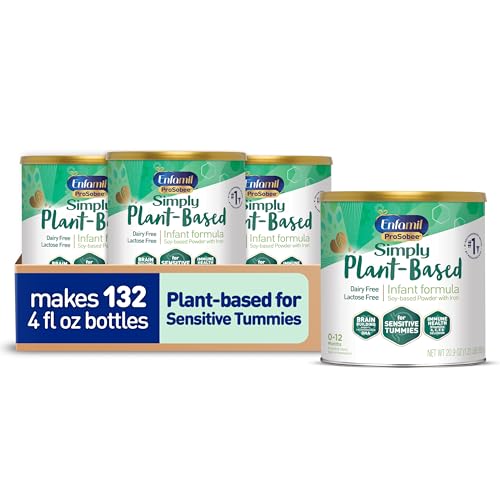
Enfamil Prosobee Four-Pack

Happy Baby Organics Stage 1 Infant Formula

Happy Baby A2 Organic Stage 1

Happy Baby Organic Stage 1

Enfamil NeuroPro DHA and MFGM

Happy Baby Organic Stage 2
A Closer Look At Each Pick
Enfamil Prosobee gives you a soy-based powder for babies from birth through 12 months. Soy protein provides a dairy-free feeding option, while four 20.9-ounce containers offer more supply than a single-can format.
Its DHA level matches Enfamil’s routine formula, and DHA is an omega-3 fatty acid associated with infant brain and eye development. The trade-off is narrower than the other options here, since Prosobee centers on soy rather than organic or A2 positioning.
Strengths Worth Knowing
- Soy protein suits dairy-free formula routines.
- Four containers simplify regular replenishment.
- DHA provides a familiar routine-formula reference point.
- SNAP benefits may cover eligible purchases.
Practical Considerations
- The four-can package needs enough storage space, and soy does not suit a soy-restricted routine.
Quick Facts
Made For
You need a plant-based Stage 1 formula and prefer a multi-container supply format.
Look Elsewhere When
Happy Baby Organics Stage 1 Infant Formula suits you better when organic ingredients and prebiotic fibers matter more than a soy-based protein source.
Happy Baby Organics Stage 1 Infant Formula takes a different route from Prosobee by using milk-based organic lactose as its primary carbohydrate. That makes it a more natural fit for a family seeking organic Stage 1 formula without moving into A2 or soy positioning.
Its prebiotic blend includes GOS and FOS, two fermentable fibers that support gut bacteria. For everyday feeding, the 21-ounce container may mean more frequent replenishment, but the ingredient profile gives you two clear filters: organic sourcing and no corn syrup solids or carrageenan.
Noteworthy Benefits
- Organic lactose resembles the primary carbohydrate in breast milk.
- GOS and FOS provide two prebiotic fibers.
- Iron is included for this Stage 1 milk-based formula.
- No corn syrup solids or carrageenan appear in the listed profile.
Softer Spots
- It contains milk, so it does not fit a dairy-free routine.
- The single 21-ounce container may require frequent replenishment.
Feature Snapshot
Right Fit For
You want an organic milk-based Stage 1 powder with prebiotic fibers and a straightforward ingredient filter.
A Better Fit Elsewhere
Enfamil Prosobee Four-Pack suits you better when your baby needs a soy-based, dairy-free option.
Happy Baby A2 Organic Stage 1 adds A2 milk to the Happy Baby Organics range, giving you a more specialized Stage 1 choice. Unlike Happy Baby Organics Stage 1 Infant Formula, it combines A2 milk with both probiotics and prebiotics in a 22.9-ounce package.
The manufacturer says the patented blend supports softer, more regular poops and aims to bring the formula’s prebiotic levels closer to those found in breast milk. That makes this a thoughtful fit for families prioritizing digestive support, though actual tolerance can vary from baby to baby.
Strong Points
- Combines A2 milk with probiotics and prebiotics.
- Uses DHA at levels stated to match breast milk.
- Manufactured in Europe under USDA organic standards.
- Prebiotic levels are designed to resemble breast milk more closely.
- The 22.9-ounce can offers a moderate Stage 1 format.
Where It May Fall Short
- A2 milk does not suit a dairy-free routine.
- The 22.9-ounce can may require more frequent replenishment than a four-can pack.
Who Will Love This
You want a Stage 1 organic formula centered on A2 milk, probiotics, prebiotics, and DHA.
Another Choice May Suit
Happy Baby Organics Stage 1 Infant Formula offers a simpler choice for you when GOS and FOS prebiotics are the deciding features.
Happy Baby Organic Stage 1 puts the same broad digestive-support approach into a smaller 14.1-ounce container. Compared with Happy Baby A2 Organic Stage 1, it offers the probiotic and prebiotic blend without the A2 designation.
That smaller format may suit a compact feeding area or a household trying to manage open formula more gradually. The trade-off is straightforward: you may need to restock sooner, and the formula still contains milk rather than offering a plant-based protein source.
Advantages To Know
- Probiotics and prebiotics support its digestive-focused profile.
- DHA is included at a level stated to meet European requirements.
- Manufactured in Europe under USDA organic standards.
- The smaller can simplifies initial storage and handling.
Small Caveats
- Its 14.1-ounce size may create more frequent restocking than larger containers.
The Details
Built With In Mind
You need a compact Stage 1 container and prioritize probiotics, prebiotics, and organic sourcing.
Swap It Out When
Happy Baby A2 Organic Stage 1 suits you better when A2 milk and a larger 22.9-ounce container take priority.
Enfamil NeuroPro DHA and MFGM is built around two nutrients associated with infant brain and eye development. MFGM components come from milk fat globule membranes, while DHA is the omega-3 fatty acid also featured in Enfamil Prosobee Four-Pack.
Unlike the soy-led Prosobee option, NeuroPro emphasizes MFGM and DHA, giving you a different reason to remain within the Enfamil range. The manufacturer says feeding it during the first year supports cognitive, motor, and communication development through age five, though that remains a manufacturer claim rather than a guaranteed outcome.
Why It Works Well
- MFGM components provide a distinctive milk-derived feature.
- DHA supports the formula’s brain-development positioning.
- Ready-to-feed and powder options are available across the range.
- Decades of breast-milk research shape the formula’s development.
Factors To Consider
- MFGM and DHA do not replace individualized feeding guidance.
- The single 20.7-ounce container may need more frequent replenishment.
- It may make less sense than Prosobee for a soy-based routine.
The Right Fit
You want a Stage 1 powder whose defining features are MFGM components and DHA.
Where A Sibling Pick Shines
Enfamil Prosobee Four-Pack suits you better when a plant-based protein source and multi-container supply matter more.
Happy Baby Organic Stage 2 is intended for babies ages 6-12 months, making it a transition formula rather than a newborn choice. It retains the Happy Baby digestive profile with probiotics and prebiotics, along with DHA at the stated European-requirement level.
Compared with Happy Baby Organic Stage 1, the key change is the age stage, not a completely different approach. The 22.9-ounce package gives you a practical format for the next phase, but a Stage 1 formula remains the relevant selection for the earliest months.
The Case For It
- Designed specifically for the 6-12-month stage.
- Probiotics and prebiotics maintain a gut-focused profile.
- DHA is included at the stated European-requirement level.
- The 22.9-ounce package balances storage and replenishment.
Details To Watch
- Its Stage 2 labeling does not cover newborn feeding.
- It contains milk, so it does not suit a dairy-free routine.
Key Specs
Whose Shelf It Belongs On
You are moving a six-month-old into Stage 2 formula and want probiotics, prebiotics, and organic sourcing.
Reach For A Different Pick When
Happy Baby A2 Organic Stage 1 suits you better for the newborn months when A2 milk and Stage 1 nutrition are the priorities.
What Matters Before You Choose A Formula
Start With The Baby’s Feeding Stage
Stage 1 formulas cover the earliest infancy period, while the Stage 2 Happy Baby Organic formula is labeled for ages 6-12 months. Match the label to your baby’s age and your pediatric clinician’s guidance rather than treating every powdered infant formula as interchangeable.
Consider The Protein Source
Enfamil Prosobee Four-Pack provides soy protein for a dairy-free routine. Happy Baby Organics Stage 1 Infant Formula uses milk-based organic lactose, while Happy Baby A2 Organic Stage 1 uses A2 milk. That single distinction can narrow the decision faster than a long ingredient list.
Look For Features That Match Your Priorities
GOS and FOS are prebiotic fibers, while probiotics add live cultures to the formula. DHA is an omega-3 fatty acid, and MFGM components derive from milk fat globule membranes. These features may matter to you, but they are not substitutes for matching the formula to your baby’s needs and preparing it exactly as directed.
Account For The Container
A four-can pack can reduce replenishment interruptions, while a 14.1-ounce can may suit a compact cabinet. The smaller package requires closer attention to stock levels, especially during late-night feeding routines where convenience matters.
Avoiding Costly Feeding Mix-Ups
Common Shopping Slip Ups
Check the age stage, protein source, and container size together before ordering. Mix-ups become easy when every tin looks similar, and a Stage 2 formula does not cover the same feeding period as Stage 1.
What The Higher Tier Buys
A higher-tier formula may add specialized ingredients such as probiotics, prebiotics, A2 milk, DHA, or MFGM components. That upgrade makes sense when one of those features directly fits your priorities, not simply because a container carries more features.
Frequently Asked Questions
What Is Stage 1 Newborn Formula?
Stage 1 newborn formula is powdered or liquid infant formula labeled for the earliest stage of infancy. The options in this roundup are generally labeled for birth through 12 months, subject to the directions on each package.
Is Soy Formula Better Than Milk-Based Formula?
Neither type is better for every baby. Enfamil Prosobee Four-Pack serves a dairy-free routine, while the Happy Baby options use milk-based ingredients and offer different combinations of organic, A2, probiotic, and prebiotic features.
What Are Probiotics And Prebiotics?
Probiotics are live microorganisms, while prebiotics are fibers that can support beneficial gut bacteria. Happy Baby A2 Organic Stage 1 and Happy Baby Organic Stage 1 include both types in their listed blend.
What Does DHA Do In Infant Formula?
DHA is an omega-3 fatty acid included to support infant brain and eye development. Happy Baby formulas and Enfamil Prosobee list DHA, while Enfamil NeuroPro DHA and MFGM combines it with MFGM components.
Which Formula Is Right For A Six-Month-Old?
Happy Baby Organic Stage 2 is labeled for babies ages 6-12 months. Your pediatric clinician can confirm the appropriate stage and transition plan for your baby.
Final Thoughts
The strongest fit depends on the distinction that matters most in your home: soy protein, organic lactose, A2 milk, probiotics, or MFGM and DHA. Happy Baby Organic Stage 2 serves the later 6-12-month stage, while the other five options cover Stage 1 needs with different priorities. Confirm the label with your pediatric clinician, then choose the formula that fits your baby’s routine without overcomplicating the decision.
