

A temperature check at 2 a.m. is difficult enough without fighting a frightened toddler. The right baby thermometer helps you get a reading quickly, interpret the display clearly, and avoid unnecessary wake-ups during fevers, medicine times, and everyday sick-day routines. The shortlist below includes three temperature devices plus four supporting tools for infant and child care, from a no-touch thermometer to a medicine dispenser and pediatric exam cover. These picks suit families, pediatric offices, and caregivers who want practical equipment that is easy to understand and use.
The Shortlist At A Glance
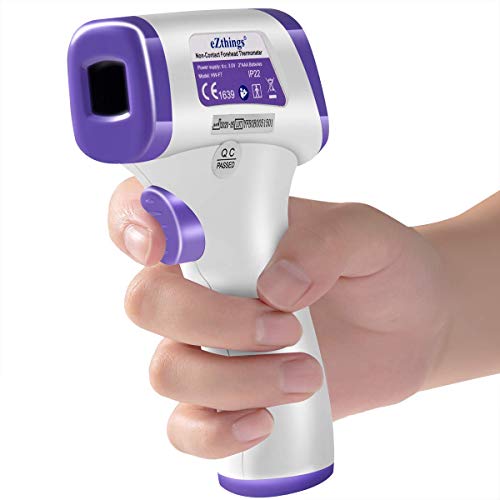
eZthings Heavy Duty Forehead Thermometer

Alcedo Forehead and Ear Thermometer

Playhouse MD Giraffe Baby Thermometer

Playhouse MD Rocket Medicine Dispenser

Playhouse MD Rocketship Otoscope Covers

Playhouse MD Interactive Nail Clipper

Playhouse MD Narwhal Nasal Aspirator
A Closer Look At Each Pick
A 2-inch reading distance makes this a practical fit for pediatric offices, busy clinics, and homes where a child may resist a cold probe touching the forehead. Infrared technology means the sensor reads heat from the skin without direct contact, while the LCD keeps the result easy to locate.
Its broader purpose sets it apart from the Alcedo Forehead and Ear Thermometer, which adds an ear mode and stored readings. The eZthings model handles forehead, room, food, water, milk, and bath measurements, so a family can use the same device beyond a fever check. In our view, that versatility gives clinical settings the stronger case.
The Practical Payoff
- No-touch readings reduce struggling during frequent forehead checks.
- A green, yellow, or red backlight gives the display an immediate visual cue.
- Surface-temperature modes add usefulness for milk, water, food, and room checks.
- The heavy-duty housing and button controls suit frequent use by caregivers.
Trade Offs
- The 2-inch positioning requirement demands a steady distance for each reading.
- It does not provide an ear reading or a history of recent measurements.
Key Specs
Right Fit For
Pediatric offices and caregivers handling frequent temperature or surface checks benefit most from its contactless design.
A Better Fit Elsewhere
Families wanting stored readings and an ear mode will find the Alcedo Forehead and Ear Thermometer more flexible.
Families often need more than one way to take a temperature, especially when a child is sleeping, squirming, or difficult to position. This model combines forehead and ear readings with a one-button control, while silent operation keeps nighttime checks from adding another noticeable sound to the room.
Compared with the eZthings Heavy Duty Forehead Thermometer, the Alcedo offers a more conventional home-care feature set: stored readings, color-coded results, and a magnetic probe cover. That history can be genuinely useful during a multi-day illness, though the device itself does not replace guidance from a healthcare professional.
The Helpful Details
- Four modes cover adult forehead, child forehead, ear, and object readings.
- Storage for 20 results makes it easier to track changes across a sick day.
- Silent mode suits bedtime and nap-time checks.
- The back-lit number and color coding simplify quick display reading.
Small Caveats
- Forehead, ear, and object readings are not interchangeable, so mode selection matters.
- The magnetic probe cover adds another piece to keep with the thermometer.
Feature Snapshot
Who It Suits Best
Families with children of different ages benefit from the selectable adult, child, ear, and object modes.
Where A Sibling Pick Shines
Clinical teams needing room and object measurements may prefer the eZthings Heavy Duty Forehead Thermometer.
A friendly giraffe shape can make a thermometer feel less clinical to a toddler, and that matters when little ones already object to being handled. This model is intended for babies, toddlers, and children six months and older, with a one-second reading, a backlit display, and color-coded results.
Its mode selection is broader than the contact-free-only approach of the eZthings Heavy Duty Forehead Thermometer. The Giraffe combines forehead, ear, and bottle readings, so caregivers can switch tasks without reaching for a separate surface thermometer. That makes it a useful middle ground for home use, though babies under six months need a different reading approach.
Real Benefits
- The animal design helps a child focus on something familiar.
- One-second readings suit quick checks around meals and naps.
- Forehead, ear, and bottle modes cover several routine tasks.
- A storytelling guide adds a calming element during sick days.
Where It May Fall Short
- The stated age range begins at six months, so it is not intended for newborn use.
- Unlike the Alcedo Forehead and Ear Thermometer, it does not store previous readings.
Quick Facts
Who Will Love This
Toddlers and young children who respond better to playful medical designs appreciate this approach.
Another Choice May Suit
Households needing 20 stored readings benefit more from the Alcedo Forehead and Ear Thermometer.
Medicine time can turn into a struggle when an infant spits out liquid or refuses a syringe. This Playhouse MD set pairs two rocket-shaped pacifier syringes with a curved delivery channel intended to place liquid toward the inside of the mouth rather than directly across the taste buds.
Unlike the Playhouse MD Giraffe Baby Thermometer, this item handles medication rather than temperature. Its value appears beside the thermometer: once you know a child’s reading, you may still need a less stressful way to administer the amount directed by their healthcare professional. The included storytelling guide adds a playful element to that routine.
Where It Helps
- The pacifier attachment gives infants something familiar to hold.
- Five-milliliter and 10-milliliter syringes support two dosing volumes.
- Separating parts makes thorough cleaning more manageable.
- The rocket styling and story guide can ease a difficult routine.
Points To Note
- Never tie the pacifier around a child’s neck because of the stated strangulation danger.
- The dose must remain consistent with the instructions supplied by the healthcare professional.
Made For
Parents of infants and young children who resist standard liquid syringes benefit from the pacifier-based design.
Look Elsewhere When
Your priority is a temperature reading rather than medicine delivery, making the Playhouse MD Giraffe Baby Thermometer the better fit.
Pediatric ear examinations can involve unfamiliar equipment and plenty of movement from a young patient. These reusable rocketship covers add a story element to the otoscope while leaving the viewing lens visible, giving clinicians a more engaging way to introduce the exam.
This is professional equipment rather than a home thermometer. The set includes large and small silicone inserts, which matter because an ill-fitting insert can obscure the lens or sit poorly on different otoscope styles. Compatibility was evaluated with selected Welch Allyn and HEINE models, so checking the shape of your own device comes before checkout.
Useful Touches
- Large and small inserts support different otoscope configurations.
- The clear lens area allows the clinician to retain a direct view.
- Two covers support rotation between patients.
- A storage pouch keeps the set together between uses.
Practical Considerations
- The otoscope is not included with this set.
- Cleaning should follow the facility’s protocols between patients.
Built With In Mind
Pediatric clinics and family practices focused on young, anxious patients gain a gentler visual approach to ear exams.
Consider Something Else When
Home temperature checks call for the Alcedo Forehead and Ear Thermometer rather than an otoscope cover.
Nail trimming rarely ends well for a restless baby, and the smallest clippers are often difficult to control. This turtle-shaped tool uses blades shaped for newborn, infant, and toddler nails, while a contoured grip gives the adult a steadier hold during brief trims.
The optional clip-activated sound adds a playful distraction that some children may enjoy, though the on/off switch matters because not every child responds well to noise. Compared with the Playhouse MD Narwhal Nasal Aspirator, which addresses mucus, this tool focuses on a separate grooming task and includes a file for smoothing edges.
Useful Strengths
- Small precision-shaped blades suit delicate little nails.
- The optional sound can divert attention during trimming.
- A contoured parent grip supports controlled pressure.
- The safety latch keeps the blades closed between uses.
Things To Weigh Up
- The sound may add distraction rather than comfort for some children.
- A caregiver should handle the clipper throughout use.
Core Details
Made For
Newborn and toddler households benefit from a compact clipper designed around small nails and a cooperative caregiver grip.
Not Your Match When
A child with congestion needs the Playhouse MD Narwhal Nasal Aspirator rather than a nail-care tool.
A blocked nose can make feeding and sleep harder for infants, and a transparent suction bulb makes the process easier to understand. This narwhal-shaped aspirator uses controlled suction and comes apart into two pieces, allowing you to see collected mucus and reach the interior during cleaning.
The removable construction distinguishes it from a traditional rubber bulb, where residue can remain around a narrow opening. A small LED adds visibility during use, though the suction technique and the child’s position still require a gentle, careful approach. For congested newborns and toddlers, the transparent chamber gives this pick a practical advantage.
Features That Help
- The two-piece design opens for more thorough cleaning.
- Transparency shows collected mucus during use.
- Controlled suction suits infants and toddlers from birth.
- The narwhal design adds a friendly character to a difficult task.
Less Ideal Details
- Suction pressure and positioning still require a gentle hand.
- The product handles nasal mucus only, not fever or other symptoms.
Feature Facts
Who Should Grab It
Parents of infants and toddlers who want a visible, disassemblable nasal aspirator find this design easy to maintain.
Reach For A Different Pick When
A primary temperature check calls for the Playhouse MD Giraffe Baby Thermometer instead of a nasal aspirator.
What Matters Most Before You Buy
Measurement method and age
Decide which measurement style fits your child and the moment. A forehead reading avoids contact, an ear reading offers another route, and a rectal thermometer may be more appropriate for very young infants based on professional guidance. Pay close attention to stated age ranges, particularly with the Playhouse MD Giraffe Baby Thermometer, which begins at six months.
Display clarity and stored results
A large, backlit number can be valuable during a sleepy midnight check. Color coding adds another quick visual cue, while stored readings help you compare changes over a sick day. The Alcedo Forehead and Ear Thermometer stores up to 20 results, which gives it an advantage over models that show only the newest number.
Portability and routine fit
Consider where the device will live and how often it will travel. A compact, multi-mode thermometer can cover home, diaper-bag, and travel needs, but extra functions create more mode choices to understand. Clear labeling and a straightforward workflow matter more than a long feature list when a child is crying.
Supporting care tools
A thermometer covers only one part of sick-day care. Medicine dispensing, nail trimming, nasal suction, and pediatric exam comfort require separate tools. Matching each item to a real task prevents a playful accessory from occupying space without solving a routine problem.
Common Mistakes Worth Avoiding
Wrong Turns To Avoid
Do not assume every mode produces the same type of reading, since forehead, ear, object, and bottle measurements serve different purposes. Check the age guidance, unit preference, and cleaning instructions before relying on a new device.
The Upgrade Payoff
A higher-priced thermometer may add stored results, silent operation, a backlit display, or a more specialized measurement method. Those extras are worthwhile when they solve a recurring inconvenience, but a simpler model may serve a straightforward household more comfortably.
Frequently Asked Questions
Which baby thermometer is best for a newborn?
The eZthings Heavy Duty Forehead Thermometer supports contactless forehead readings for babies, although age guidance and your healthcare professional’s advice should guide the method used.
Is a no-touch forehead thermometer useful for toddlers?
Yes. Contactless readings can be quicker and less disruptive, particularly when a child is sleeping or resistant to having a cold probe placed nearby.
What is the difference between forehead and ear readings?
Forehead readings use infrared sensing at a set distance, while an ear reading uses a probe placed in the ear canal. Their results and appropriate use can differ.
Should a baby thermometer store previous readings?
Stored readings help you compare changes across several checks. The Alcedo Forehead and Ear Thermometer keeps up to 20 results for that reason.
Can one thermometer handle bottles and food?
The eZthings Heavy Duty Forehead Thermometer includes surface modes for items such as bottles, water, and food, as well as body-temperature measurement.
Final Verdict
The Alcedo Forehead and Ear Thermometer offers the most balanced setup for everyday family use, while the eZthings model serves clinical and multi-surface checks particularly well. The Giraffe option adds child-friendly appeal, and the remaining four picks support common care routines beyond taking a temperature. Match the tool to the task your family actually performs, and keep the instructions close.
