

A long shift, a demanding workout, or a desk-heavy day can leave your lower back asking for more support than clothing alone provides. A back support belt adds structure around the waist, and the right choice depends on whether you need targeted lumbar support, broad back coverage, breathable fabric, or hot and cold therapy. These options cover different body sizes, routines, and clothing preferences, helping you narrow the field before placing an order.
A Closer Look At The Lineup

CRAZY AL’S Back Brace with 6 Stays, Breathable Mesh, Medium
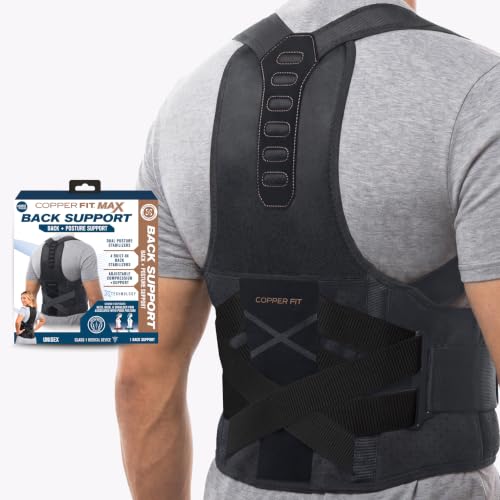
Copper Fit Max Back Posture Support L/XL
Copper Fit Max Back Posture Support 2X/3X

FREETOO Lumbar Back Support Brace
Copper Fit Max Back Posture Support Small/Medium

Peak Form Hot and Cold Back Brace L/XL

AGPTEK Air Mesh Back Brace M
A Deeper Look At The Lineup
Picture a warehouse shift spent walking, bending, and carrying packages. This CRAZY AL’S brace gives that routine a more substantial structure than a simple wrap, using four memory-aluminum stays and two steel springs along the waist for lumbar support.
Compared with the fabric-led FREETOO design, this model puts more emphasis on organized support around the lower back. Its breathable mesh panel can sit beneath work clothing, and the Medium size covers a 29.5- to 37.4-inch waist measurement at the navel.
Real-World Strengths
- Six stays create a more structured support system for standing work and lifting.
- A removable lumbar pad adds pressure in the area you may notice most.
- Breathable mesh helps release heat during long periods of wear.
- Five listed sizes make waist measurement more useful than guessing by pants size.
Practical Considerations
- The firm stays and springs may feel more present than fabric-only supports during extended wear.
- Measure at your navel before ordering, since the fit depends on waist circumference.
Key Specs
Built With In Mind
You benefit most from this brace during prolonged standing, physical work, gym sessions, and other routines where firm lumbar structure matters.
Swap It Out When
FREETOO Lumbar Back Support Brace is a better fit when you prioritize a soft stretch-knit feel over six internal stays.
Where CRAZY AL’S concentrates on the lumbar area, Copper Fit Max spreads its design across more of the back. Reinforced panels and targeted compression create a broader support structure for posture-focused routines, including desk work, commuting, and long periods of standing.
For most people, that wider coverage may feel more natural when the goal is staying aligned through a workday. The L/XL variant serves larger frames, and the same basic design appears in the Small/Medium and 2X/3X versions reviewed below.
What Stands Out
- Full-back coverage supports posture across more than the waist alone.
- Reinforced panels add structure without relying on multiple exposed stays.
- Targeted compression gives you a clear sense of support during seated work.
Points To Note
- You may notice more overall bulk than with a narrow lumbar brace.
- Confirm that the L/XL label matches your usual clothing size before ordering.
Core Details
Who It Suits Best
This support fits you well when posture and broad back coverage matter more than a narrow, heavily reinforced lumbar design.
Another Choice May Suit
AGPTEK Air Mesh Back Brace M is a better fit for workouts where ventilation and exercise-specific support take priority.
The 2X/3X version keeps the same full-back construction as the L/XL model, but its size is intended for a larger torso. That makes it a practical choice for people who need broader physical coverage rather than the more compact L/XL fit.
You can use the reinforced panels and targeted compression during desk-heavy days, service work, or any routine where staying upright matters. Compared with CRAZY AL’S six-stay brace, the design is less explicitly lumbar-focused and more concerned with whole-back posture.
Noteworthy Benefits
- Extended coverage supports posture across the back rather than concentrating on one narrow zone.
- The larger size offers room for a fuller torso without changing the core support design.
Where It May Fall Short
- The close compression may feel more pronounced to you than a softer, stretchy knit brace.
Made For
You will appreciate this version most when you have a larger frame and want broad back structure for prolonged standing or seated work.
Where A Sibling Pick Shines
Copper Fit Max Back Posture Support Small/Medium is the more suitable sibling for a smaller torso.
Some braces feel supportive because their internal structure dominates; FREETOO takes a gentler route. Its 3D-knit fabric is soft, lightweight, and stretchy, allowing the lumbar support to follow your body rather than resisting it.
That makes the design appealing for women who want supportive contact under regular clothing. You may find it more comfortable for errands, desk work, and extended wear, particularly compared with the rigid stays and springs in CRAZY AL’S Back Brace with 6 Stays, Breathable Mesh, Medium.
Strong Points
- Lightweight knit fabric suits long periods of regular wear.
- Stretch construction conforms closely to different body shapes.
- The soft material can sit beneath everyday clothing.
- Breathability supports comfort in warm indoor environments.
- Skin-friendly fabric avoids a bulky, padded feel.
Things To Consider
- You may want more rigid support for heavy lifting than this fabric-led design provides.
- Its close fit can show through fitted clothing depending on your preferred silhouette.
Feature Snapshot
The Right Fit
This lumbar support suits you best when comfort and low-profile wear matter more than maximum structural reinforcement.
A Better Fit Elsewhere
Peak Form Hot and Cold Back Brace L/XL is a better fit when temperature-based comfort and adjustable straps are central to your routine.
For a smaller torso, the Small/Medium Copper Fit Max avoids the roomier proportions of the L/XL and 2X/3X versions. It retains the same reinforced panels, broad back coverage, and targeted compression, giving you posture support without moving up to a larger size.
That balance works well for a home office, shorter commutes, or daily routines that call for consistent support without a heavily reinforced frame. You may find the fit easier to manage beneath work clothes than the six-stay CRAZY AL’S model.
What Helps Most
- The smaller sizing gives you a more proportional starting point than the L/XL and 2X/3X variants.
- Broad panels and targeted compression support posture throughout seated and standing routines.
A Few Limitations
- You may want a more ventilated mesh construction during vigorous exercise.
- Confirm the Small/Medium label aligns with your usual clothing size before ordering.
Who Should Grab It
You should consider this version for smaller frames that need broad posture support during everyday work and commuting.
Consider Something Else When
AGPTEK Air Mesh Back Brace M is a better fit for active routines where airflow and exercise-focused reinforcement lead your needs.
A physically demanding workday rarely needs the same support every hour. Peak Form adds a reusable gel pack, letting you choose a warm or cool sensation alongside the brace’s two adjustable straps.
Heat can relax the muscles around your midsection, while cooling offers a different form of comfort after exertion. The L/XL version is designed to sit under clothing, making it a sensible choice for warehouse work, garage projects, or routines that combine lifting with recovery time.
Key Advantages
- The reusable gel pack works warm or cool for flexible daily use.
- Two straps let you adjust the brace around your torso.
- Thermal comfort can be added without reaching for a separate heating pad.
- The low-profile design is intended for clothing over the brace.
The Fine Print
- Confirm the L/XL sizing before ordering, especially for close-fitting work clothes.
- Follow the gel pack’s heating and chilling directions for consistent use.
Quick Facts
Best Suited To
This brace fits you best when your routine combines physical work with periods of rest, warming, or cooling around the lower back.
Reach For A Different Pick When
FREETOO Lumbar Back Support Brace is a better fit when a soft stretch-knit design without a thermal pack suits you better.
Warm weather workouts create a familiar tradeoff: you want structure around your lower back without adding a heavy layer. AGPTEK uses 0.5mm Air-Mesh fabric, while its internal layout includes a lumbar pad, flexible pads, metal stays, and support strips.
The result is designed for support during and after exercise, with ventilation serving as the central comfort feature. Compared with FREETOO’s soft 3D-knit approach, this model adds more internal hardware, which may suit you better when movements and training loads vary.
Points In Its Favor
- Air-Mesh construction encourages airflow during warm exercise sessions.
- Two metal stays and two support strips add structured stability.
- Multiple lumbar and flexible pads distribute contact around the lower back.
Possible Compromises
- The internal pads and stays may feel firmer than a fabric-only lumbar support.
- Confirm that the M size corresponds to your waist and torso proportions before ordering.
Technical Highlights
Whose Shelf It Belongs On
This brace belongs with your gear if you train regularly and want ventilated, structured support around the lower back.
Not Your Match When
Copper Fit Max Back Posture Support Small/Medium is a better fit for office work centered on broad posture support rather than exercise reinforcement.
What to Match With Your Daily Routine
Start With The Support You Need
A lower-back-focused brace works well for lifting, standing, and targeted stability. A broader posture support suits desk work, commuting, and hours spent sitting, while an exercise-oriented model combines internal reinforcement with ventilation. Start with the activity that creates the most discomfort or fatigue in your routine.
Measure Before You Order
Waist circumference matters more than a standard clothing label for a close-fitting support. Measure around the navel, compare that number with the available range, and then consider how the brace sits over your usual work clothes. A size that feels secure at the waist is more useful than one chosen only from a loose clothing size.
Match Materials To Your Comfort Priorities
Soft stretch-knit fabric usually feels natural during long, low-intensity wear. Mesh can reduce trapped heat, while stays and springs create a firmer structure for demanding routines. A thermal system adds another layer of versatility, but it also requires refrigeration or heating between uses.
Two Details That Change the Decision
Wrong Turns To Avoid
Avoid choosing by style alone, since a slim-looking brace may use rigid internal parts. Think about the length of your workday, whether you sit or stand more, and how close your clothing fits. Measure your waist before comparing labels, and check whether the support concentrates on the lumbar area or covers more of the back.
What Separates Premium From Basic
Higher-tier models commonly add more reinforcement, adjustable components, specialized materials, or thermal functions. Those additions help when your routine involves varied temperatures, frequent movement, or prolonged support. A simple stretch-knit option can be more appropriate when comfort and low-profile wear come first.
Frequently Asked Questions
How tight should a back support belt feel?
A back support belt should feel secure without restricting breathing or normal movement. You should be able to bend and walk comfortably, while the support stays in place.
Should I measure my waist or use my pants size?
Measure your waist at the navel because a belt fits around your torso rather than your hips. Pants size provides little useful guidance for this purpose.
Which type is best for standing at work?
A structured lumbar brace with stays and adjustable support is useful for long standing shifts. A broad posture design can also work when your role involves a mix of standing, walking, and sitting.
Can these belts be worn under clothing?
Most of these designs are intended to fit beneath clothing, but the amount of bulk varies. A stretch-knit model generally creates a smoother profile than one with multiple internal supports.
What matters most for exercise support?
Ventilation, flexible movement, and a secure fit matter most during exercise. A model with mesh fabric, flexible pads, and metal stays offers a useful balance of airflow and structure.
Wrap Up
The most useful back support belt is the one that matches your body size, work routine, and tolerance for stiffness. Firm stays suit physical labor, stretch-knit fabric favors everyday comfort, broad panels support posture, and thermal features add flexibility. Compare those priorities before choosing, then use the product page to confirm the fit.
