

A long day at a desk can leave your back and hips feeling tight, while driving, standing, or training may leave you searching for a comfortable way to decompress at home. An inversion table can support a controlled, upside-down stretch, but the right model depends on your body size, available floor space, and preferred level of adjustability. These options range from full-size Teeter designs to folding mini tables for compact rooms.
The Choices Worth Comparing

TEETER FitSpine X3 Inversion Table with Accessories, 300 lb Capacity

TEETER EP-560 Inversion Table with Accessories
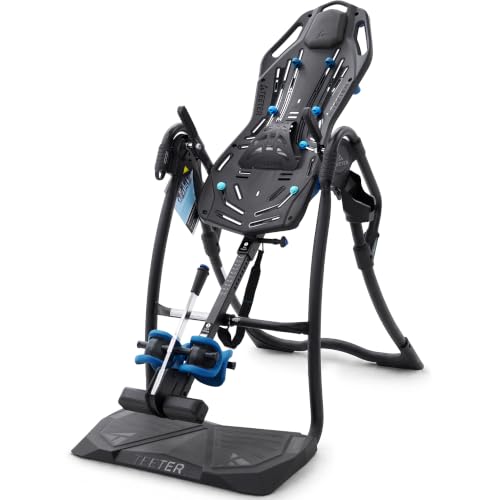
TEETER FitSpine LX9 Inversion Table with Easy-Reach Ankle Lock, 300 lb Capacity

YOLEO ITX320 Inversion Table

MuChaIOAK Heavy Duty Inversion Table, Blue

Generic Mini Inversion Table with Rollers, Foldable Back Extension Machine

Gryphvex Mini Inversion Table for Home Office, Portable Folding Spine Stretch Chair
The Strengths Of Each Pick
The FitSpine X3 centers on a flexible backrest rather than a rigid slab. Its eight-point floating suspension allows the support surface to move with your body, which may feel more accommodating during a home stretching routine. For most people, that combination of adjustment and included accessories makes this a practical middle ground between a basic table and a heavily equipped model.
Unlike the TEETER EP-560, which emphasizes a two-position foot platform, the X3 focuses on backrest movement and the easy-reach ankle lock. Its eight differently sized acupressure-style nodes add contact points around the back, while the Grip-and-Stretch handholds give you something to pull against during a supported stretch.
Notable Gains
- Floating suspension supports smoother movement across the backrest.
- The easy-reach ankle lock simplifies entry and exit.
- Eight raised nodes provide varied contact during stretching.
- Handholds add useful support for controlled pulling movements.
- A 300-pound capacity suits many household users.
Points To Keep In Mind
- As a full-size design, it needs adequate floor and ceiling clearance.
Feature Snapshot
Made For
This model fits home users who want a full-size inversion table with flexible support and multiple stretching aids.
A Better Fit Elsewhere
The TEETER EP-560 suits people who prioritize foot placement and ankle-cup adjustability over the X3’s floating backrest.
The EP-560 puts foot placement at the center of its design. A two-position platform lets you select between different starting angles, while the wraparound ankle cups distribute contact around the lower legs. That makes the table appealing for people who want a measured entry and a stable resting position.
The ComforTrak backrest flexes beneath you, and the Grip-and-Stretch handholds support a pulling motion. Compared with the FitSpine X3’s eight-point suspension, the EP-560 uses a different backrest design, so your preference will likely come down to how the support feels during your routine.
Strengths Worth Knowing
- Two foot positions make the inversion angle easier to tailor.
- Wraparound ankle cups add lower-leg support.
- The flexible backrest accommodates movement.
- Handholds support a more active stretch.
Practical Considerations
- The 300-pound limit excludes heavier users.
- The full-size frame needs more room than a folding mini model.
- Platform and ankle-cup positions deserve adjustment before you begin.
Quick Facts
The Right Fit
This table suits home users who want two-position foot placement and supportive ankle cups in a full-size format.
Where Another Pick Shines
The TEETER FitSpine X3 is a better fit for people who prefer a floating eight-point backrest and varied contact nodes.
The FitSpine LX9 builds on the same floating-backrest approach found in the X3. An eight-point suspension system gives the support surface room to flex, and the easy-reach ankle lock is designed to make getting into and out of the inverted position less awkward. It feels like a natural choice for a dedicated stretching corner.
Integrated accessories set it apart from the more mechanically focused EP-560. You get handholds for assisted stretching, varied-height nodes for additional contact, and a 300-pound capacity. In a dedicated room, that fuller feature set may make more sense than choosing a compact chair-style alternative.
The Helpful Details
- Floating suspension creates a flexible contact surface.
- Integrated handholds support controlled stretching movements.
- Varied nodes offer several pressure points.
- The ankle lock simplifies entry and exit.
- The stated 300-pound limit suits many users.
Possible Compromises
- Its full-size format demands more floor space than a mini table.
- Users seeking a folding design will need to look at the YOLEO ITX320.
Core Details
Built With In Mind
This model fits people with dedicated floor space who want a full-size table, flexible suspension, and several stretching accessories.
Another Choice May Suit
The Generic Mini Inversion Table with Rollers suits smaller rooms where portability and back rollers matter more than full-size construction.
The YOLEO ITX320 is designed around a simpler, space-conscious setup. Its foldable structure can make storage more practical than with a fixed full-size frame, while the removable lumbar pad gives you a way to adjust the lower-back contact area. That combination makes the table easier to integrate into an apartment or multipurpose room.
Reversible ankle holders add another layer of positioning flexibility. Compared with the TEETER FitSpine X3’s floating backrest and eight nodes, the ITX320 concentrates on adjustability through the lumbar pad and ankle system. You may find that approach more useful when you want a straightforward table without a large collection of accessories.
Where It Helps
- The folding frame simplifies storage in tighter rooms.
- A removable lumbar pad lets you customize lower-back contact.
- Reversible ankle holders support different positioning preferences.
Small Caveats
- Folding reduces storage needs but not the floor space required while in use.
- You receive fewer built-in stretching aids than the TEETER FitSpine models.
Who Should Grab It
This table suits apartment residents and home users who value folding storage and removable lower-back support.
Look Elsewhere When
The MuChaIOAK Heavy Duty Inversion Table is the better fit for people who need a higher listed capacity and extensive height adjustment.
The MuChaIOAK model leads this group in listed weight capacity at 330.7 pounds. It also offers meaningful framing adjustments: height changes from 51.57 to 61 inches, while a four-gear limiting bar controls the inversion angle. For a home gym, those adjustments can make fitting the table to different users more straightforward.
The double-triangle base and widened rear bars form the structural core, while shoulder pads, a lumbar cushion, foam foot pads, and a headrest spread contact across several areas. Unlike the compact Generic Mini Inversion Table with Rollers, this is a full-size frame built for more conventional inversion positioning.
The Good Stuff
- A 330.7-pound capacity exceeds the other listed limits.
- Height adjustment accommodates different user dimensions.
- Four limiting-bar gears vary the inversion angle.
- Shoulder, lumbar, foot, and head support distribute contact.
- The double-triangle base provides a substantial frame.
Things To Weigh
- The 61-inch maximum height requires adequate room.
- Its full-size construction is less convenient to store than a folding mini table.
Technical Highlights
Whose Shelf It Belongs On
This model fits home gym users who need a higher weight limit, substantial height adjustment, and multiple angle choices.
Reach For A Different Pick When
The Generic Mini Inversion Table with Rollers is a better fit for a compact room where portability matters more than a 330.7-pound capacity.
This mini table takes a different approach from a full inversion setup. Instead of holding you upside down in a large frame, it uses a compact back-extension position with eight high-density foam rollers. Those rollers create moving contact across the back, which may appeal to people who want a home stretching station with a smaller footprint.
The foldable frame supports easier storage, and the resistance feature adds another movement option to the routine. Compared with the Gryphvex Mini Inversion Table, this model puts more emphasis on rolling contact and resistance. Its 297-pound capacity is also worth checking against your body weight before making a decision.
Everyday Perks
- Eight foam rollers provide moving back contact.
- The foldable structure suits compact storage.
- Resistance adds a second mode to home stretching.
- The listed 297-pound capacity covers many users.
Less-Strong Areas
- Users over 297 pounds exceed the listed limit.
- This is a back-extension design, not a full ankle-secured inversion table.
Feature Breakdown
Best Suited To
This model fits small-space users who prefer rolling back contact and resistance exercises over full inversion positioning.
Swap It Out When
The YOLEO ITX320 is a better fit for people who want an actual inversion table with a foldable frame and removable lumbar pad.
The Gryphvex design targets a familiar problem: wanting a stretching device without dedicating an entire room to it. Its portable, folding format can be moved aside when work calls for the floor space, making it a practical option for a home office or apartment. The spine-stretch chair position also offers a more compact alternative to a full ankle-lock frame.
Easy assembly keeps the setup process approachable for someone without specialized tools. Compared with the Generic Mini Inversion Table with Rollers, it prioritizes portability and a folding chair format rather than eight foam rollers and resistance. It may be the simplest option here for a short daily stretch between remote-work sessions.
A Favorable Mix
- The folding frame supports convenient storage and relocation.
- Compact construction suits home offices and apartments.
- The chair-style format avoids a full-size inversion frame.
- Assembly is designed to be straightforward.
Trade Offs
- Compact construction offers fewer positioning features than a full-size table.
- You still need enough room to unfold and use the chair.
Who Will Love This
This table suits apartment residents and remote workers who need portable stretching equipment that can be folded away.
Where It May Fall Short
The TEETER FitSpine LX9 is a better fit for dedicated stretching space with a flexible full-size backrest and easy-reach ankle lock.
What Matters Before You Invert
Start With Your Space
A full-size inversion table needs room to stand, recline, and rotate into position. Ceiling clearance and the floor footprint matter more than decorative accessories, particularly in apartments with low ceilings. Compact models such as the Generic Mini Inversion Table with Rollers or Gryphvex Mini Inversion Table are easier to move and fold away, though both still need working space.
Compare Support and Adjustment
Capacity means the maximum user weight listed for a table. Your body weight should remain comfortably below that limit, and the teeter models accommodate up to 300 pounds while the Generic Mini Inversion Table with Rollers lists 297 pounds. The MuChaIOAK model reaches 330.7 pounds and also offers height and angle adjustment, making it useful for a shared home gym.
Match Your Stretching Style
The TEETER FitSpine models use a floating backrest, handholds, and varied contact nodes. The EP-560 places more emphasis on ankle cups and a two-position foot platform, while the MuChaIOAK table offers broader height and angle settings. Compact designs provide easier storage, but their chair-style or back-extension positions differ from a complete upside-down stretch.
Practical Details Across These Picks
Mistakes Worth Dodging
The most common mistake is judging a table only by its size. Check the listed weight limit, required floor area, ceiling clearance, and adjustment system before placing an order. Another common shortcut is buying a compact model for a full inversion experience, only to find that its chair-style movement does not match your preference.
What The Higher Tier Buys
A higher-tier table often adds broader adjustment, more substantial contact padding, and a larger support system. The TEETER FitSpine LX9 adds suspension, nodes, and handholds, while the MuChaIOAK model expands capacity and adjustment range. Those additions matter most in a dedicated exercise area or when several people will use the equipment.
Frequently Asked Questions
What weight capacity do these inversion tables support?
The listed limits range from 297 pounds for the Generic Mini Inversion Table with Rollers to 330.7 pounds for the MuChaIOAK Heavy Duty Inversion Table. The TEETER FitSpine X3, EP-560, and LX9 each list a 300-pound capacity.
Are mini inversion tables suitable for small rooms?
Mini models can be a better fit for small rooms because their folding frames are easier to store and relocate. You still need enough clear floor space to unfold the unit and assume the intended position.
Which table has the highest listed capacity?
The MuChaIOAK Heavy Duty Inversion Table has the highest listed capacity at 330.7 pounds. It also provides height adjustment from 51.57 to 61 inches and four limiting-bar gear positions.
Is a TEETER model better for home stretching?
The right TEETER depends on the features you value. The FitSpine X3 and LX9 emphasize a floating backrest, suspension, and accessories, while the EP-560 centers on ankle cups and a two-position foot platform.
Should a folding table be assembled before use?
Follow the manufacturer’s assembly instructions and confirm all fasteners are properly secured before positioning yourself. A folding design simplifies storage, but it still needs a stable, level location and enough room for the frame to open fully.
Final Thoughts
Your best choice comes down to space, weight capacity, and the style of movement you want. Full-size Teeter tables suit dedicated stretching areas, the MuChaIOAK model serves higher-capacity needs, and compact designs fit rooms where storage and portability come first. Check the measurements and usage instructions before choosing, then select the table that fits your routine without taking over your space.
