

Your therapist adds balance work to your routine, but you need something that fits your floor space, comfort level, and exercises without turning setup into a project. Foam pads offer a forgiving surface for ankle, knee, and core drills, while rolling platforms challenge balance through constant adjustment. The right choice depends on whether you want cushioned support, portable convenience, or a more athletic balance challenge at home.
The Choices Worth Comparing

INDO BOARD The Original Balance Board Trainer with Roller
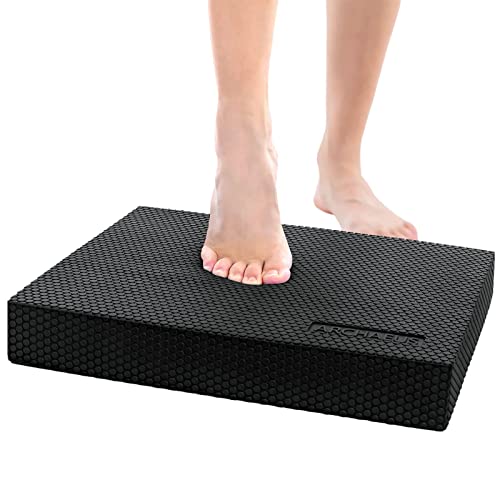
ARCHAEUS Foam Balance Pad for Knee Exercise

ManManLine 15 x 12 Inch Extra Thick Non-Slip TPE Balance Pad for Physical Therapy

Hshbxd Professional Balance Pad

ZaxuVexo Foam Stability Trainer for Therapy and Pilates

Yoblink 15.75 x 13 Inch 2 Inch TPE Balance Pad

SlackBow SlackBlock Compact Portable Athletic Balance Trainer
The Details Behind The Selections
The Original Indo Board brings a different kind of challenge to physical therapy. Instead of standing on a fixed foam surface, you balance on a board that rolls beneath your feet, which turns ordinary squats, lunges, and stance work into continuous balance adjustments. That makes it especially useful for athletes who already have a solid foundation in standing exercises.
Including a roller keeps the setup simple, while the board’s sports-oriented design suits surfers, skaters, snowboarders, and yoga practitioners as well. For home users with more experience, this rolling action can feel more engaging than the softer foam designs later in the list.
Good Reasons To Consider
- Rolling motion turns familiar exercises into active balance work.
- The included board and roller cover the complete training setup.
- It suits several sports rather than serving one narrow routine.
- A long-running design history may appeal to athletes familiar with the trainer.
Trade Offs
- The moving platform requires more balance confidence than a fixed foam pad.
- Hard flooring may need a mat beneath it for comfort.
Quick Facts
Who It Suits Best
This pick fits athletes and experienced therapy participants who can comfortably stand on an unstable platform and want a more active balance challenge.
Where Another Pick Suits Better
ARCHAEUS Foam Balance Pad for Knee Exercise offers a more stationary and potentially more forgiving surface for early balance work.
A soft foam surface can make therapy exercises easier to approach when a rolling platform feels too demanding. The ARCHAEUS pad uses TPE foam, a flexible material that creates an uneven base for working on balance, coordination, body control, and core strength. Its soft construction also gives knees and ankles a gentler landing surface than a hard board.
That combination makes sense during home rehabilitation, mobility work, or light fitness sessions where you want to challenge stability without introducing the continuous movement of a roller. It also gives beginners a practical bridge between supported standing work and more demanding balance exercises.
Everyday Advantages
- Soft TPE foam supports knee and ankle exercise sequences.
- The fixed surface works well for controlled balance drills.
- Useful for coordination and motor-skill practice at home.
- Core exercises can be performed while the surface challenges stability.
Minor Gripes
- It does not provide the moving challenge of a rolling platform.
- Foam can compress during extended or stationary exercises.
Feature Snapshot
Made For
This pad suits beginners, home therapy participants, and anyone rebuilding ankle or knee control on a forgiving surface.
Consider Something Else When
SlackBow SlackBlock Compact Portable Athletic Balance Trainer better matches athletes seeking a firmer, full-body platform for dynamic sports drills.
Clear dimensions make the ManManLine pad easier to plan around than a generic foam mat. Its 15-by-12-inch footprint leaves room for standing exercises, while the 2.36-inch thickness creates a more substantial surface for knee, ankle, and core routines. You can judge whether it fits your available floor space before setting up a home session.
The soft TPE material should feel more forgiving during supported stance work, while the non-slip design helps keep the pad from moving beneath you. Compared with the ARCHAEUS pad, the larger listed footprint and greater thickness give this option a more substantial feel, though either choice can work for a gradual home routine.
Where It Excels
- Defined dimensions simplify floor-space planning.
- Extra thickness adds cushioning beneath the feet and knees.
- The non-slip surface supports more controlled balance positions.
- TPE foam suits knee, ankle, and core exercises.
- The 15-by-12-inch area accommodates a natural stance.
Practical Considerations
- The larger footprint takes up more room than a compact foam pad.
- Its extra height may be more than your exercise style requires.
The Numbers That Matter
Right Fit For
This pad fits home therapy users who want a thick, defined surface for ankle, knee, and core work in a dedicated floor area.
Not Your Match When
Yoblink 15.75 x 13 Inch 2 Inch TPE Balance Pad suits people who prioritize a textured, sweat-resistant surface and easier portability over extra thickness.
The Hshbxd pad is built around a familiar fitness format: a foam platform that turns familiar movements into balance work. Lunges, planks, squats, and sit-ups all become more demanding because your feet and lower body must adjust to the shifting surface. That versatility makes it useful for physical therapy routines alongside yoga and stretching.
Its strongest selling point is the variety of exercises it supports. A therapist may use one exercise for ankle control, another for core work, and another for coordination, while the same pad can support general fitness sessions. The honest read is that its appeal comes from exercise flexibility rather than a single specialty feature.
What Earns Its Place
- Works with lunges, squats, planks, and sit-ups.
- Supports foot, ankle, and core stability drills.
- Useful for yoga, stretching, and general fitness.
Small Caveats
- The foam surface does not roll like a board trainer.
- Exercise difficulty still depends on your stance and range of motion.
- Confirm that your planned movements fit the available pad area.
Best Suited To
This model suits therapists, coaches, and home exercisers who want one foam platform for several standing, core, and mobility exercises.
A Better Fit Elsewhere
ManManLine 15 x 12 Inch Extra Thick Non-Slip TPE Balance Pad for Physical Therapy better fits users who need stated dimensions and extra cushioning for their floor exercises.
Floor cleanliness matters when a foam trainer lives in a busy therapy area, home gym, or dance studio. The ZaxuVexo pad combines a soft, thick cushion with a water-resistant, non-slip design that should fit well into routines involving yoga, Pilates, dance, or general balance work. Its surface can also provide support around the knees and elbows during supported positions.
That balance of cushioning and upkeep convenience gives it a broader appeal than a single-purpose therapy aid. You can use the same pad for ankle stability, a supported stretch, or a Pilates exercise, then wipe it down after a sweaty session. For shared spaces, that simple care routine is a practical advantage.
A Few Strong Suits
- Water resistance helps with routine cleanup after exercise.
- Non-slip construction supports controlled foot placement.
- Soft cushioning suits knee and elbow-supported positions.
- Works across therapy, yoga, dance, and Pilates routines.
Details To Watch
- Confirm the footprint suits your planned stance before use.
- Its soft surface may move more than a rigid platform.
Core Details
Who Will Love This
This trainer suits people balancing therapy, yoga, Pilates, and dance exercises who value cushioning and straightforward cleaning.
Look Elsewhere When
Yoblink 15.75 x 13 Inch 2 Inch TPE Balance Pad fits users who need exact dimensions, textured traction, and a lighter portable option.
The Yoblink pad pairs a portable footprint with a surface made for controlled traction. Its 15.75-by-13-inch dimensions provide a stable area for standing exercises, and the 2-inch height gives the foam enough body for ankle and knee work. At 10.5 ounces, it is straightforward to move between a therapy room, garage, or travel setup.
TPE foam is described as sweat-resistant and non-slip, while the textured top adds another layer of grip during balance changes. That makes this a practical middle ground between the thicker ManManLine pad and the more athletic rolling trainers. For anyone who travels with a home program, carrying one compact platform simplifies setup considerably.
Practical Advantages
- The 10.5-ounce weight makes storage and transport simple.
- Textured footing assists with balance adjustments.
- TPE construction resists sweat during active sessions.
- Defined dimensions support repeatable exercise placement.
- Two-inch thickness offers a useful balance of cushioning and stability.
Some Limits To Know
- Its footprint is slightly larger than the ManManLine option.
- Its listed thickness is less than the 2.36-inch ManManLine pad.
Built With In Mind
This pad suits active therapy participants and travelers who want a textured, lightweight platform for ankle stability and general conditioning work.
Another Choice May Suit
ManManLine 15 x 12 Inch Extra Thick Non-Slip TPE Balance Pad for Physical Therapy better fits users seeking a smaller footprint and extra cushioning.
The SlackBlock sits closer to an athletic balance tool than a cushioned rehabilitation pad. Its compact, portable form makes it easy to move between a living room, garage, court, or training area, while the unstable platform encourages dynamic balance, agility, and coordinated full-body movement. For athletes, that combination is more useful than a soft pad designed mainly for stationary exercises.
The trainer has also been associated with collegiate and professional sports programs, giving it a clear athletic identity. You can use the shifting surface for stance work, lower-body control, and sports-specific coordination. Compared with the ZaxuVexo cushion, it offers less emphasis on comfort and more emphasis on active balance response.
What It Does Well
- Compact construction supports training in several locations.
- Dynamic balance work suits athletic footwork and coordination.
- The platform engages the body rather than only cushioning it.
- Portable storage is convenient for shared or temporary setups.
Where It May Fall Short
- It offers less cushioning for comfort-focused rehabilitation work.
- The athletic challenge may feel unnecessary for gentle mobility drills.
Technical Highlights
The Right Fit
This trainer fits athletes, court players, and active adults who value portable, dynamic balance work over a cushioned stationary surface.
Reach For A Different Pick When
ARCHAEUS Foam Balance Pad for Knee Exercise suits therapy participants who prioritize a soft, fixed surface for gentler balance and mobility exercises.
What Matters Before You Buy A Balance Pad
Match The Challenge To Your Experience
Foam platforms provide a predictable, cushioned base, while rolling or sloping trainers ask more from your ankles and core. Beginners and people returning from an injury often benefit from a softer, fixed surface. Experienced athletes may prefer the continuous adjustment of a moving or angled platform, but your current balance confidence matters more than the activity listed on the package.
Check Surface Comfort And Support
A soft pad can make knee-supported movements more comfortable, while a firmer trainer may provide a clearer stability challenge. Consider whether your routine emphasizes controlled ankle mobility, balance confidence, core endurance, or sports footwork. The right support level helps you complete the planned movement without replacing the exercise with constant posture adjustments.
Plan Around Dimensions And Portability
A larger pad gives your feet more room to change position, while a compact model is easier to carry and store. Measure the available floor area before choosing, and consider the surfaces you will use. A dedicated exercise room has different needs from a small apartment, shared clinic, or traveling routine.
Think About Cleanup And Storage
Water resistance and a wipe-clean surface matter most when sweat, dust, or frequent shared use is involved. A lightweight trainer is easier to move between locations, while a thicker pad may remain in one place. Think about how your program is structured before choosing the option that seems most convenient.
Common Sense Buying Traps
Mistakes Worth Dodging
A dramatic challenge does not make a trainer suitable for every exercise. Many people need a soft surface for knee and ankle work, so choosing the most athletic model first can make a routine harder than it needs to be. Measure your exercise area, confirm the surface type, and select the level of instability that matches your current training plan.
What Separates Premium From Basic
Higher-cost models may offer more refined materials, specialized shapes, or a more involved construction. Those additions make sense for coaches, shared facilities, and athletes who use one trainer across several sports. For a small home routine, a portable TPE pad with secure footing and suitable dimensions may cover the same practical needs without extra features you will not use.
Frequently Asked Questions
Are Foam Balance Pads Suitable For Physical Therapy?
Yes, foam balance pads suit many physical therapy exercises involving the ankles, knees, hips, and core. The right choice depends on your stability level, exercise type, and preference for a cushioned or moving surface.
Which Balance Pad Is Best For Beginners?
The ARCHAEUS Foam Balance Pad for Knee Exercise is a practical beginner option because its soft TPE surface supports controlled balance work. Start with supported standing exercises and progress only as your balance confidence improves.
Is A Thicker Balance Pad More Comfortable?
Extra thickness generally adds cushioning beneath the feet, knees, or elbows. The ManManLine model provides 2.36 inches of foam, while the Yoblink pad is listed at 2 inches, giving you two distinct options for comfort and floor space.
What Size Balance Pad Works For Home Exercises?
A pad that accommodates your natural stance is usually easier to use than a narrow platform. The ManManLine pad measures 15 by 12 inches, while the Yoblink pad measures 15.75 by 13 inches, so compare both dimensions with the area available at home.
Can Balance Pads Be Used For Yoga And Pilates?
Yes, soft foam models commonly support standing poses, balance transitions, Pilates exercises, and supported stretching. The ZaxuVexo Foam Stability Trainer also offers water resistance and simple cleaning for mixed-use indoor routines.
Final Thoughts
Your best balance pad is the one that matches your current ability and the exercises you actually perform. Foam users gain a softer, stationary base, while athletes may prefer the more active challenge of a rolling or angled trainer. Measure the space, consider cushioning, and choose the level of instability that supports a consistent routine.
