

A baby bottle can influence how much air enters during feeding, and that detail matters for a household dealing with frequent burping, gas, or spit-up. You also need the right flow, capacity, and material for your baby’s stage. These seven options cover newborns, breastfed infants, combo-feeding families, and babies transitioning to sippy cups, with design differences that should shape your decision.
A Snapshot Of The Selections
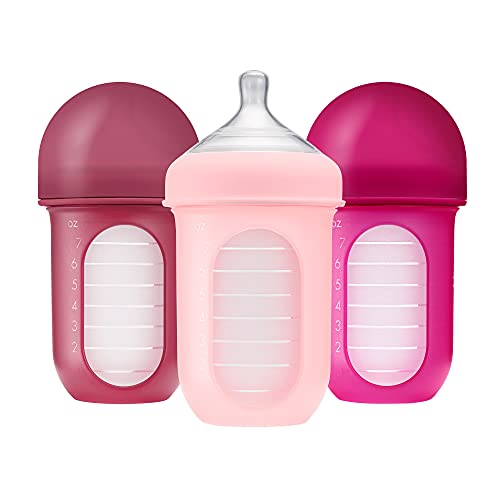
Boon Nursh 8 Oz Bottles

Dr. Brown’s Narrow 8 Oz Bottle

MAM Easy Start Anti-Colic 5 Oz

Thyseed 3+ Month Fast Nipple

Thyseed Glass Anti-Colic 5 Oz Newborn Bottle

Thyseed Glass Anti-Colic 8 Oz Slow Bottle, 2 Pack

Thyseed PPSU Anti-Colic 5 Oz Extra Slow Bottle
Taking A Closer Look At The Options
The Boon Nursh approaches colic and reflux feeding from the air-management side. Its silicone pouch contracts as the baby drinks, allowing milk to replace the collapsing space rather than drawing air into the feeding path. For a household dealing with frequent gas or spit-up, that direct design is easy to appreciate.
You also get a familiar bottle shape without a separate vent or valve, while the nipple and pouch are made from food-safe silicone without BPA or PVC. The three-bottle set provides useful backups for nights, daycare, and travel. Compared with the vented systems later in this list, the Nursh takes a more mechanical approach to reducing swallowed air.
What Works In Its Favor
- The collapsing pouch keeps the feeding system from needing a conventional vent assembly.
- The nipple shape and length support tongue positioning while a newborn learns to latch.
- Only the silicone nipple and pouch touch the milk, simplifying material considerations.
- The minimal piece count makes washing and assembly less complicated during busy days.
- Three 8-ounce bottles give you a spare for daycare, travel, or a feeding mishap.
Small Caveats
- Additional Nursh pouches, nipples, and storage lids are sold separately, so check what your setup requires before buying accessories.
Key Specs
Made For
This set suits parents of newborns who want an air-conscious bottle with a simple, washable design and several ready-to-use sizes.
Consider Something Else When
Choose the Thyseed Glass Anti-Colic 5 Oz Newborn Bottle instead when a glass body and an extra-slow newborn flow rate take priority over the Nursh pouch system.
Dr. Brown’s Narrow 8 Oz Bottle enters the list for a different stage of feeding. It replaces a standard nipple with a soft silicone sippy spout, giving an older baby a familiar bottle while introducing skills associated with drinking from a cup. That continuity can make the transition feel less disruptive for your child.
The spout fits the familiar Dr. Brown’s Options+ Narrow bottle, and a snap-on cap helps keep the drinking surface covered during travel. This is not an air-focused colic bottle, though, so a household still addressing reflux through bottle design should look elsewhere. Its strongest case is a gradual move away from conventional bottle feeding.
Points In Its Favor
- The soft silicone spout offers a less familiar shape than a standard bottle nipple, which supports a gradual transition.
- Keeping the familiar bottle body can make the change less disruptive during teething or a fussy period.
- The snap-on cap adds useful coverage for daycare bags and family trips.
- Dishwasher and sterilizer compatibility simplifies routine bottle care.
Practical Considerations
- You must remove the vent system to fit the sippy spout, so this option does not serve as a complete colic-focused setup.
- The spout is designed for Dr. Brown’s Options+ Narrow bottles rather than every narrow bottle in circulation.
Quick Facts
The Right Fit
This bottle pair works best for a baby already comfortable with Dr. Brown’s bottles and ready to practice drinking from a soft spout.
Look Elsewhere When
Choose the Boon Nursh 8 Oz Bottles instead when reducing air intake during ordinary bottle feeding matters more than sippy-cup practice.
The MAM Easy Start Anti-Colic 5 Oz pairs a small capacity with a vented base designed to limit air entering the milk. That makes it a practical starting bottle for newborns receiving smaller feeds. Unlike the Boon Nursh, which uses a collapsing pouch, this design keeps the air-management function in the bottle base.
The SoftSkin nipple is shaped to help babies feed at their own pace, which matters when you want a steady feeding rhythm rather than a fast flow. Four bottles also make it easier to rotate bottles during washing or keep supplies at home and elsewhere. The trade-off is that the vented construction gives you another component to keep clean.
Useful Touches
- The 5-ounce capacity suits newborns and parents who prefer smaller, more frequent feeds.
- The vented base is designed to keep air separate from the milk during feeding.
- The breast-shaped nipple supports a more natural feeding rhythm for newborn babies.
- A four-bottle pack gives you useful separation between washing, home, and travel.
Where It May Fall Short
- The smaller capacity may require additional refills as your baby begins taking larger feeds.
- The vented base means there are additional parts to wash compared with a basic bottle.
- Confirm that the bottle’s flow and capacity suit your baby rather than relying on the age marking alone.
Feature Snapshot
Who It Suits Best
This set fits parents seeking a compact, vented bottle for a newborn who is still taking small amounts at each feed.
Skip It When
The Thyseed Glass Anti-Colic 8 Oz Slow Bottle, 2 Pack may suit you better once larger feeds and a glass body become priorities.
The Thyseed 3+ Month Fast Nipple is a replacement accessory rather than a complete bottle. It provides a medium fast-flow nipple for babies at least three months old, which can be useful when an existing bottle system needs a new flow rate. The two-pack gives you a spare for home, daycare, or washing rotation.
This makes the product relevant to a specific stage of feeding, not a broad solution for reflux. Unlike the complete MAM Easy Start Anti-Colic 5 Oz, the Thyseed nipple cannot provide the base vent that limits air entering the milk. Check your existing bottle and nipple system before ordering, since the product does not add bottle-level air management.
Where It Delivers
- The medium fast flow suits babies who have progressed beyond a slower newborn nipple.
- Two nipples provide a practical replacement pair.
- The nipple-only format lets you keep the bottle body you already use.
Points To Keep In Mind
- Confirm that the nipple is compatible with your bottle before purchasing.
- The 3+ month marking makes it unsuitable for a newborn who still needs an extra-slow or newborn flow.
- As a nipple accessory, it does not add the base vent found in a complete anti-colic bottle.
Built With In Mind
This pair suits caregivers with a compatible bottle system who need to move a baby older than three months toward a medium fast flow.
Another Choice May Suit
The Thyseed PPSU Anti-Colic 5 Oz Extra Slow Bottle offers a complete setup for a newborn who needs slower feeding and a coordinated anti-colic base.
The Thyseed Glass Anti-Colic 5 Oz Newborn Bottle combines a glass body with a base vent intended to separate air from milk. The manufacturer cites a clinical study published in JAMA, giving the venting approach useful context without changing the practical reason to choose it: a coordinated bottle, nipple, and base for newborn feeds.
The breast-like nipple uses multiple small openings to create a more even flow, which can help reduce gulping and frustration during a feed. Its extra-slow rate and 5-ounce size suit babies at the beginning of bottle feeding, especially breastfed infants or those using combination feeding. The glass construction is the premium-leaning part of this setup, both aesthetically and in the hand.
Real Benefits
- The base vent is designed to reduce bubbles and the amount of air swallowed during feeding.
- Multiple nipple openings create a smoother flow than a single large opening for some babies.
- The breast-like shape supports babies accustomed to nursing or combination feeding.
- The extra-slow flow gives newborns a gentler starting pace.
- Glass provides a clear view of the remaining milk, which makes preparing feeds more visible.
Details To Watch
- Glass adds more weight to your hand and feeding bag than a plastic bottle.
- The 5-ounce capacity suits newborns, but larger babies may move beyond it sooner.
- Only one bottle is included, so a second unit is useful for continuous rotation.
Technical Highlights
Who Will Love This
This bottle fits breastfed or combo-fed newborns who benefit from a slow flow and a glass body with a separate base vent.
Where Another Pick Shines
The MAM Easy Start Anti-Colic 5 Oz may be more practical when you want several smaller bottles rather than a single glass option.
The Thyseed Glass Anti-Colic 8 Oz Slow Bottle, 2 Pack moves up in capacity while retaining the vented-base approach seen in the 5-ounce version. That makes it a sensible option for breastfed infants taking larger feeds but still benefiting from a slow nipple. Two bottles also reduce the disruption of washing one while the other is in use.
The nipple’s small openings distribute milk more evenly, while the base vent is designed to keep air away from the milk. Compared with the extra-slow newborn bottle, this version offers more capacity and a standard slow flow for babies from three months onward. You still receive the weight and handling considerations that come with glass.
Benefits That Matter
- Eight-ounce bottles accommodate larger feeds without changing to a fast-flow nipple.
- The slow flow continues to support a paced feeding rhythm.
- The vented base is designed to limit bubbles and swallowed air.
- Two glass bottles support rotation between homes, wash cycles, and caregiving locations.
- The clear bottle body makes the remaining milk level easy to see.
Some Limits To Know
- The 3+ month flow rating does not match the extra-slow nipple used for newborn feeding.
- Two 8-ounce glass bottles take up more room in a diaper bag than compact plastic options.
- The larger volume may not be necessary for babies who consistently take smaller feeds.
Core Details
Best Suited To
This pair suits breastfed babies at least three months old who take larger feeds and benefit from a slower flow.
Reach For A Different Pick When
Choose the Thyseed Glass Anti-Colic 5 Oz Newborn Bottle instead for an extra-slow flow and the smaller starting capacity.
The Thyseed PPSU Anti-Colic 5 Oz Extra Slow Bottle gives breastfed babies a plastic bottle with a coordinated anti-colic base and breast-like nipple. PPSU is a durable plastic used here in place of glass, producing a different carrying experience from the two glass options. The 5-ounce body keeps the setup compact for newborn feeds.
Its patented base vent is designed to keep air out of the milk, while the extra-slow nipple releases milk in response to active sucking. That supports a more baby-led feeding rhythm, which can be helpful during combination feeding. Compared with the Thyseed Glass Anti-Colic 5 Oz Newborn Bottle, the flow concept is similar, but the material and purchase quantity differ.
Reasons It Performs
- The base vent is designed to reduce gassiness, spit-up, and burping associated with swallowed air.
- The soft, breast-like nipple supports a natural latch for breastfed and combo-fed babies.
- Milk releases when the baby actively sucks, encouraging a paced feeding experience.
- The extra-slow rate fits newborns who are still adjusting to bottle feeding.
- PPSU construction offers a lighter alternative to the glass bottles in this list.
Possible Compromises
- Only one bottle is included, which may leave you without a dedicated backup.
- The 5-ounce capacity may become small quickly for babies who begin taking larger feeds.
- Newborn, slow, and extra-slow nipple rates serve different feeding stages, so check the rate carefully before ordering.
Feature Facts
Whose Shelf It Belongs On
This bottle belongs with breastfed or combination-feeding families seeking a paced, extra-slow flow in a compact plastic setup.
Swap It Out When
The Dr. Brown’s Narrow 8 Oz Bottle is a better fit for a baby ready to move from conventional bottle feeding toward a sippy spout.
What Matters Most in a Colic and Reflux Bottle
Match the Air-Management Design
Anti-colic describes a design intended to limit the air a baby swallows during feeding. That can involve a collapsing pouch, a vented base, or another mechanism, so compare how each bottle handles air rather than looking only at the product category. The Boon Nursh uses a silicone pouch, while the MAM and Thyseed bottles place a vent in the base.
Select the Right Flow Rate
Newborn, extra-slow, slow, medium, and fast rates serve different stages. A slow nipple can help a newborn remain comfortable, but it may feel restrictive once your baby develops a stronger sucking rhythm. Use the stated age and flow markings as a starting point, then observe your baby’s feeding behavior without forcing a particular pace.
Balance Capacity Against Portability
A 5-ounce bottle suits small, frequent feeds and fits compactly in a diaper bag. An 8-ounce bottle reduces refills for babies taking larger meals, although it adds weight and storage space. Glass offers a clear view of the milk, while PPSU or silicone gives you a lighter plastic alternative.
Check the Complete System
A replacement nipple cannot provide the same air management as a complete vented bottle. Before buying accessories, confirm that the nipple fits your bottle and that the intended flow matches your baby’s stage. Multi-piece systems also deserve a place in your cleaning routine from the first day.
Before You Settle on a Bottle
Mistakes Worth Dodging
Don’t choose a bottle solely because its packaging says anti-colic. Look for the actual air-management mechanism, nipple rate, and capacity, since bottles can address feeding discomforts in different ways. Buying several sizes before observing your baby’s feeding pace can also leave you with bottles that quickly become inconvenient.
Where The Extra Money Goes
Higher-priced options often use glass or PPSU, coordinate the nipple and venting system, or include multiple bottles. The upgrade matters when a slower flow, lighter weight, or additional bottle directly fits your daily routine. A basic, compatible system can make more sense when simple use and straightforward cleaning are your priorities.
Frequently Asked Questions
Are Colic Bottles Suitable for Reflux?
A bottle designed to limit swallowed air may suit a feeding routine involving frequent gas, spit-up, or reflux symptoms, but it does not address every cause of discomfort. The nipple rate, feed size, and baby’s overall feeding behavior also deserve attention.
Are Silicone Bottles Better Than Glass Bottles?
Silicone is lighter and flexible, while glass provides a clear view of the milk and feels more substantial in your hand. The better choice depends on portability, cleaning preferences, and how your baby responds to the feeding system.
Is a Slow-Flow Nipple Necessary for Newborns?
Many newborns begin with a slower flow, but individual feeding needs vary. A slow or extra-slow nipple can encourage a gentler pace, while a faster rate may become appropriate as sucking strength and feeding volume increase.
Should You Buy Bottles With Matching Vent Systems?
Using a bottle, nipple, and base as a coordinated system makes the intended flow and air-management design easier to understand. Replacement nipples can be convenient, but confirm compatibility and understand that a nipple alone does not add a bottle base or vent.
How Many Bottles Are Enough for Home?
A small rotation of bottles lets one dry while another is used, and separate bottles can stay at home, daycare, or a caregiver’s home. The right quantity depends on washing speed, feeding frequency, and how many caregiving locations need supplies.
Closing Thoughts
The right bottle is the one that coordinates a suitable flow rate, appropriate capacity, and a practical air-management design for your baby’s stage. Boon Nursh offers a distinctive pouch system, MAM provides a compact vented option, and the Thyseed choices cover slow-flow glass and PPSU setups. Match the bottle to the child and the daily routine rather than expecting one design to fit every feeding situation.
