

Moving from a bottle to a covered cup can turn snack time into a small negotiation. The right training cup gives your baby a manageable way to practice sucking, sipping, or open-cup drinking while keeping spills, cleaning, and the learning curve in perspective.
The Lineup, Simplified

Re-Play Spill-Proof Toddler Sippy Cups, 10 Oz, Set of 3

GROSMIMI PPSU Baby Straw Cup, Stage 1, 10 oz, Sky Blue, Handles
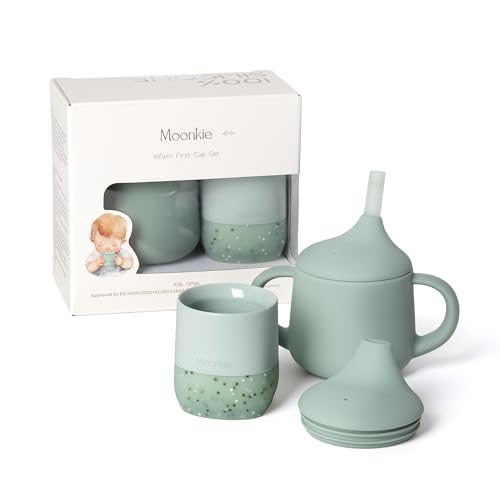
Moonkie Baby Training Cup and Sippy Cup Set, Mint, 2 Pack

Moonkie Baby Training Cup and Sippy Cup Set, Blush, 2 Pack

GROSMIMI PPSU Stage 2 Straw Cup, Dinosaur

NUK First Choice Learner Cup 2.0, 5 oz, 2-Pack

More Details On Our Top Picks
Re-Play takes the familiar spout route into bottle-to-cup training. Its soft, one-piece silicone valve and leak-resistant design offer a gentler starting point than the cross-cut straw used by the GROSMIMI cups, which may matter for a child still learning to control the flow.
Three 10 oz cups give you a practical rotation for home, daycare, and the car. The high-density polyethylene construction, made from recycled milk jugs, also feels more purposeful than a single cup, although its basic spout design gives you less choice as drinking skills develop.
Points In Its Favor
- Three cups support separate locations without forcing one cup to travel between them.
- The soft silicone valve provides a familiar route from bottle nipples to cup drinking.
- Microwave and top-rack dishwasher compatibility simplifies daily cleanup.
- The 10 oz size offers a useful balance for toddlers who are past tiny starter portions.
Things To Consider
- The cups are leak-resistant rather than completely spill-proof, so careful handling still matters during active play.
- Three cups require enough storage space for regular rotation, especially in a small diaper bag.
Key Specs
Made For Everyday Rotations
This set suits families who want a dependable spout cup, three separate units, and straightforward cleaning for daycare or travel.
A Better Fit Elsewhere
The GROSMIMI PPSU Baby Straw Cup fits babies specifically ready to practice drinking through a straw and benefit from rotating handles.
Straw drinking introduces a different skill from a conventional spout, and this GROSMIMI cup is built around that distinction. The Stage 1 straw is softer for new gums, while the cross-cut design and flip-top lid work together to limit leakage during early practice.
Its polyphenylsulfone, or PPSU, body resists heat better than many basic plastics, which also suits repeated sterilization. Soft handles rotate through 360 degrees and follow the cup’s angle, a helpful feature for babies who tend to turn their wrists while drinking.
Good Reasons To Consider
- The soft Stage 1 straw gives beginners a less rigid option than the firmer Stage 2 version.
- Fully separable parts support thorough cleaning at home or through sterilization.
- Rotating handles make the cup easier to hold from several positions.
- The 10 oz capacity gives growing babies more room than the smaller learner cups here.
Worth Noting
- Straw drinking requires more coordination than a familiar spout, so some babies will need extra practice.
Technical Highlights
Who Will Love This
This cup suits babies aged six months and older who are ready to explore straw drinking and benefit from a heat-resistant body.
Consider Something Else When
The Re-Play Spill-Proof Toddler Sippy Cups suit families prioritizing a soft spout, three separate cups, and leak-resistant drinking.
Moonkie packages two drinking experiences into one set, giving you a spout cup for early practice and an open cup for later sipping. That progression may be useful in a home where you want to introduce cup drinking gradually without replacing every feeding setup at once.
Both pieces use food-grade silicone without BPA, PVC, or phthalates. The soft spout and straw offer gentler contact points, while the open cup lets your baby practice directing a sip into the mouth. The honest read is that open-cup practice can involve more drips than straw drinking.
Useful Strengths
- The two-piece format supports both sucking practice and more advanced open-cup sipping.
- Dishwasher-safe silicone makes regular cleanup straightforward.
Practical Considerations
- The open cup will generally create more drip opportunities than a sealed straw cup.
- Starting at four months requires close attention to your baby’s comfort and readiness.
The Right Fit
This set suits parents who want one purchase to cover both a spout stage and an open-cup stage beginning at four months.
Where Another Pick Shines
The GROSMIMI PPSU Baby Straw Cup suits families prioritizing a spill-resistant straw, rotating handles, and sterilization-compatible materials.
The blush version shares the Moonkie set’s useful two-stage structure: one cup supports sucking through a soft spout, and the other introduces natural open-cup sipping. You can introduce the covered cup first, then bring out the open cup as your baby becomes more comfortable controlling each sip.
Both cups are made from food-grade silicone and can go in the dishwasher. Unlike the GROSMIMI selection, this pair does not provide a straw, heat-resistant PPSU body, or rotating handles, so its value lies in the progression between two basic drinking formats rather than added hardware.
Notable Upsides
- Combining a spout cup and open cup creates a clear progression for home practice.
- Soft silicone parts are gentle on developing gums and teeth.
- The two-cup format offers separate pieces for different feeding moments.
Room For Improvement
- The open cup may need more careful handling during initial practice.
Feature Facts
Built With In Mind
This set suits parents of babies from four months who want to move gradually from a covered spout toward an open cup.
Another Choice May Suit
The Moonkie Baby Training Cup and Sippy Cup Set in Mint offers the same two-format approach for families who prefer a different color.
Once a toddler starts chewing the straw, a softer drinking component can become a point of frustration. The GROSMIMI Stage 2 keeps the same cross-cut straw and flow behavior as Stage 1 but gives the straw a firmer feel for children aged 12 months and older.
The dinosaur design adds a recognizable theme, though the practical distinction is the tougher straw. PPSU and silicone contact the drink, every piece separates for cleaning, and the rotating handles remain available. For a first-time straw drinker, this version is likely better reserved for the later stage.
A Favorable Mix
- The firmer Stage 2 straw is intended for toddlers who have begun chewing their drinking straw.
- The flip-top lid and cross-cut straw help manage leaks during carrying and tipping.
- Disassembly supports thorough dishwasher, microwave, or sterilization cleaning.
- Rotating handles help small hands maintain a comfortable grip.
Trade Offs
- Its firmer straw is less suited to the earliest stage of straw introduction than the GROSMIMI Stage 1 cup.
- The 10 oz size may take up more space in a small diaper bag than a 2 oz learner cup.
Made For Chewing Toddlers
This cup suits toddlers 12 months and older who already understand straw drinking and are becoming more active with their cups.
Swap It Out When
The GROSMIMI PPSU Baby Straw Cup in Sky Blue suits babies beginning straw practice at six months with the softer Stage 1 straw.
A 5 oz learner cup offers a smaller starting point than the 10 oz cups in this lineup. NUK pairs that compact size with a soft drinking spout, removable anti-slip handles, and a two-cup pack, making it a straightforward choice for a smaller feeding routine.
The spout is designed to be gentle on teeth and gums, while the spill- and leak-resistant design gives early practice a level of spill control. The cups are also dishwasher safe and BPA free. The trade-off is a smaller capacity that may need more frequent refilling than the GROSMIMI or Re-Play options.
Strong Points
- Removable anti-slip handles offer a secure grip for smaller hands.
- Two cups support a home-and-travel rotation or separate clean and in-use units.
Some Limits To Know
- The 5 oz capacity requires more refills than the 10 oz training cups in this list.
Quick Facts
Best Suited To
This set suits parents of babies six months and older who want a compact spout cup and two separate learner cups.
Look Elsewhere When
The Nuby 2 oz Training Cup suits families prioritizing an even smaller silicone cup for first sips and compact storage.
The Nuby First Training Cup takes a deliberately small approach. Its 2 oz capacity keeps the first drinks manageable, while the angled walls and free-flow spout give your baby a different path than a bottle nipple without adding the bulk of a larger handled cup.
Made entirely from silicone, the cup is soft for delicate gums and teeth and works with warm or cold drinks. An easy-grip, non-slip shape supports small hands, although you may find that 2 oz becomes inconvenient once your baby begins drinking larger amounts. It remains a compact training tool rather than a full-day cup.
What Stands Out
- The 2 oz size offers a manageable starting volume for first practice.
- Silicone construction provides a soft surface for gums and teeth.
- The angled walls and free-flow spout support a gradual move away from a bottle.
Small Caveats
- The 2 oz capacity means more frequent refills than the 5 oz and 10 oz options.
- Its compact size may limit the volume available during longer outings.
Feature Snapshot
Who Should Grab It
This cup suits families introducing a very small silicone training cup for a baby’s earliest sips at home.
A Better Fit Elsewhere
The NUK First Choice Learner Cup 2.0 suits families wanting a larger 5 oz spout cup, removable handles, and a two-cup pack.
What Matters During Cup Training
Matching the Drinking Method
A bottle nipple, a cup spout, a straw, and an open rim each require a different mouth movement. Choose the method that matches what your baby already practices, then give your child time to become familiar with the new shape before introducing another one.
Looking Beyond Spill Control
A lid that resists leakage helps during floor time, but capacity, handles, and drinking method matter just as much. Straw cups suit babies ready to seal their lips around a straw, while soft spouts and open cups address different stages of the same learning process.
Planning for Storage and Cleaning
Reusable cups need a realistic cleaning routine and enough cabinet space for the parts. Pay attention to removable components, dishwasher compatibility, and whether your routine includes boiling or steam sterilization before choosing a model.
Common Drinking Cup Pitfalls
Mistakes Worth Dodging
Avoid buying several styles at once, since a changing cup can slow practice. Choose one method, use it consistently, and consider capacity and storage before adding more options to the household.
What Separates Premium From Basic
Higher-tier cups may use heat-resistant PPSU, rotating handles, multiple straw stages, or broader cleaning compatibility. Those additions matter most for frequent use, repeated heat exposure, or toddlers who quickly move beyond a soft Stage 1 straw.
Frequently Asked Questions
When should a baby start using a training cup?
Most training cups in this lineup are intended for babies around six months old, while the Moonkie sets are marked for four months and older. Readiness also depends on your baby’s comfort with a new drinking method.
Is a sippy cup better than an open cup for bottle-to-cup transition?
A sippy cup offers greater spill control, while an open cup introduces natural sipping skills with more potential drips. The Moonkie sets provide both formats so you can move between them gradually.
What size training cup is easiest for beginners?
Smaller cups such as the 2 oz Nuby and 5 oz NUK options suit early practice and limited portions. A 10 oz cup becomes more useful once your baby is comfortable handling a larger volume.
How often should training cups be replaced?
Replacement depends on wear, cracks, seal performance, and your baby’s continued fit rather than a fixed schedule. Inspect the valve, straw, lid, and body regularly, especially after drops or repeated cleaning.
Are reusable silicone cups easier to clean?
Fully separable silicone and PPSU parts are generally convenient for washing and sterilization. You still need to check the product’s cleaning instructions and reach all removable pieces during regular cleaning.
The Takeaway
The most useful training cup is the one your baby can comfortably hold and drink from without making the routine feel overwhelming. Start with the drinking method and capacity that match your child’s current skills, then treat fewer cups used consistently as more helpful than a crowded drawer of options.
