

A bunion can turn an ordinary walk into a lesson in footwear. The sore spot at the base of your big toe may rub, press, or shift with every step, so the right support matters more than a thick cushion alone. This roundup compares full-foot insoles, toe separators, braces, socks, and hydrogel pads to help you match the product to your shoes, symptoms, and daily routine.
Orthotic inserts use shaped support to influence how your foot sits inside a shoe, while cushions and sleeves focus more directly on pressure around the bunion. Persistent pain or numbness deserves attention from an appropriate specialist, since footwear support cannot replace a professional assessment.
A Snapshot Of The Selections

Amitataha Memory Foam High Arch Support Insoles M
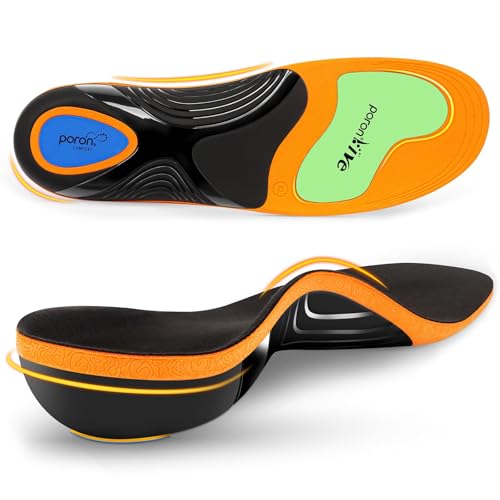
Gviipk Work Boot High Arch Support Gel Insoles L
EZWORK 1.2mm Rigid Carbon Fiber Insoles Pair

OrthoSleeve Cushioned Split-Toe Bunion Relief Socks

OrthoSleeve HV3 Bunion Brace and Splint

Kimihome Hydrogel Bunion Cushions, 12 Pcs
Taking A Closer Look At The Options
This full-foot insole focuses on arch support and shock absorption rather than isolating the bunion itself. Its high-arch shape may suit people who spend long periods walking or standing, provided the shoe has enough room to accommodate the added structure.
Unlike the adhesive pads and split-toe socks later in the list, this option supports the entire foot while cushioning the heel and forefoot. You may find it most useful in sneakers, walking shoes, boots, or other roomy footwear, with a size that can be trimmed along the marked cutting line.
Positive Points
- The contoured arch area gives more structured support than a flat cushion.
- Flexible memory foam can soften the feel beneath long walks.
- A marked cut line lets you resize the insole to suit the available shoe space.
- It suits several shoe types, including sneakers, boots, and flatter footwear.
- Men’s and women’s size options make it useful for shared households.
Practical Considerations
- The strong arch profile may feel too pronounced in narrow or shallow shoes.
- Cutting the insole changes the fit, so compare the marked line with your shoe before trimming.
Key Specs
Made For
You benefit most from this insole if you need full-foot arch support and wear shoes with room for a shaped insert.
Another Choice May Suit
Kimihome Hydrogel Bunion Cushions, 12 Pcs suit you better when localized pressure relief matters more than full-foot support.
Built for work boots and long shifts, this insert prioritizes a high-arch platform and impact cushioning. PORON, an open-cell cushioning material used in the construction, is designed to compress under load and absorb impact, which matters when your feet remain inside firm footwear for hours.
Compared with the Amitataha Memory Foam High Arch Support Insoles M, this choice has a more work-focused positioning. The stated size covers men’s 9.5 to 10.5, so checking your boot interior is essential before ordering.
Practical Pluses
- High-arch support suits work boots used during extended standing shifts.
- The thin, lightweight construction may leave more room inside a boot than a bulky foam insert.
Some Limits To Know
- The listed size is narrow, so it will not suit every foot length.
- The product is marketed for people over 220 pounds, making a careful fit check sensible.
- Its high-arch structure may not suit boots with a sharply raised insole bed.
Quick Facts
Right Fit For
You benefit most from these insoles when you wear structured work boots through long standing shifts.
A Better Fit Elsewhere
EZWORK 1.2mm Rigid Carbon Fiber Insoles Pair suit you better when firm stability matters more than cushioned walking.
This rigid carbon-fiber plate takes a completely different approach from soft foam and gel. At 1.2 mm thick, it offers a stable platform with little bending, which can be valuable when toe movement needs to remain limited or a firmer foundation is preferred.
The pair is designed for both men and women and is marketed for several toe-related concerns, including hallux limitus and hallux rigidus. You would choose this over a cushioned insole for structure, but comfort still depends on the shoe and the advice of a specialist for a specific foot concern.
Noteworthy Benefits
- The 1.2 mm profile creates a relatively low-profile rigid platform.
- Limited flex helps keep the foot from moving through a wider range inside the shoe.
- One pair serves both feet, simplifying replacement of a matched set.
A Few Limitations
- Its rigidity offers less soft cushioning than the foam or hydrogel options in this roundup.
- Check that your shoes have sufficient room to accommodate a rigid insert without lifting the heel.
Feature Snapshot
Built With In Mind
You benefit most from this pair when stability and restricted bending are more important than soft cushioning.
Swap It Out When
OrthoSleeve Cushioned Split-Toe Bunion Relief Socks suit you better when direct toe separation and gentle cushioning are your priorities.
These socks place a cushioned, split-toe layer directly around the big toe. The separation reduces the way that toe presses against neighboring toes, while the extra fabric over the bunion area offers a softer barrier than a standard sock.
Unlike the full-foot Amitataha Memory Foam High Arch Support Insoles M, this option does not reshape the arch or heel. You may find it most useful in flexible shoes where the bunion rubs against the upper or the toe box feels crowded.
Advantages To Know
- The split-toe design creates physical separation around the big toe.
- Cushioned fabric adds softness where the bunion contacts the shoe.
Points To Note
- These are socks rather than full-foot insoles, so they provide no structured arch platform.
Who Will Love This
You benefit most from these socks when toe crowding and rubbing are your main footwear concerns.
Where A Sibling Pick Shines
OrthoSleeve HV3 Bunion Brace and Splint suit you better when you want a more structured bunion-area support than a sock provides.
The HV3 is a one-sleeve brace that combines a split-toe section with focused bunion-area support. Hallux valgus, the condition in which the big toe angles toward the neighboring toes, is one of the concerns this design is intended to address.
Compared with the OrthoSleeve Cushioned Split-Toe Bunion Relief Socks, this brace offers a more deliberate support structure without occupying the full shoe. The trade-off is a bulkier fit that needs room in the toe box.
What Stands Out
- The split-toe design separates the big toe from the second toe.
- A structured section supports the bunion area rather than merely cushioning it.
- Protective material helps reduce contact between the toe and footwear.
- One sleeve allows you to position it on the foot that needs it most.
Less-Strong Areas
- You need a shoe with enough toe-box space to avoid crowding the brace.
- Only one sleeve is included, so it does not provide a matched pair.
Best Suited To
You benefit most from this brace when focused big-toe separation and structured bunion-area support are your goals.
Reach For A Different Pick When
Kimihome Hydrogel Bunion Cushions, 12 Pcs suit you better when discreet, localized cushioning inside the shoe works better for you.
These transparent hydrogel pads put a soft, slippery layer between the bunion and the shoe. The adhesive backing makes them easy to position, while the 12-piece set provides enough replacements for several pairs or repeated changes.
Unlike the OrthoSleeve HV3 Bunion Brace and Splint, this option does not separate the toes or support the arch. You may find the discreet profile useful in loafers, flats, and other shoes where a bulky support would change the fit.
A Strong Showing
- Hydrogel creates a soft surface for reducing direct pressure and rubbing.
- The adhesive backing keeps the pad in position without a bulky strap.
- Twelve pads make it easy to rotate cushions among several pairs of shoes.
Small Caveats
- The pads add bulk, so tight shoes may feel more crowded.
- Moisture and sweat can affect how an adhesive pad stays attached.
- They cushion one location without supporting the rest of the foot.
The Numbers That Matter
The Right Fit
You benefit most from these pads when your main concern is direct shoe pressure against a sensitive bunion area.
Look Elsewhere When
Amitataha Memory Foam High Arch Support Insoles M suit you better when you want support across the heel, arch, and forefoot rather than a small cushion.
Matching Support To Your Footwear And Symptoms
The right product depends on where your foot feels crowded and what kind of correction you want. Start with the pressure point, then check whether your shoes can accommodate the added structure.
Decide Between Local Cushioning And Full-Foot Support
Hydrogel cushions and split-toe socks focus on the bunion area, making them sensible when rubbing is the main issue. Full-foot insoles suit you better when heel fatigue, arch support, and overall impact absorption matter alongside toe comfort.
Pay Attention To The Shoe Profile
A bulky cushion or rigid plate can raise the foot inside the shoe and change how the heel sits. Roomy sneakers and boots usually accommodate more structure, while narrow flats and low-cut shoes may leave little room for a shaped insert or brace.
Check The Size Before Ordering
Foot length is only part of the fit, since arch height and shoe volume also influence comfort. Compare the listed size, width, and cutting options with the shoes you expect to use, and note whether the shape feels supportive without feeling crowded.
Consider How Long You Will Wear Them
Short walks, full workdays, and extended athletic activity create different demands. Soft hydrogel may feel unobtrusive during casual use, while supportive foam or a rigid plate may make more sense for long hours in structured footwear.
Common Mistakes Worth Avoiding
Common Shopping Slip Ups
Choosing solely by cushioning can leave the underlying fit problem untouched. Measure the shoe, check the toe box, and decide whether you need local pressure protection, toe separation, or full-foot support before selecting a product.
What Separates Premium From Basic
Rigid carbon fiber, shaped arch supports, and gel cushioning use different materials and construction methods. An upgrade is worthwhile when its added structure or targeted cushioning matches a specific daily task, not simply because a product has a more elaborate design.
Frequently Asked Questions
Are bunion shoe insoles the same as bunion pads?
No. Insoles support the full foot, while pads cushion a specific pressure point. Socks and braces add separation or targeted support without replacing a full insole.
Which option is best for narrow shoes?
A thin hydrogel cushion may fit more easily than a shaped foam insert, rigid plate, or brace. You should also compare the shoe’s width with the product’s dimensions before ordering.
Can an insole change the shape of a bunion?
No support product should be expected to change the underlying bone position. Your goal is more comfortable footwear and reduced pressure, while structural changes require assessment by an appropriate specialist.
Should bunion supports be worn in every shoe?
No. You may find them most useful in shoes that rub or crowd the big toe. A rigid insole, gel pad, and brace can each affect shoe fit differently, so give each one a separate trial.
Do these options work with walking shoes and work boots?
Yes, the roundup includes full-foot insoles, socks, cushions, and a brace suited to different footwear. Match the product’s profile to the shoe, and avoid combining several thick supports unless a specialist has advised that approach.
Final Verdict
The Kimihome Hydrogel Bunion Cushions offer the simplest way to soften a direct rubbing point, while the Amitataha and Gviipk insoles make more sense for whole-foot support. For firmer toe control, EZWORK leads the rigid category, and the OrthoSleeve choices focus on separation. Choose based on where your discomfort appears and how much room your shoes provide.
