

You’ll love how coconut sauces lift simple meals without fuss. They add mild sweetness, savory depth, and lower sodium than soy, so you can feel good about using them more. Try liquid aminos for marinades, teriyaki for glazes, or a rich coconut-based dressing for salads and bowls. Pair with garlic, ginger, citrus, or chiles to brighten flavors. Keep bottles with clean labels on hand and you’ll want to reach for them every time.
| BetterBody Foods Organic Coconut Aminos (16.9 oz) |

| Best Low-Sodium | Primary Ingredient: Organic coconut blossom nectar | Soy-Free: Soy-free | Gluten-Free: Gluten-free | VIEW LATEST PRICE | Read Our Analysis |
| Coconut Secret Organic Coconut Teriyaki Sauce 10 FZ |

| Best for Glazing | Primary Ingredient: Organic coconut tree sap (coconut sap) | Soy-Free: Soy-free | Gluten-Free: Gluten-free | VIEW LATEST PRICE | Read Our Analysis |
| Coconut Secret Organic Liquid Coconut Aminos (2-Pack) |
| Best for Meal Prep | Primary Ingredient: USDA organic coconut sap | Soy-Free: Soy-free | Gluten-Free: Gluten-free | VIEW LATEST PRICE | Read Our Analysis |
| Coconut Secret The Original Amino Soy-Free Seasoning 16.9 Ounce |
| Most Versatile | Primary Ingredient: Coconut tree sap | Soy-Free: Soy-free | Gluten-Free: Gluten-free | VIEW LATEST PRICE | Read Our Analysis |
| Big Tree Farms Organic Coconut Aminos (32 fl oz) |

| Best Value Family Size | Primary Ingredient: Organic coconut flower blossom nectar | Soy-Free: Soy-free | Gluten-Free: Gluten-free | VIEW LATEST PRICE | Read Our Analysis |
More Details on Our Top Picks
BetterBody Foods Organic Coconut Aminos (16.9 oz)
Should you want a cleaner, milder soy sauce substitute that fits many diets, BetterBody Foods Organic Coconut Aminos often feels like the right choice. You’ll find a friendly bottle made from organic coconut blossom nectar and Himalayan salt that skips soy and added sugar. It’s USDA Organic, non-GMO, gluten-free, and lower in sodium than regular soy sauce, so you can season without worry. Use it in stir fries, marinades, dressings, or as an all-purpose sweet savory lift. Because it’s paleo friendly and less processed, you’ll enjoy flavor with simpler ingredients and gentler dietary fit.
- Primary Ingredient:Organic coconut blossom nectar
- Soy-Free:Soy-free
- Gluten-Free:Gluten-free
- Low/Reduced Sodium vs Soy Sauce:Lower sodium than traditional soy sauce
- Dietary Suitability:Paleo-friendly; suitable for gluten-free diets
- Typical Uses:Substitute for soy sauce in stir-fries, marinades, dressings; all-purpose seasoning
- Additional Feature:No added sugar
- Additional Feature:Himalayan salt used
- Additional Feature:Larger 16.9 oz bottle
Coconut Secret Organic Coconut Teriyaki Sauce 10 FZ
Should you want a teriyaki sauce that stays gentle on your diet but still brings bright, savory flavor, Coconut Secret Organic Coconut Teriyaki is a smart pick. You’ll love that it blends original coconut aminos with garlic, ginger, onion, cayenne, and sea salt for a lively glaze. Use it on fish, chicken, meat, or veggies, and in sautés and marinades. It’s soy free, low sodium, no MSG, USDA organic, gluten free, kosher, and non GMO verified. The sap base gives minerals and amino acids with low glycemic impact, from sustainable, fair trade Philippine farms.
- Primary Ingredient:Organic coconut tree sap (coconut sap)
- Soy-Free:Soy-free
- Gluten-Free:Gluten-free
- Low/Reduced Sodium vs Soy Sauce:Low sodium
- Dietary Suitability:Suitable for paleo/low-glycemic diets; kosher noted
- Typical Uses:Brushing on fish/chicken/veggies; sautés and marinades; glaze/teriyaki use
- Additional Feature:Includes garlic & ginger
- Additional Feature:Slight cayenne heat
- Additional Feature:Teriyaki spice blend
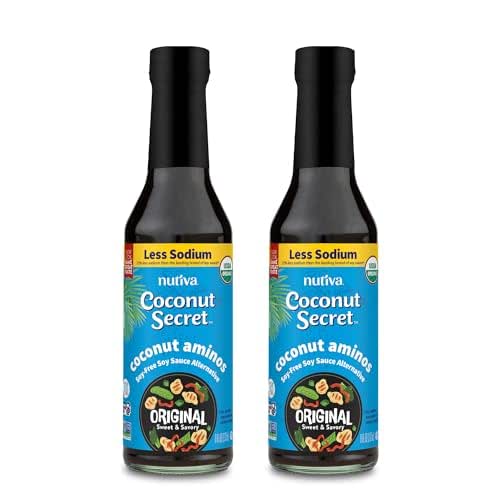
Coconut Secret Organic Liquid Coconut Aminos (2-Pack)
Should you want a soy sauce substitute that keeps your meals savory but lighter, Coconut Secret Organic Liquid Coconut Aminos is a great pick for everyday cooking and anyone watching sodium. You’ll love its savory yet slightly sweet flavor with hardly any coconut taste, so it blends into dressings, marinades, stir fries, sushi, and dipping sauces. It’s made from USDA organic coconut sap and sea salt, contains 17 amino acids, and has no MSG. Because it’s low sodium, gluten free, non GMO, vegan, keto and paleo friendly, you can use it confidently for family meals and meal prep.
- Primary Ingredient:USDA organic coconut sap
- Soy-Free:Soy-free
- Gluten-Free:Gluten-free
- Low/Reduced Sodium vs Soy Sauce:Low sodium (12% DV per serving)
- Dietary Suitability:Vegan, keto, paleo compatible
- Typical Uses:Seasoning, salad dressings, marinades, stir-fries, sushi, dipping
- Additional Feature:Packaged as 2-pack
- Additional Feature:Low sodium (12% DV)
- Additional Feature:Rebranded under Nutiva
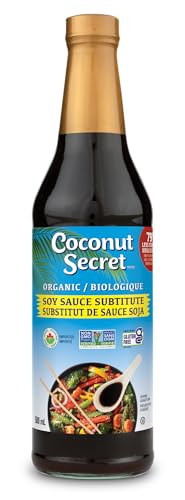
Coconut Secret The Original Amino Soy-Free Seasoning 16.9 Ounce
Provided that you want a soy sauce swap that stays friendly to diets and sensitive palates, Coconut Secret The Original Amino is a smart pick. You’ll find a savory, gentle umami from coconut tree sap and sea salt, not coconut flesh, so it won’t taste coconutty. It works in dressings, marinades, sautés, and sushi, and it brings 17 amino acids without MSG. Because it has 73% less sodium than soy sauce, you can season more safely. It’s USDA Organic, gluten free, non GMO, vegan, and sourced from Philippine farms using sustainable, fair trade methods you can trust.
- Primary Ingredient:Coconut tree sap
- Soy-Free:Soy-free
- Gluten-Free:Gluten-free
- Low/Reduced Sodium vs Soy Sauce:73% less sodium than traditional soy sauce
- Dietary Suitability:Vegan/vegetarian friendly
- Typical Uses:Salad dressings, marinades, sautés, sushi; general soy sauce alternative
- Additional Feature:73% less sodium
- Additional Feature:Only two ingredients
- Additional Feature:Marketed as healthier condiment
Big Tree Farms Organic Coconut Aminos (32 fl oz)
Should you want a soy-free, lower-sodium alternative that still brings savory depth, Big Tree Farms Organic Coconut Aminos is a smart pick. You’ll find a warm umami flavor with a bright spike of salt that lifts stir fries, grilled veggies, and marinades. Made from organic coconut flower nectar and Balinese sea salt, it’s free of artificial preservatives and flavors and works well as a glaze, dipping sauce, or finishing drizzle. It’s rich in essential amino acids, lower glycemic, and has about half the sodium of soy sauce. The brand supports sustainable sourcing and farmer communities, so you feel good using it.
- Primary Ingredient:Organic coconut flower blossom nectar
- Soy-Free:Soy-free
- Gluten-Free:Gluten-free
- Low/Reduced Sodium vs Soy Sauce:About half the sodium of soy sauce
- Dietary Suitability:Suitable for various diets (soy-free/gluten-free/kosher)
- Typical Uses:Marinade, glaze, dipping sauce, finishing sauce, seasoning for snacks and mains
- Additional Feature:Large 32 fl oz size
- Additional Feature:Balinese sea salt
- Additional Feature:Farmer‑community sustainability mission
Factors to Consider When Choosing Coconut Sauce
When you pick a coconut sauce, consider about the flavor profile and how bold or sweet you want it to be so it matches your dishes. Check the sodium level and ingredient simplicity to make sure you’re not getting concealed additives or too much salt for your diet. Also consider dietary compatibility and amino acid content so the sauce supports your health goals and tastes great at the same time.
Flavor Profile
Should you want a sauce that adds both sweetness and savory depth, coconut-based sauces are a smart choice because they often bring a mild umami with gentle caramel or molasses notes from coconut sap rather than a heavy coconut fruit flavor. You’ll observe many blends balance sweet and salty, and they often add garlic, ginger, or onion for warm aromatic layers. Texture matters too, since thin, soy-like sauces soak into marinades while syrupy glazes cling to grilled foods. That contrast affects how flavors land on your tongue and how they pair with ingredients. Because coconut sauces have natural sweetness and some acidity, bear in mind them flexible for dipping, glazing, dressing, and pairing with meats, veggies, and stir-fries.
Sodium Content
You’ll often find that coconut-based sauces give you big flavor with much less salt, which is great should you’re watching your blood pressure or cutting back on sodium. Look at sodium per serving on the Nutrition Facts because serving sizes vary and small bottles might list teaspoons or tablespoons. Many coconut aminos or teriyaki-style sauces contain roughly 12% to 50% of the sodium of regular soy sauce, so you can enjoy savory notes with less worry. Should you manage hypertension or follow a low-sodium plan, choose products labeled low sodium and compare mg per serving against your daily target under 2,300 mg. Scan ingredients for added sea salt or Himalayan salt. Even low-sodium options need portion control, so use a dash or teaspoon for flavor.
Ingredient Simplicity
Pick a coconut sauce with a short ingredient list and you’ll almost always get a cleaner, more honest product. You want labels with two to six items because fewer ingredients usually mean less processing and fewer surprises. Look for words you know, like coconut sap or nectar and a single salt, and skip sauces that hide behind long lists of preservatives, artificial flavors, or many thickeners. Also check that common additives such as MSG, high-fructose corn syrup, artificial sweeteners, or multiple emulsifiers aren’t present provided you prefer a purer product. Prefer whole-source ingredients rather than extracts or concentrates so natural nutrients stay intact. Finally, verify claims like no added sugar by reading the ingredient list, not just the front label.
Dietary Compatibility
Whenever you’re choosing a coconut sauce, consider about how it fits your diet and health needs so it becomes a worry-free pantry staple. Check labels for soy-free and gluten-free claims provided you have allergies or celiac disease, since traditional soy contains gluten and soy proteins. Next, scan sodium per serving because coconut sauces can be lower in salt, but amounts vary. Also look for added sugars, sweeteners, or MSG should you follow low-sugar, keto, or clean-label plans. Confirm vegan, vegetarian, paleo, or keto suitability ensuring ingredients are plant-based and minimally processed, not using animal products or high-glycemic syrups. Finally, read allergen and cross-contamination warnings regarding tree-nuts, soy, or gluten to protect severe sensitivities.
Amino Acid Content
Tasting the savory depth in a coconut sauce often comes from its amino acids, and comprehension what that means can help you choose a bottle that really sings with your meals. You’ll find many coconut-based sauces carry a range of amino acids, often including most of the 17 reported in coconut sap seasonings. That matters because free amino acids like glutamic acid bring umami, giving a soy-like savory note without soy or added MSG. You can lean on that flavor to make dishes feel richer while keeping ingredients simple. Amino acid levels shift with processing and concentration, so check labels and serving size. While not a full protein source, these sauces add some nutrition compared with plain salty condiments.
Versatility In Cooking
Being aware about amino acids helps you appreciate why coconut sauces taste rich, and it also points to how useful they are in the kitchen. You can swap amino-style or teriyaki-style coconut sauces for soy sauce in stir-fries, marinades, dressings, and dips because they give sweet savory umami with less salt. Since many have lower sodium, you’ll control salt without losing depth. Their mild sweetness and subtle coconut hint pair well with vinegars, citrus, and spicy flavors, so you can brighten or tame dishes easily. Sauces with garlic, ginger, onion, or chilies double as glazes for grilled proteins and roasted vegetables. Their pourable texture mixes into marinades and reduces into glossy glazes, letting you adapt them across many recipes with little fuss.
Sustainability Practices
Whenever you care about the planet and the people behind your sauce, start from checking how coconuts and sap are grown and harvested; look for organic, agrochemical-free farms and suppliers who limit tapping so trees stay healthy and keep producing. Afterwards look for fair trade or community-supporting sourcing. You want brands that pay workers fairly and invest in local projects because that helps families and protects land. Also prefer certified sustainable harvesting methods that limit tapping frequency and reduce tree stress. Check for third party certifications like organic, fair trade, or non GMO and for clear supply chain details. Lastly, consider how products travel to you and choose sauces in recycled or recyclable containers and from nearby producers to cut transport emissions and waste.
Packaging Size
Deciding on the right packaging size can save you money, cut food waste, and make cooking less stressful, so consider how often you actually use coconut sauce before you buy. Should you cook with it rarely, choose a small 8 to 10 ounce bottle so you can try flavors without wasting food. In case you reach for coconut sauce weekly, a 16 to 32 ounce bottle will stretch your budget and reduce trips to the store. For mixed uses like marinades, dressings, and finishing, a mid size often fits best and keeps sauce fresh longer. Reflect on shelf life after opening and check labels for refrigeration guidance. Also weigh storage space and pourability, since narrow bottles fit shelves but jars and squeezable bottles pour more cleanly. For shared kitchens, buy bulk but plan storage and hygiene.
