

A ten-hour shift, a crowded flight, or a long run can leave your legs feeling heavy and tired. Compression socks for blood circulation apply graduated pressure that decreases as it moves up the leg, making these six options useful for travel, standing work, exercise, and long periods of inactivity.
The right pair depends on pressure, coverage, fabric, and fit rather than a one-size-fits-all formula. This comparison covers full-length socks and calf sleeves, ranging from light 10-15 mmHg support to firmer 20-30 mmHg designs, so you can match the garment to your routine.
A Quick View Of The Lineup
NEWZILL 20-30 mmHg Compression Socks

NEWZILL Unisex Calf Compression Sleeves 20-30 mmHg
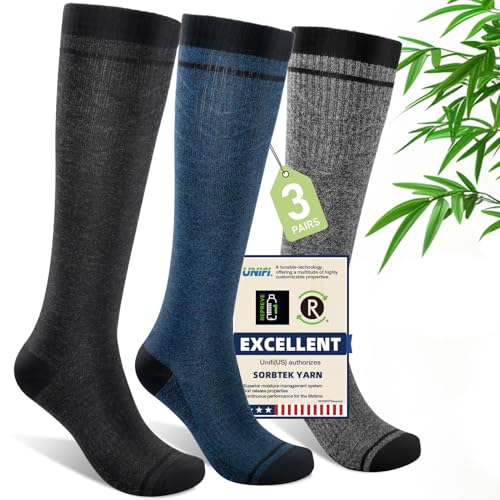
Iambamboo 15-20 mmHg Socks

Core-Spun 10-15 mmHg Socks

Dr. Motion 5-Pack Socks

Copper Fit Easy On & Off Compression Socks 3-Pack for Men & Women
A Breakdown Of The Leading Choices
A full day on your feet calls for more than a sock that simply feels snug. These knee-high NEWZILL socks provide 20-30 mmHg of graduated pressure, with firmer support near the ankle and lighter compression toward the calf, making them a practical choice for nurses, drivers, travelers, and active adults.
Unlike the Iambamboo 15-20 mmHg socks later in the list, this pair offers a firmer compression range. The stretchy CLIMA-PRO fabric, reinforced shape, and seamless toe also make it more suitable for high-output days, although 20-30 mmHg may feel more assertive than a newcomer expects.
Reasons It Performs
- The 20-30 mmHg range gives substantial support for long standing shifts, travel, workouts, and active recovery.
- A 4-way stretch construction and contoured cuff help the knee-high design remain in place through repeated movement.
- Breathable fabric helps manage warmth during commutes, shifts, and exercise.
- The seamless toe reduces excess material where rubbing is most likely to occur.
- Unisex coverage gives men and women the same ankle-to-calf support profile.
Practical Considerations
- The 20-30 mmHg pressure is firmer than the lighter Core-Spun and Dr. Motion options, so start with a shorter wear period.
- Check the available sizing and calf measurements before ordering, particularly when comparing this firm fit with a calf sleeve.
Key Specs
Built With In Mind
You benefit most from these socks during long shifts, active travel, workouts, and other days when firm graduated support is comfortable for you.
Where Another Pick Shines
NEWZILL 20-30 mmHg Compression Socks suit you better than NEWZILL Unisex Calf Compression Sleeves 20-30 mmHg when you want full-foot coverage rather than targeted calf support.
These sleeves make sense when you want focused calf compression without covering your feet. The 20-30 mmHg range matches the firm support of NEWZILL Compression Socks, but the shorter format feels more natural for running, hiking, cycling, martial arts, and warm-weather activity.
Breathable CLIMA-PRO fabric and a seamless construction reduce bulk around the foot, which is a noticeable difference from full-length socks in hot conditions. You still need to account for calf dimensions, especially because a close sleeve fit determines how securely the support stays in place.
Where It Excels
- Targeted 20-30 mmHg compression supports active routines without covering your feet.
- The sleeveless design suits sports where bulky socks can interfere with footwear.
- Breathable fabric and seamless construction keep the calf area comfortable during movement.
- Stretchy material accommodates running, hiking, cycling, yoga, court sports, and standing work.
Small Caveats
- Measure your calf before ordering; the available S/M, L/XL, and XXL ranges cover 9-21 inches.
- The sleeve does not provide the full-foot coverage offered by Iambamboo 15-20 mmHg Socks.
- For a lighter feel, the sizing guidance recommends the larger size when you fall between two options.
The Right Fit
You benefit most from these sleeves during active movement or extended periods of standing, particularly when low-profile calf support matters more than complete sock coverage.
Swap It Out When
Core-Spun 10-15 mmHg Socks may suit you better when you need gentler support that is easier to wear throughout the day.
A long flight often calls for soft fabric as much as firm support. These Iambamboo socks use 80% renewable bamboo viscose with Sorbtek yarn and Lycra spandex, creating a lightweight option for extended wear while your legs sit still for hours.
The graduated profile starts at 20 mmHg around the ankle, eases to 17 mmHg at the calf, and reaches 15 mmHg below the knee. Compared with the firmer NEWZILL socks, this feels like a gentler middle ground for office days, flights, and everyday activity.
Notable Gains
- Bamboo viscose gives the fabric a smooth feel that suits extended travel and sensitive skin.
- Grooved Sorbtek fibers are designed to move moisture away from your feet and dry rapidly.
- Three-stage graduated pressure supports the ankle, calf, and lower leg without the firmness of a 20-30 mmHg design.
- Lightweight stretch allows natural foot movement during flights, standing work, and daily wear.
Points To Note
- The 15-20 mmHg range provides less compression than the two NEWZILL options for people accustomed to firmer support.
- Moisture-management claims depend on the overall fabric blend and how closely the socks fit your foot.
Feature Snapshot
Made For
You benefit most from these socks on long flights, full office days, and warm periods when soft full-length coverage matters more than strong compression.
Reach For A Different Pick When
NEWZILL 20-30 mmHg Compression Socks suit you better when firm graduated support is your main priority during demanding work or exercise.
Some people want circulation support without the intense squeeze of a higher-pressure sock. Core-Spun provides light 10-15 mmHg graduated compression, making it a sensible starting point for long walks, office days, and anyone who finds firmer socks challenging to wear.
The stretchy yarn is designed to make the knee-high socks easier to pull on, a useful detail for caregivers or anyone managing stiff knees. CoolMax fibers move perspiration away from the skin, while reinforced heel and toe areas add durability where everyday wear creates the most stress.
The Case For It
- Light graduated pressure offers a gentler entry point than 15-20 or 20-30 mmHg socks.
- Stretchy construction simplifies putting the socks on and helps them conform to the leg.
- CoolMax fibers help maintain a cooler, drier feel during extended wear.
- Reinforced heels and toes suit regular use in everyday shoes.
Trade-Offs To Consider
- The 10-15 mmHg range offers lighter support than the Iambamboo and NEWZILL options.
- Compare the available sizing with your calf and foot measurements before ordering.
Core Details
Who Will Love This
You benefit most from these socks when you want light daily compression, easier handling, and moisture management without a firm athletic squeeze.
Consider Something Else When
Iambamboo 15-20 mmHg Socks may suit you better when moderate graduated pressure and a softer full-length fabric are your priorities.
Five pairs make it easier to keep compression socks ready for the workweek, a short trip, and weekend errands without handling one pair every night. Dr. Motion uses 8-15 mmHg pressure across three graduated zones, offering light-to-moderate support for daily use.
Moisture-wicking fabric helps move sweat away from your feet, while the soft, breathable, stretchy construction supports longer wear. Compared with Core-Spun 10-15 mmHg Socks, this set provides a similar light-pressure profile with a more practical multi-pair format.
The Practical Payoff
- Five pairs support regular rotation through work, travel, and exercise.
- Three compression zones provide graduated support from ankle to calf.
- Moisture-wicking fabric helps your feet stay dry during extended wear.
- Soft, breathable, and stretchy materials allow comfortable movement.
- The 8-15 mmHg range offers a light balance for everyday use.
Points To Keep In Mind
- The stated size covers women’s shoe sizes 4-10 and calf measurements of 12-18.5 inches, so check your dimensions carefully.
- The pressure is lighter than the Iambamboo 15-20 mmHg socks and considerably lighter than the NEWZILL 20-30 mmHg options.
Made For
You benefit most from this five-pair set when regular workdays, short trips, and easy sock rotation matter more than very firm compression.
Look Elsewhere When
NEWZILL 20-30 mmHg Compression Socks suit you better when high-pressure support for demanding activity is the main goal.
Compression socks are easier to adopt as a habit when putting them on does not become a daily struggle. This Copper Fit set is positioned around easy handling, with three pairs for travel, nursing shifts, running, recovery, and general use by both men and women.
The compact three-pair format suits a small travel bag or a weekly rotation, and the unisex positioning widens the range of people who can share the same purchase. The honest read is that convenience is the clear attraction here, while pressure level and fabric details deserve a closer look before you commit.
Positive Points
- Easy-on-and-off positioning makes the socks convenient for frequent daily use.
- Three pairs offer a practical rotation for travel, work, and exercise.
- The design is intended for men and women across several active and standing routines.
Worth Noting
- Confirm the compression level, sizing, and fabric details against your needs before ordering.
- Choose a more precisely specified pressure range when you need a particular level of graduated support.
Details At A Glance
Who Should Grab It
You benefit most from this set when easy handling, a three-pair rotation, and unisex sizing matter more than a precisely defined compression level.
A Better Fit Elsewhere
Dr. Motion 5-Pack Socks may suit you better when you want a larger rotation with clearly stated pressure and calf measurements.
Match Compression Pressure to Your Day
Compression pressure is measured in millimeters of mercury, or mmHg. A higher number indicates firmer pressure, while a lower number creates a lighter squeeze, so matching the level to your activity and comfort preference makes the choice much clearer.
Light compression around 10-15 mmHg works well for extended daily wear and people new to compression garments. Moderate pressure near 15-20 mmHg provides a stronger graduated feel, while 20-30 mmHg suits people already comfortable with firm support during demanding work or exercise.
Consider The Coverage
Full-length socks support your ankle, calf, and foot, making them a logical choice for travel, walking, and active routines. Calf sleeves stop below the knee, which can feel cooler and less bulky during sports, especially in warm weather.
Check The Fit Before Ordering
Measure your calf and foot, then compare those numbers with the available size chart. A fit that is too loose may not feel consistent, while a tight fit can make longer wear uncomfortable, especially with the firmer 20-30 mmHg designs.
Match The Fabric To Your Climate
Breathable fabrics and moisture-wicking yarns suit warm travel, active exercise, and long shifts. Bamboo viscose offers a soft feel, while nylon and spandex blends provide stretch, so your climate, planned duration, and sensitivity to texture should guide the final choice.
Common Mistakes Worth Avoiding
The most common mistake is choosing pressure by trend instead of comfort and activity. Another mistake is ignoring calf measurements, which matters because the same compression level can feel different across different sleeve and sock sizes.
What Separates Premium From Basic
Higher-tier socks often spend more on fiber technology, multi-zone construction, stretch, and easier handling. Those improvements can matter during long shifts, warm workouts, or repeated travel days, while lighter and simpler designs remain sensible for occasional use.
Frequently Asked Questions
What compression level should you choose for daily wear?
Light 10-15 mmHg compression is a practical starting point for all-day comfort. Move toward 15-20 or 20-30 mmHg as your comfort and activity level allow.
Are compression socks better than calf sleeves for circulation?
Full-length socks cover more of the leg and foot, while calf sleeves provide targeted support below the knee. Choose full-length socks for travel and walking, or sleeves for lower-profile active wear.
Do compression socks need to be worn all day?
You can wear them for the portion of your day when your legs are active, traveling, or spending extended time standing. Begin with shorter periods and increase the duration as comfort allows.
How should you size compression socks?
Measure your foot and widest calf area, then compare those measurements with the product’s sizing chart. Fit matters because a loose sock may not feel evenly graduated.
Can you wear compression socks with regular shoes?
Compression socks usually fit beneath everyday shoes, especially the slimmer designs in this group. Check your shoe size and toe fit so the socks do not create a tight or bunched toe area.
Final Verdict
The most useful choice is the one that matches your pressure tolerance, activity, and leg measurements. NEWZILL offers the firmest support, Core-Spun provides the gentlest start, and Iambamboo lands between them with soft fibers, while the Dr. Motion and Copper Fit sets add practical multi-pair convenience. Choose based on your routine, then give the fit time to become familiar.
