

Compression socks can make a long hospital shift feel more manageable, especially when you spend most of the day standing, walking between rooms, or sitting at a desk. The right pair should provide graduated support without creating a tight cuff, pinching around the toes, or leaving you wanting to remove them before your shift ends. The options below cover different needs, from lightweight everyday wear to firmer support for active professionals and frequent travelers.
An Overview Of The Picks

Nurse Mates Women’s Calf Socks 12-14 mmHg
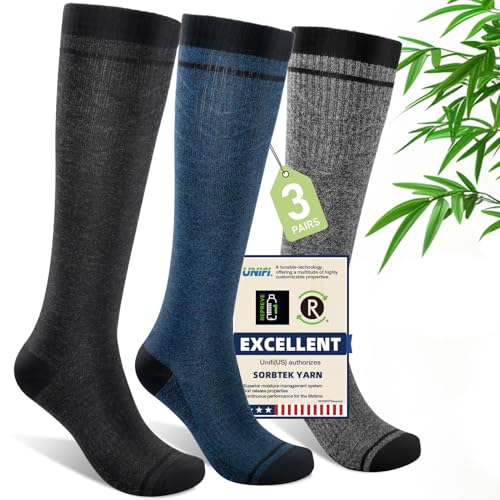
Iambamboo Compression Socks 15-20 mmHg

Sockwell Lotus Lift Compression Socks

NEWZILL Bamboo Viscose Compression Socks

ACTINPUT Copper Compression Socks 4 Pairs

Iambamboo Merino Wool Compression Socks 20-30 mmHg
The Details Behind The Selections
Nurse Mates built these calf socks around the kind of shift that starts early and keeps your feet moving. The 12-14 mmHg graduated compression is moderate rather than forceful, so they offer support for circulation without the heavy sensation associated with firmer athletic socks. That balance makes them a sensible starting point for healthcare workers who want a sock that can stay on through busy clinical routines.
The soft, breathable fabric is designed to move moisture away from the skin, which matters during long periods in scrubs. A welted top helps keep the sock from sliding down, while the heel and toe pockets reduce the pinching that can develop in a crowded work shoe. Novelty prints and solid colors also give you a little personality without compromising the practical design.
The Value In It
- Moderate 12-14 mmHg compression suits everyday shifts better than very firm levels.
- Moisture-wicking fabric helps your feet stay dry during extended wear.
- The welt top is designed to stay in place without a tight, digging cuff.
- Heel and toe pockets add comfort inside closed work shoes.
Small Caveats
- One size fits most, so checking the fit against your shoe and calf proportions remains sensible.
Key Specs
Who It Suits Best
These socks suit healthcare workers who spend a full shift standing or walking and prefer moderate, comfortable compression.
Consider Something Else When
Choose Iambamboo Compression Socks 15-20 mmHg instead when you want a softer bamboo-based fabric and firmer graduated support for travel.
These Iambamboo socks bring a softer material profile to a more supportive 15-20 mmHg range, which makes them useful for a long-haul flight or a workday spent moving between tasks. The blend includes 80% renewable bamboo viscose, Sorbtek yarn, and Lycra spandex, giving the fabric a smooth feel while helping it handle moisture and stretch.
Unlike the more structured design of Sockwell Lotus Lift Compression Socks, this pair leans toward lightweight wear and flexible movement. The graduated pressure is 20 mmHg at the ankle, 17 mmHg at the calf, and 15 mmHg below the knee, decreasing upward as the sock rises. That profile may feel more substantial than the Nurse Mates option without reaching the same firm level.
Real Benefits
- Breathable bamboo viscose feels smooth against the skin.
- Moisture-management yarns help the feet feel fresher during long flights.
- Stretchy construction allows easier movement through a workday.
- Graduated pressure supports the lower leg without the heaviest compression.
Trade Offs
- The 15-20 mmHg range is firmer than the 12-14 mmHg Nurse Mates socks.
- Some people may prefer a more structured construction for high-intensity activity.
Feature Snapshot
Made For
These socks suit travelers, office workers, and healthcare professionals who want soft fabric with moderate-to-firm support.
Another Choice May Suit
NEWZILL Bamboo Viscose Compression Socks are a better fit when a three-pair rotation and full-foot cushioning matter more to you.
Sockwell Lotus Lift Compression Socks take a more performance-oriented approach than the softer Nurse Mates and Iambamboo options. Their 20-30 mmHg firm graduated compression is designed for walking, running, hiking, biking, and sports, with support that spans four zones. For a healthcare worker who also spends time training or walking briskly during a shift, that stronger profile can feel more purposeful.
The construction includes spandex, a graduated compression leg, a turn welt top, arch support, and a seamless toe closure. Those details favor a close, supportive fit, while the high-performance yarns add moisture management, odor control, and temperature regulation. The listed sizing spans women’s US shoe sizes 4 to 13 across the available combinations, so careful size selection matters.
Reasons It Performs
- Firm 20-30 mmHg compression supports demanding activity.
- Arch support adds structure for walking and standing.
- A seamless toe closure helps reduce rubbing in closed shoes.
- The turn welt top is designed for a secure, comfortable fit.
Points To Keep In Mind
- The 20-30 mmHg range is the firmest choice in this group.
- Size availability is split across women’s and men’s shoe ranges, so verify the size chart.
Right Fit For
This pair fits active healthcare workers and commuters who want firm support for walking, exercise, and long periods on their feet.
Where A Sibling Pick Shines
Nurse Mates Women’s Calf Socks 12-14 mmHg may feel more comfortable for someone who wants lighter support during a routine shift.
NEWZILL pairs a 15-20 mmHg graduated profile with a three-pair format, which is useful for healthcare workers who do not want to handle a damp sock at the end of every shift. The bamboo viscose content is 78%, with a breathable, moisture-wicking character that suits warm work environments and frequent walking.
Compared with the single-pair Nurse Mates option, this set gives you a simple rotation for workdays, travel, and exercise. Full-foot cushioning and a smooth toe area can help reduce rubbing and pressure inside work shoes. The soft, stretchy cuff is designed to remain comfortable without digging into the calf, while the graduated support targets circulation during extended standing or sitting.
The Good Stuff
- Three pairs make daily rotation and laundry scheduling easier.
- Full-foot cushioning adds comfort inside closed work shoes.
- The smooth toe area helps limit rubbing during extended wear.
- Bamboo viscose supports breathability and moisture management.
- The non-binding cuff is designed for comfortable daily use.
Practical Considerations
- The 15-20 mmHg level is firmer than the lighter Nurse Mates option.
- Full-foot cushioning may feel bulkier for people who prefer a barely-there sock.
Core Details
Built With In Mind
This set suits nurses, teachers, office workers, and frequent travelers who want a practical multi-pair rotation.
A Better Fit Elsewhere
Iambamboo Compression Socks 15-20 mmHg may appeal more when a single pair with a refined bamboo blend is your priority.
ACTINPUT takes a practical approach with four pairs of copper compression socks, giving healthcare workers enough pairs to keep a rotation going across a busy week. The listing positions them for nursing, running, flying, and athletic wear, so they are aimed at people whose workday may include both long periods of standing and active movement outside the hospital.
The four-pair format is the clearest advantage here. It makes it easier to change socks between shifts, workouts, and travel days without relying on a single pair to dry completely. Copper is also part of the product identity, while the athletic framing suggests a more active use case than the softer Nurse Mates calf socks. For a precise purchase, check the listed sizing and compression details against your usual fit.
Features That Help
- Four pairs support convenient rotation between shifts and workouts.
- The product is positioned for nursing, running, flying, and athletic routines.
- Copper compression construction gives the pair a distinct activewear focus.
Things To Consider
- Verify the size chart before ordering, especially for a close athletic fit.
- Those wanting very soft bamboo-based construction may prefer NEWZILL Bamboo Viscose Compression Socks.
Feature Facts
Who Will Love This
These socks suit nurses and other active professionals who want several pairs ready for shifting, exercise, and travel.
Reach For A Different Pick When
Sockwell Lotus Lift Compression Socks are a better choice when clearly stated 20-30 mmHg pressure and sports-oriented construction matter most.
Iambamboo Merino Wool Compression Socks combine a 20-30 mmHg range with a knee-high design for flying, travel, and active use. The merino wool and Dryarn construction gives the sock a different material character from the bamboo viscose options, while the firm compression makes it more closely aligned with the Sockwell performance choice.
Those same traits make them a sensible option for a healthcare worker who spends long hours walking, travels for work, or wants a sock that can handle changing temperatures. A firm compression level can provide a more noticeable support sensation during standing or walking. The trade-off is that this is not the most flexible choice for someone who wants very light pressure across a full shift.
Why It Works Well
- Firm 20-30 mmHg compression gives a pronounced support profile.
- Merino wool and Dryarn construction suit travel and changing conditions.
- Knee-high coverage supports the lower leg during walking and flying.
Soft Spots
- The 20-30 mmHg range may feel too firm for very light everyday wear.
- Those wanting a softer material profile may prefer Iambamboo Compression Socks 15-20 mmHg.
Best Suited To
These socks suit healthcare professionals who also travel, walk frequently, or prefer firm compression during active work.
Skip It When
NEWZILL Bamboo Viscose Compression Socks suit you better when a three-pair rotation and cushioned construction are the priority.
What Matters Before You Buy Compression Socks
Compression level and daily duration
Graduated compression means pressure changes along the sock rather than staying constant. Lower levels around 12-14 mmHg may feel easier for routine shifts, while 15-20 mmHg offers firmer support for long walks, travel, or active work. The 20-30 mmHg designs have the strongest sensation, so give them a fair wear test during a busy day.
Fit inside work shoes
A compression sock that feels supportive in your hand can behave differently inside a closed, cushioned work shoe. Look for a secure top band, room around the toes, and a length that stays comfortable behind the calf. For a firm pair such as Sockwell Lotus Lift Compression Socks, careful size selection matters because the compression itself makes the fit more noticeable.
Fabric and moisture management
Bamboo viscose and merino wool blends are often chosen for comfort and moisture handling, while synthetic performance yarns can add stretch and structure. Merino Wool Compression Socks 20-30 mmHg suit travel-oriented routines, whereas NEWZILL Bamboo Viscose Compression Socks focus on cushioned daily wear. Think about your work shoes and climate rather than choosing on fabric name alone.
Having enough pairs
A three- or four-pair set is convenient for people who wear compression socks daily. Rotation gives each pair more time to dry and reduces the need to rush through a change after a sweaty shift. A single pair can still work well, particularly for occasional travel, but the multi-pair options are easier to maintain during a demanding schedule.
Key Details Before You Decide
Common Shopping Slip Ups
Compression level is not the only consideration. Check the sock length, shoe fit, and top band before ordering, since a too-tight cuff can distract from the support. A lighter pair may suit a casual workday, while a firmer design can feel unnecessarily intense for someone who mostly sits.
What Separates Premium From Basic
Additional pairs, refined yarn blends, and shaped construction often determine whether a sock stays comfortable through repeated use. Higher compression can also add a stronger support sensation, but the best level is the one that fits your routine, shoes, and tolerance without distracting you at work.
Frequently Asked Questions
Are compression socks suitable for healthcare workers?
Compression socks can suit healthcare workers who spend long periods standing, walking, or sitting. The best level depends on your shift, footwear, and how much pressure feels comfortable.
Which compression level works for a long nursing shift?
A 12-14 mmHg pair offers moderate support and may feel easier for routine wear, while 15-20 mmHg provides firmer graduated pressure. Try the level that matches your comfort and activity.
Should compression socks be worn with running shoes?
Yes, many compression socks are designed for walking, running, and other active routines. A smooth toe, secure cuff, and appropriate shoe size help prevent rubbing during movement.
How many pairs of compression socks are practical?
Three or four pairs make rotation easier for regular use. One pair can work for occasional travel or short periods of wear, but a rotation helps each pair dry between uses.
What should you check before buying compression socks?
Check the compression range, sock length, size chart, cuff construction, and toe finish. You also want to consider whether the fabric suits your work shoes and climate.
Final Thoughts
The right compression socks for healthcare workers depend on the balance you need between support, softness, and a secure fit. Nurse Mates suits moderate everyday wear, NEWZILL makes rotation convenient, and Sockwell or Iambamboo Merino Wool Compression Socks provide firmer support for active and travel-heavy routines. Choose the pair that feels comfortable enough to keep on from the start of your shift to the end.
